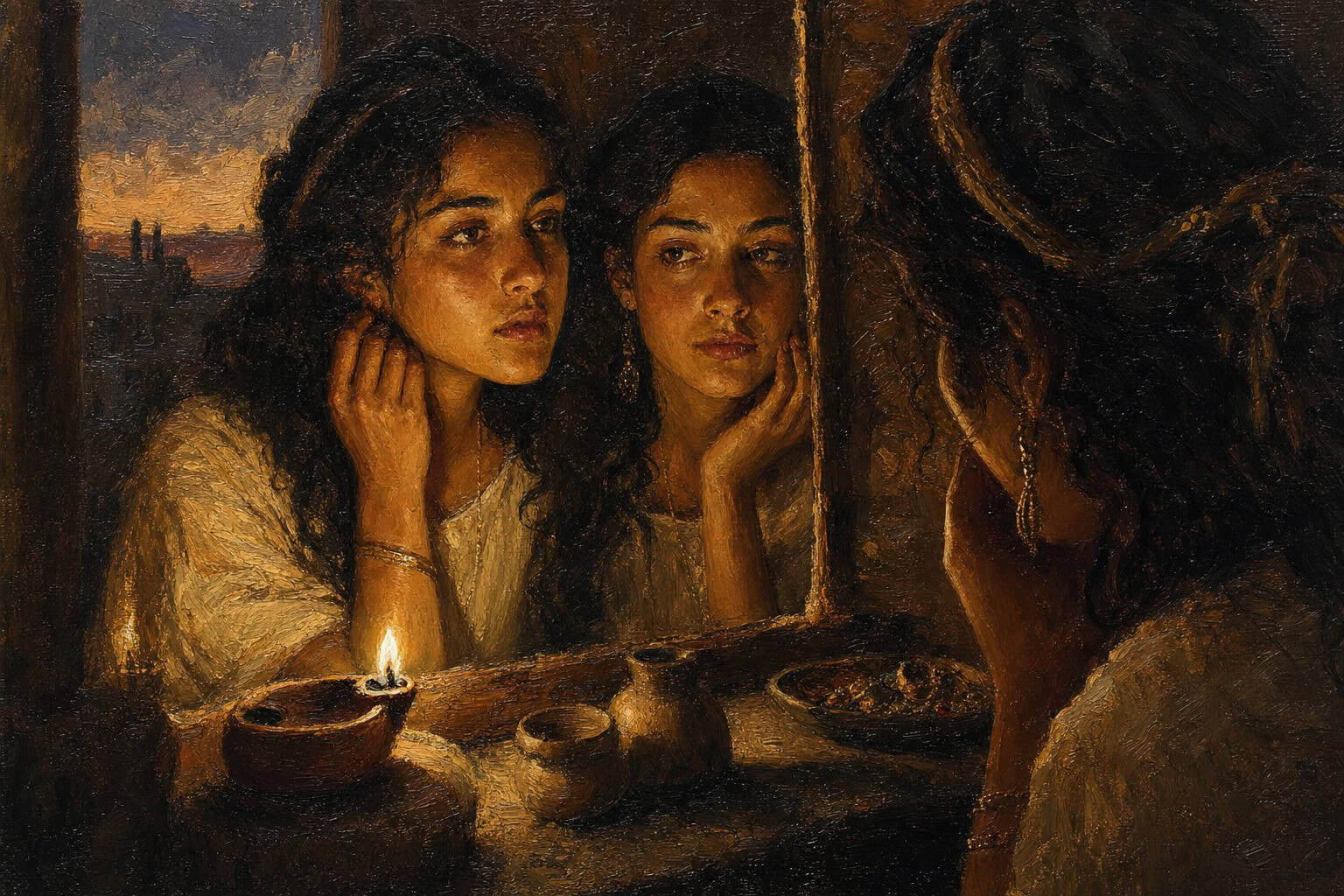
Why do girls play games? A raw, honest look at how a girl’s changing body rewrites every relationship before she chooses any of it.
You Called It a Game Because You Could Not Call It a Wound
You already know the feeling, even if you have spent years pretending you do not. You watched a girl say one thing with her mouth and another with the set of her shoulders. You watched her pull a boy close and shove him off in the same afternoon, and you wanted to name it cruelty, or vanity, or sport. You called it a game because that word let you stay angry instead of sad. Anger is cheaper than sorrow; it asks nothing of you, and it keeps her at arm’s length. But sit with it a moment, in your own body, in your own memory. Remember being young enough that play was just play, before anything about you signaled anything to anyone. You ran, you fell, you got up. No one was reading you. Then remember the year that changed, when the same running and shoving that had been innocent suddenly meant something none of you had chosen. That is where the games begin, and they do not begin as strategy. They begin as a body that started announcing things before the girl inside it had words for them. You felt it happen to someone you knew, or to yourself. One summer she was a child among children, indistinguishable from the pack, her age just a number that meant nothing to anyone. The next she walked into a room and the room changed. Older men looked longer, then looked away, then looked again. Boys her age went stupid and cruel by turns, laughing too loud, standing too close. And she had done nothing but grow. That is the part your anger skips over, the part that would break the clean verdict if you let it in. She did not sit down and decide to become a signal. Her hips widened, her waist narrowed, her skin cleared, her hair went long and bright, and all of it began speaking a language she had never agreed to learn. The men around her heard it fluently, translated it instantly, answered it in their bodies before she had opened her mouth. So before you ask why she plays games, ask what she was handed. She was handed flesh that spoke first, that spoke loudest, that told strangers about fertility and youth and appetite while she was still trying to finish her homework and figure out who she was. The games came after all of that. The games were the only reply she could improvise to a conversation that had already started without her, over her, around her. This is where Fractions of the Soul sets its long, unflinching gaze, and it does not let you keep your easy verdict. It asks you to feel the fear underneath the flirting, the child underneath the woman the world suddenly saw and wanted.
The Rough Play With Her Brother Ended and No One Said Why
Notice the small deaths first, because they are the ones nobody grieves. There was a brother she wrestled once, a father who tossed her toward the ceiling and caught her, an easy physical closeness that asked nothing and hid nothing. Skin touched skin and meant only love. Then her body changed, and that closeness quietly ended. The wrestling stopped. The tossing stopped. No one announced it. A father simply grew careful where he had once been free, pulling his hands back a half-second sooner, and a brother grew stiff and strange, and the girl learned in her own skin that her body now meant something dangerous even to the men who had loved her cleanly. Feel how lonely that is. She lost a whole vocabulary of safe touch in a single season, without warning, without explanation. And at the very same time a new vocabulary opened with men who wanted her, men who had never been safe, men whose interest arrived warm and flattering and edged with something she could not yet name. Both things happened together. That word matters more than you think. Simultaneously she was cut off from the innocent hands and offered the hungry ones, in the same body, in the same year. The exchange was not fair, and she never signed it. So of course she is confused about what touch means. Of course she tests it, offers it, snatches it back, watches what happens. She is running experiments on a system that ambushed her, trying to learn its rules by trial and error because no one sat her down and explained them. You who judge her games, ask yourself the harder question. When did you first learn that closeness had a price? When did some tenderness in your own life go quiet because your body had crossed an invisible line someone else drew? The narrator of this book turns that question on himself, again and again, and refuses to let it land only on the women he describes. He asks what he did with the girls whose games he met. He asks whether he read their pushing and pulling as strategy because reading it as fear would have implicated him, would have made him one of the men whose looking taught them to perform. That is the honesty that stings. Her games are not the first move. They are the third or fourth move in a match that began when grown men started measuring a child by her waist and the clearness of her skin. She did not open the game. She only learned, fast and young, that the board was already set and the stake on the table was her whole self. The rough play with her brother ended and no one explained why, and into that unexplained silence she poured every clever, doomed defense a frightened girl can invent.
When Attention First Felt Like Power She Learned What It Wanted
Here is the turn, and it is not the one you expect. The attention did not only frighten her. It thrilled her. Feel the shame in admitting that, because the book does not spare it or soften it. There was a moment, real and specific, when she discovered that her body could command a room, could turn a man’s head across a distance, could make grown men lean in and go soft and slow. After years of being small and overlooked, one of many children who blurred together, this was power, and it was intoxicating. She had never held power before. Now it seemed to pour off her skin without any effort at all, without a word, just by existing in the room. And this is the trap, the exact trap, the one that makes the games inevitable rather than wicked. She learned she could summon the attention long before she understood what the attention was hungry for. She could call it like a spell and watch it come. She could not yet see the appetite crouched inside the flattery. So she played, because playing felt like control, and control felt like safety, and safety was the one thing her changing body had quietly stolen from her. The games were never frivolous. They were an attempt to steer a force far larger than she was, using the only lever anyone had pressed into her hand.
The body speaks a language the girl never agreed to learn, and the boys answer before she has said a word.
That is the sentence that undoes the easy story. She is not the author of the conversation. She is answering it, in the dark, with tools handed to her too early and never explained. And here is where the book refuses to leave her alone in that dark, and refuses to leave you comfortable in your judgment of her. Because underneath the power she felt was a hunger no amount of attention could ever fill. Every glance she commanded was a substitute for something she never received, and the terrible truth of it is that the more attention she won, the more clearly the emptiness underneath showed through. The power was real and the power was a lie, both at once, in the same breath. She was learning she could make men want her in the very same season she was learning she could not make anyone truly stay. Wanting was easy to conjure. Staying was impossible to buy. That is not a game. That is a child, alone, discovering that the only currency the world would accept from her was the one currency that could never purchase the thing she actually needed, which was to be known, and kept, and brought home.
The body speaks a language the girl never agreed to learn, and the boys answer before she has said a word.
What She Won With Her Body She Could Not Keep With Her Soul
Watch what happens after the thrill fades, because the fallout is where the real grief lives. The attention comes and goes like weather. The men who leaned in lean back out. The power that felt like a spell turns out to be a wage, paid over and over for a hunger that never quiets down. And she is left holding a self she does not know how to name, a girl who learned to be a signal before she ever learned to be a person. Feel the exhaustion of it in your own chest. To be always performing, always reading the room, always calculating how much to reveal and how much to hold back. To never once relax into being simply seen, because being seen has only ever meant being wanted, and being wanted has only ever meant being taken from and left behind. This is what the games cost her, and the cost is steeper than any judgment guessed. They gave her a hundred fluencies and stole her one native tongue. She can speak the language of appetite in her sleep, can read a glance and answer it without thinking. She has forgotten how to say, plainly, I am afraid, or I am tired, or I want to be held by someone who is not counting what he can take. The narrator sits inside this fallout without flinching from it, and he does not tie it off with a bow. He offers the girl no lesson and the reader no tidy moral. Instead he asks the questions that keep him awake. Who was she to me, really? What did I refuse to see when I met her games with games of my own? Did I ever, once, reach past the performance to the child underneath it, or did I only play back, glad she was easy to misread? That refusal to resolve is the strange mercy of the book. The cheap version would forgive too fast or condemn too fast, and both would leave her a stranger, a type, a warning. Here she stays human, complicated, wounded, and partly tangled in her own undoing, the way real people always are. And this is where something quiet enters that the world does not offer and cannot fake. Not a rescue. Not a fix. The book does not lift her out of the dark or hand her a clean, bright ending. But it insists that God is present in it, walking beside her inside the very games and the very hungers, close to her in every glance she chased and every tear she wiped away before anyone could see. He does not remove the wound. He keeps company with it. That nearness does not erase the cost. It refuses to let the cost be the whole of her story.
The Girl Under the Performance Was Always Worth Meeting
So return to your first anger now, and hold it more gently than you did before. You wanted to know why girls play games, and you wanted the answer to be simple, because simple answers let you stay clean and stay outside. But you have felt it in your own body by now, in your own memory. The games are the language of a girl who was handed a body that spoke before she could, who lost her safe touch and gained her dangerous touch in the same brutal season, who tasted power before she grasped its price and then spent years paying that price without ever getting to keep the thing she thought she had bought. The games are not the crime. They are the scar tissue grown over a wound the world made and then refused to name. And here is the tenderness the book asks of you, the same tenderness it asks of the narrator. Turn toward the girl you were taught to despise, the one who played games, the one who tested and withdrew and dangled and fled. She was frightened. She was improvising with empty hands. She was steering a force far larger than she was, with the only lever anyone had left in her grip. Maybe that girl was someone you knew and misjudged. Maybe that girl was you. Either way she deserved to be met as a person and not as a puzzle to solve, as a soul and not as a signal to read. And the past does not stay past in a body like hers. It presses forward into every year that follows. The fear learned at thirteen shapes the reaching done at thirty. The body loyally keeps what the mind tries hard to forget, carrying her into a long ache of time she never chose and cannot fully leave behind. This is what Fractions of the Soul holds up to the light and will not let you look away from. It gives you the girl entire, the frightened child and the intoxicated performer and the exhausted woman, all at once, all of them true, none of them cancelling the others. It does not forgive her too fast or damn her too fast. It sits with her in the dark and insists she was always worth meeting. If you have ever been the one playing games, or the one wounded by them, or the one who stood at a distance and judged and never once asked why, this book will not let you keep that distance. It will draw you in close, close enough to grieve with her, close enough to be honest with yourself, close enough at last to be tender with the child who was only ever trying to survive.