You reach for another body when someone dies. Can sex really heal that grief? A raw look at flesh as protest against death.
Thunder Before the Phone Rang
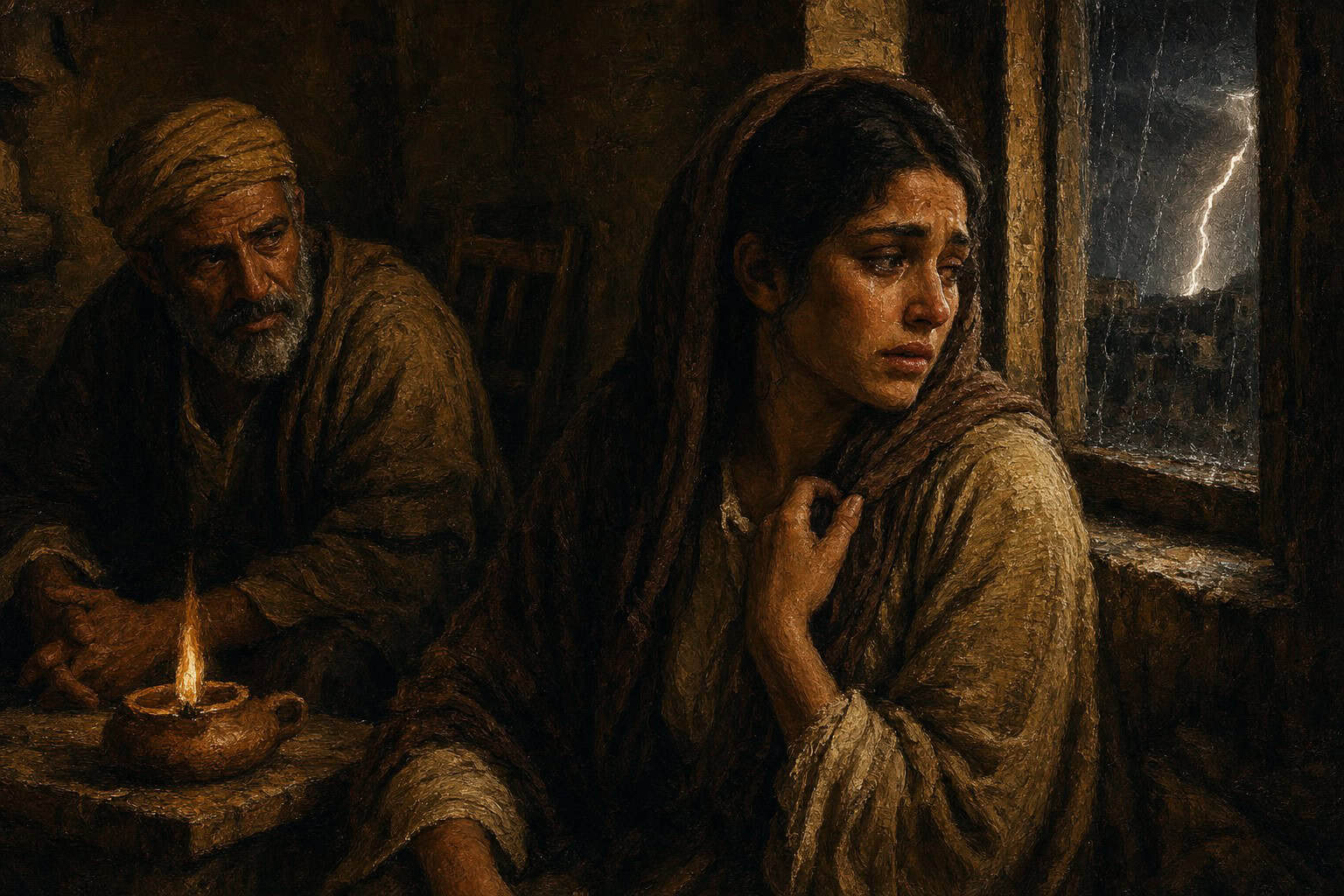
You reach for a warm body when the cold one arrives. A grandmother lies dying in a hospital bed, ringed by family, carrying her own long list of worries, and the man who loved her cannot bring his real self into that room. He does not trust her to see him clearly. He does not trust God to hand her that clarity, either. Their bond never ran through the spirit; speaking soul to soul would have felt strange between them, out of place, like singing aloud in a waiting room. So he stays outside her seeing, redacted, a trimmed-down version of himself cut to fit the room’s comfort. This is where Confessions to the Empty Chair sets its tenth chapter, and it opens not with the death but with a premonition. Thunder cracks. Lightning splits the dark. Rain runs down the window, and he wakes already knowing. The phone rings after. Before his mother can speak, he says two flat words: I know. He knew at three years old, he tells us, when another loved one was about to die. He knows now, and the knowing changes nothing about the pain; it only means he grieves before permission arrives, before anyone tells him it is time. There is something terrible in that early sight. It does not spare him a single ounce of the ache. It hands him the loss in advance and then makes him wait for the world to catch up. Underneath the premonition sits a quieter wound. He is a man who disturbs more than he consoles, who learned to erase himself before others could dismiss him first. Some women, he notes, are practiced at brushing men aside, and he has heard every one of their lines, though he insists he was never like other men. Conclusively, he says. The word lands like a fist on a table. He wanted, more than almost anything, to be seen as himself, not as a burden, not as a threat, and he almost never was. He wonders now whether she needed his distraction rather than his worry, whether pulling her from her fear was the only real gift he had to give. He will never know. So when the body he loved goes still, when the grandmother is gone before he could show her his true face, an old defiance stirs in his chest. If death erases, he will insist on presence. If the grave says no, his skin will shout back yes. And the question this chapter cracks open is the one many of us have carried to a search bar at three in the morning: can the heat of another person actually mend the wound a death tears open, or does it only cover the sound of the tearing?
Flesh Thrown at the Cemetery’s Silence
Grief does not stay in the chest. It floods down into the hands, the mouth, the whole reaching animal of the body, and it hunts for something living to hold. In the chapter he names this plainly, borrowing the weary voice of an old king: he sets life against death, pleasure against pain, company against the long loneliness. Each encounter becomes a small argument shouted at a headstone. He hated death, he says, that absolute finality, that flat negation of everything that breathes. Faced with it, his affairs took on a new, defiant meaning, a meaning that had nothing to do with joy and everything to do with refusing the silence. This is where the honest reader begins to squirm, because he is not describing appetite. He is describing protest. The body knows what the mind will not say aloud: we reach for warm skin partly to prove we are not yet corpses. When a coffin closes, the surviving flesh grows loud. It wants proof of its own aliveness. It wants a witness whose pulse it can feel under its own hand. There is a strange, almost sacred logic to this, a rough theology of survival, flesh knotted against flesh like a cord meant to hold against the dark. And yet the chapter refuses to let him off easy, and he refuses to let himself off easy either. He turns the lens on his own motives. Is this love, or is it a dose of medicine swallowed against annihilation? Is the next person a real other soul, met and honored, or a solvent poured over his own terror of standing alone in an empty room? He does not fall toward these women so much as fall away from himself. The rejection he dreads is not really about them at all; it unmasks an older dread, the terror of being unseen, the terror of standing among people who talk around him while he quietly disappears. So he builds a private chemistry, each body a defense against the memory of being brushed aside, each night a wall against the morning. The tension is that all of this can be true and still fall short. Pleasure is real. Comfort is real. Two people in the dark can genuinely quiet each other’s fear for a few hours, and to call that nothing would be a lie. But the grave does not answer back. The silence in the cemetery does not break for any lover’s warmth. Morning comes, gray at the window, and the loss sits exactly where he left it the night before. The wound was never in the skin. It lived underneath, in the place only the dying seem able to reach, the unredacted self he had spent his whole life editing out of every room he ever walked into.
Only the Dying Saw His Real Face
Here is the turn the chapter drives toward, and it hollows a man out. He wonders whether death itself might be the only lens sharp enough to bring a soul like his into focus. The living kept misreading him. His grandmother, gentle as she was, never quite caught his true shape; he did not offer it to her, and he did not trust God to supply it in his place. But he lets himself imagine that now, in God’s presence, she finally sees him whole. Not as a burden. Not as a threat. Simply as he is. That is the cruelty and the mercy braided into one thread: the recognition he starved for his whole life may only arrive after the person who could give it has gone silent. This is why no amount of warm flesh can heal the true grief. The body he chased was never the thing he actually wanted. He wanted to be seen, held in a gaze that did not flinch, known without editing himself down first. Sex can mimic that for an hour. It cannot deliver it. Two bodies can press close in the dark and still leave two souls unread, two strangers who touched everything but the one hidden face. And the deepest loneliness, the chapter suggests, is not being rejected but never having been seen at all. You can lie surrounded by lovers and remain buried alive in their scripts, performing the trimmed version of yourself you handed over so they would not dismiss you before you could dismiss the risk.
We reach for another body not out of hunger but out of terror, hoping warm skin can argue with a cold grave.
That line is the hinge the whole chapter swings on. What he needed was never another dose against death but the raw courage to carry his unredacted face into a room and let it be seen, even at the risk of the very dismissal he feared. Grace, when it arrives in this book, rarely lifts him clear of the dark. It walks beside him inside it, matching his pace. God does not delete the grief. God stays present in the tears, near in the very reaching, quiet in the storm that woke him before the phone ever rang. The premonition was not a rescue thrown down from above. It was a companion in the knowing, a presence sitting with him in the exact hour of dread. And the recognition he imagines his grandmother now holds, the clear sight of him at last, is the very shape of the thing his whole restless body kept trying to buy with pleasure and could never once afford. He spent his desire like currency in a country where the currency was never accepted.
We reach for another body not out of hunger but out of terror, hoping warm skin can argue with a cold grave.
Morning, and the Loss Sits Where It Sat
After the encounter ends, the room goes ordinary again. This is the part no one who searches for healing wants to hear. The defiant nights do their work, then release him back into the plain facts of daylight: she is gone, buried like so many women in his life under the words he never spoke and the feelings he held back behind his teeth. That phrase should stop us cold. Buried under unspoken words. He did not fail her by loving too little. He failed her by hiding, by keeping his real self behind the version that would not disturb, would not risk being called too much. And now the chance has closed with the lid. You cannot say the thing to a hospital bed after the bed goes empty. The affairs cannot reach backward and unbury the words. They were never able to, not for one hour. What sex offered was distraction, and distraction is not nothing; he even wonders, turning it over, whether his grandmother in her last days might have wanted his distraction more than his concern, whether pulling her attention away from her own dying was a small mercy he could still give. He will never know. That not-knowing becomes its own long ache, a question he cannot answer and cannot stop asking. It is the residue grief leaves when a relationship ends unfinished, a debt that can no longer be paid to anyone. And so the man who used bodies to argue against death is left, in the falling light of the chapter, holding the one thing those bodies never touched: the unlived honesty between him and the people he loved. He remembers the ripples an earlier young death sent through the family, the sorrow of parents forced to bury a child, a younger brother left stunned in the wreckage. He has practice witnessing loss. Practice does not soften it. It only makes him a steadier watcher, a man who can stand in the sorrow without flinching and still feel it flay him. The hard question he sits inside, and does not tie off, is whether all his reaching outward was really a way of never reaching inward, never toward God and never toward the true faces of the people beside him in the bed and at the graveside. He built an armor of cool analysis to survive being misread, and the armor hardened over the years into a fortress that kept everyone out, including the very ones who might have loved him whole. The pleasure was real. The healing was a rumor. The grief stays where it sat.
What the Body Was Praying For All Along
So the honest answer to the question is tender and severe at the same time. Sex does not heal grief. It comforts, it distracts, it insists on life for a single night, and all of that is human and forgivable and even, in its aching way, holy in its longing to live. But the wound death opens is a wound of being unseen, and only being seen can close it. The chapter leaves him reaching, and it does not pretend for a moment that the reaching worked. What it offers instead is the slow, terrible suspicion that the thing his body kept begging for was recognition, the clear gaze that loves you as you are without needing you to shrink an inch. He imagines his grandmother finally holds that sight now, in the light of God, where the editing stops and the trimmed version falls away. And the striking thing, the thing this memoir keeps circling back to, is that God did not spare him the storm or the phone call or the empty morning. God was simply near inside all of it, walking with him in his sin and his sorrow both at once, present in the tears and the reaching and the gray light on the sheets. That nearness is not a fix. It is company in the dark, which may be the only healing that does not lie to your face. For anyone who has grabbed at another warm body to prove they were still breathing, who mistook desire for medicine and woke still grieving in the same skin, Confessions to the Empty Chair refuses the easy word. It will not tell you the flesh can raise the dead. It will sit with you in the exact place where it cannot, and it will ask, gently and without a trace of contempt, what you were really reaching for in the dark. Perhaps you were not hungry at all. Perhaps you were terrified. Perhaps every restless night was a clumsy prayer, a plea to be known before the grave, spoken in the only language a frightened body still trusts. There is no tidy ending here, and that absence is the mercy of it. The book hands you no cure. It hands you the truth that the cure you were chasing was never in another person’s arms but in the courage to stop hiding, to carry your unredacted face into the light while the people you love can still turn and see it. Read on, and you will find a man learning that terrible lesson too late for one grave, and, maybe, just barely in time for the rest of his life.