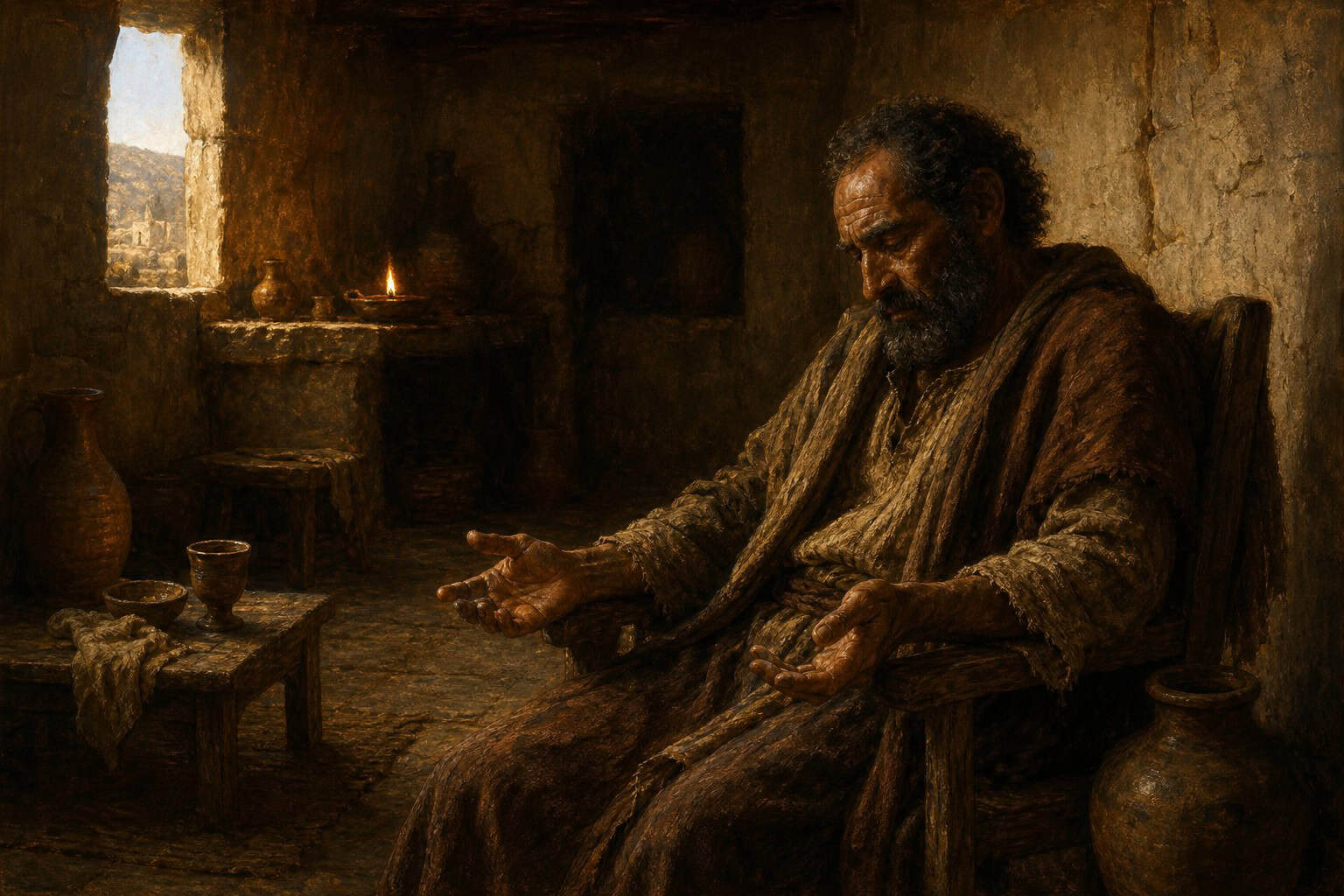
When do people start feeling old? Not a birthday but a silence in the body. A memoir’s honest answer to the age when age arrives.
The Morning Your Knees Report Back
You want a number. You typed the question wanting a birthday circled in red, some threshold you cross in a single step, some morning the body finally hands you the notice. I remember wanting that too, young one. I wanted age to arrive like a bill in the mail, dated and clear, so I could brace before it landed. It does not come that way, and I will not soften it to make you feel better. Feeling old does not arrive by calendar. It arrives the first morning your knees report back to you before your mind has thought to ask them anything. You push up from a chair and there is a small negotiation now where before there was only rising. Your body used to obey without comment, a servant who never spoke, who carried your errands and your appetites and your late nights without a single complaint. Then one day it clears its throat. It begins to speak, low and plain, and you understand that it was always there beneath you, holding up your ambitions and your sins with its quiet muscle, asking nothing. The flesh remembers what the mind hurries past. Your hands know the cold before you name it. Your back keeps a diary of every load you refused to set down. That is the first lesson of getting old, and it has almost nothing to do with years. It is about attention. You start feeling old the day your body stops being invisible to you — the day a shoulder, an ankle, a familiar flight of stairs steps out of the blur of the working machine and stands alone, distinguished, insisting on itself. I felt it not at forty or fifty but in a season when grief had scraped me hollow, when I sat down in the evening and simply did not want to rise, and the not-rising was not only sorrow. It was the flesh, tired and honest, telling a truth I had spent decades refusing to hear. You are searching for the age. I am telling you the age is only a symptom of something underneath it: the hour you can no longer pretend you are made of pure will, that you can outrun anything, that the body is a rumor happening to other men. The flesh asks to be reckoned with. And most of us, at that first quiet report, feel a spike of fear, because we mistake the speaking for abandonment — as though the strong young animal we lived inside has stood up and walked out, leaving us alone in a cooling room. It has not walked out. It has only begun to whisper. Learn to listen to it before you learn to grieve it.
Straining Your Ears in the Desolate Quiet
Here is what knots the question, young one. The dread of getting old is rarely about the body by itself. It is about a silence you begin to hear behind everything else. When you were young the world roared. Plans, hungers, futures — they made a constant noise, and the noise felt like proof that you mattered, proof that something was carrying you forward, proof the machinery of your life was still running hot. Then the noise thins. Friends drift or fall silent or simply die. Rooms that used to fill now hold their breath. The phone that used to shake with need goes still on the table. And into that thinning comes a worse quiet — Heaven’s. You pray and nothing answers. You put the plain questions of a tired man up toward the ceiling and the ceiling gives you back only the sound of your own breathing, close and useless. This, more than any number, is what makes a person feel finished. Not the failing knee but the sense of being set at a distance, placed outside the glass while the world goes on waking without you, unconscious of your absence. I know this quiet from the inside. I strained my ears in it for years, sitting before a chair that would never fill, waiting for a voice that would not arrive on command no matter how I begged it. I set it down in Confessions to the Empty Chair because I could not carry it alone anymore, and I misread that silence, for a long and clenched stretch, as the flat sound of being abandoned. That is the lie aging whispers straight into the ear. It tells you the emptying is a verdict, that the quiet means you have been put down and forgotten, that your usefulness expired somewhere back on the road and no one bothered to tell you. The body’s small betrayals and Heaven’s large silence braid into one accusation: you are done, you are alone, no one is listening on either side. I believed it. I want you to know I believed it fully, so you will never take me for a man who found his peace easily and now hands it out cheap from a safe distance. The desolate quiet is real. It presses you flat against your own refusal. It does not console you; each breath meets an unmoving surface and comes back unspent. But do not settle the account yet, young one. Do not sign the paper the fear pushes toward you. The silence you are hearing as abandonment may not be one thing at all. I did not know that then. I thought every silence was the same silence, one long unbroken No. That was my failure of hearing, and it cost me years of dread I never needed to carry. Age arrives — that much is true. But the meaning you hang on its quiet is still open. That part is still yours to get wrong or to get right.
The Silence That Is Not One Thing
Let me tell you what took me far too long to learn, what would have spared you so much clenching of the jaw had it reached you sooner. The silence is not single. It is multifaceted, layered, wearing more than one face, and I had been reading every face as the same dead No scrawled across the sky. Sometimes His silence is hard grace — the kind that will not answer your question precisely because it wants you up out of the chair and walking, wants you to seek, because the seeking itself is the only road by which you grow into the man capable of holding the answer without shattering it. Sometimes the quiet is not a withholding at all but sacred space, a room He clears and stands guard over so that your own spirit can finally speak, so you can hear what you actually believe underneath all the borrowed noise you inherited and mistook for faith. And sometimes — rarely, but it does break in — the stillness is the very hush in which a whispered voice can at last be distinguished from the racket you had been calling prayer. This changes everything about growing old. Because the thinning you dread, the emptying you name as pure decline, is the same thinning that finally lets you hear. When you were young you could not have heard Him. You were too loud with wanting, too full of your own footsteps, too busy dragging the future toward you by the collar. The body that now speaks, the rooms that now hold their breath, the calendar that now sits heavy in the hand — these are not a door swinging shut on your life. They are the stripping away of static. I fought that stripping. I mistook it for theft, for a hand reaching in to take what was mine, and I clenched around what little I had left as though holding tight could stop the emptying. It could not. And when at last my grip failed and my hands fell open, exhausted, that was the exact hour the silence began to sort itself into its several kinds, and I could tell one quiet from another. Do not wait until your hands fail, young one. Learn now that the quiet has faces. Learn to ask, in the stillness, which silence this one is.
You do not grow old on a certain morning; you grow old the first time silence answers where a voice used to.
What the Emptying Leaves Behind
Do not hear me making the loss sweet. It is not sweet, and I refuse to do to you what the comforters do, pressing a tidy phrase over the wound like a bandage over a break that has not been set. The body still fails. The friends are still in the ground. The chair is still empty and no argument on earth fills it back up. Growing old is a genuine bereavement, and you are right to feel it as one; do not let anyone shame you out of the grief. What I am telling you is that grief and grace are not enemies here — they take the same room, they fall in the same tears. When I sat in that desolate quiet, God did not reach in and lift me out of it. He sat down in it with me, on the floor, in the dark, and stayed. That is the honest accounting I owe you. He was not a rescue arriving to cancel my sorrow; He was a nearness walking with me inside my very failure, present in every tear I thought was falling into nothing at all. And here is the harder reckoning that comes with the years. You will begin to look back and count. You will see what you did and what you left undone — the people you loved carelessly and in a hurry, the ones whose sideways looks and stiffening shoulders and half-swallowed sentences you refused to read while there was still time to read them. Aging is not only the body speaking. It is memory laying its ledger open on the table and pointing. The years hand you exactly enough distance to see the true shape of your own choices, and that seeing cuts deeper than any failing knee ever could. I saw whom I had failed, plainly, without the mercy of excuse. I saw the love I had tried to secure through performance and obligation, through being useful, through earning — when love can only ever come as a gift, freely given or not given, never manipulated into staying, never coerced, never bought with compliance. You cannot purchase it back with regret. You cannot pry forgiveness out of the dead. That is the true ache of growing old, young one, and I will not blunt it: not that the body fades, but that the accounting comes due while some debts can no longer be paid to the ones you owed them. His sovereignty does not undo that. He does not rewind the tape. And yet even this the silence somehow holds. Even the ledger, thrown open under a hard light, becomes sacred space — the one place where you finally tell the whole truth about yourself, out loud, in the stillness He clears and keeps for exactly this confession. That is not comfort. It is something sterner and better: company in the telling.
Listening Where the Noise Used to Live
So when do people start feeling old? I will give you the honest answer at last, plainer than the number you came looking for. You start feeling old the first time silence answers where a voice used to be — in your body, in your rooms, in your prayers, in the space beside you at the table. There is no birthday for it. It comes the season the world stops roaring on your behalf and leaves you with a quiet you must learn to interpret with your own two hands. Most people meet that quiet and name it abandonment on the spot, and they spend their remaining years braced against a verdict that was never actually handed down, flinching from a sentence no one pronounced. Do not be one of them. The quiet is not the sentence. The quiet is the invitation you were too loud, too young, too busy to receive until now. Feeling old is the strange beginning of being able to hear. The body speaks so that you will finally attend to it after years of using it like a rented thing. The rooms empty so that you will notice who is still standing in them. Heaven pulls back its clamor so that its whisper can be distinguished from everything you once mistook for its voice. This is the odd mercy hidden in age, and I did not find it by cleverness — I found it only by living the whole way through the fear you are feeling right now, every step of it. I wrote it down not as a man who defeated his sorrow and now sells the cure, but as one who was accompanied inside the sorrow and lived to tell you the accompaniment was real, was warm, was there in the dark when I had given up expecting it. Sit in your quiet. Let your knees report. Let the ledger stay open on the table a while. Let the chair stand empty without demanding, tonight, that it fill. You are not being discarded, young one. You are being emptied so that something can at last be poured in without spilling. The number you searched for does not exist. What exists is this: a silence you can spend your whole life fearing, or a silence you can slowly learn to read like the hand of a friend on your shoulder in the dark. I feared it far too long. I am telling you now so you need not lose the years I lost. Go gently into the quiet. Rest your tired hands where mine have rested. Someone is already in there, breathing beside you in the still air.