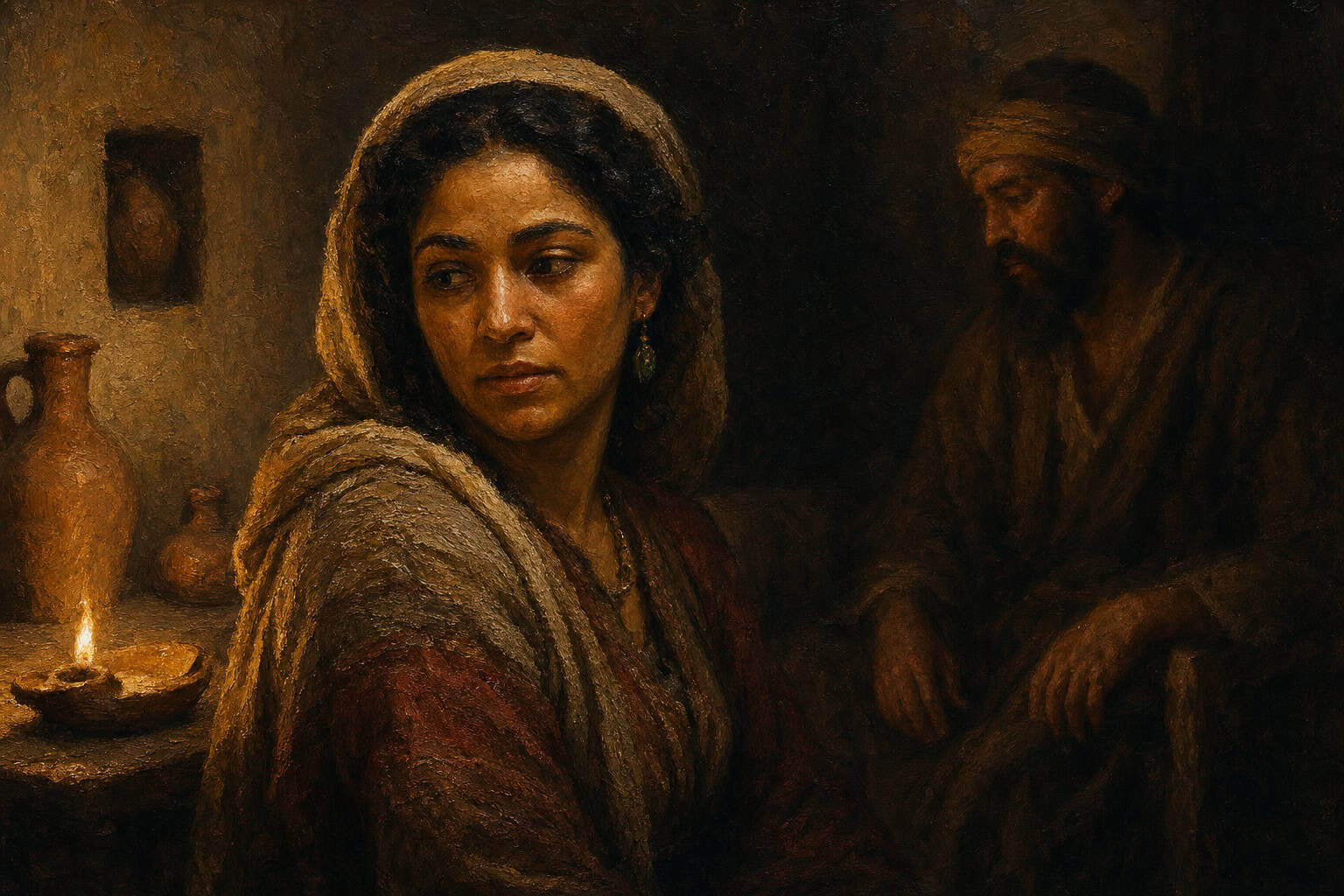
Why does a girl hide her feelings? A raw reckoning with distance, dead intimacy, and the walls we build even inside a shared bed.
The Contract No One Signed
You want to know why she hides her feelings, and the honest answer begins in a bed shared by two people who share almost nothing else. In the twelfth chapter of Confessions to the Empty Chair, I write about a season when the whole inner frame between my girlfriend and me had already caved in, though we kept walking through the outer rooms of it out of habit. There had been a confrontation that gutted me, a betrayal I could not unsee, and after it a new understanding took hold without a single word being said. She would give me the body. I would give the provision, the roof, the steady thing she could lean on when the world tilted. We each played our part like actors who no longer read the script but still remembered the blocking, the marks on the floor, where to stand and when to turn. And so I learned, from very close, what a hidden heart looks like from the outside. It looks like a woman moving through the act with her face perfectly composed, her breath even, her eyes fixed somewhere past me. It looks like rules laid over the flesh itself, limits she set and defended, a coldness she never named and never lowered. I hated it in my chest and my gut. I also could not make myself leave it. What I did not grasp then, and grasp now writing it down, is that her hiding was not one clean mystery I could solve with enough patience. It was many things folded into a single still surface. Some of it was plain self-protection. Some of it was a contempt she had decided not to voice out loud. Some of it was simple tiredness with the work of pretending she still cared. When a person stops showing you their heart, your first instinct is to read it as a punishment aimed at you, a sentence handed down for some crime. That is almost never the whole of it. A hidden heart is usually built for reasons far older than you, in rooms you were never once allowed to enter. She was guarding an original self she had decided no one, least of all me, would ever be handed. I wanted so badly to be let inside. I mistook the fact that she still permitted my hands on her for a sign of some way through. It was not a way through. It was a debt being paid in the one currency that cost her nothing of her actual interior. That single distinction took me years to see, and it changes everything about the question you came here holding.
Squatting in the Ruins of a House
Here is the part I am least proud of, and I will not soften it. I stayed. I kept taking what I needed from a structure I already knew was condemned, the way a man keeps living in a house whose foundation has cracked because he cannot bear to sleep anywhere else. I once described myself in those days as a squatter in the wreck of our connection, feeding off the physical shell of a thing whose soul had long since walked out. That image is exact, and it does me no favors. A squatter does not own the walls he sleeps between. He does not repair the roof. He simply occupies what someone else built and abandoned, and he waits, half-knowing, for the day the notice comes and the locks change. That was my whole posture toward her. I told myself I was being honorable by staying, by not chasing other women through the bars and back rooms of the city, by keeping a fidelity she herself did not keep. But look hard at what I was actually doing under that word. I was collecting on a debt. I was wringing satisfaction out of a body while telling myself the emotional cost belonged to someone else. If you are the girl in this arithmetic, or you love one, understand what her hiding was doing at the very same hour. She had run the same cold sum I had. She had decided that real presence was too expensive to hand over, so she gave availability instead and kept the rest under lock. Her rules on the act, her insistence that we were not animals, that humans do it a certain plain way, were not truly about decency or taste. They were fence posts driven around a self she would not surrender. I resented every one of them. I now see they were the visible edge of an invisible wall, and the wall itself was the whole point. When two people both go quiet on the inside, the thing does not end with a crash. It keeps its outer shape while the meaning quietly rots out of the center. The bed remains. The talk stops. The face stays composed while the person behind it steps one pace further back each night. I mistook the steadiness of access for the steadiness of love, and that is the oldest error a heart can make. A woman can share your address, your surname, your dark hours, and still have moved to a country you will never once be granted a visa to visit. Her hidden feelings were her passport out. And I, still hoping to earn a devotion she had already refused to give, kept knocking politely on a wall I insisted on calling something else.
The Cold Room Where She Was Free
The turn came the day I finally understood that her coldness was not some accident of her nature, not a mood I could wait out. It was a decision, made for reasons that had nothing at all to do with me and everything to do with what she had survived long before I arrived in her life. I have written elsewhere in these pages about another person, in another dead union, who wept in real devastation while their partner felt only a cold, clean relief at no longer having to pretend, at no longer needing to invent reasons to avoid the touch. That is the thing no jilted lover wants said to his face. Sometimes the woman hiding her feelings is not suffering behind the mask at all. Sometimes she is relieved to finally set the mask down in a place where you cannot see her do it, to lay down the daily labor of performing an affection that died in her some time ago. Her silence was not a wound she was nursing in front of me for sympathy. It was a freedom she was taking, quietly, in a room I had been locked out of for years. That was the revelation that cut the deepest, because it stripped me clean of the story where I got to be the one wronged, the faithful man abused by a faithless wife. I wanted to be the good man honoring a bad bargain. But my so-called morality was only another kind of hiding, dressed better than hers. I hid my own dying feelings behind a posture of duty. I hid a plain appetite behind the softer word humane. We were both concealing something in that bed. We were both squatting in the same ruin, back to back. The only real difference was that she had made her peace with the arrangement, and I was still bleeding into it night after night, still telling myself that a rescue was on its way and I only had to hold on a little longer.
A hidden heart is not always cruelty; sometimes it is the last shelter a wounded person can afford to build.
After the Mask Slips
Once I saw it plainly, the suffering did not vanish, but it changed its shape entirely, the way a stone in the shoe stops being agony the moment you finally reach down and find it. There is an old idea I keep circling all through this book, that a pain stops being pure torment the instant you can form a clear and honest picture of it and hold that picture steady in your hands. That is not comfort, and I refuse to sell it as comfort. Naming the thing did not make her love me. It did not rebuild the house or hand me back the wasted years. But it did stop the frantic, sleepless guessing that had run me ragged. When you finally see why she hides her feelings, the not-knowing that has been torturing you loosens its grip on your throat. I could stop reading her composed face as a riddle I might one day crack open with enough patience, enough proof of my worth, enough performed devotion. Her hiding was never a lock waiting for the right key I had somehow failed to cut. It was a decision she had every right to make, and I had no power on earth to reverse it. That is a bitter medicine to swallow. It asks you to accept that another soul is simply not yours to pry open, that the barrier is real and load-bearing, that your longing places no obligation on her to lower it an inch. I spent so many years certain I could earn my way in. The true accounting I owed was not to her at all. It was to myself, and it was to God. What had I done with my own heart inside that ruin? I had hardened it deliberately while calling myself faithful. I had used a body while grieving that mine was being used. The reckoning was never about decoding her. It was about facing squarely what I had let myself become while I waited for her to change into someone she had no intention of being. And in that raw facing, strangely, I found I was not alone in the room. I will not tie a ribbon on this, because there was no rescue that season, no dramatic light cracking through the ceiling. But I have come to believe God sat with me in that cold place, inside the very sin of my staying, not lifting me out of it and not walking away from it either. He was in the tears I would not let fall in front of her. He was in the flat quiet afterward, when the appetite was fed and the emptiness rolled back in like a tide over sand. Grace there was not deliverance. It was company that would not leave.
What the Silence Was Guarding
So why does a girl hide her feelings? Because a heart wounded early enough learns that showing itself is dangerous, and it builds walls so patiently that it comes at last to mistake them for its own face. Because concealment can be self-protection, or contempt, or exhaustion, or a quiet freedom, and very often several of these at once, folded so tightly together that you cannot pry them apart from the outside. Because rules and limits and a composed silence are only the visible rim of an interior a person has resolved to keep, and keeping it may be the last real power she believes she still holds in her own hands. I learned that her hiding was rarely about me, though it wounded me nightly as if it were carved for me alone. I learned that access is not intimacy, that a shared bed can hold two separate exiles lying inches apart, that a house can keep its walls standing long after the family has moved out of the warm heart of it. The harder lesson, the one I still chew on, was about my own hiding, my morality that turned out to be a mask, my staying that turned out to be a slow and quiet theft. If you came here searching for the trick that makes her open up, I have to be as honest with you as the older man writing this had to be with himself. You may not be granted entry. Her barriers may be older and stronger than your love, laid down brick by brick in rooms you were never there to witness. What you can do is stop pretending the ruin is a home worth defending. You can face what you have done inside it and what you have quietly left undone. You can let the clear, unflinching picture of the thing loosen the torment of not knowing that has kept you awake. And you can trust, though it will feel nothing like a rescue, that you are not the only one sitting in that cold room. I wrote this chapter of Confessions to the Empty Chair not to solve the mystery of a hidden heart but to sit inside it honestly, all the way down, because that is precisely where I finally struck something true, and found Someone unwilling to leave the room with me. If any of this reads like a place you already sleep, the whole reckoning is waiting between those covers.