Feeling crazy after abuse? A memoir chapter reads a rave playlist as proof you weren’t insane—you were surviving. Read it here.
A List of Songs Where a Body Learned to Move Through Pain
Am I crazy, or did surviving really look like this? That is the question a reader carries into Chapter 16 of Confessions to the Empty Chair, and the book meets it in the strangest place—a citation list. Not a scene of blood, not a scene of prayer at a bedside, but rows of song titles, each one stamped with a year, a label, a mix name. The older narrator sits with these entries the way a man sits with old X-rays, holding the film up to the lamp and reading the fracture line long after the bone has fused. The words look clinical on the page. Underground. Recordings. Portamento. They are filed in alphabetical rows, spaced and punctuated like something a scholar would submit. But each entry was once a night. Each one was a specific late hour when the young body found a beat and rode it until the beat became the only thing holding him together. You know this list. You have your own. It lives on a folded club stamp gone gray on your wrist, or in a playlist you named something you can barely stand to open now, or in a shoebox of tickets you keep meaning to throw out and never do. The narrator does not treat these songs as nostalgia, and this is the first mercy of the chapter. He is not remembering fun. He is not romanticizing a wild youth. He is reconstructing how he stayed alive when nothing gentler would hold him. The list is forensic. It marks the exact tempo that kept a heart beating past the point where the heart wanted to stop, the precise beats per minute that stood in for the will he did not have. That is where your question and his lay down side by side. You feel crazy because the way you survived does not look like survival. It looks like ruin—loud rooms, chemical hours, a body flung at strangers under moving light. But the narrator asks a harder thing of himself, and then of you. What if the ruin was the raft? What if there was no calmer place to walk into, and the floor was the only room wide enough to hold what you could not carry alone in daylight? He does not answer yet. He simply opens the file. He lays the years out in order and looks at them without flinching, the way you have never quite managed to look at your own. And already, before a single track plays back in memory, the shame begins to change shape—into something closer to a wound that was tended in the dark. Not well. Not wisely. But tended, by the only nurse who ever showed up: the boy himself, moving, sweating, refusing to die.
Each Remix Another Hour Stolen From Consciousness
Read the list in order and you feel the night itself gather speed. The early entries are aggressive, kinetic, all elbows and voltage—commands more than songs. A title barks at you to get up and dance, and it hits like a shove between the shoulder blades. The names from the late eighties carry that electric charge of a floor packed body to body, sweat sliding down the walls, the whole room breathing as one overheated animal. There is a track that reaches for something huge and ceremonial, a borrowed grandeur, as if the night were an act of worship and everyone knew it. Then the list turns. The tempos loosen. The names go strange and inward. Portamento—the slide between two notes, one tone melting into the next with no clean break, no step, no edge. That word is doing quiet work in the chapter. It names how the night moved through the young man: not in stages but in a smear, one hour bleeding into the next, the self sliding out of focus by design. This is the tension the book refuses to soften. The move from hard rave to hypnotic trance is not a party winding down toward sleep. It is a controlled descent into forgetting. Each remix is another hour lifted off his shoulders, another layer of a person deliberately switched off. And here the narrator turns the lens on himself, hard. He does not let the music carry the blame. He remembers choosing it. He remembers consenting to enter the night, walking toward the erasure with his eyes open, not stumbling into it by accident. He wanted to vanish. He knew what the descent would do and he went down into it anyway. So he sits with the ugly question a survivor almost never dares to ask aloud: if I built the escape route myself, does that make the wound less real, or does it only prove the wound had already taught me that vanishing was safer than being seen? He gives no comfortable answer. Instead he holds the strobe-memory the book describes—colors folding into one another, going dark, red flooding back—and he admits it is hard to keep describing, because to describe it is to stand again in the very place where he could not stand to be himself. That is the heart of it. The abuse had made his own waking hours unbearable to inhabit. The floor offered a way out of it that felt like his own free decision, his own design, his own control. That is the trap and the mercy braided so tight you cannot pull them apart. The music did not heal him. It let him disappear for a few hours so he did not have to stay awake inside the whole weight of what had been done. You are not crazy for having needed that. You are reading the survival manual you wrote in the dark, and you are startled to find how carefully it was made.
The Terrible Precision of the Archivist
Then comes the turn, and it is not in the music at all. It is in the punctuation. Look at how the older narrator sets these entries down. He does not merely name the songs. He records the mix. He names the label. He notes when a track was first pressed and when it was later reissued, the original year set apart in careful parentheses, as if the exact pressing mattered to God. This is the revelation the chapter has been walking toward, and it lands with a cold clarity that changes everything before it. The man who once used these sounds to dissolve himself now catalogs them with the exactness of a scholar cataloging relics. He has become the archivist of his own undoing. And that precision is not neutral. It is a confession in disguise. Why does the year matter? Why the mix name, the label, the reissue date, the fussy compilation notes? Because the meticulous record is how a survivor tries to prove he was there—that the nights were real, that the body which moved and vanished was a real body with a real history, not a delusion, not madness dressed up as memory. The abused person feels crazy precisely because so much of it went unwitnessed. No one saw. No one kept the account. So the older self keeps it now, obsessively, the way you keep every ticket stub and every faded stamp, because if the record is exact then the suffering was real and you were not making it up.
You were not losing your mind on that floor; you were keeping it alive with the only method that still worked.
That is why the citations read like an act of devotion rather than a bibliography. The narrator is not showing off his knowledge. He is standing before an empty chair—the whole book is spoken toward that vacancy—and he is laying out the evidence of his own life because someone, finally, must. Even if the chair stays empty. Even if the only one who could possibly be listening is the God he half-fears and half-reaches for across the room. The precision is prayer in the shape of a discography. Each date is a nail he drives into the wall to say: here. This one. On this night I was alive and this song was playing and I did not die, though I had built the whole hour to make dying easy. He interrogates even this. He wonders whether the record-keeping is one more way of controlling a past that controlled him, one more disappearing act performed with a filing system instead of a strobe. He does not settle it. He simply keeps writing the years down, exact and unblinking, a man refusing to let his own unseen life go on being unseen.
You were not losing your mind on that floor; you were keeping it alive with the only method that still worked.
What God Was Doing in a Room Built for Disappearing
So where was grace while the young man was engineering his own erasure hour by hour? The chapter refuses the easy answer, and this is where the book earns its severity. There is no rescue in these pages. No hand reaches down to lift the needle off the record and lead him, blinking and cured, out into clean morning air. The narrator does not pretend one did, and he would not respect you if you wanted him to. What he does instead—slowly, with the honesty of a man who has stopped lying to himself—is reconsider who was actually in the room with him. The floor was built for disappearing, yes. But the surprising thing, looking back from a great distance, is that he was never fully gone. Some thin thread of himself stayed awake through every dissolving hour. It is the same thread that now sits and files the years with such stubborn care. And that thread was not his own strength; he knows he did not have that much strength, not then, not for years after. It was something that walked with him inside the ruin rather than waiting outside for him to climb out. This is the memoir’s hardest and most beautiful claim, and it costs him to make it. God was not standing at the exit with a towel and a lecture. God was on the floor. Present in the sweat and the strobe and the chemical hours, quiet, saying nothing, walking beside a young man in the middle of his own sin and self-erasure—not stopping it, not scolding it, simply not leaving. The nearness is the mercy, not the removal of the dark. And the narrator sits now with what that admission costs him. He would rather have been rescued. He would rather the story ran clean: I was drowning, and I was pulled out, and I was dry. But that is not what happened. What happened is that he was drowning and was not alone in the water. He turns his own resentment over in his hands—the part of him that still wants a cleaner deliverance, that reads his survival as a kind of failure because it did not look like being saved. The abuse had taught him he was not enough to be kept, not worth the keeping. The floor let him prove that verdict true, night after night, by making himself vanish before anyone could confirm or deny it. And yet he was kept. Unseen by the crowd, unheld by the strangers who touched him and forgot him, unwitnessed by every person who should have looked and did not—he was nonetheless not lost. The colors folded into dark and the red came flooding back, and something patient was there for the whole of it, closer than the beat. He does not resolve this. He lets it stand, unfinished and raw, the way real grief and real grace stand together in the same body at the same hour.
The Stamp Gone Gray, Still Legible on the Skin
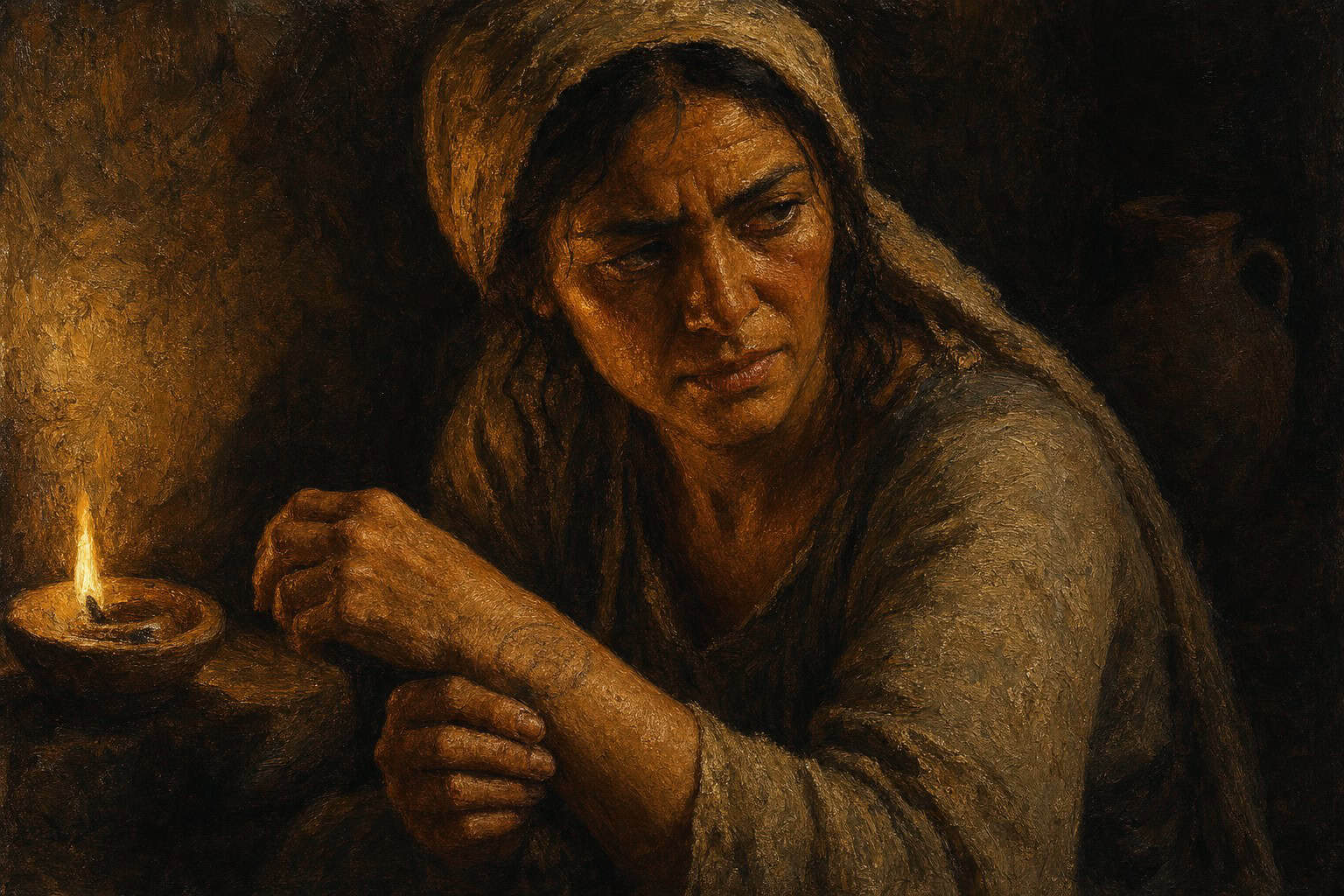
You came here feeling crazy, and the chapter sends you away with something steadier than comfort. It does not tell you the nights were fine. They were not. The escape had teeth; it took years and pieces of a self that did not fully come back to him, and he counts that cost plainly. But it names the thing you could not name for yourself: that the wildness which frightens you now was intelligence, not madness. Your body knew how to keep you alive when your mind had run clean out of gentler options, and it reached for the crudest tool within reach—loud rooms, moving light, a beat that could outlast your despair by sheer repetition. The narrator holds his list up now, not as a trophy and not as a scar he is proud of, but as a document he can finally read without the shame drowning him mid-sentence. He knows what each mix cost him. He knows the reissue dates by heart the way another man knows his children’s birthdays. And in knowing them, he stops fearing that he imagined all of it. That is the quiet gift Confessions to the Empty Chair holds out to anyone who survived by disappearing: your record is not evidence of insanity. It is evidence that you were there, that it was real, and that you did not go through it as utterly unaccompanied as you have always believed. The chapter leaves the deeper wound open on purpose. It makes no promise that you will stop keeping your accounts, or that the old songs will lose their pull when they come on unexpectedly, or that the shame is finished with you. It promises something smaller and truer—that the compulsion to remember, to name, to date and file, is the soul doing its faithful work, refusing to let a life witnessed by no one go on unwitnessed forever. Turn your wrist to the light and the old stamp is still there, half-scrubbed, ink sunk into the creases of your skin, faint but legible if you tilt it right. That mark is not proof you were lost. It is proof you were here—moving, breathing, holding on with everything crude and desperate that was ever handed to you. Read the rest of what the narrator sets down and you will find a man who stops treating his own survival as a crime scene to be ashamed of and starts treating it as a testimony to be spoken—said aloud into an empty chair, unsure if anyone at all is on the other side of it, certain only that it must be said. If you have ever feared that the way you made it through means something in you is broken past repair, this chapter will lower itself into the dark beside you and tell you otherwise—without lying, without flinching, and without switching the harsh light back on before you are ready to bear it.