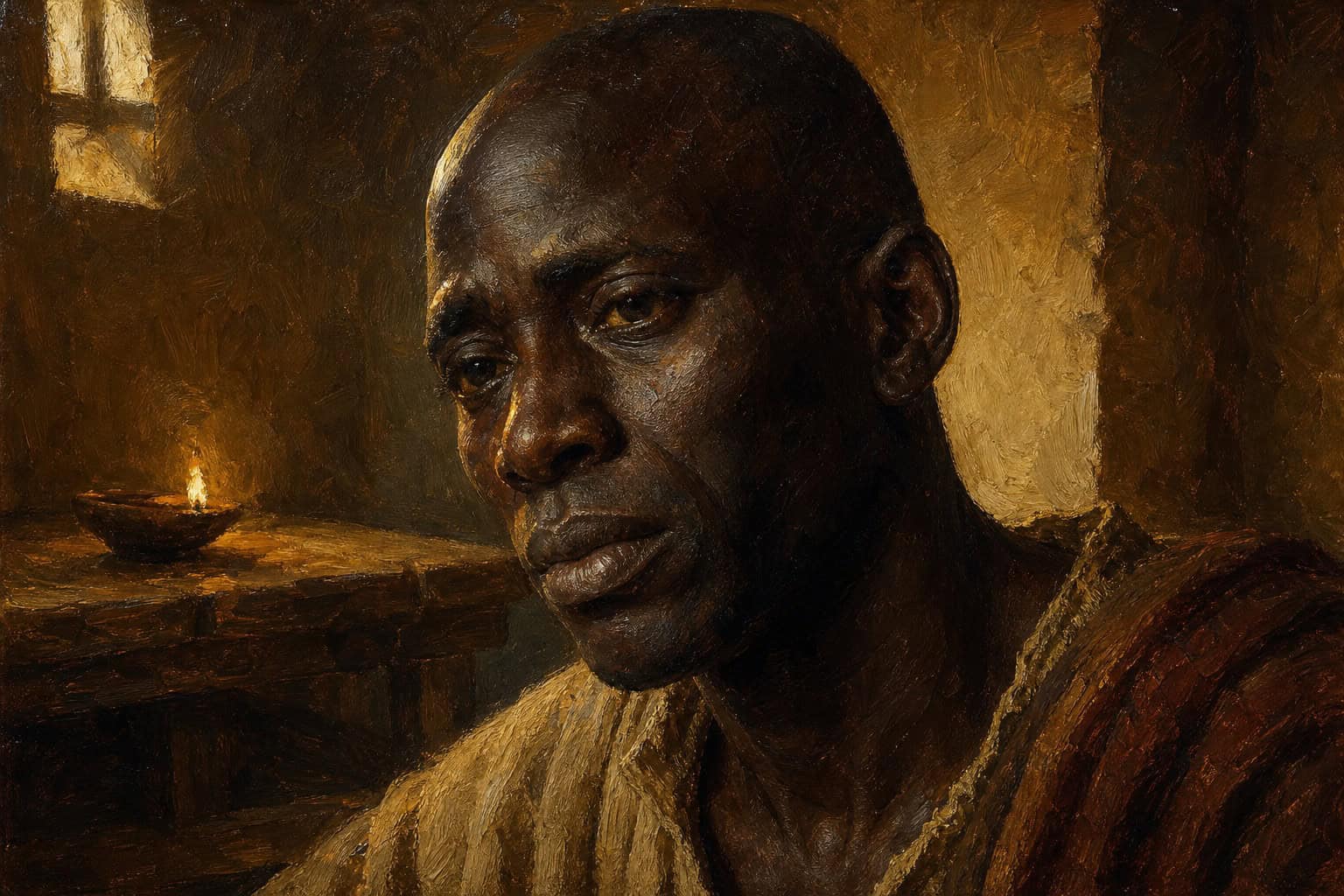
Love from a stranger can feel like sudden grace. Here’s what it heals, what it hides, and why it can’t be the anchor you need.
A Mouth You Did Not Ask For
You have wanted this without daring to say so out loud, and now it is happening. Someone you barely know leans in, and their kindness lands like water poured on ground that had gone hard and cracked from thirst. There is no history between the two of you, no long debt of proof, no slow earning of the moment. That is exactly why it works. A stranger has not seen your worst days. They have not watched you fail. They have not learned the exact shape of the shame you carry like a second skin. So when their mouth finds yours, or their eyes hold yours a second too long, the message arrives clean and whole and unearned: you could be wanted. The body believes it long before the mind can lift a single objection. Your chest loosens. Warmth climbs your neck and settles behind your ears. For one bright second the old sentence written over your life is overturned, and you are not the disqualified thing you had come to believe you were. This is what draws a certain kind of person toward strangers again and again, and it is not mere appetite. It is hunger for a verdict. The stranger holds a strange authority precisely because they owe you nothing. Their tenderness cannot be waved away as pity. It cannot be explained as obligation or history or guilt. It feels, for one uncounted moment, like a true thing said about you from somewhere outside your own rigged and pitiless court. This is where such a moment sits early in Confessions to the Empty Chair — an uninvited tenderness received like grace because it asked for nothing and gave the starving child exactly the thing it had gone without. But sit inside the feeling honestly and the crack shows. The verdict comes from someone who does not know you. And a verdict spoken by a stranger cannot bear weight for long, no matter how sweet its sound. You carry the warmth home in cupped hands and try to keep the small flame of it alive through the evening. But strangers move on. They have their own weather, their own rooms, their own lives that never included yours. The one who touched you does not carry your history, and so they cannot carry your future. The relief was real. The kindness was real. What was not real was the belief forming quietly underneath it all — that this feeling could be laid down as a foundation and built upon. You are not wrong to be moved by it. You are only in danger of building your whole house on sand while calling the sand rock, and mistaking a passing gift for the final one.
The Cold That Answers the Warmth
The warmth is never allowed to stand by itself for long. Almost as soon as the stranger’s kindness lifts you off the ground, someone else’s indifference presses you flat again. Not cruelty. Cruelty would be easier, because cruelty at least treats you as worth the trouble of hating. Indifference is the worse thing. It is the casual shrug, the eyes that slide past you and find something more interesting behind your shoulder, the person who could take you or leave you and clearly, easily, without a second thought, chooses to leave. An hour ago you were wanted. Now you are furniture in the room. The whiplash between those two temperatures does something quiet and permanent to a person, and the body registers it first, long before the mind has words for it. Your soft heart, ground against the coarse rock of other people’s carelessness, begins to callous over as plain survival. You decide, without ever sitting down to decide, that you will not be caught out so nakedly again. You will not let the next warmth inside so fast. You will build. This is the hinge the whole account turns on: the walls that go up in these years are not raised coldly by some scheming, calculating mind. They are laid course by course by a flesh that remembers being touched and then dropped, that flinches at a closing distance before you have thought a single thought about it. Each rejection is another brick set in mortar. And here comes the self-deception that has to be named plainly, because it is the one that damns quietest. You begin to mistake the walls for strength. You tell yourself you have grown wise. You tell yourself you no longer need anyone, that this hard self-sufficiency is only maturity finally arriving. Some of us go further and baptize the thing. We call our distance discipline. We call our guardedness a kind of spiritual seriousness. We call our refusal to depend on any human being a purer form of trusting God alone. It is none of that. It is fear, dressed in borrowed vestments, playing at virtue. The old command to trust with your whole heart and lean not on your own understanding is being broken in the very act of praising your own hard independence. You are not leaning on God at all. You are leaning your whole weight on your own defenses and calling the lean holiness. The stranger’s kiss and the stranger’s shrug fed the same fire from opposite sides — one proved you could be wanted, the other proved that wanting was dangerous, and between them they trained you to feel everything and show nothing. You grew fluent in a closeness that risked nothing at all. Warm on the surface. Sealed and dark beneath. The most terrible part is how well it works. The walls do keep the pain out. They keep out, just as surely, the very nearness your whole body had been aching toward. You cannot have both, and no one warns you of the trade in time.
The Face Held Still Behind the Screen
Then a love arrives that is not from a stranger at all. Someone knows you. Someone stays past the first night and the first month and the first disappointment, stays long enough that the guarded warmth turns to a real fire you did not have to guard, and you do something you swore off years ago — you let a person walk past the walls you were so quietly proud of. This is the deeper kind, the kind you had secretly decided would finally heal what all the strangers never could. With this person you set something on a throne. You enthrone peace. You enthrone security. You enthrone the sense that the ancient wound has, at long last, been answered by another human face. You come to believe, without ever announcing it, completely and in your bones, that human love is the antidote. It closes the old childhood marking. It answers the long hunger for acceptance. It fills the isolation you built with your own hands and then hated. You make this love the center around which everything else turns. And then it ends. Not in a screaming fight you could push against. Not in a betrayal you could burn clean with rage. It ends in a calm voice and a face held still, two years closed inside a single unhurried breath. The loss feels absolute, total, a rehearsal for the hour of your own death. You cry out toward heaven and heaven says nothing, and the silence itself sounds like agreement — like God nodding along quietly with the severing, giving His consent to your undoing. This is the place every honest reader has to sit inside without flinching or reaching for a bandage. The despair here is not cheapened and it is not tidied up with a lesson. It is a man burning on the altar of a memory he refuses to let go of, mistaking the heat of that fire for pure cruelty when it is something far stranger than cruelty. Because when the accounting finally comes, it is merciless and it is true. All human devotion evaporates in time. Every love between two people is made to pass away; it was never poured to hold the weight of forever. You had taken a person and turned them into an anchor for eternity, and no person alive can bear being made that. The stranger’s kiss and the love that lasted whole years turn out to be the same mistake read at two different depths — both asked a mortal creature to be the ground your soul stands on, and no mortal creature can ever be that ground.
A stranger’s tenderness can prove you are lovable and still lie to you about where love must finally rest.
Standing in the Cleared and Bitter Place
After the break you are left standing in a room that has been emptied out. The altar where you set that love so carefully is bare now, swept clean, and you do not feel one flicker of freedom. You feel robbed. This is the honest part no one warns you about beforehand: the shattering of an idol does not arrive as relief. It arrives as bereavement, plain and heavy. You still reach for the person who is gone. Your hand still moves toward the empty side of the bed out of pure habit. The body keeps its old motions long after the mind has admitted they are pointless now, and every reach that meets only air is its own small, fresh grief renewed. Do not let anyone convince you this season feels like liberation. It feels like being taken apart. It feels like being set up as a target for wounds you cannot understand, crying out against a God whose steady attention now feels less like love and more like an enemy who will not look away. And yet. Somewhere in that emptied room, if you can be honest instead of only wounded, a second and harder accounting begins to open. You start to put the sharp questions to yourself and not to the one who walked away. What did you do to that love by making a god of it? Did you ever truly know the person, or did you only ever know what they did for the hollow rooms inside you? Were you loving them at all, or using them as the medicine for a wound that was yours alone to carry to God? These questions sting exactly because they are fair. The one who left was a whole and real person, not a function, not a cure, not a wall against your loneliness. And you had quietly reduced them to a remedy. That is the sin waiting to be faced under all the grief, and it will not be argued away. Grace, when it comes into this stripped and bitter season, does not come as a rescue. It does not hand the love back. It does not reverse the loss or explain the timing. It comes instead as a quiet nearness inside the ruin itself — God present in the actual salt of the tears, walking beside you in the middle of the very sin you are still committing, not standing off at a clean distance waiting for you to tidy yourself first. He does not lift the dark away. He is found down inside it. That is the strange, unsentimental mercy running under this book: not that the pain is removed, but that Someone is uncovered within it, close and unhurried and unwilling to leave. The severing was never a punishment aimed at you. It was the cutting of an anchor rope, so your soul could not stay lashed forever to a thing that was always meant to sink beneath you.
What the Swept Altar Finally Says
So here is where it comes to rest, and it does not rest gently or offer you a pillow. Love from a stranger is not nothing, and it never was. The kiss that told you that you could be wanted was true and it was good — a real word spoken over a wounded life, and you were right to receive it as grace and to feel the whole night turn on it. But it was never meant to be your foundation. Neither was the deeper love that came later and stayed longer and hurt so much worse to lose. Both were genuine gifts, and gifts are made to pass through your open hands, not to become the hands themselves. The error was never in the loving. Loving was right. The error was in the anchoring. You asked a passing thing to hold you fast against eternity, and when it could not hold, you called God cruel for showing you it never could. Stay with that a while. The tenderness you crave from another body is not filthy or shameful hunger — it is a real need, honestly felt in the flesh, and God does not sneer at it. He only refuses to let it become the last and final word spoken over your life. He is jealous, the old scripture says, and that jealousy is not small or petty. It is the jealousy of a love that will not stand by and watch you starve to death at a table that was never set to feed you forever. What this book hands you is not the comfort you went looking for. It will not promise that the right person is out there to finally heal the wound. It will not tell you your walls were wisdom, or that the loss could have been dodged with more care. It tells you something harder and, strangely, more bearable in the long run: that every human love is a candle and not the sun, and that the ache you feel when a candle gutters out is your own soul remembering, in the dark, that it was fashioned for a light that does not fail. The walls you raised to keep yourself safe have to come down, and the coming down will cost you, because the flesh remembers every dropping and does not forgive on schedule. But on the far side of that stripping stands the only anchor that actually holds fast. If you have loved a stranger, or been loved by one for an hour, and felt the whole spinning world tilt on that single warm moment — this account is yours to read. Not because it explains your longing into nothing. Because it takes your longing seriously enough to tell you the plain truth about where it can finally lie down and rest, and Who, it turns out, has been walking close beside you through the whole dark stretch you were sure you crossed alone.