Lonely in high school? A Catholic memoir’s raw take on isolation, being singled out, and why your slowness to understand may be the thing that saves you.
The Hallway That Kept Its Own Weather
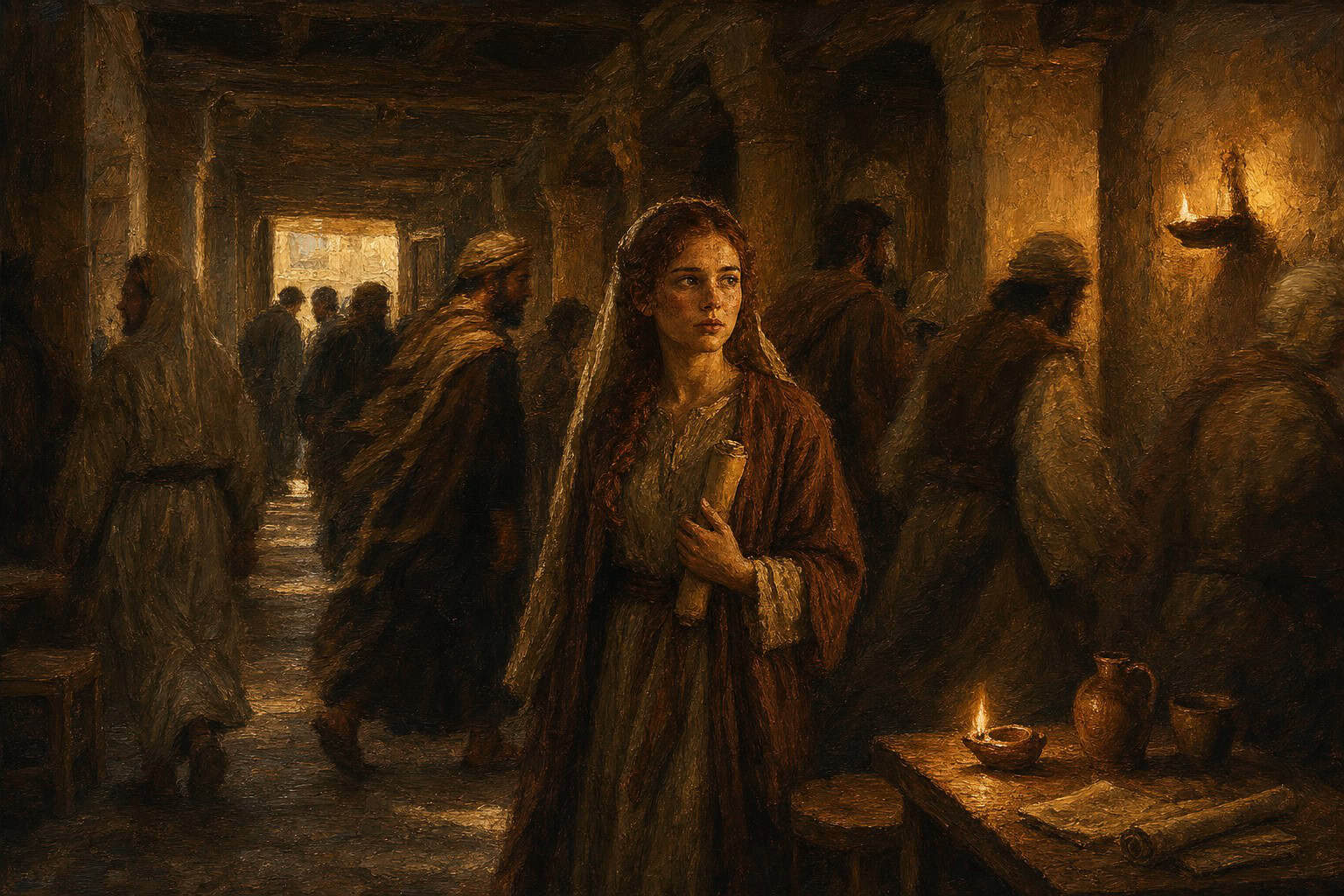
You are standing at the edge of a crowded hallway, and the noise moves through you like weather you cannot enter. Every other body seems to know something you were never told. They lean into each other, laugh at things that make no sense, arrange themselves into little warm groups the way light gathers on a wall in the afternoon. You stand there in your own skin, and the skin feels borrowed, a coat someone lent you and forgot to reclaim. I remember this, because I was you, and I have carried the memory of that hallway longer than I want to admit. The overhead lights hum. Lockers slam somewhere down the corridor. A backpack strap digs into your shoulder and you keep adjusting it so your hands have something to do. The strange thing is that loneliness in a crowd weighs more than loneliness alone. Alone, at least the silence is honest, at least the quiet belongs to you. Here, surrounded, you feel the incalculable distance between what your face performs and what your chest actually holds. You have learned to smile at the right moments, to nod, to say the small words that keep people from looking too long at you. But behind that arranged face a whole hidden country goes unvisited. No one asks about it. No one knows it is there. And you begin to wonder, quietly and with a kind of shame that sits low in your stomach, whether the failure is in you, whether you were assembled wrong, missing the one part that lets a person belong. Your breath goes shallow. You count the seconds until the bell frees you to move. I want to tell you, from the far side of many years, that the question you are asking is older and holier than you know. It is not a small teenage ache to be outgrown. It reaches all the way back to the first exile, to a garden emptied and a gate that would not open again, to the long human condition of being made for connection and finding yourself standing apart from it. Your slowness to read these others is not stupidity. It is the mark of a creature who learns through pain and time, who cannot see everything at once the way brighter beings can. That slowness will feel like a curse in this hallway. It will feel like everyone else was handed the manual and you were handed silence. But hold the thought loosely for now, the way you hold a thing you are not yet sure of. There is a mercy hidden inside your inability to see clearly, and you will not find it here, in this bright cold corridor. You will find it much later, in the dark, where it was waiting for you the whole time.
The Riddle They Read Aloud Without Asking
There is a moment I need you to sit with, because it shaped more than you understood at the time. A teacher looks at you longer than at the others. Maybe it is your answer, given in that odd sideways way your mind takes. Maybe it is your strange quiet, the stillness that sets you off from the fidgeting room. And the teacher says it out loud, in front of everyone, that you are a puzzle, a riddle, something to be figured out. For one second it feels like being chosen, like a warm hand on the back of your neck. Then it curdles. Because to be a riddle is to be an object set on a desk for others to turn over in their hands. Faces swing toward you. You feel the eyes settle and then slide away, the way water slides off oiled cloth, and you understand, without words for it yet, that being singled out is only another kind of exile. This is where the loneliness stops being an accident of scheduling and desks and starts becoming who you think you are. You begin to interpret it. You build a story: that you are handpicked for solitude, made for watching from the outside, destined never to be simply among people the way they are among each other. That story will comfort you and poison you at the same time, in the same breath. Here is what I did not know then and want to hand back to you now, gently. The instinct to watch, to analyze, to stand at the edge and read the whole room before you enter it, you developed that because your basic trust had already been broken somewhere earlier, in fractured fairness, in caregivers who kept changing the rules, in the small betrayals that taught you the world does not keep its promises. Your watchfulness was armor forged in an earlier fire, hammered out before you had chosen anything. It kept you safe when you needed keeping. But armor is heavy across the shoulders, and it locks out warmth as surely as it locks out harm. The devastating part is that you started to believe the armor was your true face. You confused the wound with your name. I have to ask you the hard question, the one I still put to myself in the quiet: how much of your loneliness was done to you, and how much did you build, brick by careful brick, because being the untouchable riddle hurt less than risking the warmth again and losing it? That early ache, when someone offered kindness and then pulled it back, crystallized into a pattern you half went looking for, so you could be proven right about how the world treats you. That is not a comfortable thing to see about yourself. But you must see it, because the walls you raised to survive one season quietly became the prison of the next, and no one hands you the key from outside.
Handpicked Was Never a Sentence
Now hear the turn, the thing it took me decades to grasp with my whole body and not just my head. There are beings who chose once, in a single blinding instant of complete understanding, and were fixed forever by that one choice, no going back, no learning, no slow climb toward the truth. Their minds were vast beyond any measuring, and their fall was final because they saw everything at once, all the consequences laid out, and rejected it anyway with open eyes. But you are not one of them. You are flesh. You learn through years of confusion and pain. You stumble into wisdom half-blind, misreading faces in the cafeteria, getting it wrong and wrong and wrong again, apologizing for things you did not understand. And this, this very thing you hate about yourself in the hallway, this slowness, this inability to simply know how to belong, is not your defect. It is your rescue. Because you fall slowly, you can be caught mid-fall. Because you do not see everything at once, your mistakes stay forgivable in a way theirs never could be. Your ignorance, the fog you have cursed since childhood, is a hidden blessing sewn into your very making. The teacher called you a riddle to be solved. But you were never a problem set left on a desk. You were a soul being made, and the making takes time, and the time is exactly where mercy has room to live.
You fall slowly enough to be caught; that is the whole mercy of being made from blood and not from fire.
Sit in the awe of that, because it is vast enough to dwarf every hallway you ever stood alone in. Let it stop your breath the way real awe does. The One who made you did not stand apart from your loneliness the way the laughing groups did. He did not read you as a riddle and move on to easier company. He wove Himself into the very suffering you took as proof you were forsaken. When you learned slowly, He was in the slowness with you. When you misread the warmth and watched it withdraw, He was in the losing of it. Your embodiment, the blood and nerve and bone that keep your thoughts from floating free and untouchable, is not your prison. It is the exact condition of your particular redemption, the thing that makes it possible at all. You could not have been caught if you were pure spirit, fixed by a single glance. You had to be slow, breakable, standing in that fluorescent hallway feeling wrong, so that grace would have somewhere soft and unfinished to reach into and hold. The isolation was real. The mercy was more real, and it was already there before you knew to look for it.
You fall slowly enough to be caught; that is the whole mercy of being made from blood and not from fire.
What the Armor Cost You to Wear
I will not pretend the seeing fixed everything, because it did not, and you deserve the truth. You still walked those halls the next morning. You still went home and performed normalcy at the dinner table, wearing the face that let you pass, cutting yourself off from your own inner life with every practiced expression, every rehearsed answer to how was school. The loneliness did not lift like fog burning off a field at nine in the morning. That is the lie I refuse to tell you. Grace, for you, was almost never a rescue up and out of the dark. It was a companion who walked down into the dark and stayed there beside you. You wanted to be pulled out. You prayed sometimes, in that bargaining adolescent way, half under your breath, to be made normal, to be given the manual, to wake up one Monday belonging. That prayer was mostly not answered the way you asked. And yet something quieter happened, so quiet you nearly slept through it. The small mercies held you: food that tasted good when nothing else was good, the warmth of it in your hands and your chest; a story on a screen that swung open a door somewhere inside you; the plain animal comfort of a body fed and warmed and allowed, for an hour, to rest. These were not distractions from the ache. They were grace wearing the clothes of ordinary things, the goodness of creation quietly anchoring your wounded soul to the fact that the world was still, underneath all of it, made good. You learned that the body which felt so alien in the hallway was also the very body through which comfort reached you. The same flesh that felt like a lent coat was the flesh that could taste and rest and be touched by a kindness you did not expect. I want you to reconsider the people who hurt you, too, the caregivers whose fairness kept fracturing, the ones whose inconsistency broke your trust before you knew trust could break. They were themselves born into an environment of wounding, passing down what had been passed to them, mortally wounded creatures and not monsters wearing masks. This does not erase what it cost you, and I will not ask you to pretend it does. But it changes the story from you being singled out for punishment to you being caught in the long human inheritance of brokenness that touches everyone, invisibly, whether they feel it or not. You were not uniquely cursed. You were commonly wounded, in a world where no wound stays private and every fracture ripples outward into people you will never meet. Seeing that did not end the loneliness. But it ended the loneliness of believing the loneliness was yours alone to carry.
The Slowness You Cursed Was the Path Home
So here is where I leave you, standing in that hallway that would not stop being cold, the bell still a minute away. I cannot promise you it got easy. I can promise you it got true, which is better and harder. The watchfulness you built as armor slowly, painfully, turned into something else over the years, a real capacity to see people, to read the ache underneath their outbursts, to understand suffering from the inside because you had lived so long within it. The isolation was not wasted. It was terrible, and it was forming you, and both of those are true at the same time without either one canceling the other. You spent years believing you were handpicked for solitude, marked as the outsider by that teacher’s gaze and by every warm group you stood beside without ever crossing into. But you were being handpicked for something you could not yet name, a way of seeing that comes only to those who have spent long enough on the edge to notice what the belonging ones never have to notice. I still ask myself whether I made peace with it too easily, whether calling my loneliness a formation is only another comforting story, the way being a riddle was once a comforting story I told to survive. I do not fully know. That question stays open under my ribs. What I do know is this: the God I was sure had abandoned me in that hallway was nearer to me there than in any place I ever felt welcomed. He was in the slowness that felt like stupidity. He was in the misreadings that felt like failure. He was in the plain grace of a warm meal after a cold walk home. He did not lift me out of the dark, most of the time. He walked me through it, tear by tear, and He was there before I ever turned to look for Him. You will not believe this yet. You will spend a long time believing the exact opposite, and I understand why. But I am telling you across all these years, tenderly and without flinching, that the loneliness of your high school hallway is not the end of your story and it is not proof that you were made wrong. It is the beginning of a strange and difficult grace you cannot see the shape of from where you stand. If you want to know how the whole of it unfolds, the wound and the watching and the slow mercy that never once arrived on time, you will find that story told with its own unflinching honesty, the darkness kept dark and the nearness kept near, in the pages I finally sat down and wrote. That is where the older voice speaks the longest, and stays. That is Confessions to the Empty Chair.