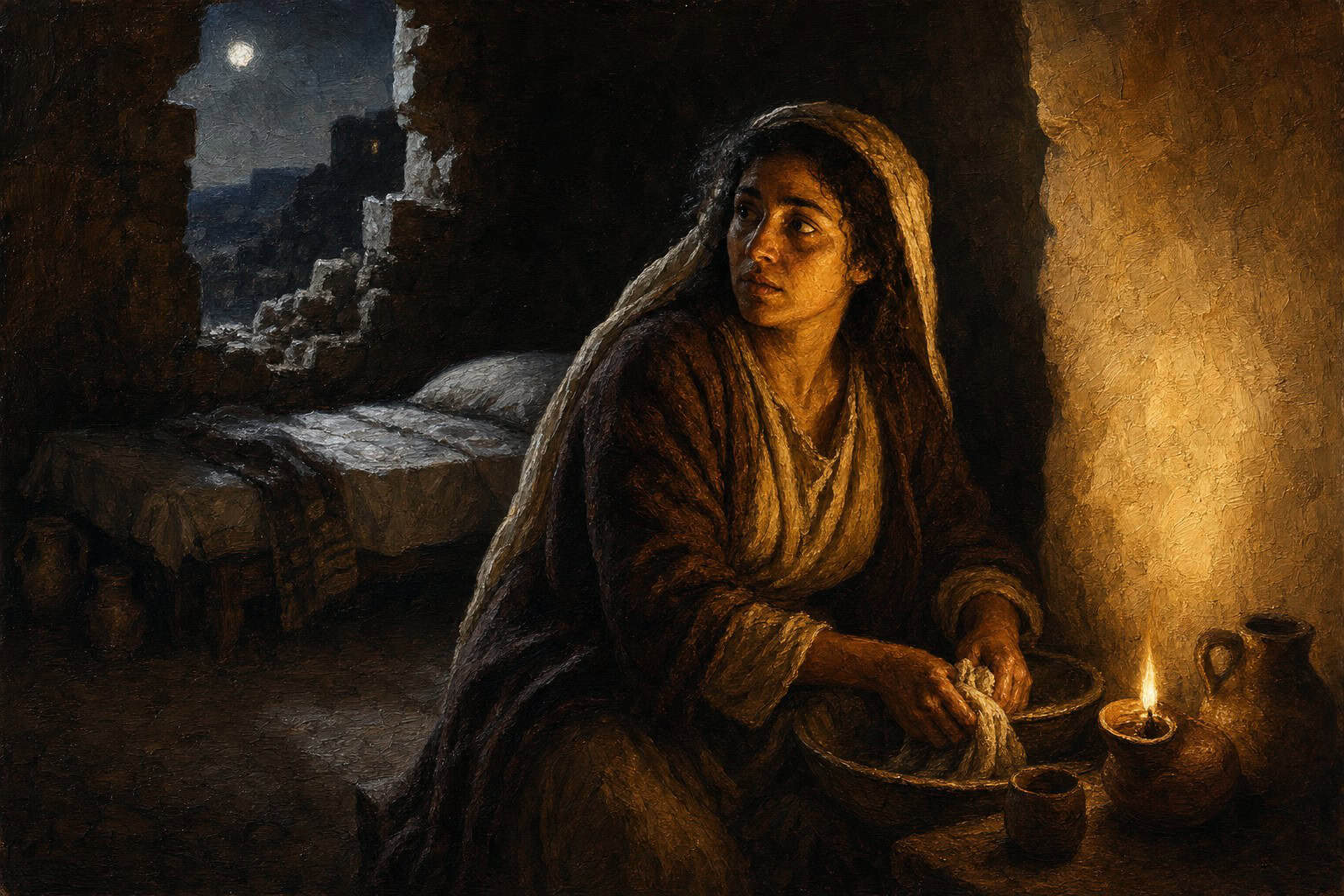
She left me for someone else, and I still wanted her body. A raw reflection on what dies, what survives, and the poison in between.
The Tower You Once Wanted to Climb
There was a time when her mind felt like a height he could not reach. In Confessions to the Empty Chair, the narrator remembers Jane not first as a body but as a fortress of intellect—someone whose sharp seeing took him apart and rebuilt him, and he loved being taken apart. That is where this begins, in Chapter 12, and it is worth naming before the wound arrives. He came to her the way a young man stands at the base of a stone wall he means to scale, neck craned, breath short, full of awe and full of envy, hungry to be found worthy of her attention. Her insight cut him clean, and he mistook the cutting for care, because it was care of a severe kind. Feel it in the body: the flush that rises when someone smarter names the thing you hid, the strange relief of being disassembled by a hand you trust. To be seen through, to have your defenses dismantled by someone you cannot outthink, is its own intimacy, and he surrendered to it the way a boy leans into a current he could still fight. He let the demolition happen because it felt like being known. Here is the first honesty the older self forces on the younger. Was that ever union, or was it only a mirror held at the right angle? Did he love her, or did he love the man she made him feel like—the one worthy of the climb? He asks it and does not answer cleanly, because the clean answer would convict him. If you have ever wanted someone chiefly for how they made you feel about yourself, you already know this exact shame, the way it sits low and warm and rotten in the chest. In those first days the constellations of moles on her skin were celestial maps he wanted to chart with his mouth, his hands, his patient attention. Her frame was a country he meant to learn by heart. Everything about her carried weight because she carried weight for him, and his whole body organized itself around her presence like iron toward a magnet. This is where the passage stands before it turns—inside a devotion that felt total but may have been, even then, more about his own hunger than about her actual particular soul. He wanted the qualities. He wanted the climb. Whether he ever wanted her, the specific breathing woman with an interior he could not enter, is the question the whole scene refuses to let him escape. So we begin in awe, in the flush of longing to be found equal to someone. It is a warm place to stand. It is also, he learns, a floor with nothing under it.
The Kiss That Poisoned Every Taste
Then came Tommy, and a kiss that would not stay in one place. Betrayal is never surgical; it does not cut one nerve and leave the rest whole. It seeps, the way damp climbs a wall until the whole room smells of it. The narrator discovers that what he cannot forgive is not only what she did but what it did to his senses afterward. The taste of a cigarette on her mouth—was it hers, or was it his, borrowed from another man and carried back to him without a word? He would never know, and the not-knowing became its own long torment, because betrayal reaches backward and stains what already happened. Every remembered touch turns suspect. The body, which should be the one honest witness, begins to lie. You cannot trust your own skin anymore, because your skin loved something that was not what it claimed to be, and now the skin does not know what it held. This is the cruelty the scene understands with terrible precision: the flesh remembers, and now the flesh remembers wrongly, or at least uncertainly, and there is no way left to sort the true nights from the false ones. The confrontation over Tommy was messy, loud, humiliating—an experience he says plainly that he hated. He did not manage it well. He did not stand in it as the man he wished to be; his voice cracked, his hands shook, the words came out ugly. And beneath the anger ran a colder current he could barely let himself name: he still wanted her. The desire did not die when the trust died. That is the horror lodged in the middle of this chapter. A thoughtful reader, man or woman, will feel this without being lectured—how longing can outlive respect, how the body keeps reaching for someone the heart has already convicted and sentenced. He does not excuse it. He does not dress it up in prettier language. He watches himself want her while resenting the wanting, and he asks whether that makes him weak or simply human or both at once. Something in him began to spread like poison from a small wound, moving quietly through the rest of him. The emotional structure between them collapsed, beam by beam, and he heard it go. But the physical structure held, and he found himself standing inside the ruin, unwilling to walk out the gap where the wall used to be. He tells it as a man cataloguing his own decay, not begging sympathy for it. The tenderness he once felt curdled into cold appraisal, and he watched it curdle in real time, and he did nothing to stop the turning. That is the passage’s slow, dreadful middle: the discovery that love can be dead in the ground while the appetite still walks the halls, feeding.
The Heart That Split Into Two Cold Selves
The turn comes when he learns what his own heart can do under pressure, and the lesson gives no comfort. Faced with a devotion he now knew he would never earn, he did not shatter and he did not leave. He split. He describes the heart fractioning itself into replicas—one self that stayed with her, played its part, took what the body wanted from her body; another self that lived away from her, guarded, hidden, arranged so it could never be captured or known. Each replica moved with a chilling independence, and the original hid behind them, safe precisely because it was never truly present to anyone. This is the revelation the whole chapter has been walking toward, and he presents it not as strength but as self-mutilation dressed up as survival. He looked at her hourglass frame with the detached eye of a merchant now, no longer an admirer counting stars. The moles that were once maps of the heavens became mere features of an asset, points on an inventory. He knew exactly what he was doing, and he did it anyway, and the knowing is what makes it terrible rather than merely sad. A new unspoken contract formed from the wreckage: her body kept him attached; his provision, his reliability, his steadiness kept her attached; and both of them, he says, lived whole lives apart even while lying in the same bed. He had turned intimacy into an exchange and called it a decision he could survive. Here, in the very cold of it, the book’s deepest suggestion lives—that God does not always arrive to lift a man out of his sin, but sometimes simply stays with him inside it, present in the ruin, near even to the self that has gone this hard.
When love is killed but the wanting lives, you learn the terrible thing your body will still do for someone your heart has already buried.
He does not report a rescue. He reports a clarity so cold it frightens him, and beneath that cold, faint as a pulse in the wrist, the sense of being accompanied by something that had not left the room. He cannot yet call it grace. He can only note that he was not entirely alone in the collapse, even as he built the machinery that would let him take what he needed and reveal nothing of himself in return. That is the climax—not a decision to heal, but a discovery of how expertly he could avoid healing while still functioning, still reaching for her in the dark, still wanting the very woman he had privately convicted. The two selves worked without touching each other, and he stood outside both, watching them like a man watching two strangers wear his face.
When love is killed but the wanting lives, you learn the terrible thing your body will still do for someone your heart has already buried.
Living as a Squatter in the Ruin
What follows the split is a long, quiet occupation. He resolved to live in the collapsed structure like a squatter—sheltering in a house he no longer owned, sleeping under a roof that was legally somebody else’s, waiting for the eviction notice he knew would come. The picture is exact and unheroic, and he means it to be. He did not fight for the marriage of two souls, because he had decided that marriage was already dead in the ground; he only kept the walls upright long enough to lie down inside them at night. The sex continued. The distance widened alongside it, one growing as the other spread, until the two moved in step like partners who no longer speak. He confesses, without flinching, that as his feelings withered his appetite did not, and from this he drew a private axiom that shames him even as he sets it down: that deep emotional connection was never, for him, a requirement for the act itself. This is the hardest ground a reader is asked to stand on with him, and he knows it, and he does not soften it. He is not asking to be admired. He is asking to be believed, and belief here means admitting a division in himself that most people carry in secret and never say aloud in a lit room. Yet even in his severity there is room left for the woman he watched become an asset. The book refuses to hand you a villain to hate cleanly. Jane had her own interior, her own reasons, her own hunger that carried her toward Tommy’s mouth—reasons he could not enter and, he begins to suspect, never once seriously tried to enter. Perhaps she too was reaching for something a mirror could not give her. Perhaps the shared illusion he mourned was one they had built together, each using the other to escape a private cold neither would name. He cannot climb inside her thoughts and report them, and to his credit he does not pretend to hold that key. He only wonders, and the wondering is more honest than any verdict he could pass. The strategic reading—the contract, the trade of provision for the body—lights up one layer and then stops at the wall. It never touches the tenderness he still, against all sense, kept for her in some sealed room. Part of him still hoped to earn her devotion, even as another part priced her like goods on a shelf. Both were true in the same chest at the same hour. That is the fallout: not resolution but coexistence, two incompatible things breathing in one body, a man who despised his own wanting and could not, would not, set it down.
What the Body Kept Wanting After the Heart Gave Up
Where does a scene like this settle? Not into peace, and the book will not pretend otherwise. There is no tidy consolation that time heals all wounds or that he learned his lesson and walked out whole. It leaves him inside the ruin, still wanting, still hiding, still accompanied by a nearness he cannot yet dare to call mercy. If you came here because someone left you for someone else and you cannot understand why your body still reaches for them in the dark, this is the honest answer the passage gives you: desire and love are not the same faculty, and they do not die on the same day, or even the same year. You can bury the trust at noon and wake at three to find the hunger still breathing on the pillow beside you. That is not simply a moral failure to be scolded away; it is the strange, divided nature of the flesh, which keeps the shape of what the will has already condemned. The narrator does not solve this. He inhabits it, and he lets you watch him inhabit it, and in the watching you feel less like a monster and more like a man kept company in a hard place. What lingers is the question he refuses to close: was any of it real, and if the tenderness and the appraisal can live in one heart at once, which one was the true self and which the replica? He does not know. He suspects the true answer would cost him more than he has to spend. And under all of it, quiet as breath moving in a sleeping house, runs the sense that God did not flee the collapsed rooms—that grace here is not a hand yanking him up out of the rubble but a presence lowering itself to sit in the dust beside a man who cannot yet weep. That is why this book holds you by the wrist and will not let go. It does not flatter your grief with easy comfort or a bow tied at the end. It sits with you in the cold, names plainly what your body still does when your heart has already surrendered, and lets you feel, maybe for the first time in a long while, seen without being condemned. The eviction notice comes eventually. He knows it is coming. So, if you are honest, do you. But before it arrives there is this—a man telling the whole truth about wanting what he could no longer love, and finding, in the very telling, that he had never been quite as alone as he believed.