Feeling abandoned by God? Scripture and one raw memoir walk you through the dark—where God is nearest, not absent, even when you can’t feel Him.
A Prayer Written by Candle Against Blacker Candle
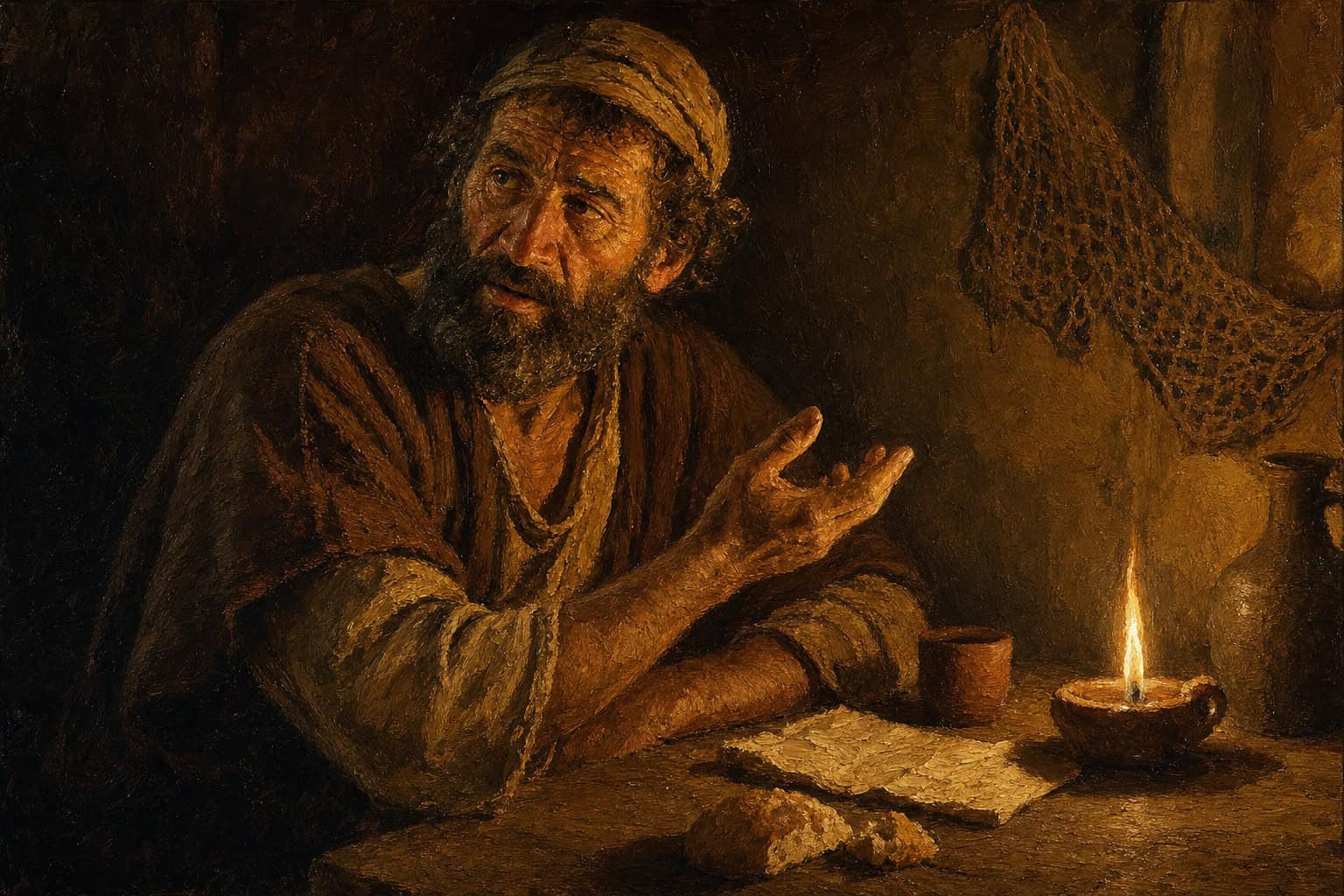
You typed the question into a search bar because the ceiling gave you nothing back. You wanted a verse, a handful of words to hold when God had gone quiet, and quiet is the cruelest thing a father can do to a child who is still calling. I know that quiet. It sits in the room with you like cold air off a window. It makes the hours long. It makes your own breathing sound loud. In Confessions to the Empty Chair the sixteenth chapter opens onto a small, strange document the narrator calls a codex, a set of hard-won notes for other men who are being torn apart from the inside. He does not begin it with confidence. He begins it kneeling, admitting to the Lord that he feeds souls with insight he did not author and cannot govern. He says plainly that he controls neither the appetite of those he teaches nor the meal they will choose. Picture it: a man at a table, setting out bread he made in the dark, and he does not know who will eat, or whether anyone will come at all. His hands are steady. His faith is not. That gap is the first thing the scene gives you, and it matters for your question. The abandonment you feel is not proof God has left the room. It may be the exact shape His presence takes when it is too large for your senses to register. The old teachers of the faith knew this. The more real and near a holy thing is, the darker it can seem to a mind squinting up at it. Light past a certain strength reads as blindness. Stare at the sun and you go blank, not because there is no sun but because there is too much of it. So the psalmists cried out that God had forsaken them, and God did not scold the cry. He let it stand in the middle of His own book, uncensored, My God, my God, why. If Scripture itself keeps the abandonment complaint on the page, then your feeling is not faithlessness. It is prayer that has run out of polite words. The narrator kneels because he has run out of them too. He is not pretending the dark is bright. He knows how few his days are. He knows a candle is a small thing against a large night, and that he might burn the whole of his down and still not see the far wall. He tells the truth about the dark and offers his little bread anyway. That is what faith looks like when the lights are off and the counting has begun.
The Sifting and the Shark’s Nose for Blood
Then the chapter turns severe, and it names the thing you may not have let yourself name. The narrator writes to his brothers about a war they did not choose. He describes an enemy who prowls the earth hunting for someone to devour, drawn to a soul the way a shark is drawn to blood in the water. There is nothing gentle in the image. It is teeth and appetite and a nose for weakness. He speaks of being sifted like wheat, shaken until the faith might fall out of a man, until hope drains, until he averts his eyes from God and does the one thing that ends every conversation, the way Judas ended his. This is where your search and his page meet. That feeling of being abandoned is often not a neutral fog that drifted in on its own. It is pressure with intent behind it, a squeezing meant to make you look away from the only face that could hold you. The narrator does not pretend the pressure is small. He says the enemy cannot strike God directly, so he tortures God’s children instead, and lifts their screams up to a father who feasts on them. Read that and something loosens in your chest, because it explains why the abandonment feels aimed. It is aimed. Notice, though, what the verses he leans on actually do. Christ told Peter he would be sifted, and in the same breath said He had prayed for him, that his faith would not fail utterly. The sifting was foretold and permitted. It was not the last word in the sentence. Someone was praying on the far side of it before the shaking even began. That is the tenderness hidden inside the terror, and it is easy to miss when your own hands are shaking. The narrator interrogates himself here, and I hear him doing it. He asks whether he sounds like a man who has beaten the enemy or a man still bleeding, still barely holding his own eyes toward God. He does not resolve it. He leaves the wound open on the page because closing it would be a lie, and he has told too many lies to add one more. The stakes are his own life, the fragile and countable days that are his alone to lose. The enemy knows those days are numbered and works the clock, pressing hardest at the hour a man is most tired. Against that, the narrator offers no armor but presence, God’s and his own, both of them refusing to leave the table while the water darkens.
Fruit Pulled Up Out of the Icy Abyss
Here is the turn, and it is quiet, the way real turns usually are. The narrator says something that should not comfort but does. His insights, he confesses, did not come from light. They came from feeling his way through darkness against a deeper darkness, extracted from an icy abyss, fruit pulled up by grace from a place that should grow nothing. He calls the source a handmaiden dwelling within, the Spirit who works down in the frozen part of a man and makes the unbearable start to mean something. This is the answer to the question underneath your question. You did not only ask which verses help. You asked, quietly, whether your pain could ever be anything but waste, whether all this suffering would just rot in the ground of you. The scene says no, it need not rot, but it will not pretend the pain was pleasant to earn that answer. The Spirit does not drain the abyss dry. She goes down into it and comes back carrying something a warm and easy man could never grow. This is why the deepest words of Scripture about abandonment were written by people mid-abandonment, not after they got their lives back. Job did not speak from comfort. He spoke from the ash heap, scraping his own skin, and God answered him not with an explanation but with an immensity, storms and sea and the wild goats giving birth in the high rock, an invitation to trust a setting too large to fit inside one man’s grief. The narrator seems to know this in his body. He is not selling recovery.
The brightest things of God fall on us as darkness first, and the darkness is not His absence but the size of His nearness.
Sit with that, because the chapter sits with it. Grace here is not a helicopter lifting you clear of the cold. It is a hand that took hold of yours somewhere down in the ice and did not let go while you were still frozen. The narrator asks himself whether he has any right to speak of this at all, whether he is a fraud handing out fruit from an orchard he was dragged through against his will, bruised and unwilling. He does not decide. He simply keeps offering the fruit, because it is the only honest thing he ever managed to grow, and because someone standing where you stand right now might need to hear that a living thing can come up out of frozen ground.
The brightest things of God fall on us as darkness first, and the darkness is not His absence but the size of His nearness.
Words That Refuse to Harden Into Law
After that revelation the ground settles a little, and the narrator does something I did not expect. He warns you not to read his hard-won notes as a rulebook. He says even the very wise cannot see all ends, and he means himself first of all. He has just laid out the enemy, the sifting, the abyss, the fruit, and then he steps back from his own authority and confesses his blindness, the way a man sets down a tool that is heavier than his arm. This is the fallout of real spiritual honesty. A man who has genuinely suffered God’s silence cannot come back with a system. He can only come back with a limp and a testimony and a plea that you not turn his testimony into a cage. For you, holding your one verse in the dark, this is a strange kind of freedom. The Bible does not hand you a formula that guarantees the feeling will lift by Tuesday morning. It hands you people. David. Job. The psalmist with the dry bones. The Lord Himself on the wood, crying the abandonment aloud so the whole world could hear it. Every one of them felt what you feel and kept their faces, however slowly, turned toward heaven. The narrator’s refusal to legislate is itself a mercy. He knows that certainty, pressed on a suffering person, can crush them. If his notes had failed to fix you, you might have taken the failure as a verdict on your own soul. So he softens. He confesses his limits out loud. And in confessing them he models the tenderness the whole chapter has been reaching toward, which is care for the very self you were taught to despise. Because that is often the hidden face of feeling abandoned by God: a low suspicion that He left because you deserved to be left, that the silence is a sentence handed down. The scene will not let that stand. The man kneeling at the start fed God’s children knowing he could not control whether they ate. God feeds you the same way, patient with an appetite you cannot summon on command, setting the plate down and waiting. The narrator questions his own motives even here, whether writing the codex is service or a way to feel useful inside his own ruin. He does not clean it up. He lets both be true, service and need tangled together, the way they always are in a real person who is still breathing. That honesty is worth more than a tidy verse-of-the-day. It tells you that you can be a mess and still be fed, still be near, still be prayed for on the far side of the shaking.
Bread Set Out for Whoever Is Still Hungry
So where does this leave you, at the end of a night that started with a search bar and a hole in the ceiling? It leaves you with the verses you came for, but held differently now, warmer in the hand. Cling to the ones the sufferers wrote. The cry of forsakenness that God let stand without editing. The promise that though a mother forget her nursing child, He will not forget you. The sifting that arrived already wrapped in someone’s prayer that your faith would not fail. The God of the whirlwind who answers grief with grandeur instead of a ledger of reasons. Let them be what they are, not painkillers but company, someone sitting beside you in the same cold. The chapter closes its codex facing loneliness itself, reaching all the way back to the first man and the ache God placed in him before there was any sin to blame it on, the ache that made him say at last when he was finally not alone. The narrator turns that ancient loneliness over in his hands and finds it is not a punishment but a design, a hollow shaped for God and for another person. Your abandonment may be that same hollow, aching precisely because it was built to be filled and is not filled yet. I will not tell you the feeling ends the minute you close this page. The book does not tell me that either, and I have learned to distrust anyone who promises it too quickly. What I can tell you is that the man at the table is still there, still setting out bread he made in the abyss, not knowing who will come through the dark to eat it. In Confessions to the Empty Chair the whole severe, tender work is that single offering, a soul held out while the dark presses in from every side, refusing to leave even when God seems to have left first. Read it if you want a companion who will not lie to you about the cold or the counting of the days. He will not hand you a rescue. He will hand you his hand, still frozen, still holding on, and the strange news that God is often closest in the exact place you were most certain He was gone. That is not a resolution. It is an accompaniment, which is the only thing that has ever actually carried anyone through a night like this one. The crumbs are still on the table. Pull up the chair. Someone made this for you in the dark, and he is still waiting to see if you will eat.