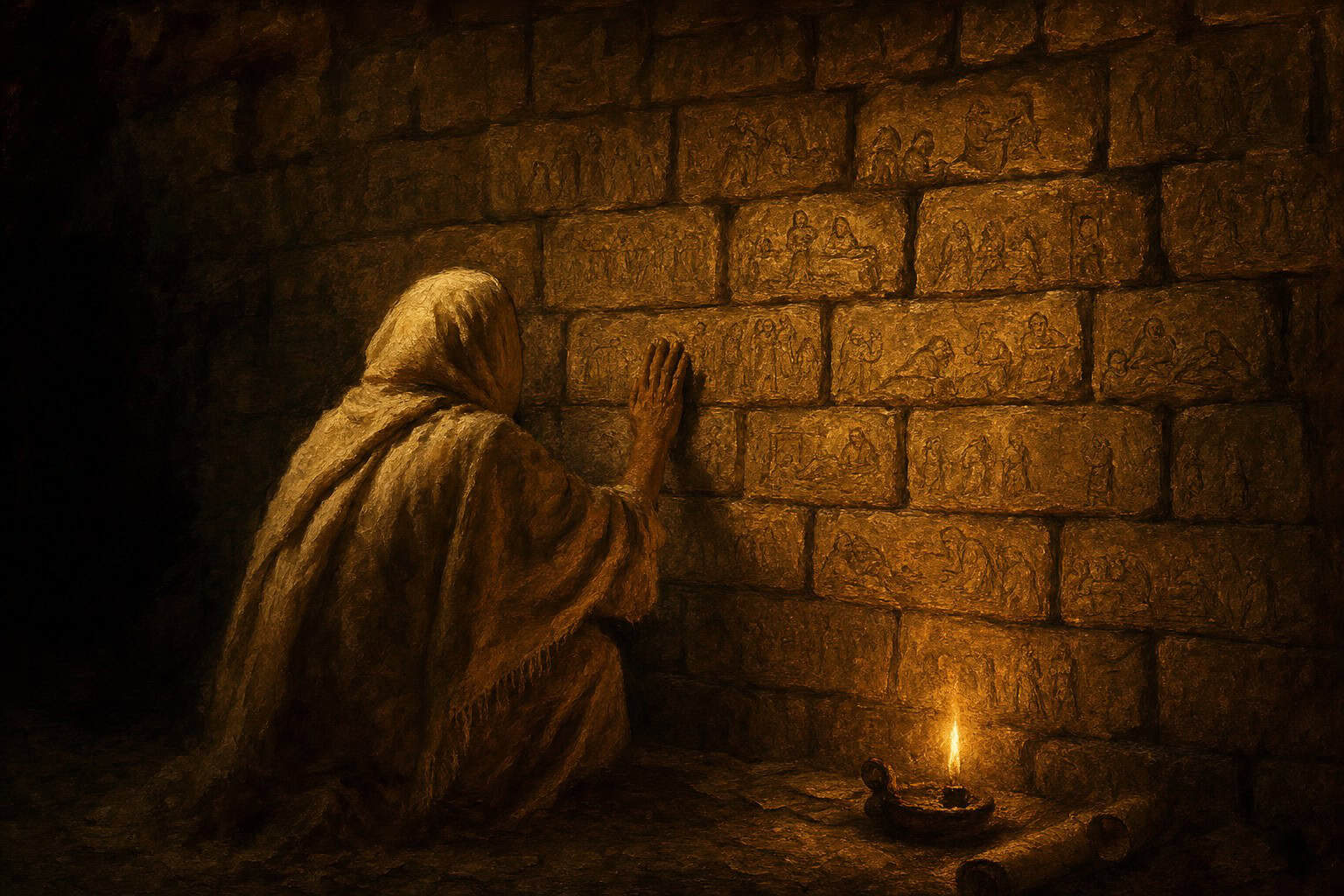
A boy copies scripture onto index cards until his hand cramps, stacking the verses like stone — not to be fed by them, but to be shielded.
Verses Stacked Like Stone Around a Trembling Heart
A boy sits with an open Bible and a stack of index cards, hand cramping as he copies line after line. Ink bleeds slightly into the paper, each verse written not for savoring but for stockpiling. Soon the room carries the evidence: cards blue‑tacked to the wall above his bed, slips tucked into the corners of a mirror, phrases folded into his wallet. He repeats them under his breath until they stop meaning anything in particular and become a sound he can hide behind. The body pays the cost—jaw clenched, shoulders tight, sleep interrupted by the need to recite one more line as if a missed verse might let something terrible in. This is not a gentle lectio but a siege. The scriptures form a ring around a center he will not name, a darkness so familiar he mistakes it for himself. Every new card is both comfort and confession: if this much armor is needed, the battle must be worse than anyone knows.
A Cold Hearth Where Two Hands Were Meant to Tend the Fire
Years later another kind of sacred labor sits in front of him, this time across a kitchen table and a shared bed. The same heart that once piled verses now tries to build a life with another, treating the relationship as a small chapel entrusted to their care. Meals cooked, small rituals of checking in, the awkward but sincere attempts at prayer together—he offers these like kindling. Yet her hands stay in her lap, or on her phone, or busy elsewhere. The absence is not dramatic; it gathers in the quiet refusals, the way she lets the smallest devotions die on the vine. He keeps striking matches alone, nursing a thin flame in a hearth gone cold. Slowly the truth presses in: this is not a holy space neglected by accident but a work she will not consent to join. To keep calling it love without her participation would be to lie about what love demands.
Radios, Mix Tapes, and the Weather Inside His Chest
Threaded between boy and man runs a long, unbroken line of sound. Childhood carries the high, bright buzz of space‑age cartoons and toy commercials, that synthetic shimmer blaring from a living‑room television while he copies verses in the next room. Adolescence arrives with its own score—mixtapes passed between friends, a favorite song looping in his headphones as he walks dark streets, feeling the bass thrum match the pulse in his throat. Later, a winter of anger comes, and the music turns harder, colder, drums like fists on a locked door. He does not simply remember these seasons; his body reenters them whenever a stray note from a supermarket speaker or car radio catches him off guard. The scripture‑wall, the untended hearth, each has its soundtrack. The passage holds him at that realization: he has not just a story but whole climates stored in his nerves, and every melody threatens to call one storm or another back over his life.
Our defenses become the map of our wounds; show me the armor a soul wears, and I will show you exactly where it was pierced.
When Your Own Verses Start to Sound Like Alarms
Anyone who has used holy things as armor will feel the strain in this moment. Maybe your cards were not Bible verses but rosaries worn until the beads snapped, devotions piled on top of each other until they blurred into superstition. Perhaps you know the fatigue of praying the same words night after night, not out of love but out of fear of what might happen if you stopped. Or you have stood at a figurative hearth, keeping daily acts of care alive while the other person moved through the house as if nothing sacred was at stake. You might recognize how sound rules your own inner weather—how a certain hymn, a pop song, even the hum of a childhood appliance can drag you back into a younger skin before you can reason with it. This passage does not diagnose or fix that pattern. It simply refuses to look away from how costly it is to live defended and alone, even in the name of God.
Learning to Hear Dissonance as Part of the Song
Under all of this, one question grows like a low note holding beneath the chords: if darkness has shaped the soul from the start, can he let divine love near without erasing the very tensions that gave his life its sound? The boy who built walls of verses, the man who tended a hearth for two with only his own sore hands, the person whose history lives inside specific songs—these are not costumes he can simply discard. The fear is plain: if the music softens, will he still be himself, or only a polite echo of someone holier, simpler, less true? And yet the armor is heavy, and the half‑lit hearth cannot keep anyone warm forever. The passage leaves him standing in that uneasy place where love’s promise and self‑protection grind against each other. Nothing resolves, but you can almost feel his ear tilt, as if straining to catch whether grace might sound less like a replacement melody and more like a key change he has never learned to play.