You want to heal the pain. Here is why matching wounds only nurses it – and what real healing asks of you, read through Fractions of the Soul.
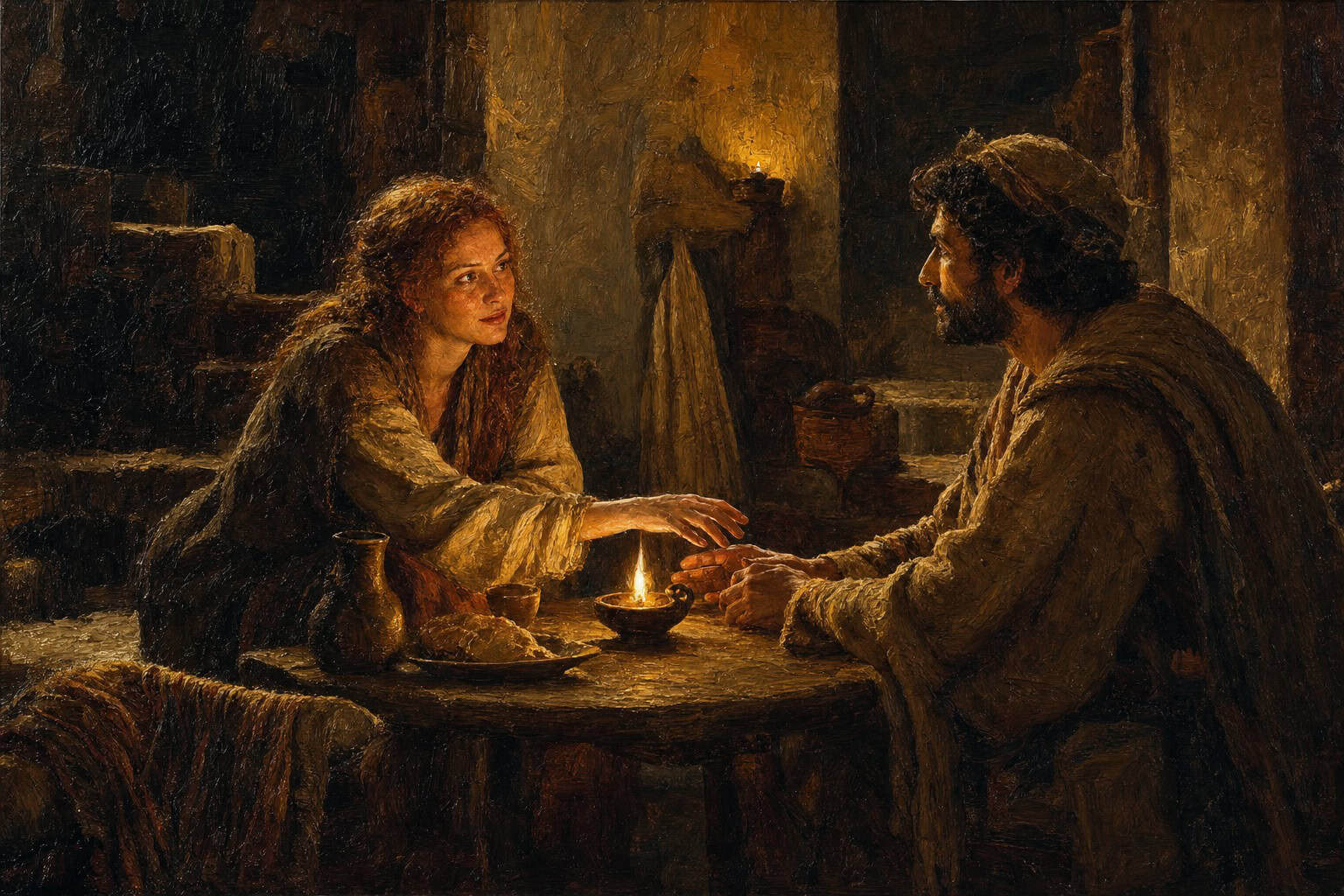
Two people trading childhood scars across a small table
You typed the words heal the pain because something in you is raw and you want it to stop. I know that want in my own teeth. In the fifth chapter of Fractions of the Soul the narrator sits across from a woman and begins the slow work he calls intimacy, though it looks more like an excavation than a kindness. They exchange childhood stories first, the small early ones, the ones that still sting when you say them aloud. Then the pivotal moments that bent them into who they became. Then the private opinions on God, on love, on what it even means to be human. He is careful here, almost tender, letting the subject matter less than the spirit in which each thing is received. She lays her mind bare in front of him. She does it unembarrassed, and that detail matters. He notices that she is not ashamed to be seen this openly, and he tells himself this is trust, this is her faith in the respect he holds for her softest places. He takes what she gives and carries it inside himself to turn over alone in the dark hours. This is the scene where two wounded people find each other, and at first it feels like the exact answer to your question. Here is warmth. Here is someone who finally understands. Here is a table where you can set down the loss, the parent who left, the years you never fit anywhere, and be met instead of flinched from. The relief of that is not fake. The recognition is not fake. But watch closely what is actually happening at that small table. Neither of them is healed. They are two cracked instruments listening to each other’s cracks and calling the sound music. The comfort of being understood is enormous, and it is terribly easy to mistake that comfort for a cure. It is not a cure. It is a truce with the pain. It is an agreement to keep the pain company so neither of you has to sit with it alone. The narrator half-knows this, which is why he watches her the way he does, gathering what he calls data points, trying to know her past her own knowing of herself. And I have to ask him, and I have to ask myself: what is that watching really for? Is it love, or is it inventory? When you go looking for someone whose wound matches your wound, you are not asking to be healed. You are asking to be seen without being changed. That is a smaller, warmer thing, and it will not do the work you are begging it to do.
The whetstone hides in treacherous water
The narrator keeps a whole vocabulary for the people he draws near, and it should make us uneasy. Some are rocks. Some are blades. A rock will not submit to what he calls his method, and so it stays hard, unchanged, shut against him. A blade agrees to be worked upon, ground down, sharpened through a pain he insists comes from a place of betterment. And then there is the woman he most respects, the one he pictures as a whetstone: sharp in her own right, ringed by dangerous water that wrecks the common man who paddles too close. Only another whetstone, he believes, can come near her without being cut apart. Read that slowly, because it explains why the pain you want healed keeps circling back to you. He has built a world where depth drives people apart. The more capable the soul, the more it isolates. Strength repels the weak and only signals to the equally strong. This is loneliness dressed up as discernment, and I have worn that exact costume. It feels noble from the inside. It feels like standards, like refinement. Underneath it runs a cold sum that guarantees you stay alone with your wound, since nearly everyone fails the test of the treacherous water by design. Notice too how the woman across the table guards herself. She drops small crumbs of affection and studies how he answers them. She keeps a way out that he would name plausible deniability, a door she can shut while calling the whole thing a misunderstanding if he proves unworthy. He reads this as her nature, the nature of all women. Maybe it is only her fear. Two people testing each other without end, each one afraid to be the first fully seen, each measuring before daring to yield anything. This is not the failure of closeness. It is a substitute manufactured on purpose because real closeness feels too dangerous to risk. When honest, direct connection seems impossible, people reach for strategy instead. They hold their wounds up like a polished shield, disclosing just enough to freeze the other in place. That is what the tenderness at the table can quietly curdle into. And here is the trap for anyone searching to heal: the very things that made you deep, the edge you are proud of, can become the wall that keeps the healing out. Your wound has fused with who you think you are. To let it be healed, you would have to stop being the wounded one who understands everyone else. Are you willing to lose that role? I was slow to answer. I am still not certain I have.
The moment the blade agrees to be ground
Everything in this chapter turns on one word the narrator returns to again and again: submission. He is clear that it is always the other person’s own choice, never something he can seize. A rock stays a rock because it refuses to be worked upon at all. A blade becomes a blade only when it agrees, freely and with open eyes, to endure the grinding. And the grinding hurts. He does not pretend otherwise, which is the one honest thing in his cold arrangement. He says the pain carries an explicit purpose, to sharpen an edge that will outlast their short time together, to leave the other person keener long after he is gone. Sit inside that claim, because it is where a scene that looked like pure manipulation splits open and shows something truer underneath. What we usually name our resistance is often just our refusal to be changed. What we flinch from and call weakness, the act of yielding, is sometimes the raw courage to be remade by something outside ourselves. The pain you came here to heal will not lift while you stay a rock, arms crossed, edges intact, safe. He gathers her fears and her losses like a craftsman testing metal, and he tells himself the friction is mercy. Maybe some of it is. Maybe the sharpening leaves her genuinely stronger. But I have learned to distrust the hand that grinds you toward its own design and calls that your betterment. There is a real thing hidden inside his false one, and I cannot let the falseness bury it: you were not made to stay untouched. Healing is not a warm bath you sink into. It is stone dragged against a blade, and it asks you to hold still under the friction while it does its slow and burning work. The only question that matters is whose hand holds the stone, and toward what end it presses you.
Recognition is not repair; two people who only nurse each other’s wounds have agreed to keep them warm.
What the watching cost them both
Step back from the table now and look at the fallout, because a scene like this leaves marks on everyone in it. The narrator wanted to heal, or something adjacent to healing, and he built a whole apparatus to get there: the exchanged childhood wounds, the careful reception of each idea, the patient gathering of who she is beneath who she thinks she is. It is intricate. It is almost reverent. And it is still, at bottom, a method aimed at mastery. He wanted to understand her more than she understood herself, and I know that hunger, because I have felt it and dressed it up as care. When you know another person that thoroughly, you can guide them, steer them, decide which ideas they take in and which they leave. The narrator says he tries to feed her good thoughts, realistic ones, grounded in reason. But who appointed him the keeper of what she is allowed to believe? That is the question that should haunt this passage, and it should haunt anyone who has loved someone as a project. There is a wound underneath his whole approach, and it is the wound of a man who cannot compel true closeness and so engineers a substitute for it. He cannot make her stay by being fully known himself, so he holds his own hurts back and reads hers instead. The relationship becomes lopsided from the start. She is naked before his gaze; he stays half-clothed behind his careful data-gathering. And here is the reckoning the scene forces on us. Both people leave changed, but not healed. She may indeed be sharper, more able to see herself, and she may also feel, later, that she was used, studied, worked upon like material rather than met like a soul. He gains his understanding and loses the one thing he most wanted, which was to be loved without a strategy in his hands. The honest accounting here is brutal. You cannot heal your own pain by curating someone else’s. You cannot be truly seen while you are busy seeing through the other. The very control that makes you feel safe is the thing that keeps love from reaching you, because love arrives only where you have set down the shield and stopped taking inventory. I did not learn this cheaply. I learned it after the tables were cleared and the people had gone.
Grace that walks in without a method
So what does heal the pain, if shared wounds only nurse it and mastery only isolates? The scene will not hand you a tidy answer, and I will not insult your rawness by inventing one. But I can tell you what breaks the closed circuit the narrator is caught inside. Real healing does not come from finding someone whose cracks fit your cracks. It does not come from becoming the whetstone who terrifies the weak. It does not even come from submitting to another person’s sharpening, because a human hand on the stone can grind you toward their purpose as easily as toward your good. What heals is being fully seen by One who needs no data points, who already knows you past your own knowing and does not use it against you. The strange mercy I have found is that this presence does not arrive as a rescue that lifts you out of the dark. It comes far more often as company inside the dark, quiet, near, present in the very tear you are ashamed of, walking beside you even in the middle of your worst engineering. The narrator wanted to be understood without being changed, and God offers the opposite: to be understood completely and loved anyway, which is the only ground on which real change can happen without terror. That is the healing your search is actually reaching for, even if you would not have named it that way. Not a warm truce with the pain. Not a partner to keep it warm beside you. A love that meets you unembarrassed, that does not flinch, and that stays when the grinding starts because it is not grinding you toward its own use but toward the person you were made to be. Fractions of the Soul does not tie this off neatly, and neither will I, because your wound is real and it is still tender tonight. But it maps the whole cold machinery of the substitutes, every one I built and hid inside, so honestly that you begin to see the difference between being managed and being loved. Read the chapter. Watch the narrator watch her. Then ask yourself the question that turned the light on for me, sitting alone long after everyone had left: do I want to be understood, or do I want to be safe, and can I bear to learn that I cannot have both from the same hand?