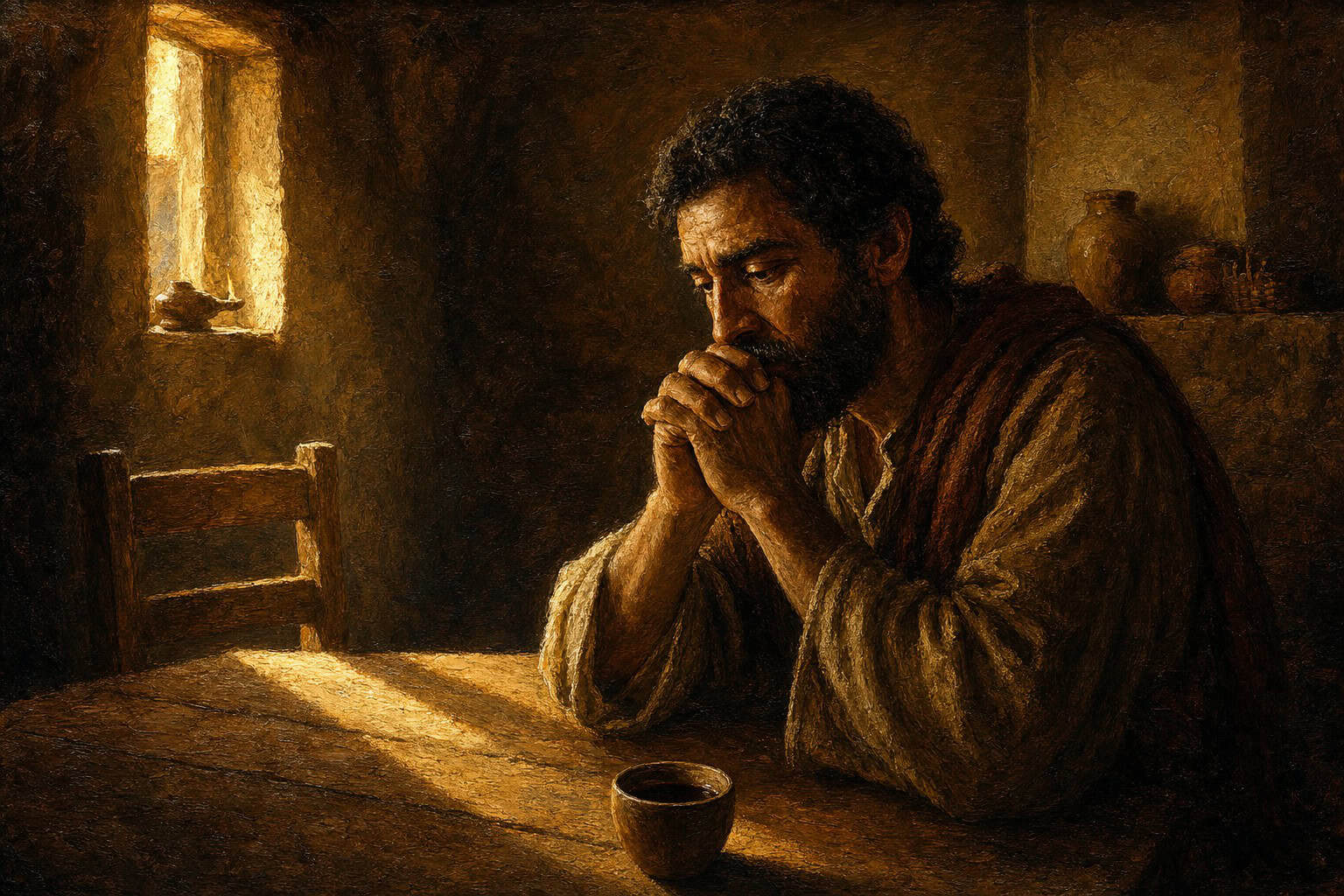
Surviving a breakup? A hard, honest guide through the wound of ending, the fear of loving what will not last, and how to burn anyway.
Coffee Going Cold Between Two People Who Still Speak
You are sitting somewhere ordinary the day after it ends. A kitchen, maybe, with the coffee going cold in your hands because you forgot to drink it. Steam stopped rising a while ago. You keep the cup anyway, both palms wrapped around it, as if the shape of holding matters more than the warmth. The other person is gone but not gone; their voice is still in the room, still in your ear, still shaping the way you narrate your own morning. That is the strange cruelty of a breakup. The body does not know the person has left. Your hands still reach for the phone to tell them small things, the joke you saw, the weather turning, the way the light came through. In Confessions to the Empty Chair, the narrator sits inside a scene of closeness that is already, in his mind, calculating its own ending. He is speaking to a woman named Leigh. He is showing her pieces of himself, one at a time, careful and slow, and even as he does it he is watching for the moment she will pull away. This is where most of us live after love breaks. We do not sit in the loss cleanly. We sit in it while still half-inside the closeness, replaying what was said, hunting for the exact word that turned warmth to distance. The question you typed into the search bar is really two questions wearing one coat. How do I stop hurting. And underneath that, quieter, how do I ever risk this again. The narrator’s morning gives you no easy answer, but it gives you an honest mirror. He knows the ending is coming. He is not naive about it. And yet he does not run. He keeps offering pieces of his spirit into the conversation like bread thrown out for a bird that may or may not eat. He watches to see if she stoops for it. This is the first thing surviving a breakup asks of you. Not to stop feeling. Not to armor up. But to stay awake inside the ache instead of numbing it or narrating past it. The cold coffee, the unsent message, the room that still holds a voice: these are not signs you are failing to heal. They are the shape of a soul that dared to attach itself to another and now feels the tearing where the attachment held. That daring is not your weakness. Sit with the cup a moment longer. Let it be cold. It is, though it does not feel like it now, the very thing that will let you love again once this cold has finished passing through you and left you emptied but not sealed.
Dropping Breadcrumbs Only the Right Eyes Can Follow
The narrator has a method, and it is a bruised one. He does not hand himself over all at once. Instead he scatters his true self in small pieces across conversations, an opinion here, a reflection there, a fraction of who he really is buried inside an ordinary remark. He calls them breadcrumbs. He wants to see whether Leigh will follow them back to the man who dropped them, or whether she will step over them and reach only for the surface, the literal thing said, the two small coins instead of the meaning they were minted to carry. He is testing her patience without her knowing there is a test. Each conversation raises the price of admission a little. If you have just come through a breakup, you know this ache in your bones. You gave someone the real pieces of you, and you learned they were only holding the surface. This is the part of grief nobody warns you about. It is not only the loss of a person. It is the fear that showing yourself again is a fool’s errand, that the next one will also skim past the buried self and pocket only the easy words. The narrator lives at the edge of that fear on purpose. He is searching, obsessively, for the precise place where a woman’s warmth turns to silence, mapping it like a man who has walked that border too many times and worn a track in it. And here the scene shows you something true about the wounded. Pain makes us cartographers. After enough leavings, you can feel the temperature drop in a room before the other person even knows they are cooling. You read the pause before the reply. You catch the smaller smile, the answer that came a half-second late. This vigilance feels like wisdom. It even protects you, a little, the way a scar protects the skin beneath it by refusing to feel. But it also isolates you, because a man who is always scanning for the exit is never fully sitting at the table. Part of him has already left. That is the trap waiting for you after a breakup. You will be tempted to become an expert in the signs of abandonment, to armor yourself with pattern-recognition so no one can ever surprise you again. The narrator shows you both the seduction and the cost of that armor. He sees everything. He misses nothing. And in seeing everything, he is permanently, achingly alone, because the seeing keeps him one step outside every warmth he watches. The breadcrumbs are honest, but they are also a test he half-hopes will fail so he can be proven right about being left. Surviving means noticing the hour when your carefulness stopped guarding your heart and started walling it up brick by patient brick.
Sentenced to See Through Every Face You Are Offered
Here the scene turns, and it turns inward. The narrator confesses something that sounds at first like pride and reveals itself as a wound. He can see through the faces people arrange for the world. He watches women build their small performances, their careful edits of themselves, the version they present at the door, and he sees all of it while they believe they are hidden. You might think this would be a gift. It is closer to a sentence handed down. Because once you can see the arranged face, you can never again rest in the warmth someone offers you plainly. There is no innocent kindness left to receive. Every gesture is read for what it conceals, every soft word weighed for the harder thing beneath it. He cannot switch the seeing off. It runs whether he wants it or not, the way a tongue keeps finding a broken tooth. And the deepest loneliness in the whole passage is not that he was left, or that he expects to be. It is that no one sees through his own arranged face the way he sees through everyone else’s. The knowing runs one direction only. He is exposed to every hidden self around him and stays hidden from all of them, a man reading a room full of people who cannot read him back. This is where surviving a breakup gets honest about the thing beneath the thing. The real terror is not being alone in a quiet flat. It is being unseen while you are still in the room with someone. It is offering the buried pieces of yourself and watching them go unrecognized, stepped over, mistaken for small talk, until you begin to wonder whether there is anything in you worth the recognizing at all. That slow disappearing, the creeping suspicion that you were not enough to be kept, is the quietest and cruelest part of any loss. It does its work in the dark. It makes you want to cover yourself and vanish even from your own gaze, to stop being a thing that can be looked at and found wanting. The narrator knows this fear intimately. He has organized his whole approach around outrunning it, testing others before they can test him, seeing first so he cannot be caught unseen. But the seeing does not save him. It only confirms the isolation it was meant to prevent.
To refuse everything that ends is to refuse living, for the whole of life is a thing that ends.
What the Silence After Leaving Teaches the Hands
So what do you do with all of this once the flat has gone quiet and the last message has stopped mattering. The narrator’s answer is uncomfortable and bracing. He would rather have clarity than comfort. He would rather a person return to their familiar habits and leave him than stay and waste the ground of his soul, scattering good seed on stone where nothing he plants can root and rise. This sounds cold on the page. Sit with it longer and something warmer shows through the frost. He is refusing to beg to be seen. He is refusing to shrink himself into a smaller shape just to keep someone who cannot follow the breadcrumbs he leaves. After a breakup, this is the harder medicine, and it works slowly, the way a fever breaks in the night without announcing itself. You will want to chase, to explain, to re-offer the pieces one more time in the hope the other person finally kneels and assembles them into the man who dropped them. The scene tells you to stop scattering seed onto stone. Not out of contempt. Out of a fierce and stubborn respect for what your own soul is worth. The fallout of a leaving is not only tears. It is the quiet after, the hours where the phone does not light, where the second cup stays clean and dry in the cupboard, where your hands do not know what to hold and keep closing on nothing. In that silence a choice forms slowly, almost against your will. You can turn the narrator’s vigilance inward and become the cartographer of your own coming losses, mapping every future wound in advance, guarding so hard that you finally feel nothing and call the numbness peace. Or you can let the silence do its slower, kinder work, teaching your hands to stop reaching toward the empty place where the person stood. The narrator, for all his armor and all his hard sayings, still offered bread. He still spoke. He still risked the recognition that never came, still dropped the crumbs knowing they might be trodden into the floor. That is the thing to carry out of the wreckage of your own ending. The leaving was not proof that you gave too much of yourself away. It was proof that you are still, even now, capable of giving, and that capacity is the only thing in you worth protecting through the whole long grief.
Burning Anyway, Because Everything Precious Ends
Here is where the scene leaves you, and it is not with a tidy healing wrapped in a bow. The deepest truth under the whole chapter is that the narrator chooses to burn passionately in his attachments precisely because they will end. He does not bank his fire on the grounds that nothing lasts. He does the opposite. He pours himself out knowing the pouring is temporary, because it is the temporariness that makes the pouring precious at all. A thing that could never be lost could never be treasured. Most of us, after a bad breakup, do exactly the reverse. We conclude that if it will only end, it is not worth the beginning. We hold back. We keep the good pieces buried where no one can reject them, and we call this wisdom when it is really a slow refusal of life itself, a way of dying on a comfortable schedule. The narrator sees through that refusal the way he sees through everything. To protect yourself from all intensity is not to survive the loss. It is to make your whole life the loss, keeping the coffee warm for no one, guarding an empty table. Surviving a breakup, then, is not learning to stop loving what will end. Everything you love will end. The person you have not yet met will also, one day, be a person you have somehow lost, because that is the plain reckoning of being a body moving through time toward its own last hour. The task is smaller and braver than never hurting again. It is to grieve fully and without shame, to stop planting seed in stone, to keep the tender capacity to be seen even after the seeing failed you once, and then, when the cold has finally finished passing through you, to strike the match again anyway. Confessions to the Empty Chair does not promise this will be painless. It promises something rarer and truer, that the pain is not evidence you loved wrongly but evidence that you loved at all. The chapter carries this fierce, wounded honesty further into a man who has memorized every pattern of leaving there is. That is a road worth walking beside him. For now, hold only this. The kettle will boil again some ordinary morning. The hands will find something living to hold. And the very fire you are afraid to light, because you already know it will one day burn out, is the same fire that proves you are, against all of it, still alive and still worth the warming.