The body knows what the mind refuses: that mercy sometimes arrives as interruption.
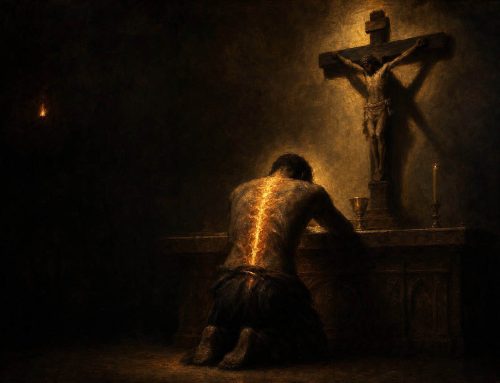
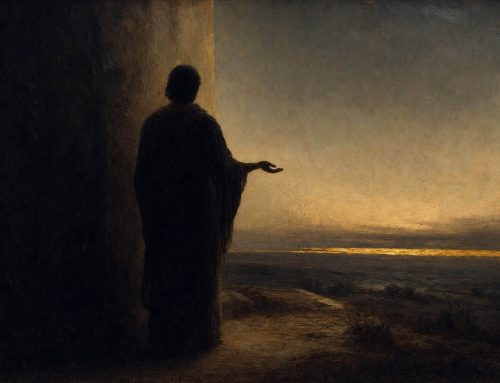
You kneel on stone floors worn smooth by centuries of other knees, other sorrows. The grooves fit your bones as if carved for this particular collapse. You came here carrying only what you possess—melancholy and darkness, your two coins—and now something shifts in the air around you, something that was not summoned and cannot be dismissed.
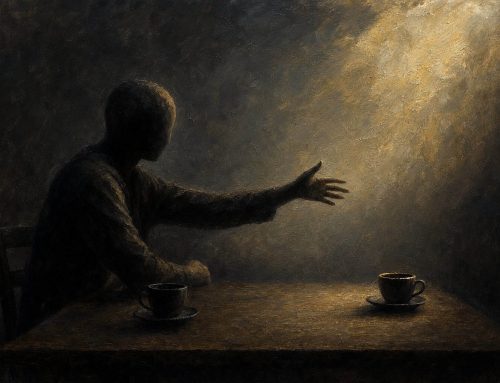
The mirror appears without warning. Not the kind you hang on walls but the sudden surface that forms when protective distance shatters. You see yourself as you are: the one who pushes away what watches you writhe, who chooses hurt like choosing power, collecting affections like loose change on the ground. The exposure burns. Your hands want to cover what has been revealed, but they hover instead above something invisible, something that feels like bread but weighs like stone.
The Unbearable Arrival
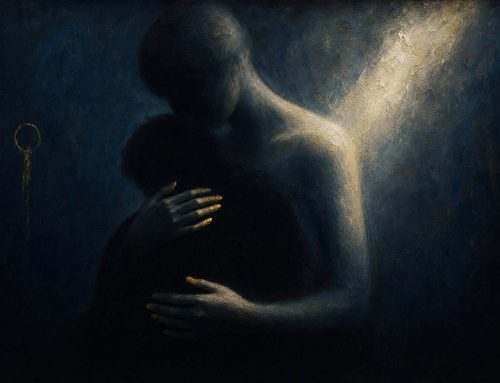
Perhaps this is what the mud of mercy sometimes looks like—not always a healing balm pressed against blind eyes, but the shock of being interrupted by desire when you had settled into the rhythm of your own ruin. You had grown comfortable in the push-away, in loving what abandons you, in the cold silence that endorses your writhing. Then this: an arrival that respects no readiness, that does not wait for worthiness.
The body makes its small involuntary shift. Despite what the mind insists must be kept at distance, muscles remember older truths. They remember the pleasure of receding hunger pains after starvation, the full belly calming what had learned to feed on emptiness. But remembering is not the same as receiving. The gift hovers in your trembling hands—dense, real, refused.
Love is free—free to accept or reject. It cannot be coerced, manipulated, purchased through compliance, or sustained by obligation. It arrives as a gift, or it does not arrive.
The Weight of What Cannot Be Given
Your hands know the weight of what has been milled from torment. Every grain ground down through nights of abandonment, through the second seeing of His turning away, through the envy of those for whom love blooms without struggle. The flour mixed with something darker—not quite ashes but the residue of what burns when you discover suffering might be your purpose, the reason for your creation.
Still, bread forms. Not by your will but through some alchemy that transforms even the inverted love that exalts the self into something that could nourish another. Your hands hover above it, knowing it must be offered but cannot be forced past anyone’s lips. The King of the Universe Himself does not act where He is not invited, does not betray the free will of His creation. How much less can you demand reception of this small, dense offering?
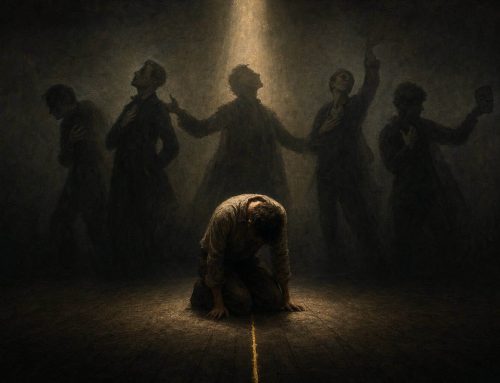
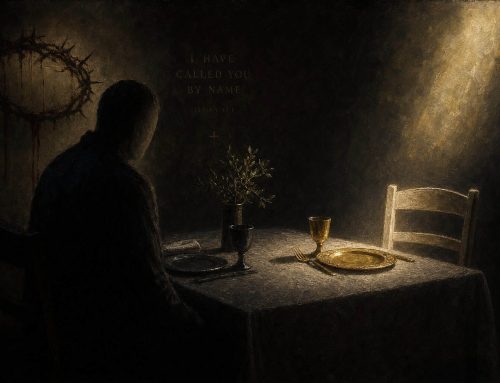
The thud when it lands sounds ordinary. No one reaches for what you’ve extended. They acknowledge with simple “thanks,” as if everything you offer carries the same weight, the same meaning. The bread sits untouched while around you the business of God’s church weaves its spiritual mandates with financial pleas, emotional stimulation with performative praise, lights and mood lighting and hand swaying, coffee and donuts in the foyer.
Ancient Reception
But the stones know better. These walls that have held generations of kneeling, of sorrow, of the hidden years when even divinity accepted poverty and dependence, found nowhere to lay its head. They receive without demanding repair. They do not ask you to be other than you are—the one whose surfaces turned to sudden mirror, whose protective withdrawal chose distance as twisted mercy to preserve another’s brightness from your contamination.
Grace lives in the suspended tension between reaching and recoiling, where bread milled from torment still offers itself as sustenance.
The ancient surfaces hold your ruin the way they’ve held countless others. No judgment in their receiving, no insistence that you transform your melancholy and darkness into something more presentable. They know what the coffee-and-donuts faithful forget: that sometimes mercy arrives not as comfort but as the shock of being seen in your rawness, of having your only possessions—your two coins of sorrow—received as sufficient offering.
Unlike angels, we are now born into ignorance and must climb toward wisdom through years of pain and discovery. That makes us weaker—but also forgivable.
The Suspended Tension
Grace lives here, in this impossible suspension. Your body moves toward what it simultaneously dreads, caught between reaching and recoiling. The hunger that shares muscles with dread pulls you forward while protective wisdom insists on distance. You are the good-for-nothing servant afraid of wasting the Master’s investment, yet also the one who knows that to everyone who has will be given more.
The offering in your hands transforms nothing cleanly. It does not lose the taste of torment, does not become purely sweet bread. Instead, it holds both—the shareable sustenance and the memory of violation, the nourishment and the wound from which it was milled. This is what you have to give: not bread that pretends no grinding, but bread that carries the full weight of its making.
Sometimes, in the rare moment when the room forgets itself, when laughter cracks the unspoken verdict of unworthiness, someone reaches for what you offer. Not because it looks appetizing, not because it promises comfort, but because they recognize the taste. They too have milled flour from their own torment, have felt their protective surfaces shatter into mirrors, have knelt in grooves worn by other bones.
The Horizon of Reception
The gift continues its small, ordinary landing—dense and often refused. Yet your hands keep hovering above the invisible bread, keep offering what cannot be forced past anyone’s lips. This is the work: not to transform violation into something unrecognizable, but to mill it into form that could, if received, nourish another’s hunger.
The ancient stones wait with you, patient in their knowing. They have seen this before—the unearned arrival that interrupts sorrow, the body’s involuntary shift toward what the mind refuses, the suspended approach that never quite resolves into either reaching or recoiling. They hold you in this tension where grace makes its home: not in the completion of transformation but in the offering itself, in hands that tremble but do not withdraw, in bread that remembers ashes but offers itself anyway as sustenance for whoever might recognize the taste of their own grinding and dare to reach, despite everything, for what hovers between giving and receiving, between hunger and dread.