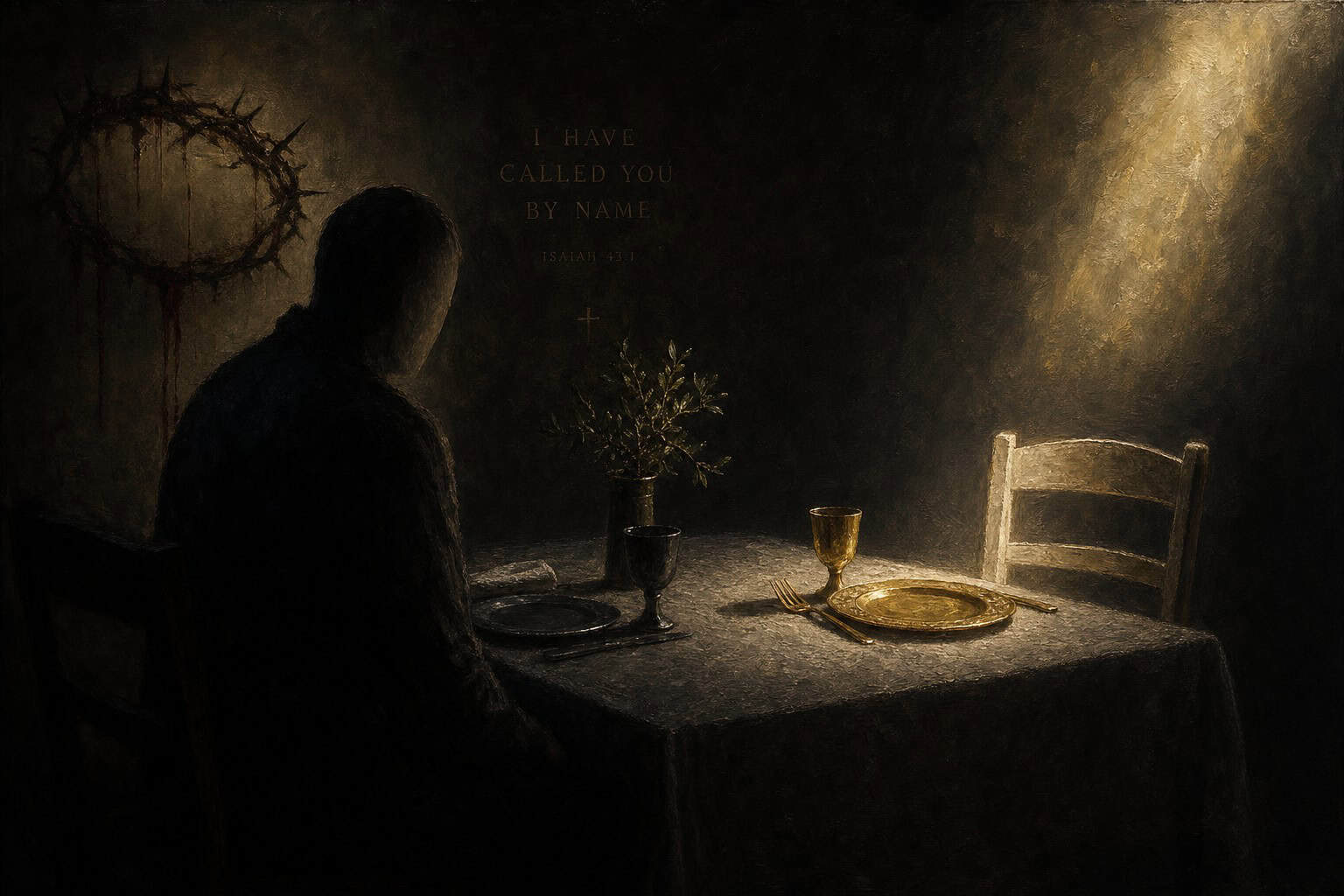
Where the missing beloved becomes more present than presence itself.
You know this weight before you name it. The morning arrives and your hand reaches across the bed to find only cold sheets, yet the depression in the mattress remains, as if their body still presses down from somewhere above the ceiling. The coffee maker gurgles its familiar rhythm and your hands pull down two mugs before remembering—always before remembering—that only one will be filled. The second mug sits on the counter, accumulating a particular kind of heaviness, the lipstick stain on its rim becoming something between accusation and relic.
The apartment reorganizes itself around their absence. Not the clean emptiness of a space never occupied, but the messy persistence of what-was-here-and-left. Their chair at the kitchen table pulls at you with a force stronger than gravity. You find yourself walking around it, never through the space it guards. The clothes hanging in the closet still carry their scent—you lean into them at 3 AM, breathing deep, then recoil as if caught stealing. Pictures that went unnoticed when they were alive migrate closer to your face, your eyes searching the frozen pixels for some hidden meaning, some message they tucked away for this precise moment of your searching.
Your body refuses the logic your mind accepts. The throat forms their name at unexpected moments—calling up the stairs, turning to share a joke, waking from dreams where they never left. Your muscles continue their trained movements: reaching for their toothbrush to set beside yours, cooking portions for two, your hand lifting to smooth hair that is no longer there. The flesh maintains its habits while consciousness watches from a terrible distance, observing your own hands perform rituals for ghosts.
Death conceals all that a person could have been; at most after death, the concentration of all that a person was…
The Living Memorial
This is how the living memorial begins—not as metaphor but as literal truth. Your joints ache with specific losses. The left shoulder carries your father’s dismissal, the right hip holds the weight of your mother’s turned back, the throat tightens around every unsent word to Jeannètte. You become the ossuary, bones ground down to make space for others’ absences. Each loss has its own texture, its own weight distribution through your frame. You learn to read your body like a map of departures.
The contamination spreads backward through time. New faces wear old masks—this stranger’s laugh carries your brother’s mockery, that lover’s touch arrives already shadowed by ancient betrayals. Fresh intimacy tastes of Eden’s first abandonment, when God withdrew into silence and left only the memory of evening walks. Every “hello” comes pre-infected with its future “goodbye.” You find yourself mourning people while they still breathe, conducting their funerals in advance, practicing for the inevitable weight of their empty chair.
Double Exposure
The double exposure intensifies. You sit across from a friend at lunch and simultaneously see them in their future coffin, their face both animated with today’s gossip and already wearing death’s particular stillness. Or the reverse: walking through the cemetery on a casual stroll, each tombstone signals death’s clear victory, yet you feel the dead crowding close, more present than the living who hurry past. Stuffed animals, toys, flowers, miniature flags, worn photos—these trinkets left by the surviving testify not to memory but to the terrible presentness of absence.
Some absences arrive before their time. The baby room with its unopened diapers, unused bottles, tiny socks and mittens arranged for a visitor who will never arrive. Everything in this room calls out to the infant who would have been. Death here doesn’t just take a child but steals all the years they would have lived, every small and great feeling threaded to that future. The room becomes a monument to the specific weight of never-was, different from the weight of what-was-and-left, yet equally crushing in its particular gravity.
Performing to Empty Chairs
You discover yourself performing to empty chairs. Words disappear into silence, efforts go unthanked, love pours out toward those who have already turned away. Even in Rome, miles from home, the empty chair travels with you, a silent confidant beneath Italian stars. You continue these performances not from hope but from something more primal—the body’s refusal to accept what the mind knows. Like those who wake at 3 AM to scroll through dead images on glowing screens, searching for living sparks in frozen pixels, you maintain the gestures of connection even as the other end of the line goes permanently silent.
The empty chair that once accused begins to hold a different presence—not fixing or filling the void, but accompanying it.
The frozen reach becomes your signature gesture. Your hand lifts toward connection then halts at an invisible barrier—a window screen that allows sight but denies touch, the memory of rejection creating an impassable membrane, the certainty of future loss paralyzing present approach. You see others chasing their own happiness, too absorbed to notice your sorrow, and recognize yourself as the dead among the living. The strings of attachment that once bonded you to others droop to the ground like broken kite strings, yet you feel them still, dragging behind you through each day.
The way through is not around; it requires walking through the valley. Remember Emmaus: grief shared honestly on the road opens the eyes to recognize the sacred Companion who keeps pace, even disguised as a stranger.
Past Wounds Through Present Skin
Past wounds seep through present skin. You wake in an empty bed and feel not just this morning’s solitude but every manufactured distance, every long absence designed to create space where intimacy threatened to form. The silence of the empty apartment becomes another forge, hammering you into shapes that can withstand the next departure. You abandon the hope of love not once but repeatedly, each abandonment layering over the last until you cannot tell which sorrow belongs to which loss.
The radio becomes your strange companion, voices of anonymous callers threading through your kitchen at dawn. Their heartbreaks become borrowed identities—you try on their grief like clothes, feeling how this widow’s sob might fit your throat, how that divorcé’s rage might animate your limbs. Through these disembodied voices, you first encounter the possibility that your grief is both utterly singular and completely common, that empty chairs furnish every home.
Time Collapses in the Body
Time collapses in the grieving body. You carry memories of Eden—that time before the fall when God walked with us in the evening cool—alongside the fresh wound of this morning’s absence. These memories, though blurred through the veil of death and sin, decorate your interior landscape. You become the book no one will read, the song no one will hear, the film playing in an abandoned theater. After three or four generations, you know, your imprint upon the world will wear away like carvings in stone exposed to water and wind.
The body develops strategies to anchor itself against the vertigo of loss. You press your feet to linoleum, feeling its coolness travel up through your bones. You plunge your hands into dishwater, letting its heat shock you back into the present moment. Yet even these anchoring gestures become rituals of grief—the linoleum remembers the weight of their steps, the dishwater cannot wash the inner stain of accumulated sorrow.
Inherited Scripts
You begin to understand that you are living inside inherited scripts. Your voice carries ancestral tones—your mother’s disappointment, your father’s withdrawal, generations of unspoken grief pooling in your throat. When you speak, you hear the dead using your mouth, their unfinished sentences completing themselves through your lips. The sins of the parents laid upon their children, repeated out of ignorance, the patterns manifesting through bodies that think they are choosing freely.
The hollowing continues. You empty into a container for others’ pain, becoming a whetstone worn down by their sharpening, a storage unit for unconfessed darkness. Your spirit writhes in futile protest before collapsing into new desolate sorrow, the disorientation of being thrown back into the world that continues its business while you carry the custody of the dead’s unfinished days.
The Chair That Begins to Hold
Yet within this very hollowing, something else becomes possible. The empty chair that once accused begins to hold a different presence. Not fixing or filling, but accompanying. The loneliness carried since childhood, the chasm widened by every departure—something claims that void without eliminating it. The perceived absence itself becomes a form of presence, casting a melancholy veil through which the world appears more truly: temporary, precious, already in the process of becoming memory.
Death reveals itself as the ocean bordering this island of the living. Everything observed, everything discussed, occurs within the context of eventual ending. The ultimate future of all the living becomes visible in every gesture—each embrace already contains its release, each gathering pre-figures its dispersal. Yet this knowledge doesn’t paralyze but particularizes. This specific mug with this exact lipstick stain. This particular silence where this irreplaceable breathing used to be.
The grief settles into your bones, not as pathology but as the honest weight of having loved in a world where everything ends. You continue reaching across the bed each morning, continue pulling down two mugs, continue speaking to empty chairs—not from confusion but from fidelity to the truth that absence itself is a form of presence, that the missing beloved organizes the world more thoroughly than any living body could, that grief is not the opposite of love but its most enduring form.