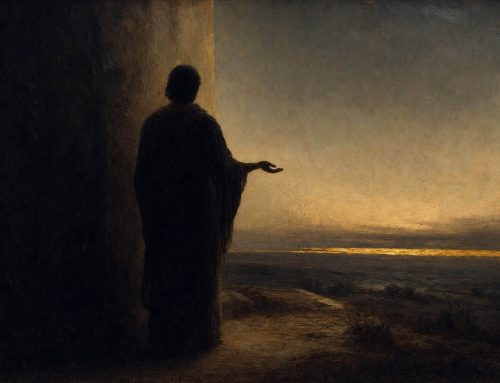
The slow dissolution of presence until one exists only as temporary furniture in others’ lives.
You know this thinning. Not the dramatic vanishing of fairy tales, but the gradual transparency that steals over you when someone’s gaze slides past as if you occupy mere fog. Your breathing changes—shallow, careful—when even an uninvited glance threatens to pierce the careful nothing you’ve become. The chest tightens against threads of connection that form despite your retreat, those invisible filaments that mark your presence through the very architecture of your avoidance.
The Division
You learned early to fracture yourself into manageable portions, each piece curated for its specific audience. To your mother, you present the dutiful child who never quite measures up to the ghost of who you might have been. To colleagues, the competent professional whose inner life remains sealed behind appropriate boundaries. To lovers, a blank screen onto which they project their unfinished stories, their lost futures. Each fragment operates independently, none aware of the others, while the center—that place where a whole self might gather—empties like a room from which all furniture has been quietly removed in the night.
The exhaustion of this distribution weighs on you like water on stone. You wake in empty beds, having manufactured distance through long absences that leave no trace of explanation. Your polished timeline tells a story scrubbed clean of messy vulnerability, each deleted message leaving a palpable gap in conversation’s flow, a silence that forces others to author volumes about your hidden state. You have become the book no one will read, the song no one will hear, the film playing in an abandoned theater.
Erasure stung worse than hate because hate still points at you. I stood where I used to stand and counted the empty.
The Body’s Betrayal
Your body knows what your mind refuses: that dissolution has its limits. Fingers leave damp marks on marked pages despite your will toward invisibility. The flesh insists on its density even as you thin toward transparency. You loathe being human, preferring to disassociate, feeling like a shell of a person watching someone else live your life from a distance.
Yet the body resists its own erasure. It breathes, it hungers, it reaches—hesitantly—toward emotion, only to retract, abandoning feeling before it can inevitably abandon you. This preemptive exclusion becomes your primary gesture, a defense mechanism so refined that you delete traces of vulnerability before they fully form. You exist per se, in a physical sense, but not yet for anyone, including yourself.
The Provisional Life
Every commitment you make carries an asterisk, every promise includes its own escape clause. You keep all arrangements blurred, exits architected, back doors tested and ready. Not from cruelty but from the terrible knowledge that to matter—to truly matter to someone—is to risk the weight of being claimed, of having your outline fixed in another’s need.
The cruelest dimension of erasure is how it makes you hypervisible to yourself—every gesture of withdrawal illuminates the self attempting to withdraw.
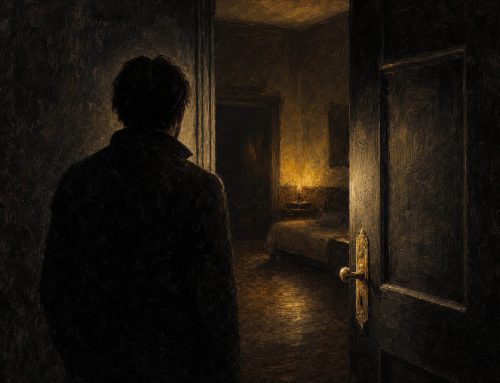
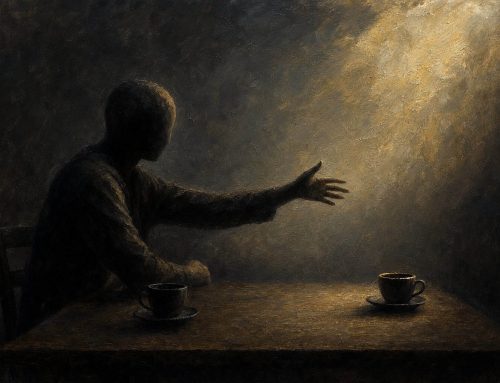
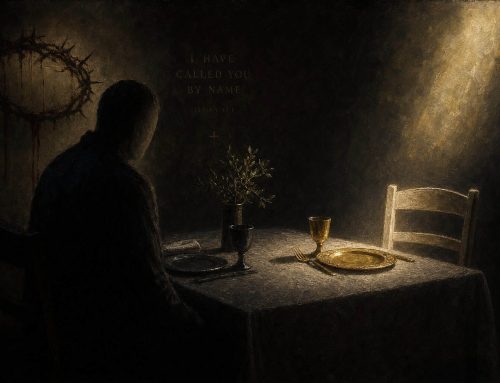
You become temporary furniture in others’ lives, present but replaceable, useful but not essential. They use your body as a doorway to someone else’s lost future, your presence as a placeholder for what they cannot reach. You sit opposite them—not in rooms but as ghosts they cannot exorcise, living behind their eyes while your actual self remains 350 miles away behind memory’s closed door.
The world, blind as ever, sees you as Clark Kent, unaware of who you are beneath the surface without glasses. Most of the time, your prediction of not being understood comes true. The evidence rests in their absence, in the empty chair where recognition should live.
The Mirror’s Silence
In mirrors, you watch your outline fade. Not dramatically—no special effects, no spectral theatrics—but through a trained attention to the spiritual pressures that undergird ordinary hours. The reflection shows only what others need to see: the competent surface, the appropriate responses, the managed presentation. Meanwhile, the actual self thins toward transparency, suspended between the terror of being seen and the ache of remaining invisible.
You have become skilled at this vanishing, at being the blank screen for projections. Others see in you their own unfinished business, their unprocessed histories, their fantasized futures. You carry these foreign narratives like borrowed clothes that never quite fit, exhausted by the constant work of mirroring, interpreting, holding space for what they cannot hold themselves.
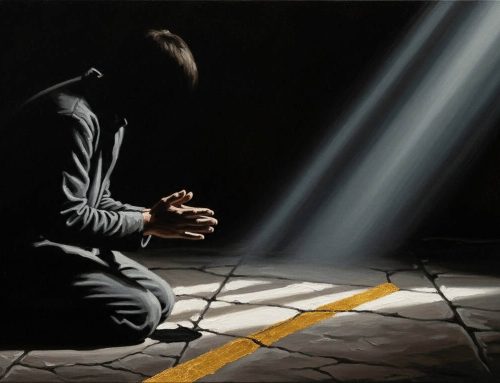
The silence where God’s voice should sound feels both like abandonment and strange relief. Where before, in the false light of human affection, that voice remained merely one among many, here in the darkness of your shame, a single speck of divine light becomes impossible to ignore. Yet even this recognition brings its own erasure—you are not seeking to surrender or substitute your individuality on the altar of someone else, not even God’s.
The Uninvited Threading
Despite your retreat, despite the systematic deletion of traces, something persists. Call it the uninvited connection that forms against your will, the invisible threading that marks your presence through its very avoidance. You cannot step into another’s mind—that sanctuary is closed to you—but you can trace the silhouette you cast against their life.
These threads pull taut at unexpected moments. A scent on clothes hanging in a closet, pictures that went unnoticed when you were present brought closer to the face as others search for hidden meaning. After three or four generations, your imprint upon the world will be worn away like carvings in stone exposed to water and wind, but for now, these traces persist despite your best efforts at erasure.
Loneliness, heartbreak, disappointment, weariness, and misunderstanding strip the soul of every false comfort, leaving it raw and exposed.
The Weight of Watching
From your place of manufactured distance, you observe. Like Odysseus returning to Ithaca in disguise, you hide your intelligence and intention, beginning your observations from afar. You see how others fill the space you’ve vacated, how quickly the world adjusts to your absence, how little disruption your thinning causes.
Yet this watching carries its own weight. Confidence in loneliness and pride in solitude resurge, overtaking any aspiration of being human again. The moments of silence and solitude at night are not spent in pensive reflection or exploring the construction of your soul, but in maintaining the careful nothing you’ve become.
You recognize in this erasure something Sartre named—consciousness as pure negativity, a nothingness that nihilates the massive plenitude of being through perpetual wrenching away. Or what Merleau-Ponty traced as the dialectic between the pre-personal, anonymous life of the body and the personal acts through which we assume our situation. These thinkers whisper at the edges of your experience, not explaining but sharpening the contours of what you already know in your bones.
The Paradox of Presence
The cruelest dimension of erasure is how it makes you hypervisible to yourself. Every gesture of withdrawal illuminates the self attempting to withdraw. Every deletion leaves its own trace. The very effort to become nothing renders you densely, exhaustingly something—if only to yourself.
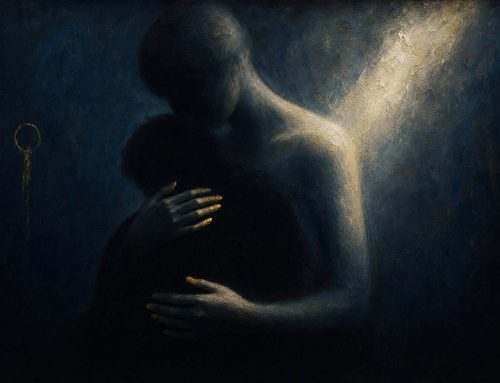
You carry memories like imagined companions walking beside you, though you never speak of them to anyone save God alone. She sits opposite you as a ghost behind your eyes, he exists as clothes that still smell like him though he will never return. These presences-in-absence people your solitude more thoroughly than any actual company could.
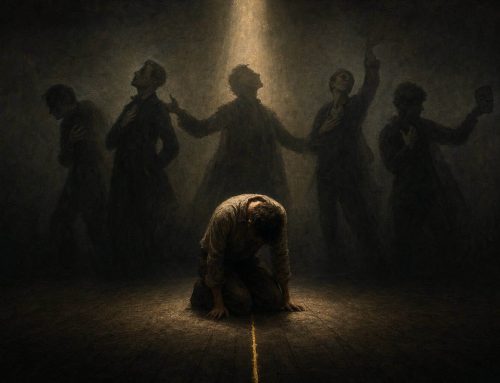
The idol of solitude breaks, finally, when you realize the silence you fled to was, in fact, the one Presence you had been seeking all along. Not a presence that erases you through divine overwhelming, but one that sees you precisely in your thinning, that recognizes the careful nothing you’ve become as its own form of prayer.
The Horizon
Finitude begins and ends with solitude. You were born alone, you will die alone. During the time between, you either embrace this fundamental isolation or you run. But erasure is neither embrace nor flight—it is the suspended state between, the permanent provisional, the commitment to remaining uncommitted.
Yet even in this suspension, something stirs. The veil thins—not between worlds but between the self you’ve hidden and the self that insists, despite everything, on existing. Tunnels and permeability exist, by definition, outside the perceptual awareness of the one bound to the familiar. Perhaps your erasure is not an ending but a preparation, a clearing of ground for something not yet imaginable.
The horizon of erasure is not recovery of solid presence—that dream died long ago. Rather, it is the possibility that transparency itself might become a way of being, that one might exist as both absence and presence, deletion and trace, the blank screen and the projection it receives. Not healing but a different wound altogether, one that breathes.