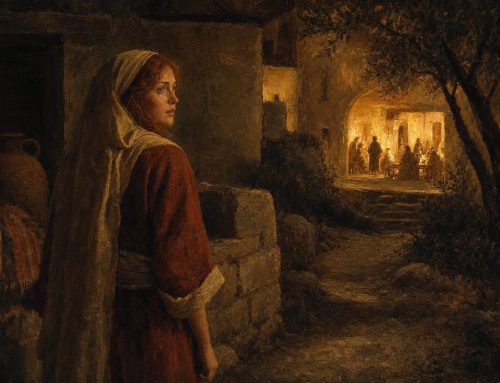
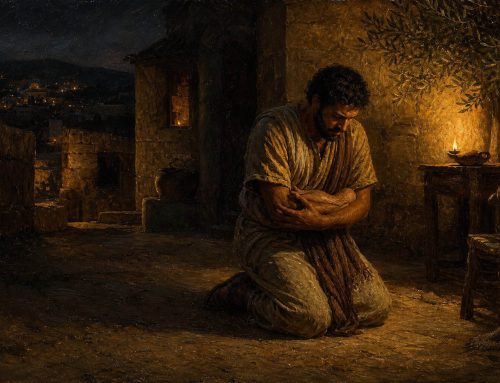
In his mind the chairs are already pulled out, a table crowded with imagined children, and he keeps reasoning at a heart that left long ago — as if logic could set a place at a life that will never come.
A Table Set for Children Who Do Not Exist
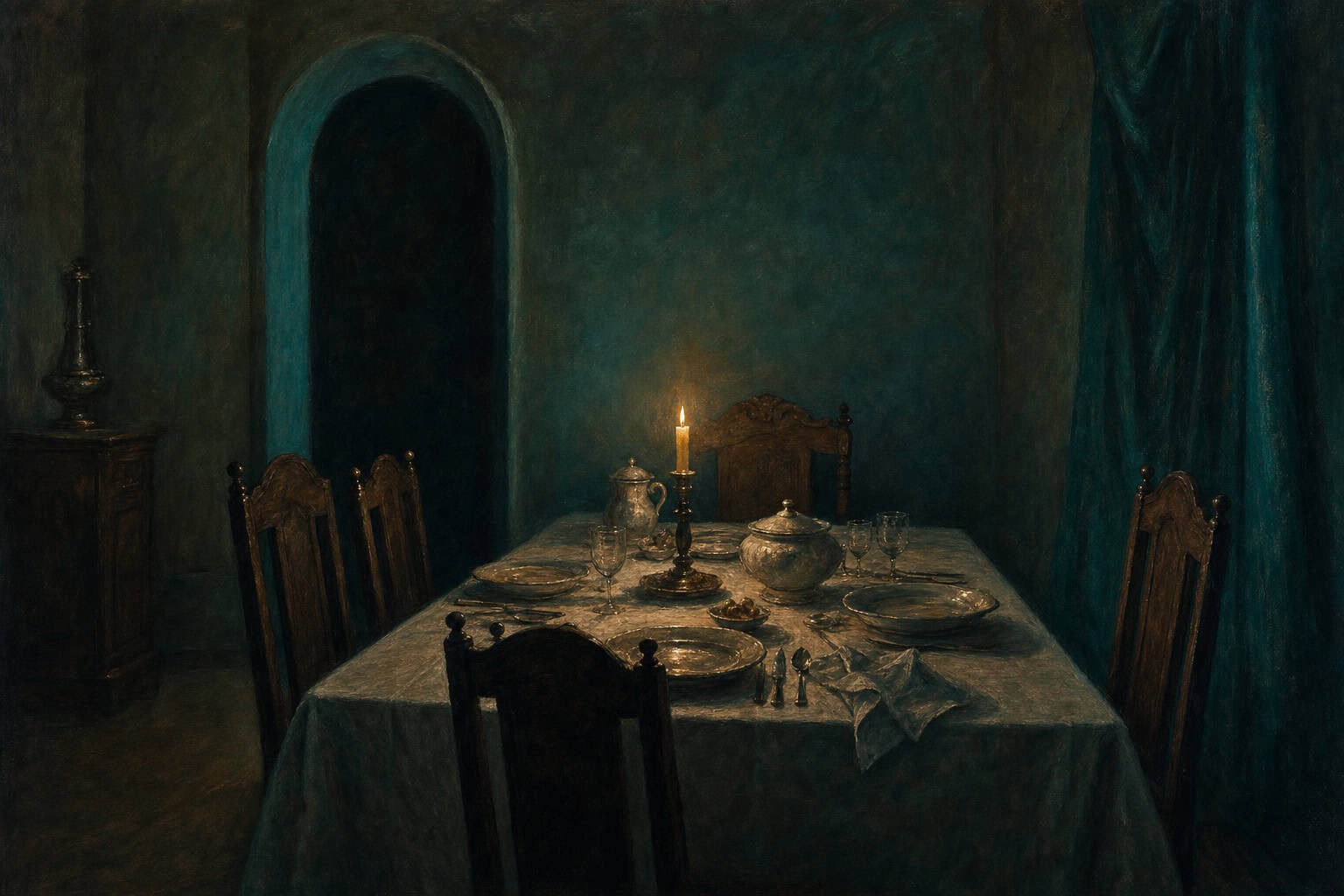
Chairs are already pulled out in his mind. A kitchen table no landlord has ever seen is crowded with plates, cups, and the small chaos of imagined children. He knows which one refuses crusts, which one drags a blanket, how their feet would swing above the floor while they eat. Their laughter is so loud in his head that it drowns out the quiet between him and the woman actually sitting across from him now. She has not agreed to these children, this table, this whole invented home, but his heart has arranged it all as if their consent were a minor detail that time would eventually supply. In this passage, the fantasy is not hazy; it has weight, temperature, even the smell of breakfast. The scene lives in that double exposure: two bodies at a real table, and the ghost family crowding the space between their plates. The distance between his furnished future and her unspoken refusal is already a kind of mourning.
When Hope Starts Rearranging Another Person’s Life
Hope has crossed a line here. It no longer waits with open hands; it has begun to move furniture around in someone else’s unseen years. He has placed her body in that kitchen, her hands pouring juice, her voice calling names he has already chosen for their children. The passage tightens around this quiet trespass: love that has slipped into possession without noticing the shift. Underneath the tenderness of his imaginings is a hard claim—this is how things will be, because he needs them to be this way. The text does not shout this; it lets the unease rise from the details, from how solid these unborn lives feel to him. When she finally speaks from her own interior world, her words do not just disappoint a wish; they topple an entire constructed household. In that instant, his grief is not about losing a woman, but about losing the whole architecture of a life he had already begun to inhabit alone.
Dates and Doctrines Thrown Like Dishes
Once her “no” arrives—not in a single word, but in a settled tone, a finality in her shoulders—he reaches for the only tools that have ever made him feel less helpless: memory and theology. He starts naming days, places, almost the hour of the afternoon sun when she once leaned toward him. Every recalled smile becomes a precedent he believes should bind the present. Alongside those memories come arguments about the meaning of love, about vocation, about what God could be asking of them. It is like watching someone in a burning kitchen throw plates at the flames. The facts are accurate, the logic tight, but the fire pays them no attention. Her body has already left the future he built, even while she still sits in front of him. In that gap, his training in doctrine becomes a shield he hides behind, insisting that if only the definitions are correct, reality itself will be obliged to change.
You cannot argue your way back into a heart that has already left; reason is a poor weapon against the body’s certainty of rejection.
The Body That Knows Before the Mouth Admits It
Long before his arguments tangle the air, his body has already received the verdict. The stomach sits heavy, as if the imagined breakfast has turned to stone. His hands tremble just enough that he hides them under the table, gripping his own knees to keep from shaking. There is that strange chill that comes when a future dies, even in a warm room; a small shiver that no cardigan or collar can fix. This is where the passage speaks to anyone who has ever kept talking long after the truth arrived: you hear the break in their voice, you see the way their eyes won’t quite meet yours, and still you keep constructing reasons, conditions, escape clauses. The young man’s training has taught him to trust clarity of thought, but now his flesh carries the clearer word. For an ordinary life, this is the mirror: how often we feel the loss first in our gut and only later in our sentences.
An Unpaid Bill at an Imaginary Breakfast
By the time their conversation winds down, no new agreement has been reached, no fresh contract drafted between God, desire, and duty. What remains is the ache of unpaid debt—except the debt itself was make-believe, a ledger he had drawn up against grace and against this woman’s freedom. He thought priesthood might settle the account, then thought she might, then imagined their children as interest on the loan. None of it balances. The chairs in his mind stay pushed out from the table, plates still waiting for hands that will never reach for them. The passage does not tidy this away; it leaves him sitting with an invoice written in his own handwriting, for a meal that was never served. Somewhere, far from that imagined kitchen, real bread will have to be broken under a very different kind of light.