Why do men keep rejecting you? A memoir’s raw reading: the ghost you flee grows louder in every new bed. Read the honest answer.
The Night You First Counted the Ceiling
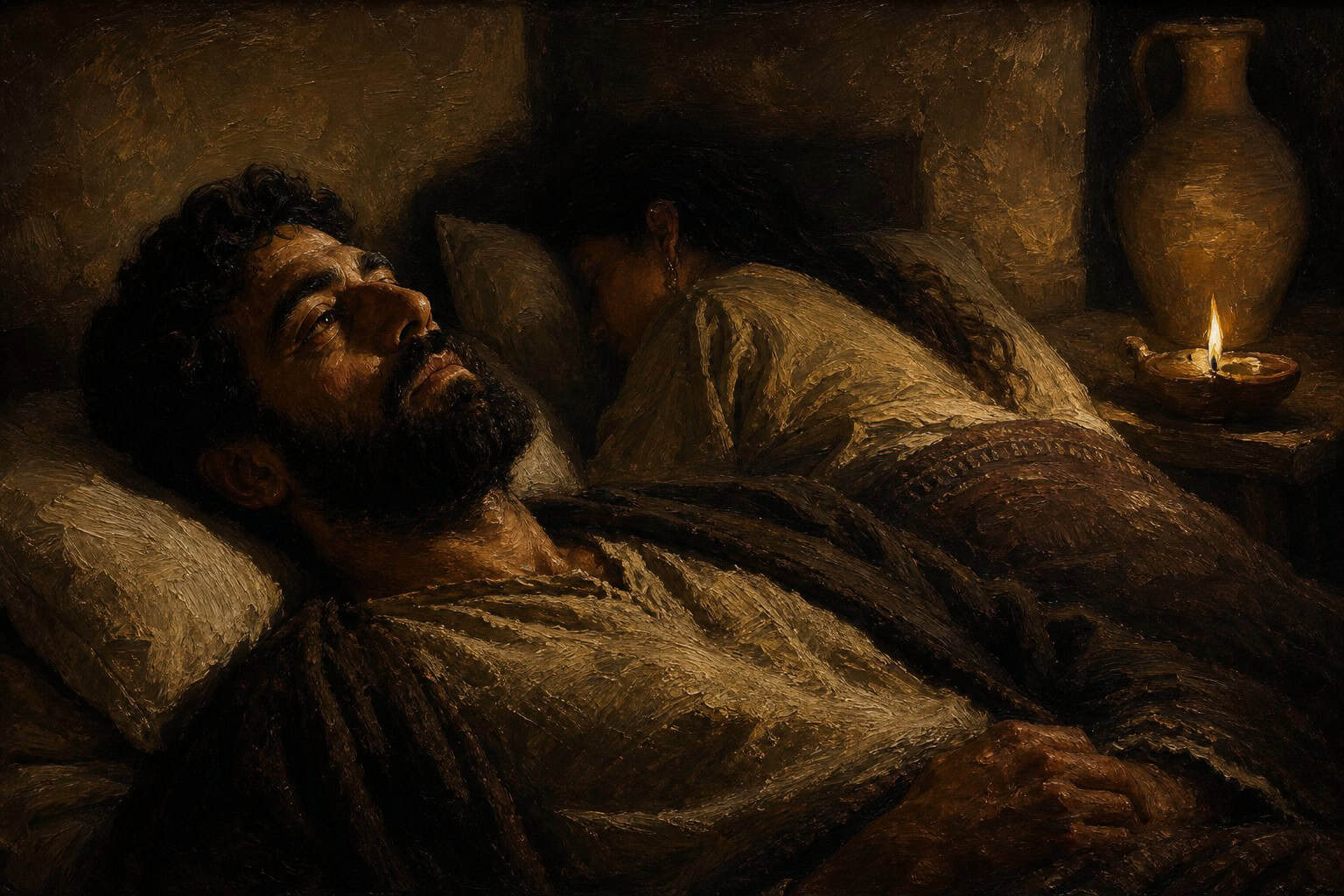
Listen to me, younger self, because I have lain exactly where you are lying now. You are on your back in a rented dark, a woman asleep beside you, her breath keeping a steady time you cannot match. You have done everything right by your own new science. You secured the yes. You performed the role. You made her smile and soften and turn toward you as if you were water she had been thirsting for all her life. And still you are staring at the ceiling, counting nothing, while the silence in the room grows so loud it roars. This is the moment you keep circling back to, the one that will teach you a lesson you refuse to hear for years. You believe the problem is that people keep rejecting you, that someone walked out once and left you hollow, and that the hollow is a hole other bodies were meant to fill. You think if you could just be chosen enough, often enough, the ache would close over like water over a dropped stone. So you learned to be chosen. You got frighteningly good at it. What took other men weeks you did in hours, because nothing quickens trust like real hunger, and your hunger was real and it was starving. But look at you now, in the dark, richer by one more conquest and poorer in the only place that matters. The woman’s name has already begun to slip from you. Her skin was soft under your hand an hour ago. Her arousal was genuine, not flattery, not performance. None of it touched the thing you came to feed, and you can feel that failure now as a cold weight settling behind your ribs. I want to be gentle with you here, though I refuse to lie to you, because you have been lied to enough by your own mouth. You were not a monster in that bed. You were an exile. You had been cast out of some home you could barely name, and every warm body was a place you tried to sleep for one night, and every morning you woke a little further from the door you were trying to find. The mood of the whole thing was grief wearing the mask of triumph, grief that had learned to smile. You called it victory. You raised it like a banner. And yet even then, in the roaring silence, you knew the victory tasted like ash on your tongue, dry and gray and gone before you could swallow it. That taste is the beginning of your honesty. Stay with it. Do not rush past it toward the next set of open arms. The ash is telling you the truth that every yes has failed to tell you.
Drinking Salt Water for a Thirst That Wanted Wine
You had a theory, and it was a good theory, which is exactly what made it dangerous. The theory was inoculation. One person had rejected you, and the rejection went into you like poison, into the blood, into the marrow, and you decided that many people, taken in small careful doses, could build up your immunity to that single cold. Every new lover became a controlled exposure. Their collective warmth, you told yourself, would dilute the one who had gone cold. And for a while you watched it seem to work. The melancholy that had stalked you for months, that had sat on your chest each morning like a wet animal, began to lift. You felt yourself hardening into something you named refined, a man who could stir desire in an afternoon and teach lessons of his own, fluent in the language of tenderness and the language of shadow both. You mistook the numbing for healing. That is the trap, and I need you to see it plainly before it costs you what it cost me. Numb is not the same as whole. When you cannot feel the wound anymore, you assume it has closed, but a wound that stops hurting because you have deadened the nerve is not a wound that has healed. It is a wound you have walked away from and left to rot in the dark. Every body you added to the count was a dose of anesthetic, not medicine, and the anesthetic wore off a little faster each time. Here is the cruelty of the accounting you were so proud of: you were trying to solve a problem of the soul with a solution measured in flesh, and the two do not share a currency. The body did what the body does; the release came; that much is honest and real. But the deeper thing, the part of you that wanted to be met and not merely handled, stayed exactly where it was, untouched, unsolved, waiting in the corner of you like a child no one had come for. You were a man drinking salt water to quench a thirst for wine, and the more you drank the thirstier you grew, and you called that thirst progress. Younger self, the reason you felt people kept rejecting you was never that you were unlovable. It was that you had quietly stopped offering the part of yourself that could be loved. You offered the mirror instead. You reflected back to each person whatever they needed to see, a lover to some, a friend to all, a polished surface with no one behind it, and so no one ever met you, and no one can reject what they never met, and no one can hold what they were never allowed to touch. You confused being wanted with being known. You gathered a mountain of proof of the first and starved to death for the second, and in the dark you could not understand why the proof kept turning to ash on your tongue.
The Ghost Grew Louder in the Crowd
Here is the thing you would not let yourself understand, and it is the turn the whole story rests on, so I will say it slowly. The one who rejected you did not lose her hold over you when you filled your bed with others. She gained it. Every stranger you took to blot out her name became a fresh place where her name got written again, in another hand, on another body. You thought each new lover was subtraction, one more degree of her power stripped away. It was multiplication. The ghost did not fade in the crowd; the ghost learned to wear every face in the crowd, and you carried her into rooms she had never entered. You would look at a woman asleep beside you and feel, running underneath the satisfaction like a cold current under warm water, the old absence sharpen, because this one was not the one, and the one was everywhere precisely because she was nowhere. This is what no one tells you when you set out to forget somebody through somebody else. You cannot heal a single wound by pressing many strangers against it, one after another, all night, all year. You only train yourself to believe that no one will ever do, that everyone falls short by inches, that the whole warm and willing world is a long row of near-misses arranged like beads around one exact hole. The pride you took in your gift was really the last disguise your despair could find. You believed some other nature moved in you, that it was not quite you doing this, that it was hunger and calling mingling in your waters, that you were forging a new creation who could pass between heaven and hell and belong to neither. That was a beautiful lie, and I understand exactly why you needed it. It let you off the hook. It made the sin into something that happened through you rather than something chosen by you. But it was you in that bed, younger self. It was your hand. It was your choice. It was your yes given, again and again, to a thing that could never fill you, and no borrowed theology of two natures can carry that yes for you.
You were not empty because you lacked lovers. You were empty because you had exiled yourself from the one love that does not depend on being chosen, and no crowd, however warm, can carry a man home who keeps walking the other way.
You cannot dissolve one person’s power over you by drowning it in a crowd; you only teach the crowd to carry their name.
What the Roaring Silence Was Trying to Tell You
So the melancholy came back. Of course it did. You had built your immunity on a false vaccine, and the poison had only gone quiet, waiting under the ice you mistook for solid ground, and now it woke and it was worse than before, because now you had proof. You had done everything a man could do. You had been wanted by more people than you could count on both hands twice over, and the wanting had solved nothing, and there was no next lover clever enough or beautiful enough to be the exception that finally worked. This is the fallout you feared most without letting yourself name it, the hour when the whole science collapses in your hands and leaves you exactly where you started, except older now, and more skilled at the very thing that was quietly killing you. I will not pretend it did not hurt. It hurt like a light and gentle hand turning heavy against you, pressing down on your chest until you were certain even help had vanished, that the road home had been closed over while you slept and no one had told you. You lay there sure you were alone. But here is what I have learned in the years since, the thing you could not yet see through your own dark. God was in that room. Not to snatch you out of it before the ceiling stopped roaring, not to spare you the ash. He was there to lie in the dark with you and refuse to leave your side. He was in the ash on your tongue. He was in the roaring silence itself, which was not empty at all but full, so crowded with His waiting that you mistook the fullness for absence. Every tear you would not let yourself cry, He counted where it stood. The exile you felt in your bones was real, but it was never exile from Him. He had followed you into every rented room and sat on the edge of every strange bed. That is the strange mercy that undoes all your careful accounting. You believed your fractures had made you permanently unlovable, damaged goods, a man whose brokenness had disqualified him from being held by anyone worth being held by. But the very break in you was the place He kept slipping through. He did not want the polished mirror you held up to the world. He wanted the shattered thing behind it, the sentimental, confused boy you were so ashamed of, the one who wanted wine and kept reaching for salt because salt was closer. That boy was the one He loved. Not the refined man you were so proud of building. The boy. And you kept killing the boy with every conquest, drowning him a little deeper each night, and God kept walking back into the wreckage to find him again, patient, unhurried, kneeling in the dark you were certain He had abandoned.
The Only Yes That Ends the Hunger
Younger self, if I could reach back into that bed and sit on its edge while she sleeps and her breath keeps its steady time, I would not tell you to stop wanting. Your hunger was never the sin. Your hunger was a compass pointing straight at the right country and reading it as the wrong address. You wanted union, and you kept settling for the kind of union that dissolves at dawn and leaves the sheets cold. You wanted to be known, all the way down, and you settled for being wanted, and you could never understand why the wanting refused to become knowing no matter how much of it you gathered. So you asked the wrong question in the dark. You asked why people keep rejecting you, why the world keeps declining to hold you, when the real question underneath was whether you had ever once let anyone hold the true thing, whether you had ever stopped performing long enough to be found by anybody at all. I cannot promise you that the people will stop leaving. Some of them will leave, and it will not always be your fault. That is the plain cost of loving inside a world of exiles, where everyone is walking home by a different road, and some of them are walking away from you toward homes of their own. But I can tell you this without flinching: the roaring silence was not your enemy that night. It was the last honest voice left in the room. It told you the salt would never turn to wine no matter how much you swallowed. It told you the crowd would never carry the ghost’s weight, only teach the ghost new faces to wear. And it told you, if you had ears left to hear it, that the thirst itself was holy, that you were built for a wine no bed on earth contains, and that the One who made you thirsty was lying there beside you in the dark, closer than the woman whose name you had already begun to lose. This is where it settles for me now, all these years down the road. Not in a tidy peace with the edges tucked in. Not in a rescue that lifted me clear of the mess. It settles in a stubborn nearness that outlasted every conquest and every collapse, a hand that stayed heavy and gentle at the same impossible time, a love that never needed my yes to be true but waited for it anyway, without end, the way a father waits at a window that stays open through the longest night. If you want to know why the rejections kept coming, begin there, in the bed you thought you had won. That is where Confessions to the Empty Chair takes up the rest of it, and where the man I became finally set down the tally and stopped counting the ceiling.