The power of goodbye lyrics: why a farewell song wakes the grief we hide, and how it names the exile of loving someone now gone.
The Radio Hummed and You Did Not Turn Your Head
You heard it first when it meant nothing. It was noise in the car on a gray afternoon, a lyric someone hummed over a sink full of plates, a few soft words about leaving that slid past you the way thousands of deaths in far countries slide past all of us. Back then you were young and busy, and a goodbye was only weather, something that fell on other people in other rooms. I remember you like that, hands on the wheel, half listening, sure the sad songs were exaggerations meant for weaker hearts than yours. You could not cry for what you did not know, and that is not cruelty. It is the ordinary shape of a living mind that keeps itself upright by refusing the full count of loss, by giving each stranger’s ending a passing nod and nothing more. Stop for every leaving, every farewell in every language, and you would never rise from the chair again. So you did what all of us do. You let the goodbye lyrics wash over you as pleasant sound, a melody about a door you had never once walked through, forgettable as the smell of the car heater. Here is what I want to tell that younger version of you, gently, before the blow lands. The song was already true. It was true before you had a face to hang it on. It was waiting, patient, for the day your own life would finally need it, the way a coat waits on a hook through a whole warm summer. The words about parting were not describing someone else at all. They were rehearsing you. You thought you were the audience. You were the subject, and you simply had not been cast yet. This is the first mercy and the first cruelty of a farewell song. It exists before your loss and it survives after it, and it does not care in the least whether you are ready. It hangs in the ordinary air, in the faint electromagnetic hum of a speaker no one is watching, holding a grief that has not yet found its owner. One day it will find you, in a checkout line, on a Tuesday, when you least expect the ambush. On that day you will understand it was never abstract. It was addressed. It had your name folded inside it the whole time, written in a hand you could not yet read, waiting for the flesh in you to grow spirit enough to see. I wish I could have made you listen sooner. But even that is a lie I tell myself, because nothing hears the song until it must.
The Chair Stays Full and the Person Walks Out of It
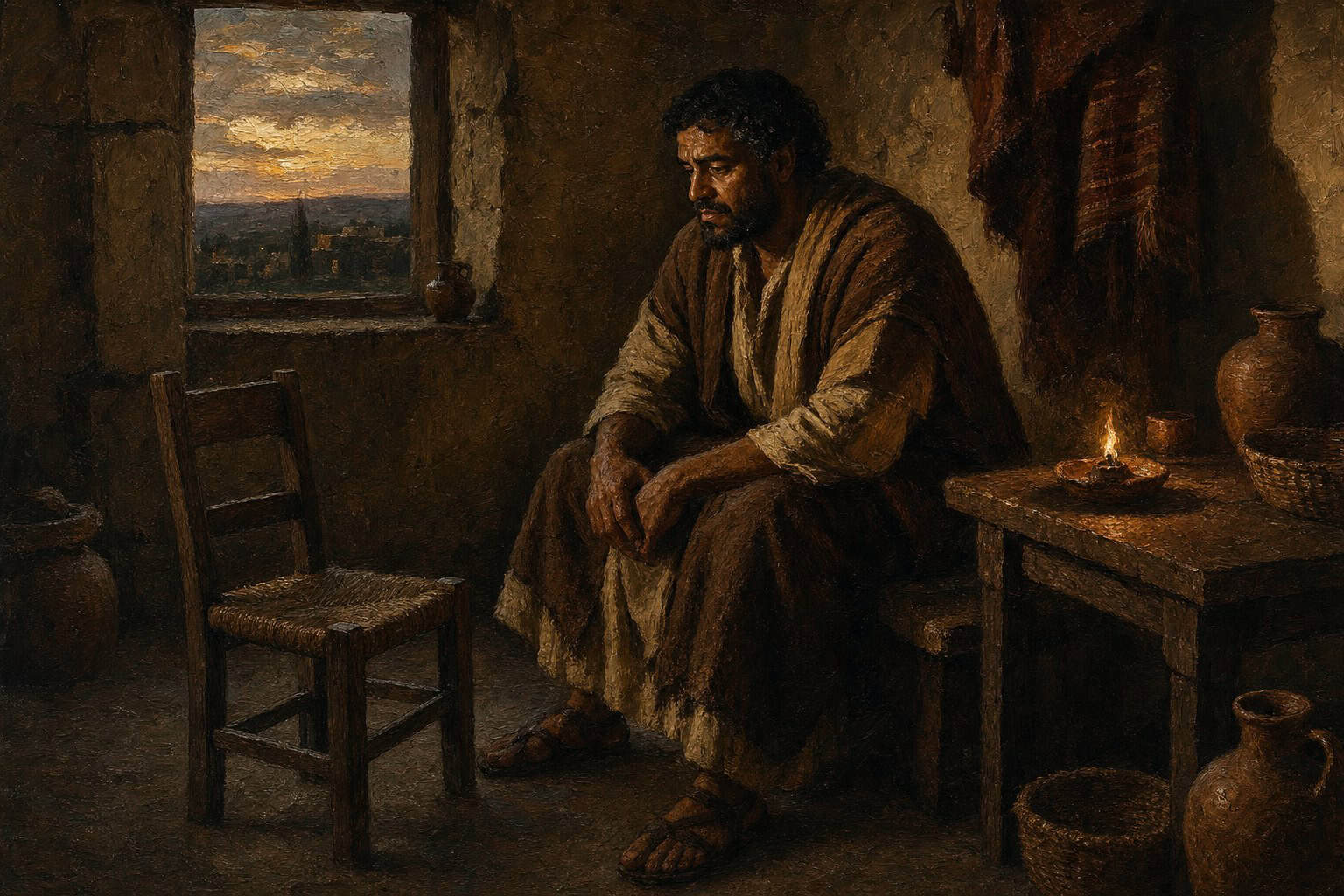
The power arrives the day the goodbye stops being general and becomes yours. This is the hinge that turns the whole house. Death in the far distance had changed nothing in you. You knew people ended, the way old Scrooge knew his partner had ended and was moved not one inch by it, cold as the counting-house. Knowledge is cheap and it warms nothing. It is confronting that costs, and it costs everything. When the goodbye is finally personal, when the leaving happens close enough to touch with your own hand, the song you ignored for years suddenly grows claws. Every line you skimmed reads now like a private letter left on your pillow. And here is the strangeness no one warned you about. The person can still be sitting right there at the table. The body remains. The voice, on some days, still remains. But the old recognizable outline of who they were to you has already walked out, and you are pulled into a double vision no melody fully prepares you for. You look at one figure and you see two at once, the one present and the one already gone, and you cannot make them fit back into a single shape. That is the exile underneath every goodbye lyric. Not only the parting of two people, but the parting from the self you were while you still had them whole. You lose them, and you lose the you who belonged to them. The song names both wounds in the same breath, which is why it takes you apart when nothing else can. It slips beneath the guard that argument and comfort never reach. A friend can speak wise sentences to your face and you will nod and stay frozen as a pond. But three plain chords and a line about walking away, and your chest breaks open like soil under the first frost. Why does the music get in when reason cannot? Because the song does not try to fix you. It only agrees to feel what you feel. It sits down beside you in the dark instead of dragging you into a light you are not ready for. I have to ask you, and I ask myself still, in the small hours. Did you love them, or did you love the version of your own life that had them standing in it? The song will not let you dodge that question. It plays the tune of what you carry now, a whole unlived future you must hold inside your own ribs, an audience of one for a life that will never happen. You become the keeper of it. You become the darkened stage where their next scene was meant to be played, and now the seats sit empty and the house lights will not come up again.
Colors Past the Edge of What Your Eyes Can Hold
Here is what the farewell song teaches, and it is the reason it holds such terrible power over a person. The veil between the living and the dead, between flesh and spirit, is thinner than it looks to a comfortable heart that has never had to test it. Not because you can trick your way past it, mind you. Not through mediums or turned cards or the summoning of the dead, which are only doors the enemy props open so that darkness can pour through the crack your grief has already made. Those are counterfeits of nearness. They lead down, always down, and they cannot be tried on for size without cost. No, the song does something the occult only apes and cannot deliver. It feeds a hunger in you that no bread reaches, and in the feeding it opens a new way of seeing. You begin to perceive what you could not perceive before. Not the dead paraded back into the kitchen, but the shape of what they meant, the true weight of what you refused to notice while they still breathed beside you. Think of it plainly. Your eyes are tuned to a narrow ribbon of light, and just past its edges lie whole colors that exist and blaze and mean, but that your body simply cannot register. The spirit runs the same way. We are not permitted to see beyond our own desire, and the limits on our sight are, to a degree that should frighten us, limits we ourselves have chosen and defended. The song, when the goodbye at last turns personal, cracks that chosen limit open like a nut. It makes you willing to see what you spent years arranging not to see. What breaks over you then is grief, yes, a flood of it, but also a strange enlargement of the whole world. You are being schooled, in the cruelest room there is, that to live fully you must stop turning your face from the ending. To live merely, you must forget death and get on with the errands. But to live abundantly, you must turn and look straight into it, into the confronting Scrooge could not manage from mere report and only learned by being taken there. The song is the small opening into that confronting. It does not force. It waits until you are ready to feel, and then it lets the whole thing in.
A goodbye is not the moment the loss begins; it is the moment we finally agree to see the fracture that was always in the room.
He Came Down Into the Room and Sat
I will not lie to you about what comes next, because a lie here would insult everything you suffered. The song does not heal you. Grace, when it finally came to you, did not arrive as a rescue out of the dark room. It did not flip on the lights and empty the chair of its ache and hand you back the person warm and whole. That is the sentimental tale told by people who have never sat where you sat, in that particular chair, at that particular table, with the plate still set. What actually happened was quieter and stranger and, in the end, far truer. God did not take the grief away from you. He came down into it. He walked with you inside the very despair, near enough that you could feel Him breathing in the small silences between the verses. He was present in each tear, not as a hand wiping it dry but as a companion who let it fall and did not flinch at it. This is the accompaniment I need you to trust, younger self, though you will spend long years doubting it and calling it absence. You kept begging to be lifted clean out. You wanted the song to stop, the loss to run backward, the person to come through the ordinary door and take their seat and complain about the weather. That miracle did not come. Direct rescue is rare. It breaks in like a single stroke of lightning, once in a great while, and never once on command. What came instead was nearness, and you almost missed it, hunting so hard for the other thing. In the exile, in that raw sense of being cast out from your own home and even from your own name, He was in the exile with you, cast out where you were cast out. That is not a lesser gift than rescue. It is the truer one. The song, played over and over in the long grief, became less a wound and more a place where you were somehow not alone. You sang it to no one, a silent performance in a house with the shades half down, and yet you were heard. And you must sit with your own failure here too, because grief is not only innocence. You were not merely a man wronged by loss. You had a hand in the distance that opened before the leaving ever came. There were words you swallowed, attentions you withheld, a love you doled out in careful portions because you assumed, as we all assume, that there would always be more time to be generous later. The goodbye song forces that ledger open on the table. It will not let you mourn as though you were only the victim. And God, seated beside you in the dark, does not accuse you either. He simply stays, holding the hard truth and the tenderness in the same hands, letting you weep for what you lost and for what you never gave.
Learning to Witness What Is Still at the Table
So this is where it settles, and where I leave you, my younger self, still standing in the last chords of that farewell. The power of a goodbye song is not that it ends things. Its power is that it refuses to let you pretend the fracture was not always there, running under the floorboards of a love you called seamless. The leaving only made the crack visible. It was there before the person ever went, the way a fault line waits under a quiet field. You learn, and it is a slow bruising lesson, that death is only the blunt illustration of a break already present in everything you loved. And strangely, in the end, that knowledge does not crush you flat. It changes how the days feel in your hands. Once you have truly confronted the goodbye, once you stop shoving it out of the frame each morning, the whole of your remaining life sharpens its edges. Ordinary colors come back brighter than you remembered them. The plain requirements of the day, the coffee going cold, the work, the walk out into the noise of the street, grow heavier and more precious at the same time, because you now know they are all on loan and none of it is owed to you. The song led you to the lip of the void and then, in mercy, led you back. Not back to who you were, for that man cannot be recovered, and the old photographs of him will ache for the rest of your life. But back into a life you can actually live inside, one that carries its dead the way a body carries a healed scar, tender and honest and now a part of you that will not be argued away. You become the keeper of an unlived future, and instead of letting it turn you into a sealed tomb, you let it teach you to witness what is still here while it is still here, still breathing across the table from you. That is the last and hardest thing the goodbye lyric plants in you before it lets you go. Love the ones still seated now, while they still hold their recognizable shape, before you are made to hold it alone for them. If you want to sit inside this whole terrain, the double vision, the exile, the God who walks in the dark rather than switching on the light, the long confronting of what it costs to lose and to have lost, it is all set down in Fractions of the Soul, unhurried and unflinching, moving the way real grief actually moves. The song will keep on playing. Let it. It is not your enemy. It is the one honest voice that agreed to feel the whole of it beside you, and it was, all along, one of the quiet ways God chose to keep you company in a room He never once left.