Your car is screeching and you want it named. Here is what the sound means, and what naming it cannot do, through Fractions of the Soul.
The Belt That Sings When the Engine Wakes
You turn the key and the engine catches, and before the car has rolled an inch there it is, that high thin wail from somewhere behind the hood. It rises with the cold morning and thins out once the metal warms and the belts loosen their grip on the frozen night. You know, roughly, what it is. A belt gone glassy and slick, slipping on a pulley it can no longer hold. A brake pad worn down to the little metal tab that shrieks on purpose to warn you. A bearing spinning dry, no oil left to quiet it. The sound has a cause. It always has a cause, and there is a real comfort in that, the same comfort we take in any name we can lay over a fear. You reach for the name the way a cold hand reaches for a light switch in a dark garage, quick, almost involuntary. This is what we do. We hear the wail and we want the diagnosis, the part number, the whole trouble squeezed down into one small nameable thing we can order and bolt back on. In the sixth chapter of Fractions of the Soul, the narrator does exactly this, except the machine he is trying to quiet is his own body. He lays out the language of the pharmacy of the flesh, dopamine and serotonin, the words for the chemicals that surge when we crave and fall when the craving burns off. He names them the way you name the belt, precisely, almost gratefully. And I understand him completely, because to name a thing is to feel, for one breath, that you have mastered it. The screech becomes a symptom. The symptom becomes a diagnosis. The diagnosis becomes a plan for a Saturday and a trip to the parts store. But look hard at what the naming does not touch. The belt still sings. The wail hangs in the cold air of the garage, going on and on while you stand there with the correct word in your mouth. You can pronounce the chemistry perfectly and the sound will not care. You can list every measurable concentration and the ache does not drop by a single degree. That gap, between the name you have and the thing that still cries out, is exactly where this chapter lives and where its hardest questions begin. It is so much easier to describe the noise than to sit with what the noise is asking of you. The narrator knows this, and he catches himself in the act, which is the first honest thing in the whole scene.
Flies Swarming the Edge of a Hunger
There is a moment where the explanations arrive all at once, and they swarm. Oxytocin. Dopamine. Serotonin. The narrator stands at the edge of a real longing, a hunger of the body for another body, a desire that trembles up through him, and the scientific words rush in like flies over meat. He calls his love a flood of chemicals. He calls his ache a secretion, a matter of levels and concentrations. And here is the terrible honesty of the book: he does not reach for these words because he is cold. He reaches for them because he is afraid. To say my longing is only a neurochemical soup is to hide the shaking of your own freedom behind a curtain of measurable things. It is the same move as the driver who names the belt so he does not have to feel the dread of the long road ahead. Reduce the wound to a chart of hormone levels and you no longer have to answer for what you wanted, or why, or whom you would have hurt to get it. This is the seduction the material view offers, and it is not a foolish view. The chemicals are real. The amplification is real. A reading of the believer and the unbeliever would find the same soup simmering in both skulls, and the narrator does not deny it and neither should you. Your desire truly does move through the flesh, through the reward system buried in the midbrain that pulls you toward whatever floods you with pleasure and drags you back for more. But watch what the reduction costs once you swallow it. If love is only the dance of secretions, then you become the servant of whatever can adjust the secretions. A drug. A screen. A phone that lights up with a single text. A person you return to not because they are good for you but because the volatility feels like proof that you are alive. The nervous system learns to read intensity as worth. High arousal gets coded as high value, and you go back again and again to the thing that screeches, because at least the screeching means something is happening in the numb hours. That is not romance. That is a metabolic habit wearing the mask of love, a valuation running underneath you like a program you never chose. The narrator turns the lens on himself and has to ask whether the loves of his own life were sacred at all, or just this slippage, the same worn belt crying in the same cold. He does not let himself off. He sits in the fear that his deepest tenderness might have been nothing more than a well-trained craving for the flood, and he refuses to look away from the possibility even as it sickens him.
The King Who Will Not Break His Own Door
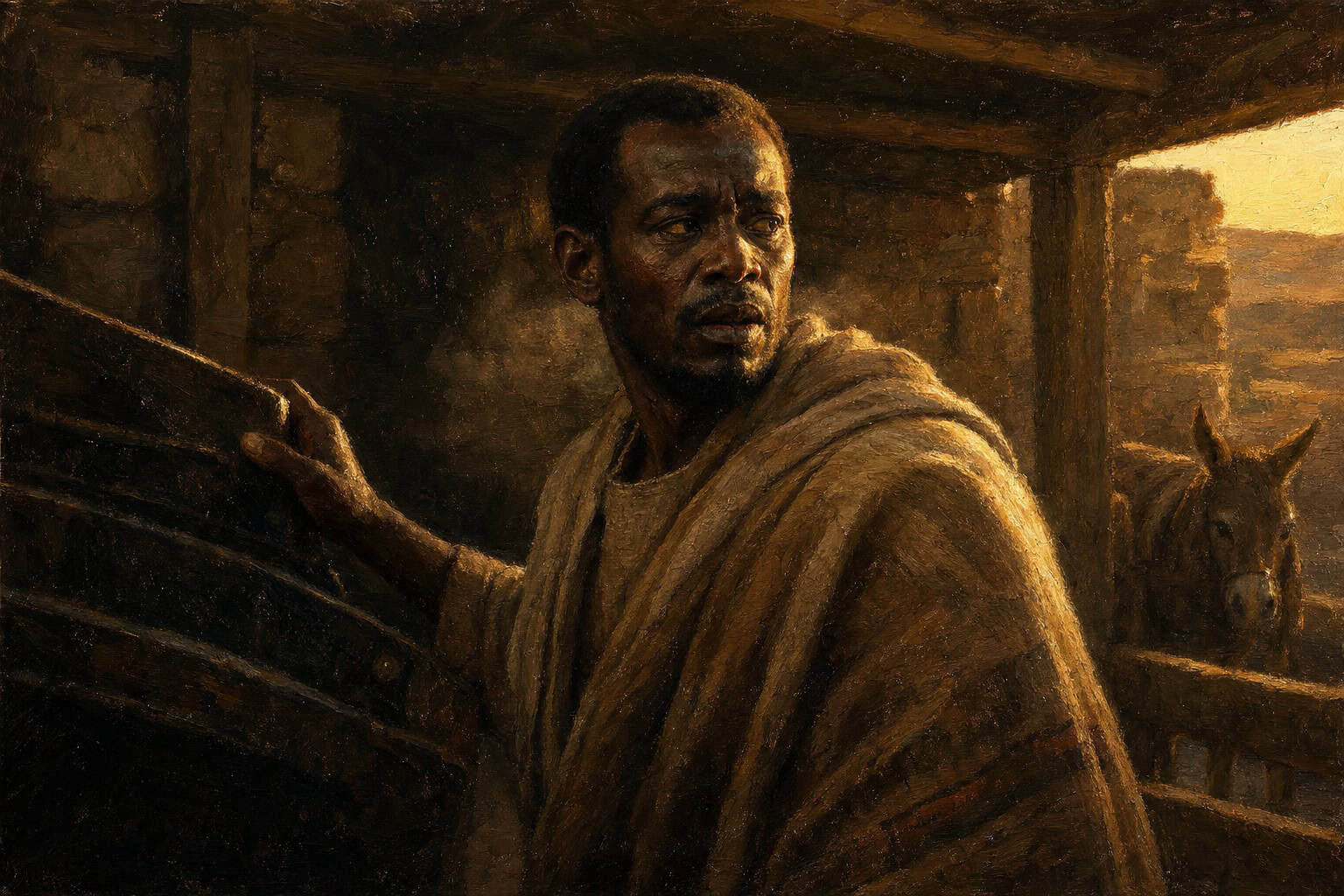
The turn comes quietly, the way real turns do, not as a rescue but as a recognition. The narrator has spent his pages dissolving love into chemistry, and now he sees that the dissolving is itself a confession. A man does not flee into synapses and secretions unless something in him is trembling too hard to face straight on. The flight is the proof of the very freedom he was trying to explain away. You cannot be mere soup and be terrified of your own choices at the same time. The anguish gives him away, betrays the machine story he was telling. And into that anguish comes the strangest image in the chapter, and it has nothing to do with the pharmacy at all. It is the picture of Christ standing outside a door He Himself made, the King of everything, waiting. Not battering the wood. Not tearing the hinges from the frame. Waiting to be asked in. The all-powerful One submitting Himself to the scandal of permission, honoring even the freedom to refuse Him. This is the exact opposite of the metabolic hack. The chemical logic forces you, floods you, drags you back to the intensity whether you consent or not, whether you want to or not. But love that is real does not force the lock. It stands and it waits and it lets you keep your terrible freedom whole in your hands. The narrator sees this and understands, at last, what his reductions had bought him and what they had cost. He had wanted to be a machine because a machine cannot be blamed, cannot be asked why, cannot be held to account for whom it hurt. But the waiting Christ refuses him that escape. The handle, he finally admits, is on the inside.
To name the sound is not to answer it; a diagnosis silences the belt but never the trembling hand that turned the key.
This is where the whole chapter cracks open. The screech in your engine can be silenced with a wrench and a new belt and forty minutes on a Saturday morning. But the screech in you, the one that keeps pulling you toward the flood and the crash and the flood again, cannot be fixed by naming its chemicals. No concentration, no reading of levels, no correct Latin will quiet it. It can only be answered by a freedom you are afraid to use, and met by a Presence that will not use it for you, will not spend it on your behalf, will not spare you the weight of the choice. The narrator does not find this liberating in any easy sense. It frightens him more than the soup did, because the soup asked nothing of him and this asks everything. He would rather be forced. Being waited for is harder than being taken.
To name the sound is not to answer it; a diagnosis silences the belt but never the trembling hand that turned the key.
The Crash After the Flood Has Run Its Course
Naming the belt does not stop the drive home, and seeing the truth does not lift the ache. This is where the book earns its severity, because it refuses to hand you a tidy morning after. The chemistry the narrator described is not a lie he can simply renounce and walk out of. The crash still comes. When the surge of pleasure has run its full course through the brain, the levels fall, and what returns is the low grey weight, the depression and the anxiety, the seeking hunger to feel normal again. He knows this rhythm in his own body, from the inside, not as a theory. He has lived the strange suspended hour that satiation offers, that counterfeit stillness when the past stops accusing and the future stops pressing and there is only the endless now, beyond guilt, beyond responsibility, beyond the ticking limit of a lifetime. It is a fake eternity, and it seduces precisely because it lifts the burden of time off your shoulders for one hour. But it is only ever on loan. The clock starts again. The tab always comes due, with interest. And in the deep grip of the hunger the world narrows until it holds only two kinds of people, the ones who can give you the thing and the ones who withhold it, and the self shrinks down to a servant of the body’s demand, an ego bent entirely to the flesh. The narrator does not pretend he has climbed out of this and now reports back from safety. He reflects as a man still inside it, still turning the same question over in the grey light. Was the love he mistook for the sacred only ever this cycle? Did he use people the way a craving uses a provider, valuing them for the flood they could deliver and resenting them when the flood ran dry? He does not answer cleanly. He lets the accusation stand against himself and does not flinch from it. And what keeps the chapter from collapsing into despair is not that the darkness lifts, because it does not lift. It is that the waiting Presence does not leave when the crash arrives. The King who would not break the door does not withdraw once the door swings open onto a ruined room littered with everything the narrator has done. He walks into the ruin. He is there in the grey morning after, in the shame, in the very sin, not scrubbing it away with one clean gesture but sitting down inside it with the man who made it. This is the harder grace, and the truer one. Not a rescue lowered from above the pit but a companion who climbs to the bottom of it and stays. The screech does not stop. But you are not alone in the car with the sound.
Both Bottles Standing in the Same Cabinet
There is a small line late in the chapter that stayed with me longer than any of the theology around it. The narrator notices that believers and unbelievers alike reach for the same acetaminophen, the same ibuprofen, off the same shelf in the same bathroom cabinet. We all open the same door when the body hurts. There is no faith so pure that it exempts the flesh from its aches, and no unbelief so complete that it escapes the longing for relief. We are, all of us, material creatures who bleed and crave and crash and swallow the little white tablets when the head throbs. I find this oddly steadying rather than deflating, because it means the narrator is not pretending to hover above his own biology. He does not float over the reward system in his midbrain like some bloodless saint who has transcended his nerves and outgrown his appetites. He is in the car with the screeching belt like the rest of us. He turns the cold key each morning and hears the wail and reaches for the name. What the chapter finally offers is not a way out of the flesh but a different way of standing inside it, feet on the same floor, hand near the same cabinet. The chemicals are real, but they are not the whole of you. The flood is real, but it is not love, and that difference matters more than anything the pharmacy could ever measure or bottle. Love is the thing that waits at the door and will not force it. Love is the freedom you are afraid to spend, the one thing no substance can hack and no reading can quantify. And the screech, the one in the engine and the one under your ribs, is not finally a problem to be named and shut. It is a question. It asks what you are driving toward, and whom you have been using to get there, and whether you can bear to be free when force would be so much simpler and so much quieter. Fractions of the Soul does not answer that question for you, and it will not promise the belt goes silent by the last page. It leaves you standing at the open hood in the cold, breath fogging, the sound still going, one hand resting on the engine you could either fix or finally sit down and listen to. If you have ever tried to reduce your own heart to its chemistry so you would not have to answer for it, this chapter will find you exactly where you stand. It found me there. And it would not let me flee into the soup.