How to handle childhood trauma when you learned to watch instead of feel. A memoir’s honest look at the safety of distance and the cost of never being moved.
The Boy Who Counted the Exits
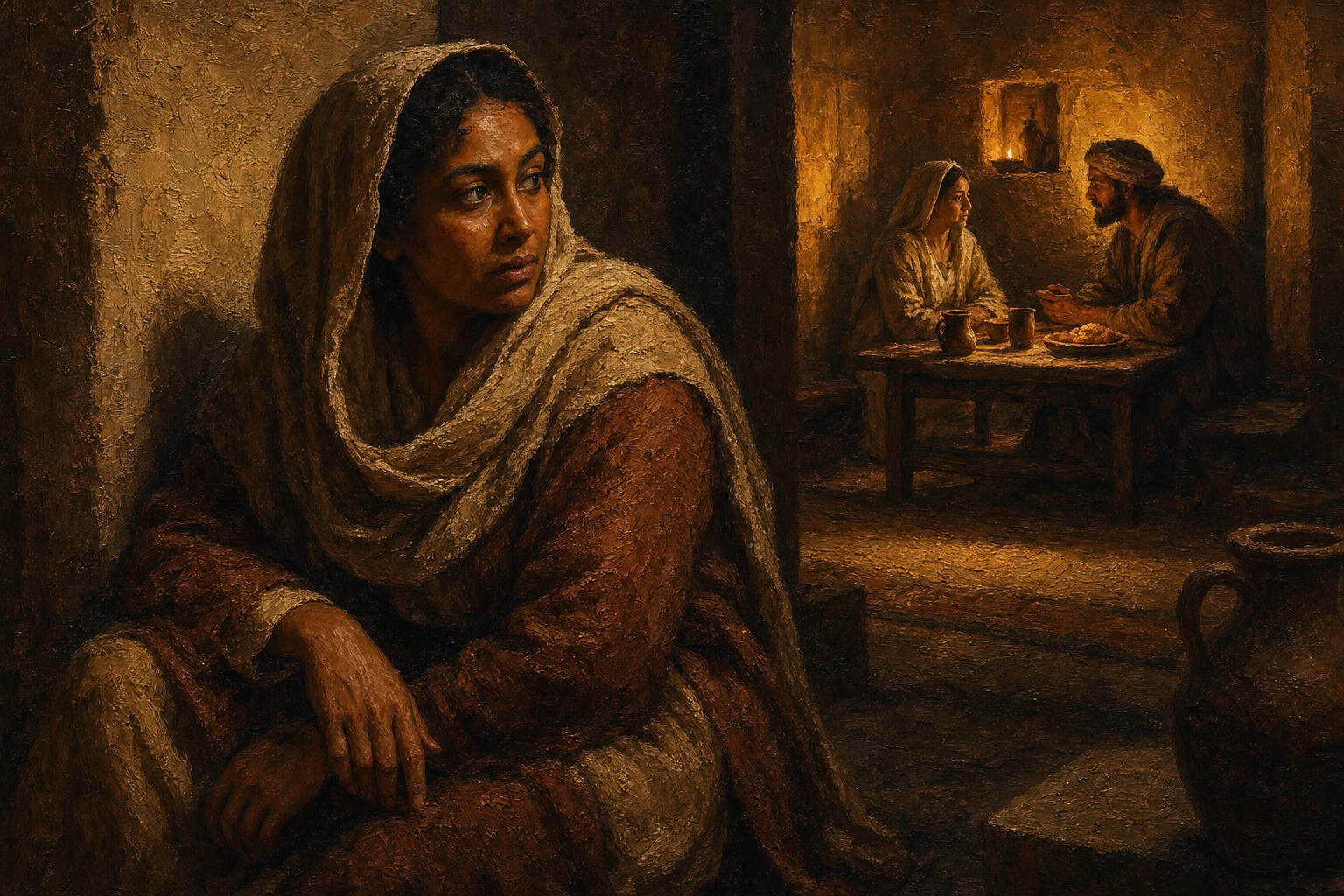
Where did you first learn that safety meant staying outside the frame? I ask you this, my younger self, because I know the answer and you did not. You are the boy who reads a room before he enters it. You count the exits. You watch the hands, the eyes, the small tilt of a shoulder, the way a doctor reads a chart he has read a thousand times. In the opening pages of Fractions of the Soul there are two young people at a table, and a narrator who will not sit down with them. He watches instead. He sees her crossed arms uncross. He sees her pupils widen. He hears her breath go shallow and quick. He notices the low light catching in her earrings as she pulls one side of her hair behind her ear and bares her neck. He catches the man’s small, private, self-congratulatory smirk in the instant the man understands he has been given permission to come closer. None of it is spoken aloud. It passes between them in something older than speech, and the narrator catches every syllable because he has trained himself to catch everything and to enter nothing. That is the terrible skill you built, and I know exactly why you built it. A child who is hurt in a room he cannot leave learns to leave without moving his feet. He climbs up behind his own eyes and studies the danger from up there, where it cannot reach him. He becomes a scholar of the very thing that is wounding him. You thought this made you strong. You called it understanding. You told yourself that if you could name every motion of the human heart, then no motion of the human heart could ever ambush you again. Here is the first hard thing I have carried back to you across all these years. Watchfulness that begins as survival hardens into a house, and then you cannot find the door out. You will live in that house for decades. You will hang wisdom on its walls like framed diplomas. And the God who was with you in the first room, the room where the hurt was done, is with you in this house too. He is quiet in the one corner you never turn to look at. He is waiting, without hurry, for you to notice that you have not been living at all. You have been observing life through a window you were too afraid to open, breathing the flat air of your own held distance.
The Bitter Comfort of the One Who Cannot Be Surprised
Look at what the watching gives you, and look just as hard at what it takes. The narrator says a casual glance hides as much as it shows, and he is right. The amateur sees two people flirting and believes he has seen the whole event. You saw more. You always saw more. You saw the imperceptible smirk. You saw the almost-unnoticeable shift in the chair. You saw the permission communicated with no words at all, the small grooming touch of a hand grazing a neck, the readiness offered before a single sentence was spoken. You could tell when a person was lying by the muscles bunching at the corner of the mouth. You could feel a room turn cold against you before anyone opened their lips. This felt like power. There was a bitter comfort in it, the comfort of the one who cannot be caught off guard, who is never the fool at the table. But comfort is not peace, and I need you to feel the difference between them now, while your heart is still soft enough to feel it. The narrator warns himself against loving the ones he observes, because the moment he feels something for them the clean edge of his sight goes dull. The infatuated ones, he says, miss the other’s nuance through willful neglect, or plain ignorance, or the simple drug of feeling good. He is not wrong about them. But here is what he will not say, what you will not say. You chose the opposite drug. You chose the numbness of the watcher over the blindness of the lover, and you dressed that numbness up as the higher road. It was not higher. It was only colder. You traded the risk of being fooled for the certainty of being alone, and you called the trade maturity. The trauma taught you the whole bargain. Somewhere back there a person you needed proved untrustworthy in your very skin, and your small body made a vow it never told you it was making. It vowed never again to hand its heart to anyone it could not see straight through. So you watched everyone, always, and you let no one finish the sentence of loving you. You closed their file before they reached the last line. The gift and the wound turn out to be the same organ. You cannot keep the seeing without keeping the exile. I did not understand this for a very long time, and by the time I did I had sat at the window so many years that I had forgotten what warm air felt like on my own bare skin.
A Man Can Name Every Thread and Still Bleed
Here is the turn, and it is the one I most need you to hear before you go any further. You believed that if you understood the wound completely, you would finally be free of it. You went down into your own memory the way a scientist walks into a laboratory. You catalogued every hurt. You traced every cause backward. You mapped the exact minute the trust snapped in two. You were certain that understanding was the same thing as healing. It is not. A man can name every single thread in the torn place and still bleed through the naming. The narrator hides so he can see clearly, and his clarity becomes his cell, because there is a loneliness inside perfect sight that no amount of further sight can ever reach. And you did the same thing to God that you did to everyone else. You went hunting for Him inside your own mind. You sorted through your memories, your moods, your careful chains of reasoning, and when you could not find Him among them you decided He simply was not there. But He was never a thing your mind could hold. He is not an image you can summon. He is not a feeling. He is not the reasoning self that does the searching. He is the Lord of the very mind that searches, and He was standing precisely where you refused to stand. In the room. In the touch. In the raw risk of being seen with your armor unbuckled and lying on the floor. You cannot handle childhood trauma by becoming a better observer of it. That is the exact move that keeps you frozen at the glass. The wound was made in a relationship, in the flesh, in the living presence of another person, and it can only be healed in that same country. Not from the tower behind your eyes. Only by climbing down out of your own head and letting yourself be looked at, all the way to the bottom, by someone who does not flinch at what they find.
You cannot study a wound from the outside and expect it to close; the flesh only heals where it consents to be touched.
The Hot Shame of Coming Down
What comes after you see this is not relief, and I will not lie to you about it, because you have swallowed enough lies already. When you finally begin to climb down from the window, the first thing you feel is not freedom. It is shame, hot and total, the shame of the one caught naked with nowhere to cover. All those years of watching were years of hiding, and the moment you stop hiding you feel the full weight of everything you kept hidden. You feel how much of your life went past unlived. You feel the faces of the people who reached for you and touched only your careful, polished surface, who never got to finish knowing you because you had already finished knowing them and shut the drawer. That grief does not close in an afternoon, and it should not. A man who spent thirty years behind glass does not walk out into the open weather without shaking. Here is where the truth I have paid for must be said plainly. God does not usually rescue you up out of this cold. He comes down into it with you. He does not lift you back over the wall into some tidy garden where the hurt never happened and the vow was never made. He sits down beside you in the ruined room where it all happened, and He stays, and His staying is the one thing that is different from before. The tears you cry when you finally let yourself be seen are not proof that He left. He is inside every one of them. He is present in your very cowardice, in the long stubborn habit of your watching, walking at the elbow of the man you were most ashamed to be. Rarely, and I mean rarely, something breaks in that feels like open miracle, a moment when the light pours through so directly you cannot argue it away. But most days the grace is quieter than that. It is the plain, unearned fact that you are not alone in the dark you built for yourself. You do not have to earn your way back into the warm room. You only have to stop pretending you were never shivering in the cold one. The instrument you forged, that cold clear watching eye, you can set it down now on the table. It served the boy who could not survive without it. It is quietly killing the man who no longer needs it.
Consenting to Be Touched
So I leave you with the thing I most wish someone had leaned over and said to me at that table, watching two strangers and mistaking my distance for depth. The wound in your childhood was real. I will not tell you it was small, or that it was your fault, or that it made you stronger. It was a theft, and the thief walked off with your ability to trust your own flesh in the presence of another living soul. But you cannot force it back by sheer understanding. You get it back the same way it was taken from you, in relationship, in the body, in the risk of the unspoken things that move between two people. One day someone will pull their hair behind their ear in low light and offer you, without a single word, permission to come into their space, and the whole trained machinery of your watching will rise up and try to keep you safe by keeping you out. When that hour comes, remember that safety and life are not the same thing. You have already tried safety for a very long stretch of years, and it left you starving at a full table. The severe joining of one person to another is never clean. You will be seen wrongly and seen rightly, both in the same breath. You will be wounded again, and you will wound. But you will also, for the first time in your life, stand inside the frame instead of studying it from the cold edge of the glass. This is what Fractions of the Soul keeps circling back to, page after page. The man who watched everyone is learning at last that he cannot heal himself by observation, that his own eye cannot wash its own sight clean, that only the gaze of another and the nearness of the God who waits down in the dark can ever teach him who he truly is. I cannot tell you how the whole of it unfolds from here. I can only tell you that the way out of the tower runs downward, and it is terrifying, and He is already standing at the foot of the stairs. Put the instrument down. Let yourself be touched. Your body has spent so long remembering only the wound. It is time you let it begin to remember warmth.