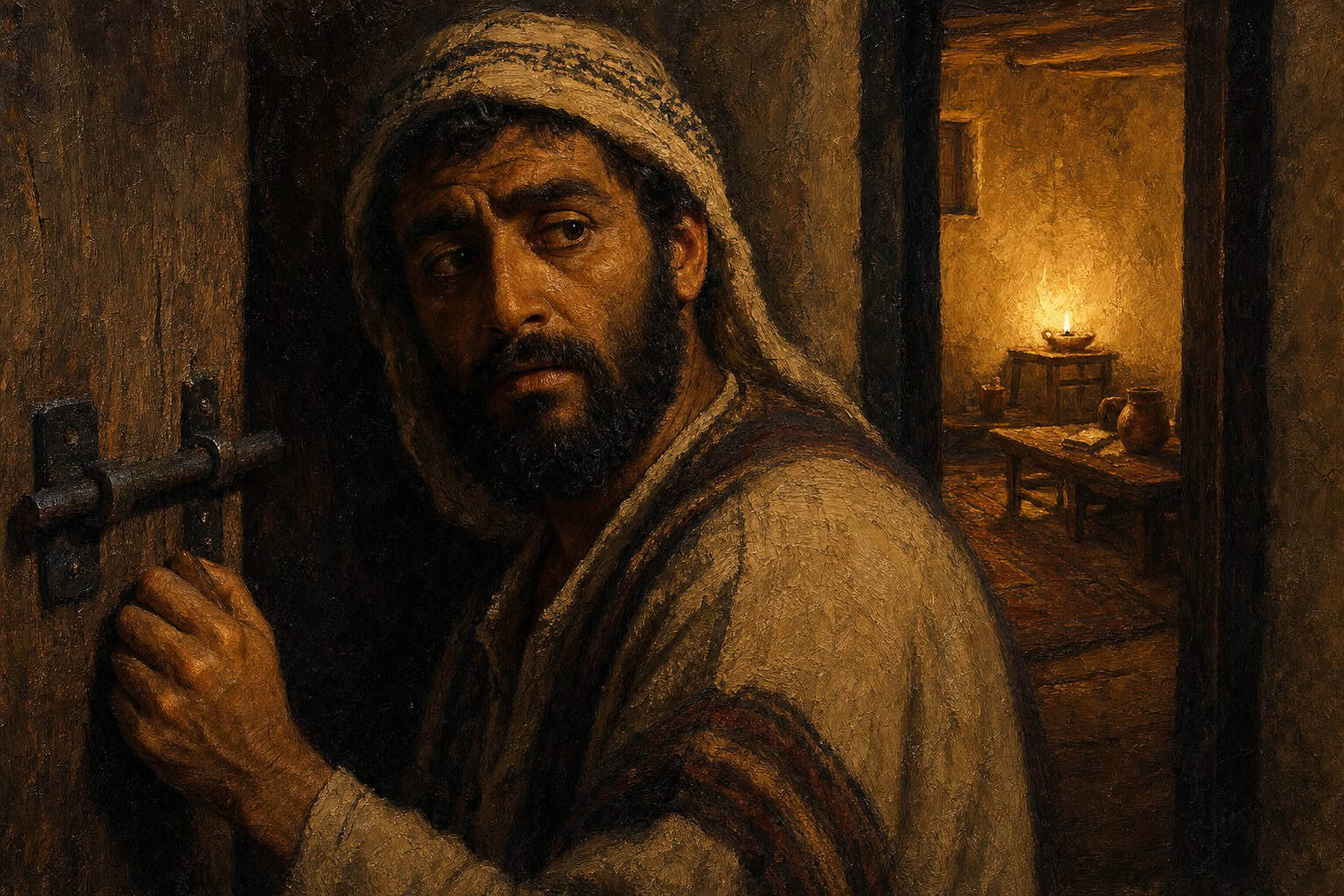
Now or I’ll lock you out. Why the ultimatum feels like love and lands like a lock — a plain look at the demand behind the door.
The Minute Your Patience Died
It started earlier than you think. Long before the words left your mouth, your body had already made the demand. You can find the exact minute if you go back. Maybe it was a text left on read for six hours while the little dots appeared and vanished, appeared and vanished, a small cruelty played out in gray bubbles. Maybe it was the way they looked past you at dinner, chewing slow, saying they were fine while the air between you went cold and thick. Something in your chest hardened right then, quiet as metal cooling. You told yourself you were being strong. You told yourself you were finished being the one who waits by the phone like a dog by a door. So the line formed. Now, or I lock you out. It felt clean. It felt like control after weeks of feeling like a beggar at your own table, holding out your hands for scraps of attention. But go back into that minute and stay there honestly. Your hand was trembling when you set the phone down. Your teeth ached from the clenching you did not notice. This was not the steadiness of someone who has decided. This was the raw panic of someone who cannot survive one more hour of not knowing. The ultimatum was never a choice you handed them, though you dressed it that way. It was a wall you threw up because the waiting had begun to feel like dying by inches, cell by cell, hour by hour. You wanted to be the one holding the key for once, instead of the one shivering outside in the dark, knuckles sore from knocking. And here is the part you would not let yourself feel: the demand did not rise from strength at all. It rose from the exact opposite. It came from a place so afraid of losing them that it chose to lose them first, on your terms, with your own hand on the lock. That way it would be your doing. That way you would not have to feel the thing done to you. You called that power. In Fractions of the Soul, deep in a chapter about how a man protects and betrays himself in the same breath, the author names this move without flinching. He calls it a terrified suspension of the very tenderness he owed another person. He built a wall of strategy where a plain word of love belonged, and he watched himself do it, and he could not stop. You know that wall. You have laid its bricks yourself. You are laying them now, in the quiet, telling yourself it is the strong thing to do.
The Body That Ran Out of Softer Words
Watch what your body does while it waits for their answer. You cannot sit still. You stand, you check the phone, you set it face down, you flip it over again thirty seconds later, hating yourself for each turn. Your stomach is a closed fist. You rehearse what you will say if they call your bluff, and then you rehearse what you will say if they beg you to take it back, and both scripts leave a sour taste at the back of your throat. This is what the ultimatum does after you fire it. It does not free you. It chains you tighter to the very person you were trying to stop needing. You are more consumed by them now than before you spoke, checking, waiting, reading meaning into the length of the silence. Every quiet minute is one more turn of a screw you set yourself. And beneath the churning there is a grief you have been outrunning for a long time. You did not reach for the demand because your love had run dry. You reached for it because you had run out of softer words. Somewhere back down the road, tenderness stopped landing, or you stopped believing it ever could. So the calculating part took over, the strategist, the manager of outcomes, the one who threatens because it no longer trusts asking. Look at that part gently for a moment before you condemn it. It is not evil. It was the last gesture your body could still make toward someone who had begun to feel completely out of reach. When every warm approach seemed to hit glass and slide off, the cold approach was the only door left standing. That deserves some mercy. But mercy is not the same as approval, and the demand does real damage, most of it to the one who makes it. Each time you reach for the ultimatum, something in you wears thinner. The author of this book knows the wearing intimately. He writes of a man who tries himself against too many wrong locks, a key ground down by every door it was never meant for, until the instrument made to open one true thing can no longer catch. He means the body and its scattered intimacies. But the image reaches your case exactly. Every threat you make in place of a plea files down the part of you that could have simply, nakedly, said I want you, stay. You are eroding your own capacity to stand in the open with empty hands and mean it. And you are so tired. The fatigue is in your shoulders, your eyes, the slow way you move from room to room. You just want the hurting to stop, and threatening feels faster than healing.
The Lock Was Never on Their Door
Here is the turn, and it will not comfort you. The lock you threatened them with was never on their door. It was on yours the whole time. You said now or I lock you out, as if you held the key to a room they were desperate to enter. But the room you actually sealed was your own. You threw the bolt, sat down inside, and waited — half hoping they would batter it down and prove they cared enough to break through. That was the real design, though you would rather die than admit it. You did not want them gone. You wanted proof they would fight to stay. The ultimatum is a test wearing the mask of a decision. And a test destroys the very thing it tries to measure, because a love that answers a threat is not the love you were starving for. It is only fear dressed in love’s clothes, and you will know the counterfeit the instant it touches your skin. This is the moment the author refuses to look away from. He sees that the so-called strategy was already a confession. To hide your true words behind a wall of power moves is not to master another person. It is to announce, at full volume, that your own footing has slid out from under you. You reached for leverage because you had lost the nerve to be seen plainly, without armor, without an escape route. The demand said I am in control. The trembling hand said I am terrified. Both were true, and the terrified one ran deeper. Sit with that without racing to repair it.
An ultimatum is the sound a heart makes when it has decided that begging is beneath it and losing is unbearable.
The strange grace here, if there is one, does not arrive as rescue. Nothing swoops down to unsay the demand or hand back the calm you lost the moment you spoke. Instead something quieter happens, if you allow it room. In the middle of the panic, in the churn and the sickness and the shaking, you become able to see yourself at last — not the strategist you were performing, but the frightened one underneath, the one who could not bear another hour outside in the cold, knocking on a door that would not open. Seeing that person clearly, without spitting on them, is the first honest thing you have done in this whole exchange. God does not usually haul you up out of this dark. More often He is found sitting down in it, next to the version of you that threw the bolt in fear, close and unhurried, not fixing the fear, just refusing to leave it alone with you.
An ultimatum is the sound a heart makes when it has decided that begging is beneath it and losing is unbearable.
After the Words Cannot Come Back
So the ultimatum is spoken. It hangs in the air, and no force on earth will draw it back into your mouth. Whatever comes next — they stay, they leave, they answer, they go silent — you now have to live inside a new fact about yourself. You are a person who reached for the lock. That knowledge settles over the following hours like weight poured into your arms and legs. You feel it in how slowly you move around your own home, the rooms too quiet, the couch cushion still holding a faint dent where they used to sit. This is the fallout, and it lives in the body before it ever reaches the mind. Your shoulders will not drop from your ears. Food has lost its point. You keep drifting toward the window without deciding to go there. The distances have all rearranged themselves. The space between you and them, which the demand was meant to shrink, has instead become something you can feel stretched across your own skin, a measurable ache. Near and far carry new weight now. The chair they sat in is far, absurdly far. The phone in your hand is too near, hot with waiting. And this is exactly where the older, gentler part of you has to begin its slow labor. You could spend these hours flogging yourself, naming yourself manipulative, cruel, weak, a person who threatens where others love. That voice is loud, and it counterfeits honesty well. But it is not the whole truth, and it is not the kind one. The kinder truth is that somewhere you were taught to despise the part of you that needs. You learned that to ask openly was to be shamed, so you wrapped the need in strategy and called it maturity. Look at that history with some mercy instead of the usual contempt. The demand was ugly, yes. It also grew from a real wound, an old one, planted young — the belief that no one stays unless you force the question at knifepoint. You can hold both truths in the same hand. You can grieve what you did and still refuse to hate the frightened self who did it. This is precisely what the author manages on the page. He turns the lens on himself without letting the examination curdle into self-loathing. He asks who these people truly were to him, what he refused to see in them, what he did with his own fear when it came. He does not tie any of it off with a tidy lesson. He stays inside the unsettled questions, and lets them stay open. You can stay there too, in the cooling room, learning the difference between an honest accounting and a cruel one — two things that sound almost the same until you listen closely.
Learning to Ask With Empty Hands
Where does it settle, then, this whole business of now or I lock you out? Not into a resolution you can wrap up and set on a shelf. It settles into a question you will carry a long while: can you learn to want someone out loud, without the threat buried underneath the wanting? That is harder than any ultimatum you could deliver. The demand is fast; the plain request is agonizingly slow. The demand feels like armor buckled tight; the plain request feels like standing in an open field with your coat stripped off and no wall at your back. Everything in your history braces against it, warns you it will end in humiliation. And yet the open field is the only ground where real connection ever grows. Nothing tender takes root behind the wall. The key ground thin against wrong locks can, sometimes, still find its true door — but only if you stop jamming it into the ones that answer only to force. That means consenting to have something in you taken apart. The author writes about growth as a kind of willing dismantling, lying still while the hands that love you cut away the very habits that protect you and wound you both at once. It is not gentle work. It draws blood. But the other road is to stay armored and alone, clutching a key that opens nothing, master of a bolted room with no one left inside it to be master of. This is where Fractions of the Soul keeps its steady, terrible honesty. It never promises that if you drop the ultimatum they will stay, or that being vulnerable earns a reward, or that God shows up to erase the ache. It promises something plainer and far more durable: that He is with you in the dark of it, walking beside the frightened strategist you have been, present in the shaking hand and the too-quiet room and the dented cushion. Grace here is not a rescue from the fear of losing love. It is companionship inside that fear, so near you can almost hear it breathing beside you. The demand you made will teach you something, if you leave the wound open long enough to read what it wrote. It will show you the precise place where you stopped believing that asking could ever be enough. And maybe, slowly, in some later room, with a new person or the same one grown older, you will set the deadbolt down and leave it down. You will say the true words with nothing waiting behind them. No leverage. No exit. Just the plain, unguarded fact of wanting to be met. You will stand there with your hands turned up and empty, and you will knock once, softly, and mean it — and that will cost you everything the threat pretended to spare.