Married but still in love with your ex? A confessional look at why we cling to a ghost of hope and call our fear faithfulness.
A Wine Glass Set Back in My Hand
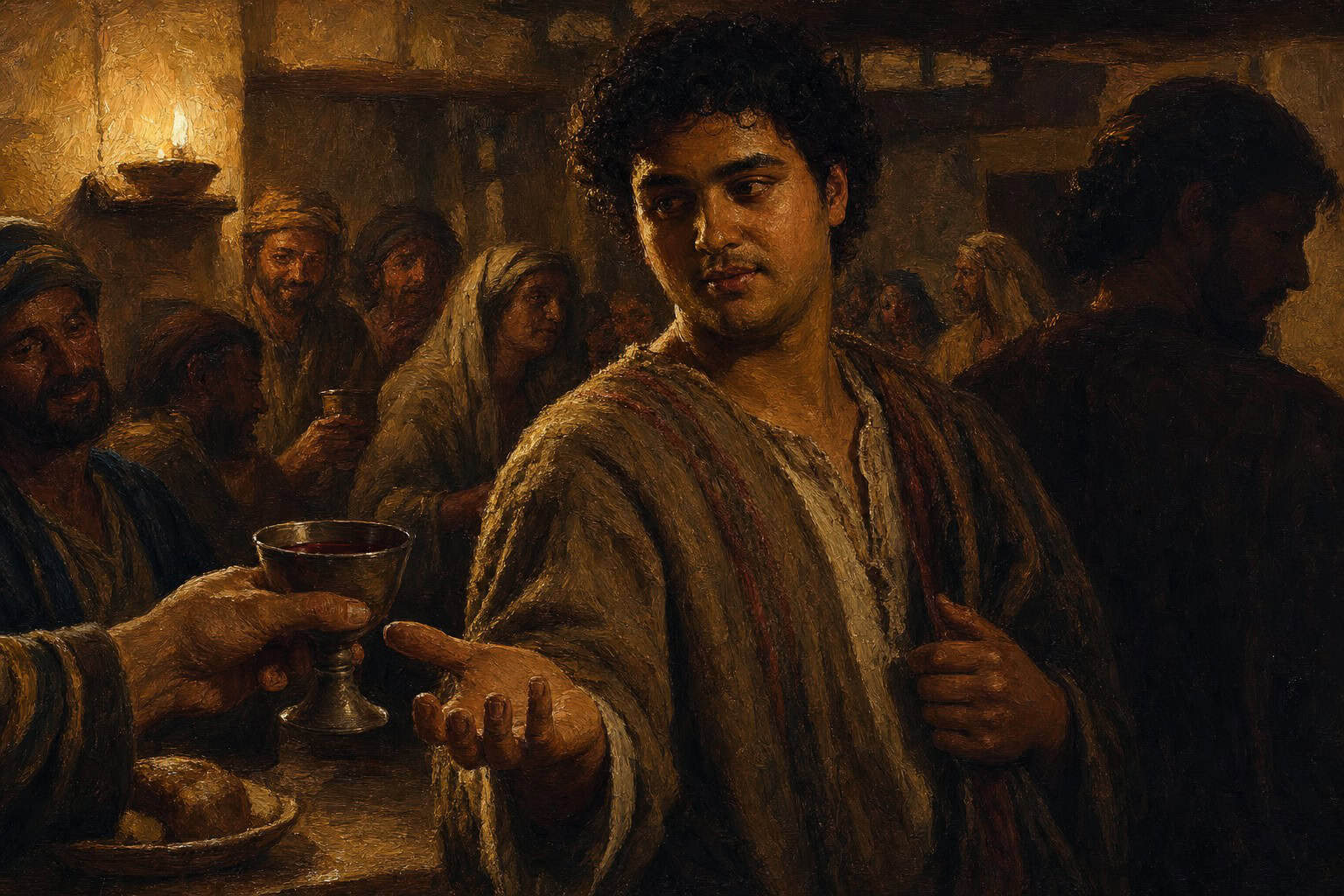
It began at a party, the kind where the talk stays polite and the drinks stay warm in the palm. I was the one who orchestrated things then—every conversation, every turn of the evening, timed like a man conducting his own small orchestra with a baton he never let anyone else touch. I knew the tempo of a room the way a driver knows a road he has taken a thousand times. I decided when to lean in, when to laugh, when to let a silence stretch. That was my instrument, and I played it well, and I mistook the playing for living. Then a woman crossed the floor and took a lead I had never offered her. She moved against me not with force but with a confidence that made force unnecessary, the way water needs no argument to find the low ground. My own song was playing over the speakers, the one I had chosen and heard dozens of times, and in her hands it stopped being mine. I was only borrowing it. Her body pressed the boundaries I had built between thought and hunger, between what I believed and what I wanted, and those boundaries thinned like paper held to a lamp until the light came through them. She did not ask. She read me. And when the song ended she stepped back, smiled, set the wine glass back in my palm with a small click of glass against my fingers, and walked into the crowd without a name and without a backward look. What I remember now is not the desire so much as the shock of being read instead of writing, chosen instead of choosing. I had spent years learning to control the pace of every closeness, to stay the author of every scene, to keep the pen in my own fist. She flipped that in a single breath. She made me the page. And here is the part the older man cannot look away from, the part that shames him even now: even with her warmth an inch from my mouth, my mind bent stupidly, stubbornly, toward a woman who was not in the room at all. Toward Jane. I was bound—not by a ring, but by a longing that no longer answered when I called it. The stranger stood before me alive and certain, and I stood there thinking of a ghost. That is the wound this scene opens for anyone who has been where I was—held in one set of arms and absent to a face long gone. The party dissolved. The academic murmur returned like a tide. But the ache did not leave, and the man writing this knows the ache was the whole point of the night.
The Ghost Answers No Prayer and Keeps the Room
To be bound in body or promise while your heart still lives with someone gone is to keep two households and pay rent on both. I know this from the inside, from the cold accounting of my own attention. The living person beside you asks for presence, real presence, and you hand over a portion, and the rest of you drifts to a memory that gives nothing back and never will. This is where the scene sits in the book—Chapter 14 of Confessions to the Empty Chair, a night that should have been simple and was not. The song at that party said it plainly, in words I had heard for years without ever hearing: the ghost keeps returning to the mind that tried to silence it. That night the words landed like a hand set flat on the shoulder from behind. I turned and there was nothing there, only the truth. What I could not admit then was how the ghost stayed alive at all. It stayed because I fed it. Every comparison I made—this stranger against Jane, this warmth against that long absence—was a small offering laid at an empty altar where no one was seated to receive it. I told myself it was love that held me in place. I told myself it was loyalty, even devotion, as if turning my face from a real woman somehow honored a vow I had made to a shadow. But the older man sees the sleight of hand now. Devotion to what? To a bond that had made more doubt than comfort, more question than answer, more sleepless staring than rest. Jane was not a wife waiting up with a lamp lit in the window. She was a haunting I preferred to a stranger’s mercy, because the haunting asked nothing of me. And there is the tension I sit inside now and will not smooth over for the sake of a tidy line. A living love asks you to risk being wrong, being wounded, being changed against your plans. A ghost asks only your attendance. You can serve a ghost your whole life and never once be corrected, never be truly seen, never be forced to grow past the person you already are. The dead thing becomes a fortress with thick walls and a single tenant. And a man will call his fortress faithfulness because faithfulness sounds nobler than the word he is hiding, which is fear. I built those walls out of theology and cleverness and a hundred good books, and behind them I kept a small shrine to a woman who could no longer wound me because she could no longer reach me. That is not fidelity. That is a refusal to be alive to the face in front of me. The hardest question I put to myself is this: how much of my clinging was love, and how much was the plain terror of being ripened toward something new and unfinished? For the one married but still aching for the person who left, the shrine feels holy. It is not. It is only the safest room in the house.
Being Chosen Breaks the Author’s Pen
The turn came in the instant I understood I was no longer the one writing the scene. All my life I had been the author of my own closenesses. I set the pace, I chose the words, I decided when a thing began and, more jealously, when it ended. This is how many men mistake control for strength. We believe sovereignty is the proof of manhood—that to be wanted on our own terms, at our own signal, on a night we have chosen, is the whole of it. We are the conductor, never the note. Then a woman desires you without asking your permission, without waiting for your cue, and the illusion cracks down the middle in a single breath. Her touch cut through every defense because touch has always done that to me; it moves faster than argument, faster than doctrine, faster than any wall I can raise with my mind. Doctrine takes an hour. A hand takes a second. And in that cutting I found something I had spent years hiding from myself with great effort. Being chosen is not weakness. It is the beginning of any real meeting between two people who are actually there. As long as I was writing, I was alone with my own pen, composing a room with only myself in it. The moment she read me, I was no longer alone—I was exposed, and being exposed is the whole price of being known by anyone. Her movement felt strangely sanctified, as though certainty itself were a small holy thing set down in a room of borrowed talk. This is the thing I want set down where a reader will run a thumb under it and stop.
We call it loyalty, but sometimes it is only the fear of being chosen by something new.
I Kept the Bitter Taste I Knew
So I did not follow her into the crowd. I stayed where I was, glass in hand, and the staying was not virtue, though I would have dearly loved to call it that and be done. I chose the ache I understood over the grace I did not, and I know now exactly why. The known ache had a shape. I could hold it in my hands, taste it on my tongue, predict its every move like a song I had memorized. The unknown grace had no shape at all, and a man terrified of losing the pen will always take the bitter thing he can measure over the sweet thing he cannot. This is the fallout, and it refuses to be tidy. There was no lightning that night, no rescue, no sudden clean freedom breaking over me like dawn. There was a fading pulse of music, a wine glass sweating in my palm, and a party carrying on as if nothing at all had happened, because nothing visible had. That is how these turns usually go—quietly, without witnesses, in the ordinary noise of a room. God did not lift the ghost off me that night. He did not clear the crowd or hand me a new heart in exchange for the old one. What I have come to believe, slowly and against my own stubbornness, is that He was there anyway—quiet, standing inside the very refusal, walking beside a man too frightened to walk toward mercy. Not saving me from the dark. Present within it, close as breath. That is a harder and a truer comfort than rescue, and it took me years to stop demanding the rescue long enough to notice the company. Because the shame of that night was real and it did not fade. A living woman had offered herself with fearless certainty, and I turned my whole self toward a dead longing instead. The older man does not excuse this. He sits down across from it and asks who these women really were to him. The stranger was a gift I treated as a temptation, because a gift I could not control frightened me more than a sin I could. And Jane—Jane by then was barely a person at all. She was a habit of grief, a room I kept lit at great cost so that I would never have to leave the house and walk into weather. I refused to see that I was not being faithful to her. I was being faithful to my own fear and dressing it each morning in the good clothes of love so it would look like something a man could be proud of. Every fortress promises safety and hands you a smaller life in return. Mine kept me from being hurt and kept me, in the same stroke, from being held, and I could no longer tell the two apart. The bitter taste sat on my tongue long after the music stopped and the lights came up. For years I mistook it for depth. It was only the flavor of a decision I would not make.
What No Equation Could Hold
Where it settles, finally, is in a truth my old science had no shelf for: the greatest risks are sometimes the only road to the grace we swear we never needed. I claimed I did not need it. I had my walls, my ideas, my faithful and undemanding ghost. And every stone of it was a man protecting himself from the part of himself that still yearned, against all his cleverness, for the world beyond his own control. That is the wound Confessions to the Empty Chair keeps pressing on, gently and without mercy in the same touch. It does not tell you the ghost is easy to bury and leave behind. It tells you the ghost lives on your attention alone, and that you feed it fresh every time you measure a living face against a lost one across a dinner table. For anyone married but still in love with the one who left, this is the question that will follow you into the dark and lie down beside you: are you being faithful, or are you only afraid? Is the shrine you keep tending a monument to love, or a shelter from the frightening grace of being chosen again while you still have breath to be chosen? I cannot answer it for you, and I would not cheapen it if I could. I can only tell you what the older man sees when he turns and looks back down the hall. We are finite. We are running out of the very time we are so careful with. Every year the pen slips a little further from the hand whether we surrender it willingly or not. The room where we keep our ghost grows narrower by inches, and the living warmth we keep refusing does not stand and wait forever—it has its own life, its own night to get home to. Charm fades and beauty passes and even grief, which feels eternal, passes too, though we build temples to make it stay. What lasts is not the memory we polish smooth with our thumbs but the love we let read us while there is still time to be read. I stood at the edge of that crowd and chose the ghost, and I have carried the taste of that choice on my tongue for years. The book does not hand you a rope out of the ache. It walks you down into it, one stair at a time, and it insists in a low voice that even there—especially there—you are not descending alone. The mercy was never going to switch on the lights. The mercy was that Someone waited in the dark room with me, patient past all reason, for the morning I might finally set the ghost down and go looking for that fearless certainty again. Whether that morning came, and what it asked of me, is the thing these pages carry. I will say only this much: the woman who read me across that floor was not the last time grace would come uninvited.