A year after a death, why does grief still ambush you? A tender reading of anticipatory sorrow, time’s collapse, and God present in the ache.
A Small Boy Weeping For The Living
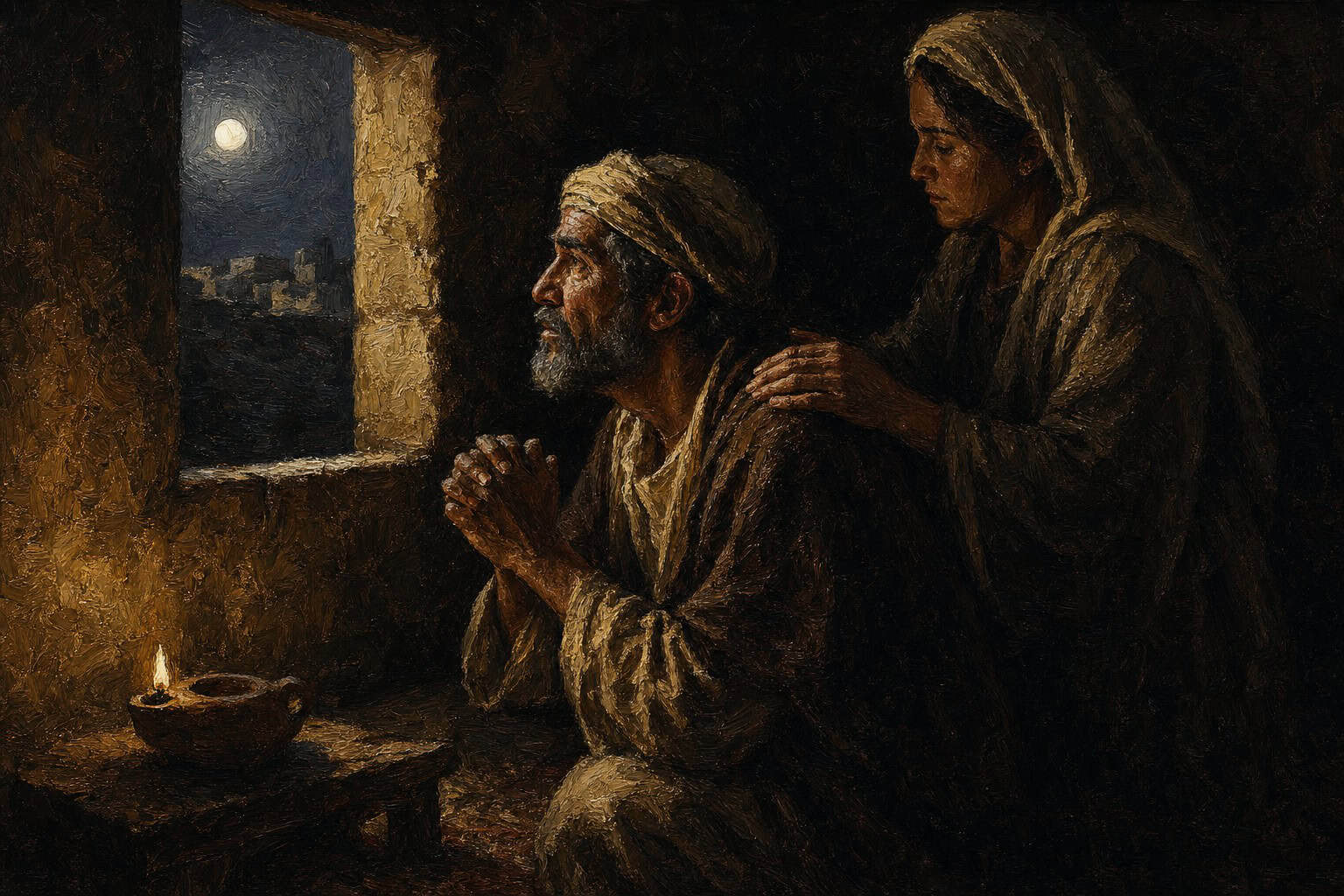
You were small, and you wept for someone who had not yet died. That is the strange thing I keep circling back to when I look for you across all these years. Ramona was alive. Her heart still beat somewhere in the house of your childhood, her hands still shelled beans and folded cloth, her voice still called your name across the rooms. And yet you knelt on the floor by your bedroom window in the dark, cheeks wet, chest heaving, mourning a loss that had not come. Your mother had tucked you in only minutes before. She came back to check on you and found you undone, your small shoulders shaking against the sill. You told her you did not want Itamona to die. She asked who had told you such a thing, and you said no one told you, you just knew. That knowing had no reason behind it. It simply arrived, whole and heavy, like weather rolling in off the hills before anyone sees the clouds. Now, a year past your own real loss, you sit up in the dark again and the same thing arrives uninvited. The person is buried. The funeral is twelve months behind you. Everyone around you has decided you must be through the worst of it, that you have folded the grief small and set it on a high shelf. But it comes anyway, in the small hours, sharp as the first night. I want to say something to the boy at the window that he could not have said for himself. You were not broken then. You were awake to something the grown-ups had learned to smooth over. Loss is real before it is finished, and it stays real long after the world says you should be done with it. Your mother meant well when she told you that you were too young to think of such things. She was frightened, and fear speaks in warnings. But she was wrong about the hours of grief. There is no correct hour for it. It does not ask the calendar for permission. A year is nothing to the part of you that loved. The little room you sit in tonight is the same shape as that childhood room, low and close, the window a pale gray square against the black. You are still the boy who feels the coming and the gone pressing into the present at once. I have not come to scold you out of it or to hurry you along. I have come to lower myself down onto the floor beside you and say, plainly: yes. It is real. You are not late to your own sorrow. You are still inside it, and being inside it is not a failure of yours.
The Evening Robbed By A Tomorrow That Had Not Come
Here is what happened to you that night, and what happens to you still. You lived tomorrow inside tonight. You felt a death that had not arrived pressing into an ordinary evening, and it stole the evening clean away from you. Your mother sat on the edge of the bed and tried for a long stretch of minutes to console you, her voice soft and low, and slowly you came to understand that the feeling did not belong to that night at all. It belonged to something that had not yet happened. And by dragging it back into the present, you lost twice. You lost the plain, quiet night with Ramona still breathing in her bed across town. And you spent a grief you did not yet owe, paying it out early, into the dark, for no return. A year after a real death you run the same disorder backward, and it cuts just as deep. The person is gone, but your body has not been told. Your hand goes to the phone before you remember. You set out the second cup and stand there holding it. You hear a footstep in the hall and turn your whole body toward it before the truth catches up. Time will not stay in its proper rows for the grieving. The dead feel near enough to touch. The living feel like figures seen across a wide field. This is not madness. It is what love does when the shape it was poured into is taken away. Your mind, overwhelmed, does what it did at that first window: it gives up trying to hold what it cannot hold, and simply lets the flood come. I watched you fight this for a long time. You wanted grief to be a chore with a finish line. You wanted a date on the calendar after which it would be done, the way a fever finally breaks and the sheets go dry. But grief does not answer the clock, because love never did. The love was never fastened to the hours. It was fastened to a person, and the person is now somewhere your hours cannot travel. So the sorrow keeps coming out of order, next year’s absence bleeding into tonight, last year’s burial fresh as this morning’s coffee. I will not lie and tell you the order can be set right. It cannot, not fully, not on this side of the resurrection. But the disorder is not a sin you committed. It is the honest cost of having loved something that was actually there. The boy at the window understood, before he had the words, that our slowness to see the future all at once is a mercy laid inside us. If you could see every loss coming, plain and total, all at once, you could not live through a single afternoon. You are meant to grieve in small pieces because you were made small on purpose, and that smallness is a kindness sewn into the seams of you.
The One Who Sat In The Dark You Thought Was Empty
I have to be honest with you about what you did with the grief, because I know you better than anyone living. You built walls. After the loss you learned to put on a face. You made the jokes land. You poured the drinks. You filled the late rooms with talk and laughter so that no one would catch the wound underneath. You told yourself the walls were strength, and for years I told myself that too. They were not strength. They were fear wearing strength’s clothes. You were terrified of being truly seen inside your sorrow, so you papered it over, and in the papering you shut out the one guest who could have sat down in it with you. This is the thing I most need to carry back and lay in your hands. God was not standing on the far shore of your grief, waiting for you to swim across before He would speak. He was in the room the whole time. When your mother took your wet face in both her hands that night, when her fingers tightened once around yours in the dark, that was not only a mother’s fear. That was tenderness reaching toward a boy who felt too much, and through the warmth of her palms, something larger was reaching too. You read the darkness as being left. You read the tears as proof that you had been abandoned to a loss no one else could feel. But the darkness was exactly where He was. He did not remove it. He did not flip on the lamp and make the sorrow stop. He simply stayed, walking the road at your slow pace, present in every single tear you shed at that window, and in every one you have shed in the year since. I wish you had known it then. I wish you had let one person see the wound instead of sealing it under a smooth performance. The mercy you kept turning away was the mercy of being kept company. And here is the line I would press into your palm if I could reach you: grief is not a season you pass through; it is a country you learn to live in, and God moves down its roads beside you. Not to rush you out of it. To keep you company in the walking. The nearness was always there. You kept reading it as absence because you were watching for a rescue, and rescue is the rare exception. Presence is not rare. Presence is the steady thing. It was in the room with the crickets going quiet and the pale square of the window. It is in your room tonight, a year on, in the dark you still cannot fix and were never asked to.
Grief is not a season you pass through; it is a country you learn to live in, and God moves down its roads beside you.
What The Mask Could Not Shut Out
Now let me name what the walls actually cost you, since you paid for them so long without adding up the bill. You wanted the performance to keep you safe, and instead it kept you alone. Once you mistook two frightened people lashed together for something deep, calling it love, building it up against the terror of standing by yourself, and when it broke the whole structure came down at once and left you standing in the wreck. You did the very same with your grief. You tried to lash yourself to noise, to the next drink, to the next joke, to anything that would hold the sorrow off, and the dam broke anyway, every time. It broke at the window. It broke in the small hours when the house went still. It broke in exactly the places you had worked hardest to seal shut. And when it broke, you were lonelier than if you had simply wept out loud from the start, because now no one even knew what you were carrying under the smooth face. This is the cruelty of the mask, and it is worth saying plainly. It does not spare you a single ounce of the pain. It only makes you bear the full weight of it without a witness in the room. I watch you a year out and I see your hands still doing it. You say you are fine. You wave off the concern the way you once waved off your mother’s questions at the bedside. You have quietly decided that grief this far past the death is a shameful thing, a weakness you ought to have outgrown by now, so you tuck it away and keep smiling. But tucking it away does not make it smaller. It only starves the part of you that might have been fed and tended. The line that divides comfort from despair does not run tidily between you and other people. It runs straight down the middle of your own heart, through the lowest floor of you, and no wall you have ever built can shove it neatly onto one side. Here is what the mask could not shut out, and it is the thing that undoes me when I look back at you. For all your careful defenses, all the noise, all the well-rehearsed performances, He got in anyway. He was in the tears the mask could not stop from falling. He was in the sleeplessness. He was in the low ache that no drink and no company ever quite drowned. You spent whole years believing you had shut the door on grief and on God both, and the entire time He was seated in the dark of the very room you thought you had emptied out. The grief you tried so hard to bury turned out to be the one place He chose to meet you. I cannot tell you the walls kept you safe. They kept you lonely. But they did not, in the end, keep you from being found.
Staying In The Country Where Someone Walks Beside You
So this is where it comes to rest, a year on, at the window that has slowly become the window of your whole life. You will not get the tidy ending you wanted, and I love you too much to hand you a false cure to keep you quiet. The grief does not close over like skin knitting shut over a break. It becomes a country you live in, and the work is not to flee the country but to stop pretending your feet are not standing in its soil. Your great-grandmother, the person you buried last year, the losses still ahead that you can already feel pressing into tonight’s dark — they are not a puzzle to be solved and set aside. They are a land. And the astonishing thing, the thing I would get down on both knees in front of the boy at the window to tell him, is that you are not walking it alone. There is Someone on the road with you. Quiet. Not fixing. Not hurrying your steps. Keeping your slow pace through the dark, present in the tears, near in the very ache you were taught to be ashamed of. Be tender with the boy who felt too much. He was not defective for weeping over a death that had not yet come. He was awake to what was real. Be tender, too, with the man a year out who still cannot sleep. He is not weak for grieving a death that refuses to stay tidily inside its year. He is faithful to a love that will not die on the schedule the world hands him. The two currents you sensed even as a child — the seen and the unseen, running together in one stream — flow that way still, and the deeper of the two is the one your eyes cannot find. That deeper water carries you right now, tonight, whether you feel its lift or not. I will not tell you the sorrow ends. I will tell you the loneliness can. Let one person see the wound. Let Him remain in the room. Set down the sandbags you keep stacking against the flood and let the water be what water is. If you want the whole account of how a soul slowly learns this — how it stops performing and finally lets itself be found in the dark — it is set down in Confessions to the Empty Chair, in the voice of the boy who wept at the sill and the man who at last understood why. The chair stood empty all those years because you kept insisting you were the only one there. You were never the only one there. You were simply unwilling, for a very long time, to turn your head and look at who had been sitting with you all along.