Where the city’s anonymity meets solitude’s door, the self discovers its most terrible freedom
The City That Swallows Edges
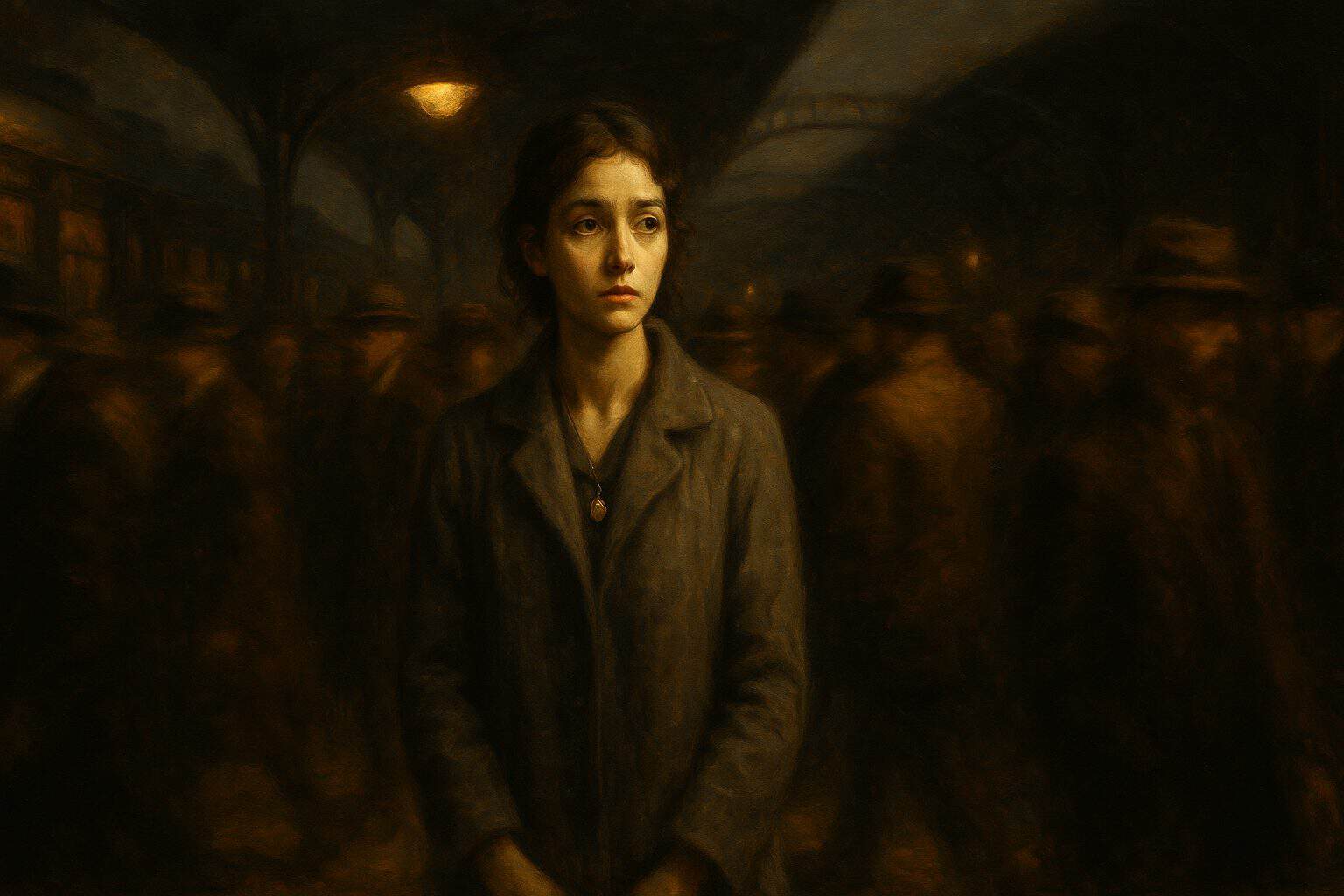
The phenomenon announces itself first through dissolution. “The city swallowed my edges and handed me anonymity.” This swallowing is not violent but almost tender—a kind of absorption that relieves even as it erases. Walking among the crowds, one discovers a peculiar mathematics: as the number of faces multiplies, the weight of any single concern divides toward zero. “Amidst the sea of faces, all my concerns and feelings shrank.”
What shrinks here is not the self as such, but the self’s insistence on its own particularity. The crowd offers what solitude cannot: a kind of existence without edges, without the terrible burden of being this one rather than another. In the press of bodies on a subway platform, in the flow of pedestrians at a crosswalk, the individual discovers relief from individuation itself.
Yet this relief carries its own exile. To be swallowed by the city is to exist per se, in a physical sense, without yet existing for anyone. “Both he and she existed per se, in a physical sense, but they did not yet exist for each other.” The crowd grants presence without recognition, being without being-seen. One moves through the city as through a dream where everyone has faces but no one has eyes.
The Masks and the Thread
In this anonymous existence, a strange proliferation occurs. The self, relieved of its edges, discovers it can wear many faces. “I took it all in, trusting that beneath these many different masks, a single, authentic self held everything together.” But what holds these masks together is precisely what the crowd cannot see—an invisible thread of continuity that runs beneath all appearances.
“I threaded honesty through jokes and prayed no one tugged the stitch and unraveled me completely.”
The joke becomes the perfect vehicle for this threading: it allows truth to appear while maintaining deniability, sincerity to surface while keeping escape routes open. In laughter, others recognize something genuine without being able to grasp it, touch it, hold it accountable. The one who jokes stands simultaneously revealed and concealed, present and absent, here and elsewhere.
This threading of honesty through deflection reveals the deeper structure of the crowd-self: it exists as a perpetual negotiation between disclosure and withdrawal, between the need to be known and the terror of being seen. Each mask permits a fraction of the self to appear—”Fractions of herself reveal themselves through each of her unique involvements with others”—while protecting the whole from exposure.
Solitude’s Door
But these fractions, these involvements, these masks worn in the crowd’s anonymous light—they follow us. “Feelings and thoughts from these involvements follow the individual to solitude’s door where he or she either invites them in or leaves them standing outside.” The door marks a threshold that the crowd cannot cross. Here, at this boundary, the most profound choosing occurs.
To leave them standing outside is to maintain the exile even in solitude—to remain a stranger to one’s own experiences, to refuse the weight of what has been lived. To invite them in is to accept the terrible work of integration, to gather the scattered fractions into something that might be called a self.
Yet most flee this threshold altogether. They spend their time “alone” setting up their next social engagement or relationship, using solitude merely as a staging ground for the next immersion in the crowd. The phone becomes a portal through which the crowd’s presence seeps even into physical isolation. One is never truly alone because one is never truly willing to be alone.
The Preemptive Exclusion
In this flight from genuine solitude, a defensive structure emerges. “Reaching hesitantly toward emotion, only to retract, abandoning it before it could inevitably abandon me. Preemptive exclusion. Defense mechanism.” The movement is always the same: a tentative reaching followed by swift withdrawal, a pattern so practiced it becomes automatic.
This preemptive exclusion operates not only toward others but toward parts of the self. Certain feelings, certain memories, certain possibilities are abandoned before they can abandon us. “For the next week, while scrambling to figure out my next step… I went silent.” The silence is not empty but full—full of all that cannot be risked, all that must be excluded before it excludes us.
In this defensive pattern, the crowd-self finds its most tragic expression. It exists as a perpetual forestalling of genuine encounter, whether with others or with itself. Every relationship becomes an exercise in controlled distance, every emotion a threat to be managed rather than a reality to be lived.
The Pride of Loneliness
Yet within this exile, a strange transformation can occur. “Confidence in loneliness and pride in solitude resurged, overtaking any aspiration of my being human again.” The very exclusion that began as defense hardens into identity. One begins to take pride in what was initially mere protection.
This pride is not simple arrogance but something more complex—a kind of fierce loyalty to one’s own exile. Having been hurt by connection, having discovered the fragility of every bond, one makes a virtue of disconnection itself. The crowd is no longer a relief but a confirmation: see how easily I move among them without being touched, without being known, without being held.
“Finitude begins and ends with solitude. We are born alone. We die alone. During the time in between, we either embrace solitude and loneliness or we run…”
To embrace solitude in this way is to make a philosophical stance out of an existential wound. It is to say: since we are ultimately alone, let us be thoroughly alone. Since every connection ends, let us end them first. Since “Part of me died; love – now pretend,” let us make all love pretend from the beginning.
The Hunger Beneath
But beneath this pride, beneath the masks, beneath the defensive patterns, something else persists. “Desire is not meant to be an end in itself… but instead requires an object outside of itself, ‘knowing,’ to pursue in order to actualize its purpose.” The hunger for genuine knowledge, for real encounter, cannot be entirely suppressed.
This hunger manifests paradoxically through the very structures meant to deny it. The one who threads honesty through jokes still threads honesty. The one who wears many masks still trusts in an authentic self that holds them together. Even in the resolution to “enjoy the buffet of her body, savoring every crumb until the day came to slam the door,” there is a savoring, a presence, an engagement that betrays the pose of pure detachment.
The crowd-self, in all its defensive complexity, remains oriented toward what it flees. Every preemptive exclusion testifies to the reality of what might be included. Every mask implies a face. Every exile remembers a home, even if that memory takes the form of denial.
The Threshold Return
The phenomenon completes itself not in resolution but in perpetual return to the threshold. Again and again, we find ourselves at solitude’s door with the feelings and thoughts from our involvements waiting to be invited in or left outside. Again and again, we must choose between the anonymity that swallows our edges and the terrible specificity of being this one self.
The crowd offers its peculiar comfort: to exist without existing-for, to be present without being seen, to move through the world as through a dream. Solitude offers its peculiar challenge: to gather the fractions, to integrate the masks, to accept the weight of what has been lived.
Between these two poles, the self discovers its most difficult freedom—not the freedom to be authentic or inauthentic, genuine or false, but the freedom to perpetually negotiate the space between revelation and concealment, between the hunger to be known and the need to remain hidden, between the exile we choose and the communion we cannot stop seeking.
In the city that swallows edges, in the crowd that grants anonymity, in the solitude that demands choosing, the self encounters itself as this strange being that can only find itself through losing itself, can only be whole through accepting its fractions, can only come home through embracing its exile.