Late-August heat presses on his lungs as a boy raised on Friday-night lights steps onto a small Catholic campus in 1995, about to learn the exact height of a ceiling he never knew his confidence had.
Air That Presses Down on the Chest
A late-August heat hangs over a small Catholic university in 1995, but the real weight is in the air that seems to press against his lungs. A boy raised on Friday-night lights steps onto a campus where worth is measured in pages, not yardage, and discovers that his public school triumphs spend like counterfeit bills. Classmates from polished Catholic prep schools move through Plato, Aristotle, Aquinas with the loose shoulders of people revisiting old roads, while he stares at the names as if they were carved in a foreign alphabet. Professors with doctorates assign whole epics where he once skimmed excerpts, thirty to fifty pages a night in multiple classes, each line expected to be understood, not merely survived. Papers must show mastery, not flair. Even the silence between questions sounds smarter than him. This is not a gentle step up; it is a collision with a hierarchy he never knew existed, and the air itself teaches him he is late to a conversation already in motion.
Red Marks Across the Page
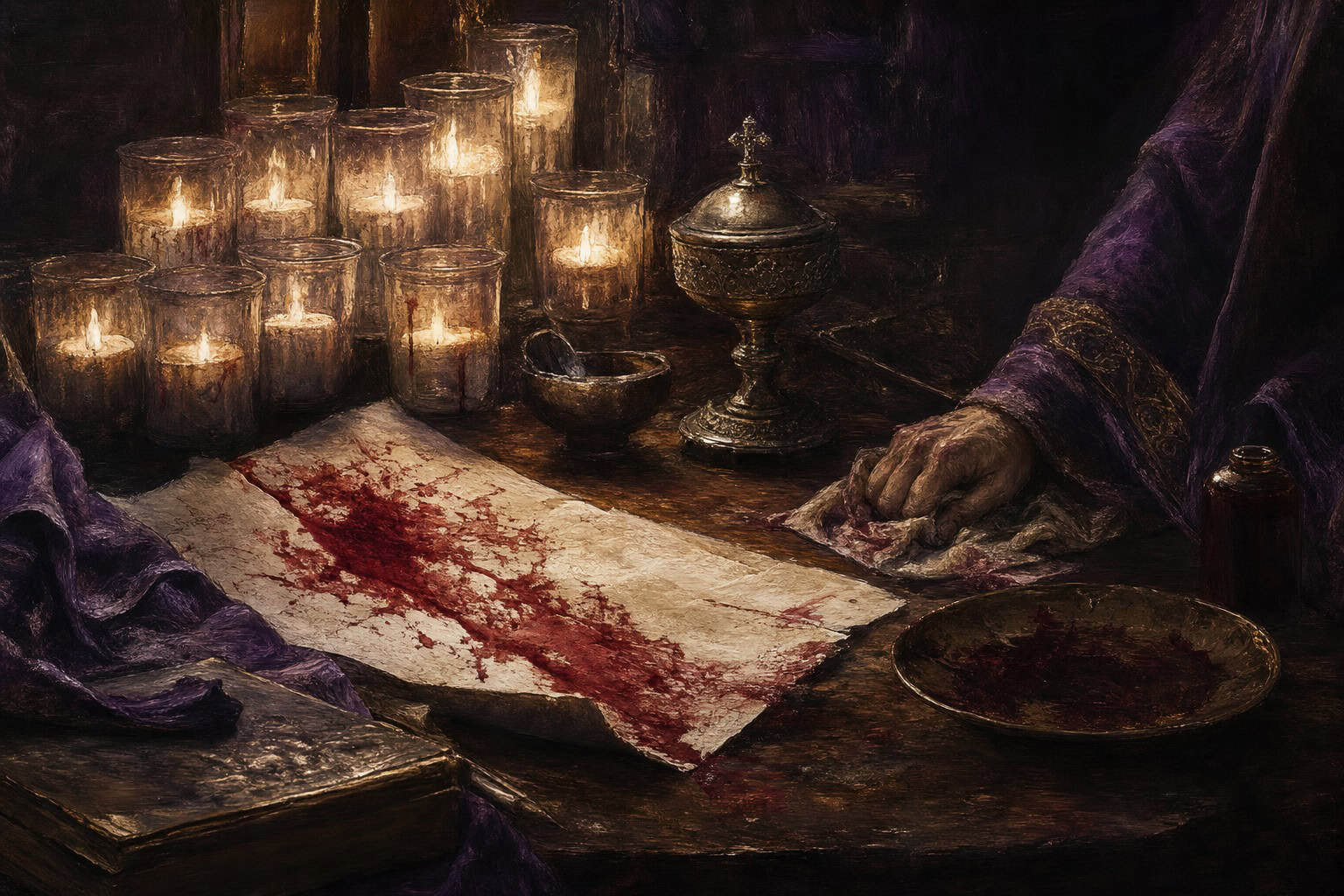
The reckoning arrives as a thin stack of paper slid across a desk, its margins slashed with red. A D-minus in freshman theology does more than bruise his GPA; it cuts through his grand ideas about his own cleverness and leaves the page looking wounded. He had imagined himself insightful, perhaps even destined for priesthood, and now stands staring at proof that he does not yet speak this language. Fear is not abstract: it is the vision of being sent home, of family shame, of a vocation laughed out of the chapel. In response, he chooses a kind of asceticism of the mind—hours bent over dense texts, forcing himself to trace arguments, to write with the clarity these doctors demand. Silence becomes tactic in the classroom while his pen learns to carry the weight his tongue cannot yet lift. The chapter orbits this moment: the discovery that if he is to remain, he must let this red ink become tutor rather than sentence.
Campfires at the Edge of Hunger
Underneath the schedule and the syllabi runs a deeper current: the shock of meeting minds that finally match the appetite he has carried for years. In the desert of his earlier schooling, two teachers once burned bright, but the bell always rang and the lesson ended just as the air grew interesting. Here, the title “Doctor” signals something different—men and women tempered by a decade of study who toss out Greek and Latin roots as casually as small talk, whose intelligence is not a party trick but a way of breathing. Even fellow freshmen display a quickness that orients itself, almost instinctively, toward what is true and good. Their very presence reveals how starved he has been, how emaciated his intellect actually is. That hunger does not sink him into self-pity; it hardens into a restless drive to be seen by these people, to be judged worthy by the very standard that exposes his lack. Recognition becomes a slow-burning fire he keeps returning to, even when it scorches.
There is a particular grief in discovering the ceiling of your own confidence, the day the world reveals how much it never taught you.
Bleach in the Back of the Throat
While the mind is being broken down and rebuilt in the classroom, the body is assaulted in the dorm. He shares a small room with Jimmy from New Orleans, a rugby player whose nickname, “Swamp,” proves painfully literal. The air around Jimmy’s bed feels thick, humid with sweat and neglect, his laundry a pile that suggests he may not even finish the most basic acts of cleanliness. Each Thursday, the West Texas boy arms himself with bleach and harsh cleansers, scrubbing floors, wiping surfaces, trying to drown the smell before weekend visitors and parties. Rugby trips become brief reprieves, windows of time to attack the room with scouring powder until the sting of chemicals catches in his throat. Outside, apartments thrum with music and cheap cigarettes, dorm rules are bent with practiced politeness, and underage drinks pass hand to hand. Inside that shared space, the battle is more primitive: order against decay, discipline against self-indulgence, the yearning for a life of the mind fought on the level of what it means to live beside another person’s body.
Discovering You’ve Been Underfed
Chapter 7 marks the first time the narrator’s confidence is not just challenged but measured and found wanting in public view. The boy who once wielded intellect as armor finds that armor paper-thin against doctoral standards and peers who have been reading serious books for years. That humiliation is not incidental to the book’s larger question; it is the academic form of the same wound that has marked his soul since childhood, now exposed under fluorescent lights and graded rubrics. To consent to divine love later, he will first have to consent to truth here: that he has been undereducated, underformed, and that his pride has grown in the space where real formation should have been. The chapter promises no quick repair, only the slow, grinding possibility that this shame might be turned, over time, into strength rather than self-hatred. It leaves him standing between a stack of ancient texts and a reeking trash bag of his roommate’s laundry, holding a bottle of bleach in one hand and a syllabus in the other, aware that both kinds of work are now required of him.