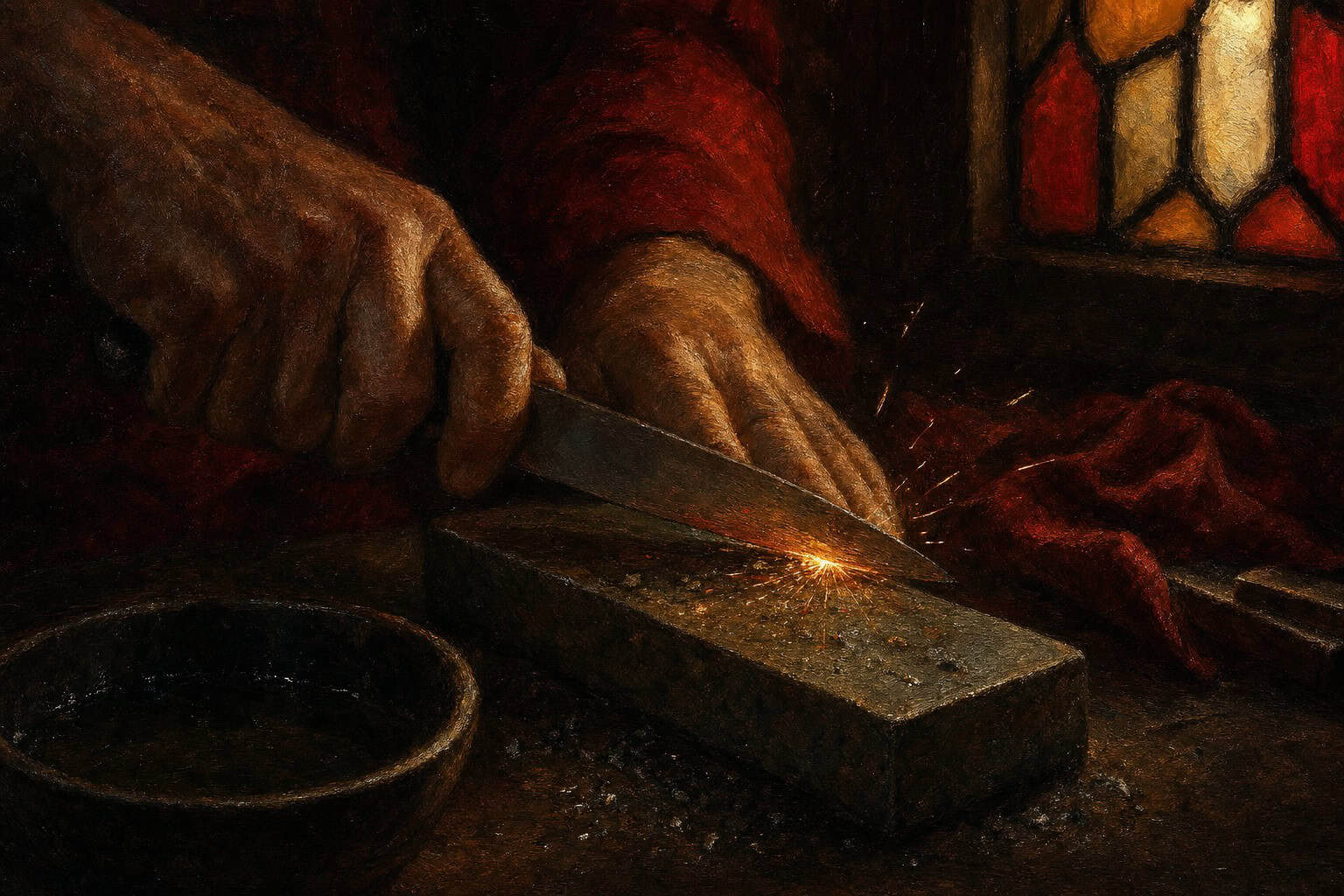
She sits across from yet another would-be guide, cradling a cold cup, trying to tell true formation from counterfeit with eyes that were smudged from the very start.
A Face Lit by the Wrong Fire
She sits across from yet another would‑be guide, the air between them thin as paper, her hands wrapped around a coffee cup that has already gone cold. His words are measured, his concern steady, but her body reads him like a foreign language; every kindness feels like a trick, every clear line like an accusation. The only teachers she has known were actors in borrowed skins—parents staging affection without tenderness, leaders offering slogans instead of wisdom, lovers running through practiced gestures that never reached the nerve. Those early counterfeits did more than bruise her; they rewired what counts as trustworthy. Now her pulse steadies only in the presence of a familiar fraudulence, the small talk, the flattery, the vague, foggy guidance that never cuts too close. When he names hard truths, her chest tightens as if threatened. When someone else shrugs and tells her she is fine as she is, her shoulders finally drop. Her heart has been trained to confuse anesthesia for care.
The Smooth Stone That Never Sparks
In this same scene, another figure edges closer—a gentler voice, a softer gaze, a promise that feels like balm on burned skin. This one does not mention change. He praises her insight, marvels at her resilience, calls her patterns understandable, even noble. The offer lands like relief: come as you are and remain untouched, except for a little polishing of the story. This is the false whetstone, the stone that never throws sparks because it refuses to meet the blade with any real pressure. Its surface is warm, its sound soothing, and every sentence leaves her exactly where she already stands. He will never risk her resentment by asking for sacrifice. He will never sit in silence long enough for truth to rise, never hold a gaze through her defensiveness. His formation is a gentle circle, not an edge, and that is why she leans toward him. His comfort feels like safety, but underneath, something in her knows she is being invited to stay dull.
The Flexed Muscle in the Glass
The passage turns from the table to the mirror. A man in the gym angles his body toward his reflection, veins rising like cords under his skin as he lifts, lowers, poses, checks again. Every rep is careful, every contour inspected, as if the mirror must be convinced of something. The body is real—worked, disciplined, undeniable—but the insistence of the display gives it away. This physique is not simply enjoyed; it is wielded, held up against an inner lack that never makes it into the frame. The text names the pattern: one part of the self swollen to cover another left starving. The overbuilt bicep hides the underfed mind. The flawless résumé hides a heart that cannot attach. The loud spiritual testimony hides a prayer life that has gone flat. What they most eagerly showcase is not their strength but their confession. The exhibition itself is the crack through which the hidden disorder leaks into view, even as they strain to keep it contained.
When your whole way of seeing was contaminated from the beginning, the hardest task is learning to recognize what genuine formation even looks like.
When Praise Feels Safer Than Truth
This is where the passage turns its light outward, toward the reader who thinks of old friendships, old crushes, old confidences offered to the wrong people. You remember the friend who always agreed, the mentor who kept telling you how gifted you were, the partner who never asked you to grow. Their words felt like rest after a long climb, and you kept returning, even when nothing in your life actually shifted. There were other voices, too—quietly naming patterns, questioning your stories, holding up an unflattering angle. Those conversations left a sting, so you called them harsh, unloving, too intense, and backed away. Underneath, this passage suggests, lies a trained reflex: affirmation registers as love, correction as threat. Your own history of chosen influences becomes a kind of X‑ray, revealing what your heart is set to seek. Not just who you trusted, but what you wanted from them—comfort, reflection, excuse, or real conversion. The pattern is rarely an accident.
Learning to Read the Blade
By the end of this moment, the question is not which guides are out there, but what sort of edge you are willing to bring to them. If early life handed you counterfeits, your inner compass learned to spin toward the easy glow of people who cost you nothing. Now, to move toward authentic formation, you would have to walk against that pull, toward the one who does not flatter your existing shape. The passage hints at a hard mercy: genuine whetstones do not feel gentle at first. They press, they scrape, they throw off heat and shavings. To submit to that touch, you almost have to distrust your own first reactions, to stay when every nerve insists on leaving, to listen longer than your defenses were built to endure. No shortcut is offered here, only the image of steel drawn again and again along stone, each pass noisy, resistant, and real. Somewhere in that grinding contact, the heart begins, slowly, to remember what sharpness is for.