Dating as a Christian man: what happens when you gather a woman’s every role and trust it all adds up to one true self. A memoir reflects.
A Boy Behind Mortared Stone at Summer Band
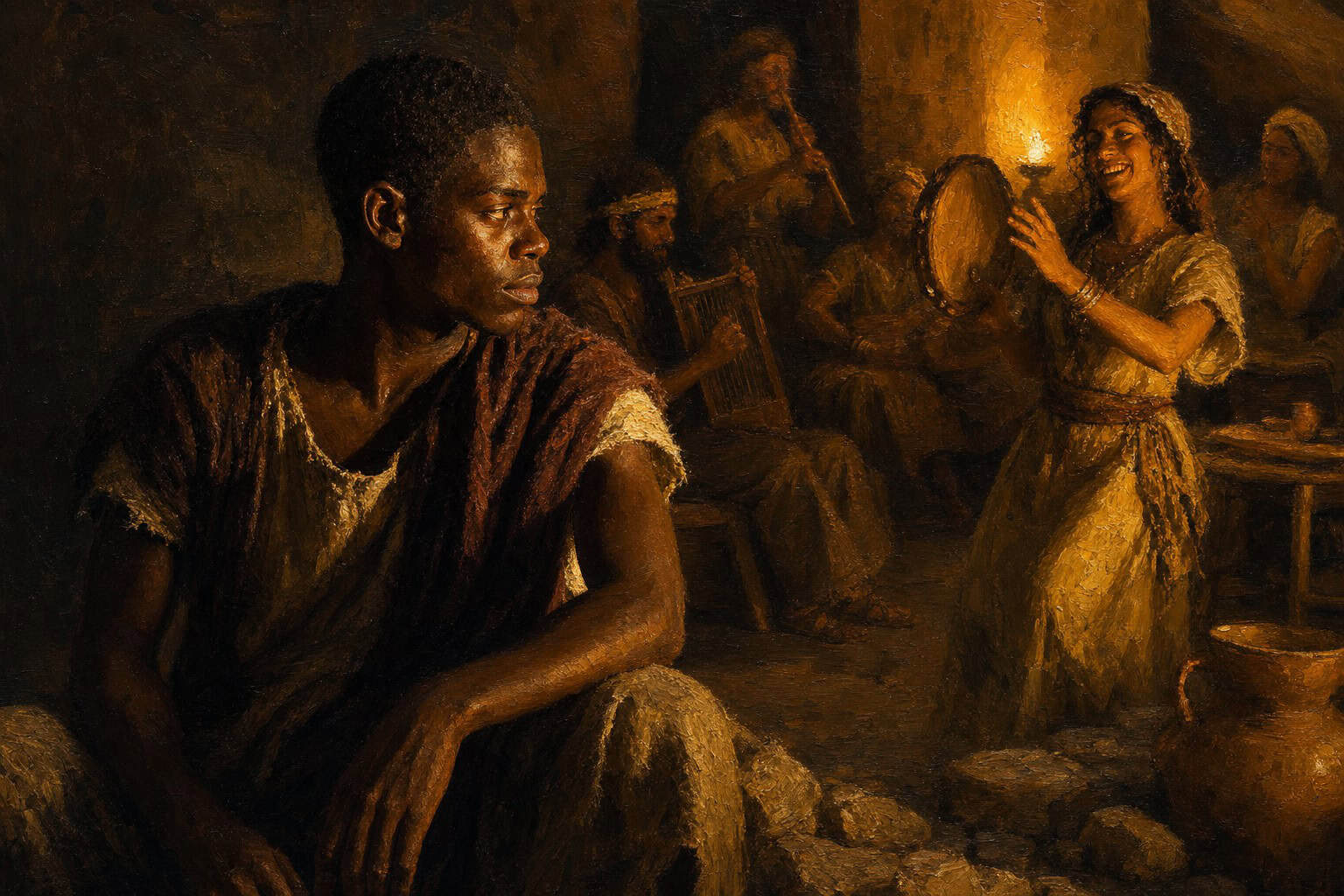
Is it safe to love someone? That is the question a Christian man carries into every new face, though he rarely says it aloud. He wants to give his heart and keep it whole at once. He wants to be pure and also known, and those are not always the same wish. In Confessions to the Empty Chair, the narrator meets this exact question as a teenager who has already sealed himself off. In Chapter Six he describes stacking stones around his heart and calling the labor holiness. He tells himself the wall guards God against a filthy world. Underneath, he already knows the mortar between the stones is hatred, not faith, and the knowledge shames him even as he takes pride in the strength of each stone. He moves through summer band practice as a reserved boy, civil to everyone, warm to no one, storing his rage in a hidden journal while other kids drift toward parties and dates and the ordinary noise of high school. He treats people with a calculated politeness that costs him nothing and gives them nothing, because open rudeness would draw attention and complicate the quiet exile he has chosen. Then a girl in the French horn section starts talking to him between rehearsals. Her name is Jeannètte. She comes with her friend Spencer, offering small jokes, easy questions, a gentle friendliness he did not earn and cannot explain. Nothing about him should have drawn her; he had made himself dull on purpose. The weeks before the official school year are hot and long, the practice field baking, the horns raised against the glare, and into that dead heat comes a person who simply will not leave him alone in a good way. Something in the mortar loosens. This is the ground the older narrator returns to when he asks how a guarded man ever learns to want another human being. For such a man, dating is never simple attraction. It is the terror of the wall coming down. He had raised the fortress precisely to prevent misunderstandings, complications, and temptations, the whole tangled business of loving another body and another will. Now a real girl stands at the base of his defenses, laughing, unafraid, and he feels both the pull of her and the older pull of a boy who secretly wants someone to prove the walls unnecessary. The reader learns at the very start that this is a story about a man who wanted to be seen and dreaded being seen in the same breath. He did not know how to read her. He only knew he was beginning to want to try, and that wanting frightened him more than his loneliness ever had.
Gathering Her Like Evidence, Trusting the Sum
Here is what a longing man does with a woman he has decided to love: he collects her. The narrator watches Jeannètte across her different settings and takes each one in like a data point set down carefully in a ledger. He sees her joking with Spencer, quick and light. He sees her serious. He sees her gentle, then sharp, then playful again between one rehearsal and the next. Each of these is a face, a role she wears, and he stores them all up. He is not cold about it; he is starving. He assembles the pieces the way a lonely man hungers for coherence in the person he desires. And beneath the whole gathering he makes one enormous, silent act of trust. He assumes that under her many masks a single, authentic self holds everything together. He does not test the assumption. He simply believes it, because believing it is what lets him love her at all. This is where a Christian man dating meets his deepest and most dangerous instinct. He wants the person in front of him to be whole, integrated, one. He wants her many appearances to point to a hidden unity, the way he was taught the soul is one before God. So he trusts blindly. He treats her contradictions as surface and her core as solid ground. The older narrator, looking back, sees how much raw desire shaped that trust. The walled-off boy who prided himself on seeing through everyone became, in love, the most credulous reader in the room. He gathered evidence of a coherence he wanted to be there. The body does this. Longing bends the eye toward what it hopes to find. When a man wants a woman, he reads her generously, filling every gap with faith and calling the filling knowledge. This is not only weakness. It can be a real mercy, a refusal to reduce her to her worst moment or her flattest hour. But it can also be a soft-eyed blindness that keeps him from seeing her as she actually is, from asking whether the many faces truly meet in one heart or only seem to from where he stands. The tension is real and the memoir refuses to soften it. To love is to trust past your knowledge. To trust past your knowledge is to risk being wrong about the very person you are handing yourself to. The narrator did not weigh this. He was too grateful that anyone at all had climbed his wall to interrogate who had done the climbing. That gratitude, tender and human, would cost him. He was reading a soul from the outside and calling the reading truth.
The Moment He Chose Blindness Over Sight
The turn is quiet and it happens inside him, not between them. There comes a point where the narrator could have stopped and asked the hard question plainly: do all these faces of Jeannètte actually add up? Is the self I am trusting real, or is it the shape my hunger poured into her many masks until it looked like a person? He does not stop. He chooses to trust, fully and without reservation. And the older man writing the memoir names that choice with terrible clarity. To soften after years of cultivated hardness is to choose mercy over destruction, he sees, and the very same softening blinds you to what you are actually looking at. Love makes you complicit in your own deception. The man who finally lets himself feel becomes the most credulous fool, gathering proof of unity where there may only be performance. This is the revelation the whole scene has been climbing toward. It is not that Jeannètte set out to deceive him. It is that his own desire led him to assume a coherence he never once verified, because verifying it would have meant keeping some part of the wall standing, and he was so tired of the wall. He wanted it down. He wanted the hugs and kisses he had watched other people share while he sat in his citadel with his journal and his rage. So he let the stone fall and did not look hard at who was standing on the other side of the rubble.
Love does not open your eyes; it decides in advance what you are willing to see, and calls that decision faith.
That is the sharpest cut in this part of the book. The narrator did not fail to think. He thought carefully, gathered patiently, reasoned soundly from everything he had. His failure sits upstream of thinking. It lies in the appetite that quietly governed which evidence he trusted and which he let slide past unexamined. A Christian man is taught to believe the best of people, to be charitable, to see the image of God in another face. These are good things and he was not wrong to want them. But they can become the exact machinery by which he refuses to see a person truly, because seeing truly might mean loving less, or loving harder, or grieving what he found. He picked the version of her that let him keep loving without cost. He would not learn for a long time what that one pick had already done, or how much of what he called faith was only the shape of his own need pressed against her.
Love does not open your eyes; it decides in advance what you are willing to see, and calls that decision faith.
What the Loosened Mortar Left Behind
After a man makes that choice, he lives inside its consequences without knowing he has made a choice at all. The narrator keeps building his picture of Jeannètte on the foundation of his one great assumption. Every new thing she shows him gets folded into the whole he has already decided is there. The fallout is not dramatic at first. It looks like happiness. It looks like a lonely boy finally warmed by another person’s attention on a hot practice field, no longer only civil but actually glad. Yet underneath, the older self can trace the crack running through it. He was not loving the woman. He was loving the coherent self he had assembled and hung on her like a borrowed name, and there is a difference between those two loves that only time exposes. This is the part of dating no one warns a young Christian man about. The danger was never that he would be too cynical. The danger was that his longing would make him too sure. He would mistake his own construction for her reality and then feel wronged when the two failed to match, though she may have shown him her many faces honestly the whole time. The memoir sits inside this ache without flinching and without a tidy repair. There is no lesson here that fixes it. There is only the slow understanding that the wall he tore down and the trust he poured out were both, in their own ways, about him. The wall protected him from the world. The blind trust also protected him, because it let him love without the hard labor of truly knowing. Both were fortifications. One kept people out. The other held the difficult truth of a real person at arm’s length while his arms pretended to embrace her. And here the book’s deepest register finally speaks. God does not rescue the narrator from this. No warning arrives to stop him gathering data on a girl he barely understands. Instead there is a sense of being accompanied inside the mistake, a nearness that does not undo the error but refuses to leave him alone in it. The Lord walks with the credulous fool as surely as He walked with the walled-off king. That is the strange, uncomfortable comfort the memoir offers. Not that you will read the other person rightly. Not that love will spare you your deceptions. But that you are not alone in the dark of your own wanting, even when the wanting has already made you blind. The mortar loosened. Something got in through the gap. The narrator would spend a long stretch of his life learning exactly what it was.
The Restless Heart That Cannot Sail Away
So what does a Christian man do with this, standing at the edge of loving someone he cannot fully see? The memoir hands him no method. It hands him a mirror. It shows him that his hunger for another person is holy and treacherous in the same motion, that the longing of the body for union is genuinely good and also the very force that bends his sight. A person is never a set of data points. She is another consciousness lived from the inside, a whole world he will never fully enter, and the moment he thinks he has her summed up is the moment he has stopped seeing her at all. This is true of the woman in these pages and true of every woman a man has ever tried to read across a rehearsal room. She wore many faces. Some she chose for her own reasons, reasons he never asked about because he was too busy fitting her into his hope. A thoughtful reader, man or woman alike, will feel the double truth here. People do present differently in different rooms, and there is real wisdom in wondering whether the faces meet in one heart. But the wondering must never curdle into contempt or harden into a verdict about her. The narrator’s failure was not that he trusted. It was that he trusted in order to spare himself the harder love of actually knowing. And the restlessness underneath all of it never leaves him. The heart that gathered Jeannètte so eagerly was already aching for a rest it could not find in any person alive. He tried to make her the answer to a longing only God could hold, and no finite person can bear that infinite weight without being crushed under it. You cannot run from your own conscience; it goes wherever you sail. You cannot lay your endless hunger across a single human being and expect them to carry what they were never made to carry. That is what this early chapter of the book opens up: the tender, dangerous work of a man learning that to love someone is to keep looking at them, past your hope, past your fear, past the story you have already quietly written about who they are. He did not know how yet. He was only a boy standing in fresh rubble where a wall had been, holding an armful of a girl’s many selves, trusting they added up to one. The memoir asks you to remember your own version of that moment, the person you were sure you understood, and to sit with what you refused to see. It offers no easy way out of the question. It walks you further into it, which is the only honest place the answer could ever live.