You burned the old love letters and the smoke won’t leave you. What the fire cannot undo, and why the longing stays. A raw meditation on ash and memory.
The Match Head Struck Against the Dark
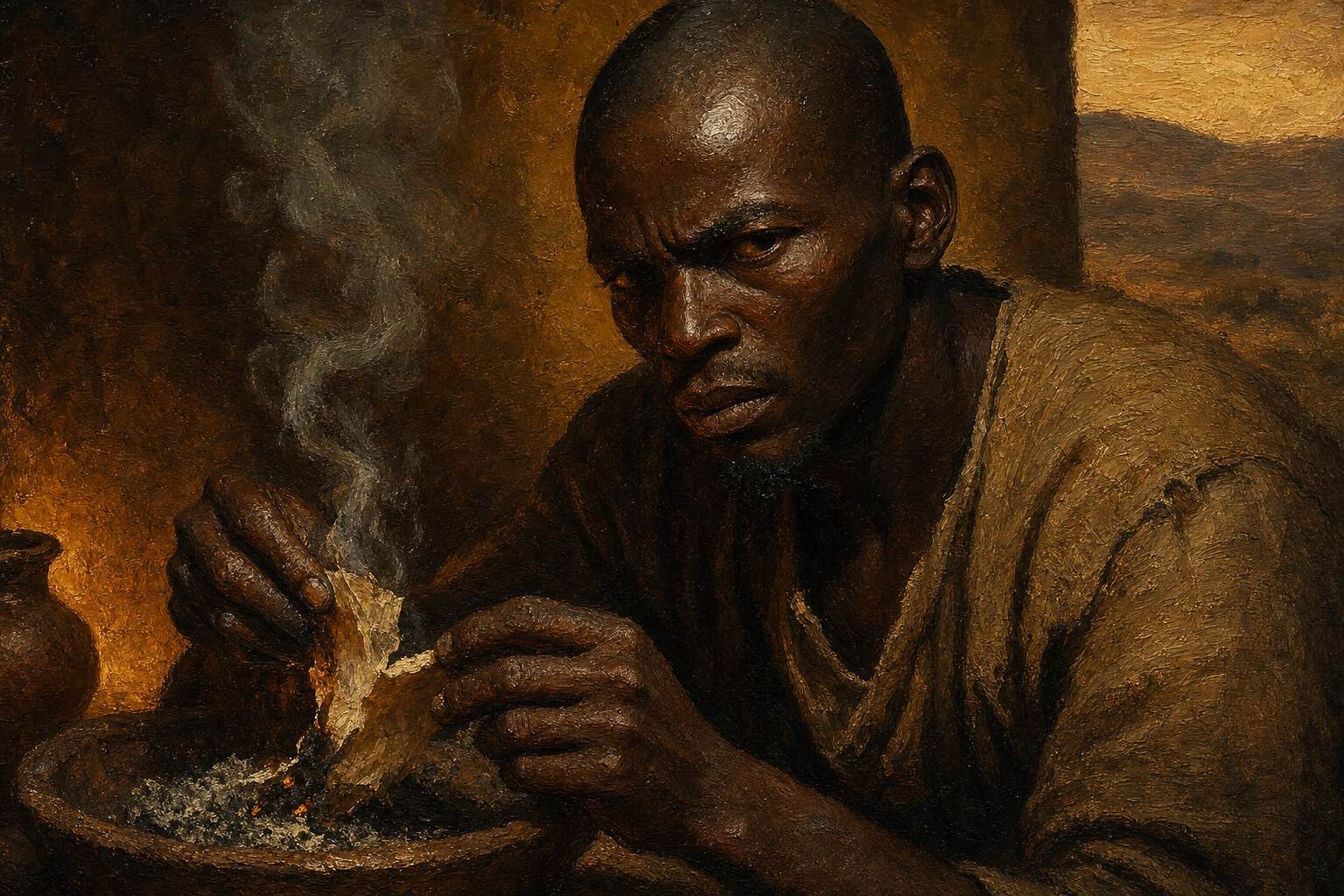
You did it in the morning, before the coffee, before you could talk yourself out of it. The letters had lived in a shoebox for years, pushed to the back of a closet shelf under a folded blanket, and this morning you carried them down and crouched at the sink, or the fireplace with the flue dragged open and cold air pouring down the chimney against your face. Your hands were steady until they weren’t. The first flame took the corner of a page and you watched the ink pucker and brown, the words you once read a hundred times now curling toward the heat, unreadable, gone. There was a smell you did not expect, sweetish and thick, the smell of a thing that was never meant to burn. You told yourself this was closure. You told yourself you were free. But even standing there, you knew you were not holding a funeral so much as trying to force one, striking a match against a darkness that would not lift on command. Under the ceremony a small honest voice asked what exactly you thought you were destroying. The paper was only paper. The handwriting was only shapes pressed into a page by a hand you cannot picture clearly anymore. The thing you wanted to kill lived nowhere in that box. It lived in you, in the way your chest tightened at a certain shade of hair, at freckles across a nose, at a voice pitched soft and attentive, leaning toward your words as if they weighed something. You could feel the old pull even now, over the ash, and it embarrassed you. You had counted on the fire to do what your will could not. You had counted on a clean line between the person you were with them and the person you meant to become. But every line you ever drew in your life had moved the moment you reached it. You would set a limit, promise yourself this far and no further, and then the boundary would slide forward like a shadow at dusk, always keeping the same short distance ahead of you. That is the terror of this morning: not that the letters are gone, but that burning them changed nothing that mattered. The smoke rose and thinned and disappeared up the flue, and your longing sat in your body exactly where it had always sat, patient, unhurried, waiting for you to stop pretending it could be reduced to gray flakes on your fingers. You had thought yourself the master of this weather inside you, the one who could summon and dismiss a storm. You are learning, crouched over a cold grate, that there is only one master of the fire you keep feeding, and it was never you.
The Ash Refuses to Cool
What surprises you is how the burning does not release you. You expected lightness. You expected the hollow, clean feeling of a room finally swept, the good tiredness of a chore finished. Instead the ache tightens, because the fire has forced you to admit how much you kept. All those years the box sat closed on the shelf, you told yourself you had moved on, that the letters were sentiment, harmless clutter, nothing at all. Now the smoke has called your bluff. You realize you were not saving mementos. You were saving a version of yourself that had once been wanted—shy and hungry for attention, chosen by someone who leaned toward your words as though they were worth leaning toward, who asked you questions and waited for the answers. That is what the fire cannot touch. You can burn the paper, but you cannot burn the memory of being sought, of not being the thing left in a toy box and forgotten. And so the wanting outruns the object. The letters are ash; the longing they once answered is not for the letters, and never was. It is a longing older than the person who wrote them, older than you, a reach toward a wholeness you can name but never quite hold in your two hands. You feel it as a physical pressure behind the sternum, a hunger with no floor to it. The mind, hating this helplessness, starts to work. It offers you cold explanations, one after another—it was only instinct, only biology, only a pattern repeating from childhood, only the old machinery of survival dressed up in the language of love. You reach for these theories the way a man with a deep cut reaches for anything to wrap the wound, because a theory does not bleed. If you can reduce her to an equation, to a set of physical traits first noticed years ago and looping ever since, then her leaving becomes mechanical, impersonal, something that merely happened rather than something done to you. You will not have to feel it as betrayal. You will not have to feel it at all. But the intellect is lying to you, gently, the way it always does when you are frightened. Explaining the wound does not close it; it only postpones the bleeding and adds a low contempt to your grief, contempt for her, contempt for yourself, contempt for having cared. And underneath the cold formula the raw thing keeps breathing. The ash on your hands still smells of the sweetness that would not burn. You wipe your palms on your jeans and the smell stays in the creases of your fingers. You wanted the fire to be a verdict, a gavel coming down. It turns out to be only a smaller fire than the one still going inside you, the one no ceremony reaches, the one that keeps asking to be fed long after the letters are unrecognizable, long after you have told everyone, including yourself, that you are finally, truly done.
What the Smoke Confesses When You Finally Stop Lying
Then it comes, the thing you have been circling all morning without letting yourself land on it. You did not burn the letters to grieve the girl. You burned them to punish the part of yourself that still wants what she gave you. And that part is not a stranger who broke into your house through a back window. It is the same heart that once turned toward something holy, that once wanted to give itself away to God completely. This is the confession the smoke drags out of you against your will: the hunger for holiness and the hunger for her body were never two separate men at war in one chest. They were one man, wanting. You had built your whole self on a clean division—the pure daylight self who belonged to God and did the good and serious work, and the shameful nighttime self you could disown as an exception, an accident, a thing that merely happened to you in the dark. Burning the letters was meant to certify that division, to prove the two halves were real, and to let you amputate the wrong one and walk away whole. But you cannot cut a self in two and keep the good half breathing on its own. The same longing that drove you toward the altar drives you toward the body; it is one reach, one thirst, one desire that has never once been satisfied by anything it managed to seize and hold. You wanted to live in heaven and hell at the same hour, to keep the delight of the hugs and kisses and stay clean, to walk right up to the edge and call your recklessness faith, to believe your will could chain what your blood had carried for a thousand generations. You made another person carry the weight of your purity. You asked her, without ever saying it aloud, to guard a line you could not guard yourself, and you called that love. It was not love. It was pride wearing love’s clothes, and it used her more quietly and more coldly than any open transgression would have. The ash on your hands is telling you plainly that the fire cannot separate what was made single. This is the hard mercy of the morning. You are not being freed from your longing. You are being shown that it was always one longing, and that you have been spending it badly, pouring a thirst made for the infinite into things that crumble in your grip and leave. The revelation does not comfort you. It strips you. But there is a strange grace in being seen this nakedly, even if the only one seeing is yourself, standing in the smell of what you burned.
Fire ends the paper, not the wanting; ash is only the body of a hunger that never learned to die.
Standing in a Room That Smells of Fire
The confession is made, and now you have to live in the room afterward, which is the harder thing by far. The letters are gone. The truth has been said out loud to no one. And nothing about your body has changed. The desire still moves in you, the same pull toward the same features, the same soft attentiveness, and the knowledge of what it truly is has not loosened its grip by a single degree. This is the fallout no one warns you about. You expected understanding to work like medicine, like a fever finally breaking. You thought that if you could only see the wound clearly, name where it began, trace the pattern back to its first appearance years ago, the seeing itself would set you loose. But the honesty you have won this morning does not lift the dryness. If anything it deepens it, opens it wider. You feel scraped out, emptied of the sweet consolations you used to live on without noticing. The affections you leaned into—the delight of being wanted, the warmth of arms around you that meant you were not, after all, a discarded thing—all of it has gone quiet, gone tasteless, like food you cannot taste through a heavy cold. You do not feel purified. You feel bereaved, robbed, standing in an empty kitchen at an hour too early for anyone to call. And here is the temptation waiting at the bottom of the dryness, patient as the longing itself: to decide that since the warmth is gone, you will go cold on purpose, as a strategy. To make a private covenant with numbness. To use people from now on the way you suspect you were used, to handle every future closeness carefully, at arm’s length, so that it can never again cost you this particular morning. The retaliatory chill is right there in the room with you, offering itself as strength, as maturity, as hard-won wisdom. It would be so easy to shake its hand and call it freedom. But you know, even in your exhaustion, that this would be a second lie laid neatly on top of the first. Choosing coldness is not freedom from desire; it is the slow murder of your own power to reach at all. To kill the longing entirely would be to kill the self that longs, and you are not willing to die that thoroughly, not this morning, not yet. So you stand in the smell of fire, dried out and undeceived, wanting a comfort that will not arrive, and refusing the counterfeit comfort of contempt that keeps knocking. This is the desert the old writers spoke of. Not punishment. A purging. The slow stripping of every affection that is not God, done without your permission, done in a dark where you cannot yet see the point of any of it.
He Was in the Water With You
You want a verdict on whether God was present this morning, standing over the sink with your sleeves pushed up and soot on your wrists. You did not feel Him. You felt abandoned, watched by a silence that handed you nothing while it seemed to pour renewal freely over everyone who had ever hurt you. That is the accusation you carry through the smoke: not that God is absent, but that He is a spectator, seated and indifferent, passing over the drowning man to bless the people already safe on the shore. Sit inside that accusation. Do not let anyone rush you out of it, because the grief is real and cheap comfort is an insult to it, a slap dressed as a blessing. And yet turn the accusation over one more time in your hands. What if the silence was not indifference at all. What if the God you could not feel was not seated on the shore but down in the water with you, in the ash on your fingers, in the tightness behind your ribs, in the very hunger you were trying so hard to burn out of yourself. The old writers say the dryness itself is the gift—that when the sweetness leaves and the warm consolations vanish, it is because a love too vast to be felt as comfort is doing its slow, patient, cutting work in the dark. You cannot verify this. It offers you no rescue, no lifting of the desert, no return of the pleasant feelings you have lost this morning. It offers only company: the strange, unprovable nearness of Someone walking beside you inside your sin rather than tapping His foot, waiting for you to climb out and clean up before He will look at you. This is not the miracle you asked for as a boy who thought faith could master anything. It is rarer than a miracle and much harder to receive, because it fixes nothing at all. It only stays. If you want to know what it is to stand exactly here—undeceived, dried out, still smoldering, refusing both the sweet lie and the cold one, wondering whether the silence around you might be love—you will find your own morning set down plainly in Confessions to the Empty Chair. It does not promise the fire will go out. It promises only that you were never burning alone at that sink. And when you shut the book you may find, closing your fist over the last cool flakes of ash, that the longing you tried to destroy is the truest thing you own—the wound and the road at once, a reach that will not die because it was built to arrive somewhere you have not yet had the courage to let it go.