Books about being an outcast: a memoir that names the ache of arriving late, keeping quiet, and learning a room’s language from the outside in.
Squeezing Through the Door After the Music Starts
You feel it in the body before you can name it. You step into a room where everyone already speaks the language, and the air itself thickens around you like water pressing on your chest. Your shoulders round inward. Your breath goes shallow. Your voice drops to nothing, because nothing feels safer than sound. You have arrived late to a party where the music started long ago, and every step you take lands off the beat that everyone else seems to have known since birth. This is the exact ground beneath Confessions to the Empty Chair in its seventh chapter, where a young man from a football town—a place that measured a person’s worth in yardage, not in pages—finds himself among classmates who read the same great books years ago and now read them again, slower and deeper. Their ease is an inheritance. His panic is his alone. If you have searched for books about being an outcast, you already know this weather in your ribs. It is the low pressure that drops when you sense, without being told, that you do not belong here. It is not loneliness exactly. It is closer to the shame of being ordinary matter dropped into a refined room, sure that your very silences give off the smell of where you came from. So you make yourself smaller. You hope invisibility can buy you time. That instinct is not cowardice; it is honest. When a room moves too fast and too fluently, shrinking feels like the only way to survive it. You study the codes the way a hungry man studies a menu he cannot afford, reading the prices twice, ordering nothing. You watch how the others hold their pens, how they nod at names you have never heard spoken aloud. You copy the surface and pray the surface holds long enough. This is the lived state we begin in—not the events of a book but the mood of an ache that many carry into every new room for the rest of their lives. The outcast is not always cast out by cruelty. Sometimes he is simply late, and lateness by itself can feel like a sentence handed down before the trial. The chapter does not hurry to comfort him, and I will not hurry to comfort you. First we have to sit inside the suffocation and admit it is real. We have to admit the body knew before the mind, that belonging was never promised to us, and that its absence sits on the ribs like a wet coat you cannot take off. That heaviness is where the whole story starts.
Names That Toll Like Bells for an Old Confidence
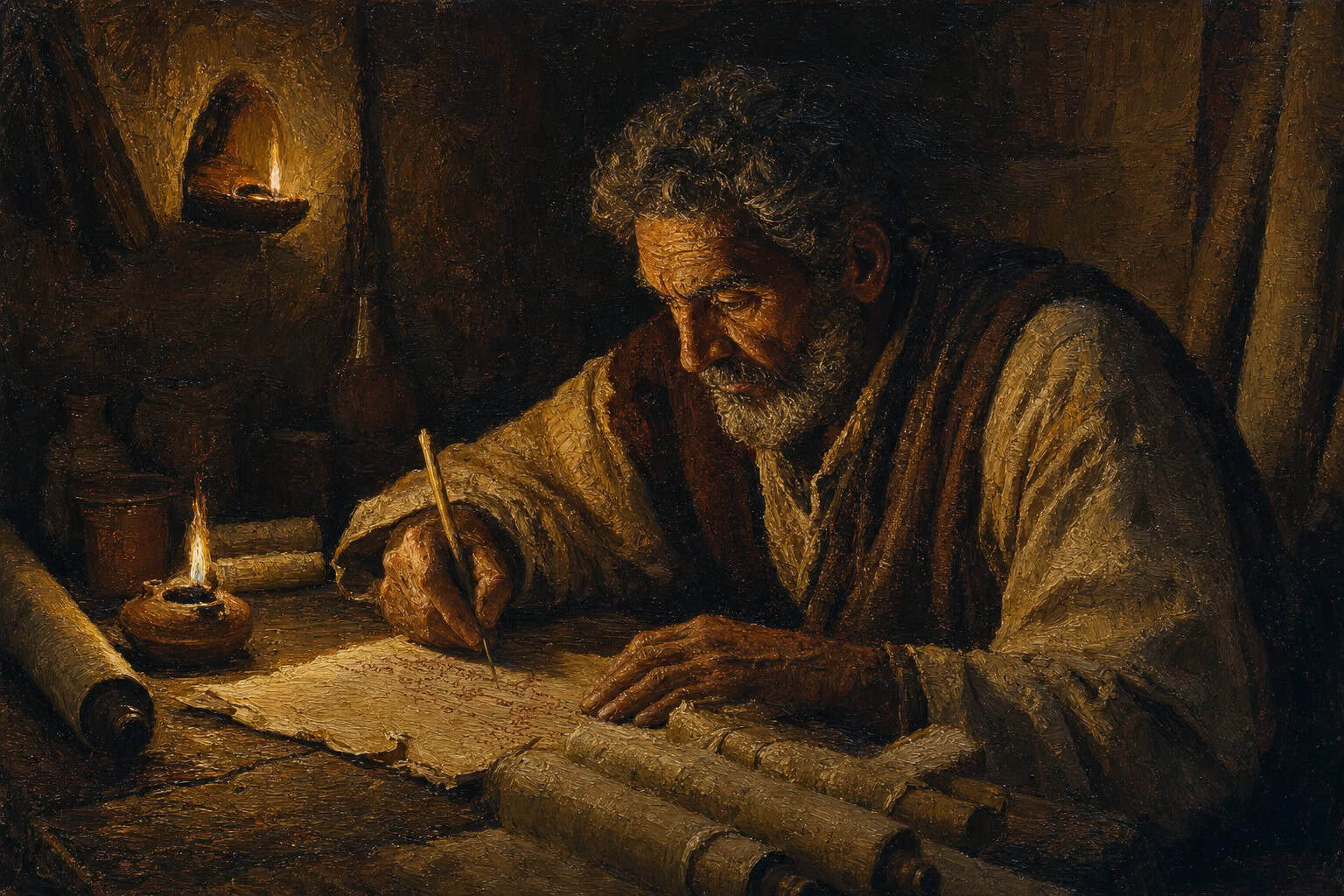
The pressure does not hold still. It gathers and grows. In this seventh chapter, a list of names begins to sound in the young man’s ears like church bells rung at a funeral—thinkers he has never read, required texts he has never held, professors who slide between Greek roots and Latin roots with an ease that feels almost cruel in how effortless it looks. Each name tolls for an old confidence that is quietly dying in him. You may know this sound too. The pile of reading swells past what feels humanly possible. Thirty pages a night, then forty, then fifty. Whole books cover to cover, not the tidy excerpts he was once allowed to skim in a public school hallway. Papers that demand more than answers—they demand command, the kind of clean explanation that proves you understand a thing only because you can hand it, whole and clear, to another person. And here the tension turns inward, which is always where it cuts deepest. The fear is not merely that the work is hard. The fear is that he was wrong about himself all along. The private story he carried like a coin in his pocket—that he was clever, that he was quick, that his mind was his one loyal friend—strikes a massive intimidating wall and simply cannot hold its own weight. That is the real terror in this scene, and it deserves plain words. The outcast’s worst wound is rarely the world’s open contempt. It is the moment his own inner scaffolding cracks, when the story he told himself to keep breathing turns out to be made of paper. So he keeps quiet in class, not only from shyness but from a growing dread that if he opened his mouth he would confirm the worst thing he suspects. He lets the pen speak in his place, because the page never watches his face go pale. There is something almost holy in this, and something desperate in it too. He turns himself into a scribe before he can risk becoming a speaker, learning the room’s language in the dark of his desk so that one day his courage might catch up with his need. But I have to ask, the way he asks himself in the harder hours: was this humility, or was it fear wearing humility’s coat? Was he serving the truth inside those difficult books, or hungering for the praise of the brilliant, aching to be recognized by the very minds that made him feel small? The chapter refuses to let him off the hook. It holds him in the pressure, in the multilingual dazzle he cannot yet match, in the classroom that is quietly taking apart the boy he believed himself to be. That is where the rising action leaves us—not defeated, not rescued, but stripped bare and standing in it.
The Wall That Will Not Move for Your Cleverness
Then comes the collapse, and it does not happen in a chapel. It happens at a desk, in a classroom, which is stranger and more merciful than it sounds. The turn in this chapter is not a triumph. It is a breaking. The young man’s faith in his own natural aptitude runs straight into the intimidating wall and gives way, and for a long moment there is nothing beneath his feet to stand on. This is the crossing every outcast reaches if he stays long enough in a room he does not belong to. You can shrink and copy the surface only so long. Sooner or later the demand turns real, the paper comes back bleeding red ink down every margin, and the self you built to survive is scattered across the desktop in front of you. What matters is what you notice while you sit in the wreckage. The narrator, breaking, does not find himself abandoned there. He finds instead a sudden awakening of the mind, a strange homecoming among the very thinkers who terrified him only weeks before. He learns that there are rival ways of thought, ways that clash and argue, and that he is somehow at home in the argument itself. The wall that would not budge for his cleverness gave way at last to his surrender. He does not conquer the room. He is conquered by it, and in being conquered, taken in. This is the sharpest thing the chapter reveals, and I want to say it without softening the edge: the outcast is not remade by winning the room’s approval. He is remade by being humbled past the point of pretending, and only then does the room quietly open its hand to him.
When you arrive late to a world that already knows its rhythm, silence is not peace but camouflage—the pen speaking while the throat waits for permission.
Red Ink and the Slow Return of the Voice
After the breaking, the pressure does not vanish. It only changes shape. The narrator still reads his fifty pages by lamplight. He still writes his papers in careful twelve-point type, double-spaced, still sits through professors tracing ordinary words back to their Greek and Latin roots as if opening small buried rooms. But something in how he carries the load has shifted. The silence that was once pure camouflage begins, slowly, to turn into listening. He is no longer only hiding behind his own quiet. He is absorbing, letting the room’s language soak into him night after night until his own courage starts to learn its shape. This is the honest, unglamorous fallout of any real remaking. There is no montage, no sudden fluency that arrives like a gift. There is only the daily grind of a mind finding its footing after the fall, one page, one sentence, one graded paper at a time. And here the older narrator, looking back, turns the lens on himself with real severity, and I follow him into it. What was he actually chasing through all those nights? The love of learning, or the applause of the learned? If we read him honestly, he admits the pull toward praise and standing, the ancient hunger to be counted worthy by the very people whose respect he craved most. The outcast who finally wins entry faces a subtler danger than exclusion ever posed. He can turn belonging itself into a new idol. He can begin to work the room he once feared, learning its codes not to serve the truth but to disarm the crowd, to win, to be admired. The chapter does not pretend he came through this cleanly. It holds the ambiguity open, the way a bruise stays tender long after the skin has closed over it. That tenderness is where the shortness of a life quietly shows itself too. There are only so many hours, only so many nights of reading, only one brief span in which to become the person the books keep calling him toward. The outcast feels this urgency more sharply than most, because he arrived late and he knows it in his bones. Every hour he spent shrinking was an hour he did not truly live, and none of it comes back. What he can do now is give an honest account of it—face what he did with his fear, what he built out of his shame, what good he left undone while he was busy making himself smaller than he was. This is the reckoning the chapter quietly asks of him. Not self-punishment, not endless flogging, but the plain and painful accounting of a soul. The voice that comes back to him is not louder than the boy’s was. It is truer, because it has passed through the fire and knows exactly what it cost, and knows too how easily it could still be spent on the wrong altar.
A Scribe Learning to Become a Speaker
Here is where it settles, though settling is the wrong word for a state this restless. The outcast in this chapter of Confessions to the Empty Chair does not walk off the page triumphant, and the book is braver for refusing to hand him that. He ends changed and still questioning—more fluent than the boy who squeezed through the door after the music began, but still unsure what all that hard-won fluency is finally for. If you came searching for books about being an outcast, this is the truest thing I can point you toward: not a story where the outsider at last beats the room and takes his bow, but one where the outsider is honestly broken and honestly remade, then left to reckon with the man he became along the way. The consolation here is not that the darkness lifts and the classroom stops being frightening. It is that he was not alone inside it. Something walked beside him at the desk, in the fear, in the red ink and the tolling names, present in the exact place he felt most exposed and least worthy. That nearness did not erase the difficulty. It made the difficulty holy. The suffocating air of the room where he did not belong became, over long months, the air in which a new self learned how to breathe. And the pen that once moved only because his throat was too ashamed to open—that pen became the first true muscle of a real voice. This memoir will not flatter your loneliness or promise you a clean arrival with the music still playing. What it offers instead is company in the hardest part, the stretch where you are still small, still copying the surface, still terrified to speak your own thought aloud. It names the pressure exactly as you feel it in your chest. It refuses to lie to you about the cost of crossing over. And it insists, gently and without cheapness, that the breaking was never the end of you. The scribe can grow into a speaker. The provincial boy can find, against every odd he counted against himself, a home among the great and terrible minds that once rang like funeral bells. But only if he stays. Only if he lets the wall do its slow work on him. Only if he pays the tuition of his pride and does not flinch when the old story of himself crumbles in his hands. If you have ever walked into a room that already knew its rhythm and felt your own hands go strange, this chapter will find you where you actually live. It does not hand you a tidy ending. It hands you a companion who has stood where you stand—and who will not pretend, for one comforting moment, that any of it was easy.