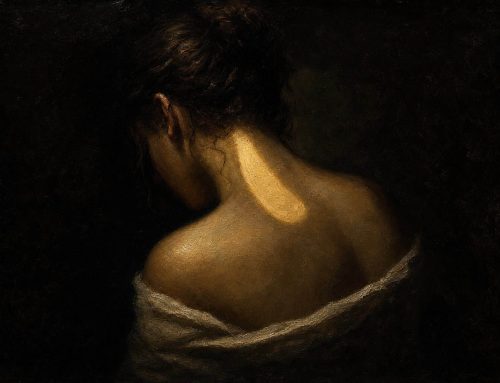
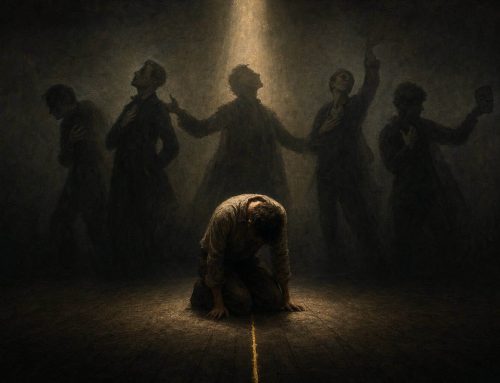
Where heaven meets dust, and the wound becomes the opening
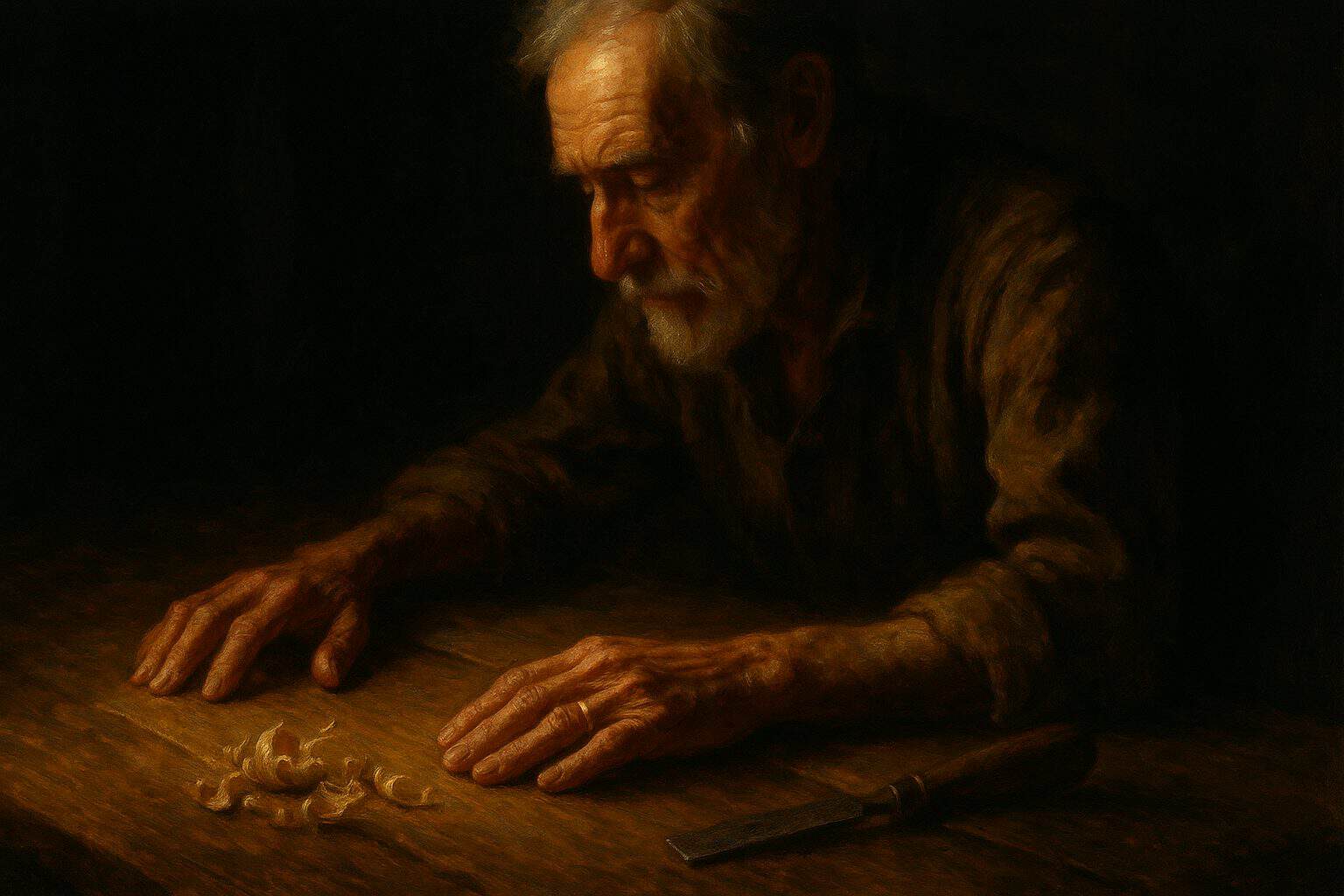
The morning light catches the grain of the kitchen table beneath my palm. This simple texture—wood worn smooth by years of meals, conversations, arguments, reconciliations—holds more theology than a thousand treatises. Here, in this most ordinary sensation, lives the mystery that has haunted me through both memoirs: we cannot feel without flesh. The angels, those pure spirits of medieval speculation, know nothing of this particular intimacy. They comprehend, perhaps, but they do not touch.
The Grammar of Incarnation
In the beginning was the distinction. “What is born of human nature is human; what is born of the Spirit is spirit.” The words hang in consciousness like two notes that refuse to resolve, each claiming its own territory, each insisting on its difference from the other. Yet even as I write these words, my fingers moving across keys, breath rising from belly rather than throat, I know this division tells only half the story.
The ancient Hebraic mind knew better. They saw the human being as a holistic soul, a unified creation of flesh and spirit that God declared “good.” Not spirit trapped in flesh, as the Greeks would later imagine. Not pure consciousness burdened with meat and bone. But something more mysterious: a unity that preserves difference, a marriage that maintains distinction.
“Holiness, I learned, is not the erasing of the darkness, but its forced integration and redemption under His sovereignty.”
Watch how this unity announces itself in the simplest moments. The rhythm of breath—is it flesh or spirit? The quickening of the heart when a beloved enters the room—body or soul? The way certain music can make us weep—physical tears flowing from immaterial recognition. Each translation, from spirit to emotion, from emotion to flesh, from flesh to mind, adds distance from the original stimulus, yet paradoxically brings us closer to understanding what we are.
The Dialogue of Touch
Touch becomes its own language, separate from words, separate even from intention. When flesh meets flesh—a handshake, an embrace, the brush of fingers across a cheek—something passes between bodies that consciousness cannot fully capture. This dialogue culminates in sensuality, that point where the spirit of each resonates through flesh, where the boundary between self and other becomes permeable without disappearing.
The body grounds our thoughts, anchors the spiritual in the particular. Without this anchorage, we drift into abstraction, lose ourselves in the ethereal. But with it—with the weight of our own flesh, the press of gravity, the simple fact of having to be somewhere rather than everywhere—we discover that limitation itself becomes revelation.
Consider how we perceive. When we as humans perceive anything with our body, through our body, because of our body, we are not perceiving the thing itself but always the thing-as-given-to-embodied-consciousness. Each brings their bodies with them to every act of consciousness, beginning and ending from the perspective of the first-person plural. We are never purely subject, never purely object, but always this strange middle term: flesh that thinks, spirit that bleeds.
The Wound as Opening
After the Fall, God divided humanity into two opposing groups. This division runs not just between persons but through each person, creating in us a fundamental fracture that becomes, paradoxically, our opening to transcendence. The wound is not simply damage to be healed but the very site where transformation becomes possible.
Music taught me this. Once I employed it as a mechanism for self-torture, those love songs cutting into memory like knives. But Martin and Adam’s music, fixated on ‘the moment,’ sometimes mocking love and sentimentality with brazen lyrics, offered a perfect counterweight. It was both genuine and performative, both mask and revelation. Through this doubling, I discovered that harmony is not the victory of one music over the other, not the annihilation of Lilith’s “loud and vain” chord, but something more complex: a weaving.
My love wove all these opposites together to make something new—a holiness woven with sex, lust, carnality, passion, desire, and pleasure. Not despite these elements but through them, the way light needs the prism’s materiality to reveal its spectrum.
The Resurrection Principle
The Greek worldview, where the Christian faith later spread, saw dualism—a pure spirit trapped in the corrupting prison of the body. But the Bible shows something different: the resurrection of all, body and soul reunited. We are not destined to remain disembodied souls in heaven but to become reunited and transformed flesh-spirit unities.
Jesus Himself embodied this transformed alignment. Heaven-spirit and dust-flesh are different, yet in Him they achieve their proper harmony. Not the erasure of one by the other, but what the phenomenologists might call a coincidentia oppositorum—a coincidence of opposites that preserves difference within unity.
“Individuality weaves the threads from each of these divergent roles into a singular tapestry, the self.”
This weaving happens in time, through time. My heart recorded what my mind could not yet grasp—Jor-El’s soothing words to his son, concepts I would revisit years later. The body remembers what consciousness forgets. No one’s heart is a tabula rasa. We carry ghosts of who we were with others and ghosts of who others were with us, and these ghosts haunt every meeting, every touch, every attempt at pure presence.
The Carnal Sacred
The belief that any woman could ensnare my heart with her body alone was ludicrous. The notion that my mind and spirit were weak enough to be overwhelmed by mere flesh was an insult. Yet this is not because flesh is insignificant but because it is never “mere.” The spirit of one who mingles his soul with another through flesh—that spirit of friendship, of love, of communion—is different from abstract affection, is it not?
We hide what we are, but what we hide bubbles to the surface. The flesh betrays the spirit’s secrets; the spirit illuminates the flesh’s hungers. We are instruments for a “more wonderful” and complex beauty, where each part makes sense from the context of the whole and how the whole makes sense from the context of each part.
Some are more attuned to spirit than to flesh. But this is not about using artificial means to transcend the perceptual limitations of the flesh—those gateways that promise transcendence while delivering only deeper entrapment. Rather, it is about recognizing that flesh itself is already spiritual, that spirit is always already embodied, even when it dreams of pure transcendence.
The Living Unity
Anchor yourself in the tangible: the grain of the table under your palm, the rhythm of your own breath moving from belly, not throat. Here, in these most basic sensations, lives the mystery of what we are. Not angels, not animals, but this third thing: flesh that aspires, spirit that hungers, wound that opens onto wholeness.
The flesh-spirit unity is not a problem to be solved but a mystery to be lived. Each moment of consciousness emerges from this doubling that is also a joining. Each gesture carries both weight and meaning. Each word spoken rises from lungs and larynx while reaching toward the ineffable.
We are the place where heaven meets dust, where the infinite finds its finite expression, where the wound becomes the opening through which grace enters. Not despite our flesh but through it, not beyond our limitations but within them, we discover what it means to be this particular kind of being: neither pure spirit nor mere matter, but the living tension between them, the harmony that includes dissonance, the unity that preserves difference.
In the end, perhaps this is what the Incarnation itself reveals: not that flesh must become spirit or spirit must become flesh, but that they were always meant to dance together, each finding in the other not its negation but its completion, not its prison but its home.