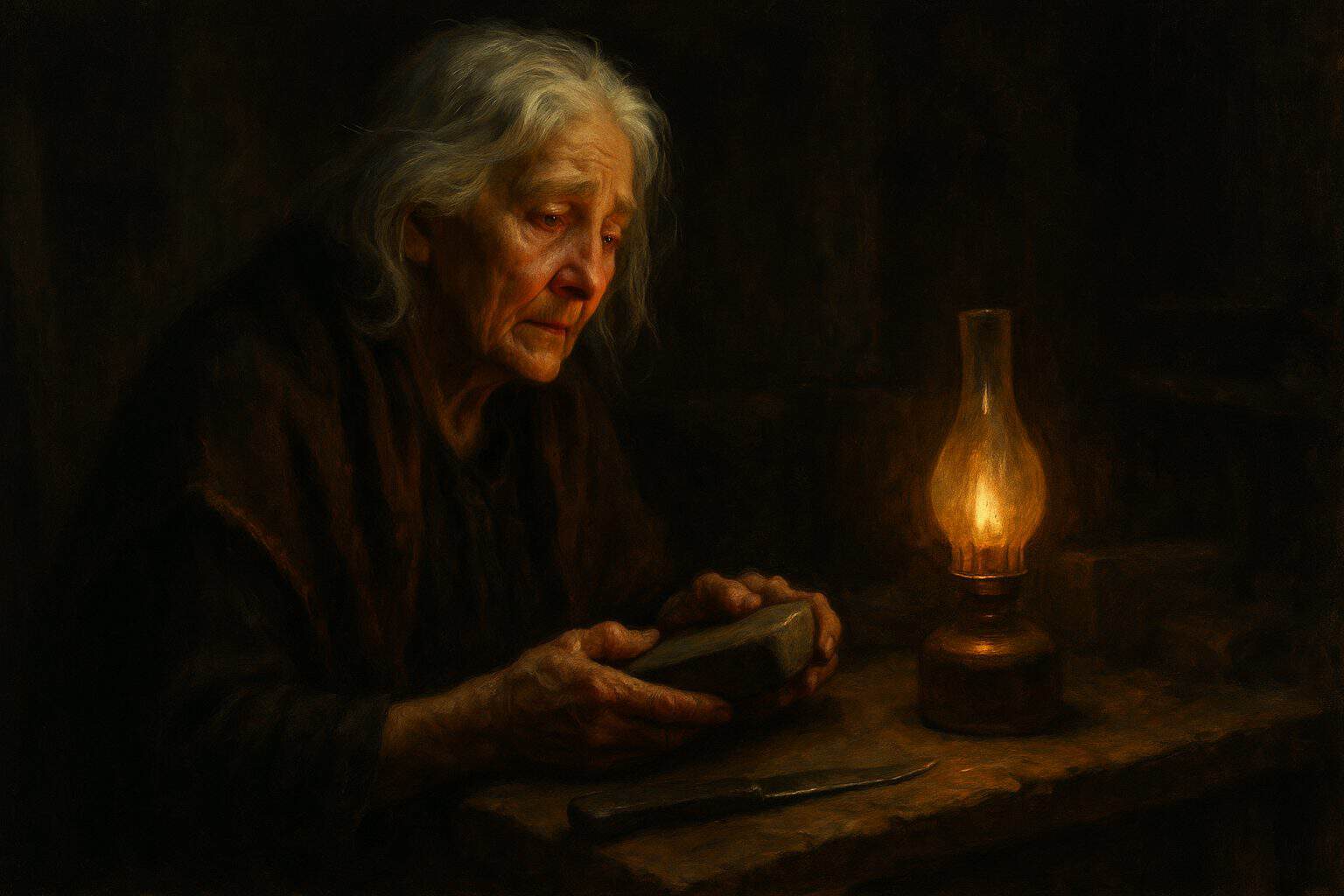
Where the ache meets its horizon, and the blade learns what sharpening costs
The Whetstone’s Knowledge
There is a particular quality to longing when death has become not abstract possibility but lived horizon—when finitude presses close enough that every reaching outward carries the weight of ending. Anthony Adoré knows this territory intimately. In Fractions of the Soul and Confessions to the Empty Chair, he traces how desire transforms when mortality ceases to be theoretical and becomes the very medium through which we encounter others.
The whetstone metaphor that runs through both memoirs carries this double knowledge. A whetstone exists to sharpen blades, yet each act of sharpening wears away its own substance. The stone gives itself to the blade’s edge through a grinding that diminishes both. This is not tragedy but structure—the way longing actually works when we know ourselves as finite. Every genuine encounter costs us something of ourselves.
“Even the time I am given with a true blade is short-lived,” Anthony writes, “as any graveyard will testify.” The graveyard stands not as morbid fixation but as honest witness. Each headstone marks where a sharpening ended, where the grinding ceased, where blade and stone finally separated. Yet this knowledge doesn’t diminish the longing—it intensifies it, makes each pass of blade against stone more precious because numbered.
Specters in the Shadows
The dead don’t leave. This is perhaps the most startling discovery in Anthony’s phenomenology of longing—how “specters of past and present relationships haunt the living in the shadows of their mind and heart, silently influencing choices.” These aren’t metaphors but lived presences, the way former lovers and lost friends continue to shape how we reach toward what’s before us.
Specters of past and present relationships haunt the living in the shadows of their mind and heart, silently influencing choices
Watch how longing moves in someone who has buried loves. There’s a peculiar doubling—the person before them and all the ghosts that person awakens. Jeannètte carries Jane’s echo. Each new blade that comes to the whetstone resonates with every blade that came before, especially those that misunderstood the relationship, those that took the sharpening but not the love that offered it.
The shadows these specters cast aren’t merely psychological residue. They’re the actual texture of how we encounter others when death has taught us that everyone we long for will eventually exist only as memory. We love through our ghosts, desire through our losses. The living beloved arrives already haunted by their own future absence.
The Ache as Compass
“The ache that once drove me toward the noise of Deep Ellum and the novelty of fleeting touch did not accuse me; it guided me, a compass.” Here Anthony discovers something essential about how longing operates under death’s shadow—it becomes navigation rather than mere want.
The ache doesn’t diminish with age or experience; it transforms. What once pulled toward distraction and noise becomes a more precise instrument, pointing toward what Kierkegaard might recognize as the eternal in the temporal. The longing knows what it seeks even when we don’t. It recognizes in certain faces, certain encounters, the possibility of that sharpening that goes all the way down.
This is why Anthony can write of choosing “the ache I knew over the grace I did not.” The familiar ache becomes more trustworthy than unknown grace because it has been tested against death’s reality. It has survived burials, endured absence, continued pointing toward possibility even when possibility seems exhausted. The ache becomes wise.
Inherited Memory
“We also inherited faint memories of a time before the fall, now blurred through the veil of death and sin.” This inheritance shapes how longing moves in us—not just toward what we’ve known but toward what we’ve never experienced yet somehow remember.
There’s a quality to certain encounters where we recognize something we’ve never seen, long for something we’ve never had. Anthony’s phenomenology suggests this isn’t projection but anamnesis—a remembering of what preceded our individual existence. The longing carries knowledge older than our personal history.
This is why certain people feel like homecoming even at first meeting, why certain touches awaken recognition rather than discovery. We’re not learning something new but remembering something forgotten. The veil of death and sin doesn’t erase this memory but blurs it, makes it arrive as ache rather than clarity, as longing rather than possession.
The Blade’s Submission
“A blade’s edge reflects its acceptance and submission to its whetstone’s principles and practices within love’s frame.” This isn’t domination but a particular form of intimacy that emerges when both parties accept their mortality.
A blade’s edge reflects its acceptance and submission to its whetstone’s principles and practices within love’s frame.
The blade must submit to the grinding, must allow itself to be worn down to achieve sharpness. But this submission only works “within love’s frame”—when the whetstone offers itself as sacrifice, not as master. Both are diminished in the encounter, both are transformed. This is what longing looks like when death is acknowledged: a mutual wearing away that creates something neither could achieve alone.
Anthony learned this through failure: “I remember spending time with certain blades, pouring all that I am into the effort of sharpening them only to have them misunderstand our relationship.” The misunderstanding isn’t about technique but about the nature of the exchange. Some blades want sharpening without sacrifice, edge without cost. They don’t understand that the whetstone too is being ground away.
The Delicate Hand
“Grinding a blade’s edge along the whetstone’s face takes both time and a delicate hand.” The delicacy isn’t gentleness but precision—knowing exactly how much pressure, exactly what angle, exactly when to stop.
This knowledge comes only through experience, through having ground too hard and shattered blades, ground too soft and achieved nothing. The hand learns delicacy through failure, through the accumulated knowledge of what breaks and what endures. Death teaches this delicacy by making every error irreversible.
Watch someone who has buried a beloved touch a new lover. There’s a particular quality to their caress—not tentative but precise, knowing exactly what touch can and cannot accomplish. They’ve learned what Sartre might call the impossible project of possession, how the Other always escapes even our most intimate grasp. This knowledge makes their touch both more modest and more real.
Weeds and Cancers
“All these things are weeds in the field, cancers in the soul, and the impurities blunting a blade’s sharpness.” Anthony’s phenomenology recognizes that longing under death’s shadow must contend with corruption—not as external evil but as intrinsic to finite existence.
The weeds aren’t separate from the field; they grow from the same soil that nourishes the wheat. The cancer isn’t invasion but the body’s own cells forgetting their limits, growing beyond their bounds. The impurities in the blade aren’t foreign additions but part of its original forging. This is what Augustine knew: evil as privation, as good gone wrong, as longing misdirected.
“Using a spiritual scalpel to eliminate this cancer from the surrounding spiritual tissue” requires distinguishing between the longing itself and its distortions. The ache that points toward the eternal can be corrupted into grasping that seeks to possess. The desire for sharpening can become desire for cutting. The longing for union can become consumption.
The Special Talent
“He showed me that I am His whetstone and that my special talent rests in sharpening blades.” This isn’t self-aggrandizement but recognition of vocation—how each of us is called to particular forms of encounter.
Some are blades, meant to cut, to penetrate, to divide. Some are whetstones, meant to sharpen, to refine, to perfect through grinding. Neither is superior; both require the other. But recognizing which you are changes everything about how you engage longing.
Anthony’s discovery that he is whetstone, not blade, explains the particular quality of his longing—always toward the Other’s perfection rather than his own satisfaction. The whetstone doesn’t cut; it creates the possibility of cutting in others. Its satisfaction comes not from penetration but from enabling penetration. This is a different eros entirely.
The Shield Against Confusion
“I forged the Codex to manage risk—with Jeannètte and Jane as my two muses… a shield against confusion, a human system erected where trust failed.” Here we see how longing adapts to betrayal, how desire continues even after trust collapses.
The Codex isn’t retreat from relationship but a different way of structuring it. When direct encounter has proven too dangerous, when the blade has cut the whetstone instead of submitting to its grinding, new forms must be found. The shield doesn’t end longing but channels it, makes it survivable.
This is what Heidegger might recognize as the technological response to Being’s withdrawal—the attempt to manage through method what once came through grace. Yet even this management carries its own longing, its own reaching toward what method cannot capture.
The Sharp Mind on the Cross
“Jesus was not high or drunk on the cross. He suffered with a sharp mind. The least I could do is try to do the same.” This is perhaps the most profound insight in Anthony’s phenomenology—that longing under death’s shadow requires clarity, not escape.
The temptation is always toward numbness, toward dulling the ache through distraction or intoxication. But Anthony learned from his nights in Deep Ellum that the dulled blade cuts nothing cleanly. The numbed longing finds only “fleeting touch,” not genuine encounter.
To long with a sharp mind while knowing death approaches—this is the human vocation. To feel the full weight of finitude while still reaching toward the Other. To accept the grinding while maintaining consciousness of what the grinding costs. This isn’t masochism but the structure of love itself in a finite world.
The Polite Blade
“Her compliments lubricated the blade she sunk into me, an act of politeness that neither dulled the edge nor changed its course.” Sometimes longing meets its opposite—the Other who approaches not for sharpening but for cutting, not for refinement but for wound.
These encounters too fall under death’s shadow. The blade that cuts the whetstone still ends in the graveyard. The wound inflicted becomes part of the texture that future blades will feel. Even betrayal becomes incorporated into the longing, not as cynicism but as deeper knowledge of what encounter costs.
The politeness makes it worse and better simultaneously. Worse because it masks intention, better because it acknowledges that even wounding happens within civilization’s constraints. We destroy each other carefully, with consideration. Death makes us courteous even in our cruelty.
The Mountain and the Needle
“Emotion is the mountain; reason is the needle.” In Anthony’s phenomenology, longing encompasses both—the massive presence of feeling and the precise point of thought.
The mountain of emotion provides the landscape within which longing moves. It creates the valleys and peaks, the possible paths, the vistas and shadows. But the needle of reason finds the exact point of entry, the precise place where sharpening becomes possible.
This isn’t the old opposition between passion and logic. It’s recognition that longing requires both mass and precision, both weight and point. The mountain without the needle is shapeless yearning. The needle without the mountain has nothing to pierce.
The Vocation of Longing
What emerges from Anthony’s memoirs is a phenomenology where longing and death aren’t opposites but partners in disclosure. Death doesn’t end longing but gives it its particular character—urgent, precise, sacrificial.
The whetstone knows it will be worn away. The blade knows it will be dulled and broken. Yet they come together anyway, again and again, because the sharpening that happens between them justifies the wearing away. This isn’t resignation but recognition—seeing clearly what Merleau-Ponty might call the flesh of encounter, where touching always means being touched, where sharpening always means being ground.
“Not every blade is meant to be sharpened because not every blade can be sharpened.” This isn’t elitism but phenomenological honesty. Some encounters don’t have the structure of sharpening. Some Others approach us for reasons that have nothing to do with refinement. Learning to recognize the difference—this too is part of longing’s education under death’s tutelage.
The graveyard remains the honest witness. Each stone marks where a sharpening ended, where longing met its limit, where the grinding finally ceased. Yet Anthony’s phenomenology suggests this isn’t failure but fulfillment—the longing completing its arc, the sharpening achieving its purpose, the whetstone and blade each becoming fully what they were meant to be through their mutual diminishment.
This is the wisdom hidden in longing’s ache when death has become horizon: we are meant to be worn away by love, ground down by encounter, diminished into our essence. The specters that haunt us aren’t warnings but teachers, showing us how to long for what will end, how to sharpen what will break, how to offer ourselves as whetstone to blades we’ll never possess.
Under death’s shadow, longing becomes liturgy—repeated action that transforms both performer and performed, a grinding that makes sacred through repetition what might otherwise seem merely mechanical. Each pass of blade against stone is memento mori and memento vivere simultaneously—remember you must die, remember you must live. The ache points toward both, compass for a journey that ends where it began, in the longing itself rather than its satisfaction.