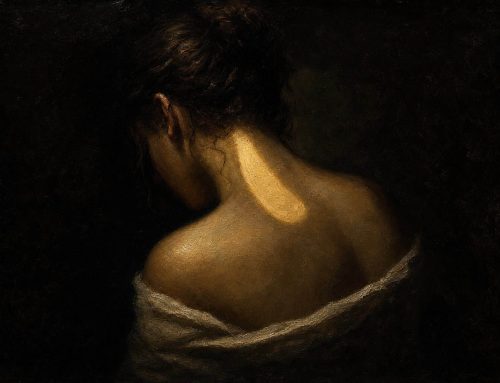
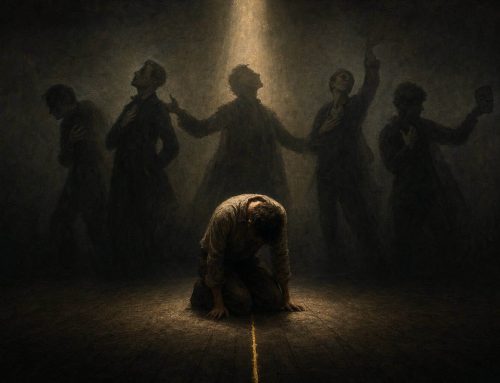
The ancient argument lives not in theories but in the morning struggle between what pulls and what chooses.
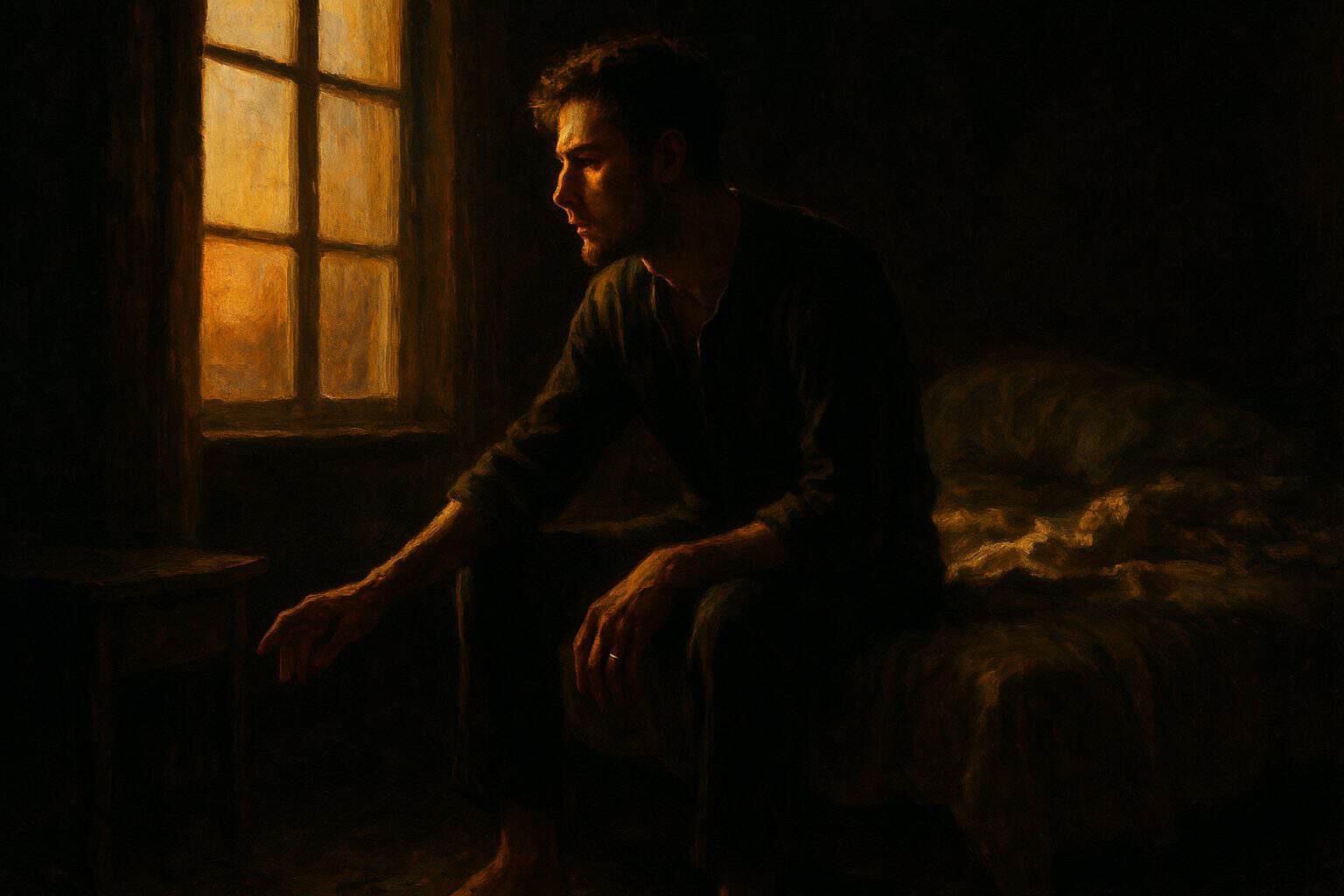
The alarm sounds at 5:47 AM. Before consciousness fully assembles itself, something already stirs—a force that precedes decision, older than thought. The body knows its hungers before the mind names them. Coffee. Warmth. The particular angle of morning light that signals possibility. Yet in that same moment, another movement: the hand that could reach for the phone, could surrender to the scroll, could let the day begin as all the others—or not. This “or not” opens like a door in what seemed a solid wall.
The Territory of the Given
Anthony writes of observing couples who “might as well be observing a rooster chasing a hen as they too walk on two feet and are driven by instinct.” The phenomenology here is precise: watching bodies move through space according to patterns that predate their choosing. The man’s chest broadens as she approaches. Her laugh pitches higher when he speaks. These are not decisions but données—the given that arrives before freedom can even pose its question.
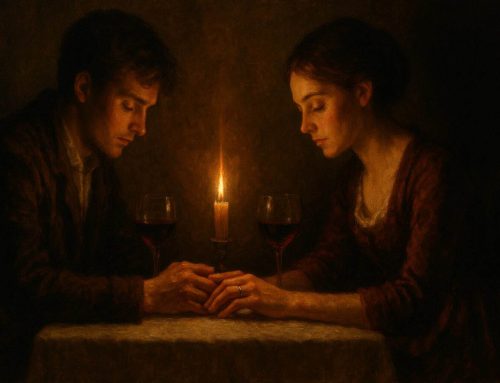
In the coffee shop, witness the choreography that no one rehearsed. She touches her neck while speaking; he mirrors without knowing. The space between them decreases by inches neither consciously measured. Their bodies know a grammar their minds never studied. This is what evolutionary determinism feels like from within: not a theory about genes and selection pressures, but the actual pull of ancient patterns through present flesh.
“Her arousal is a verdict, not a debate. It is a primal force.”
The verdict arrives before the trial begins. Anthony maps this territory with cartographic precision: “A man cannot negotiate, chase, persuade, or reason her desire into existence.” Here lives the phenomenology of the determined—not as philosophical position but as lived helplessness before forces that move through us like weather through a valley.
The Fissure of Awareness
Yet something else occurs. Anthony describes “the evolution of their souls”—a phrase that assumes what determinism would deny: the possibility of becoming other than what one is. Between the rooster’s chase and the soul’s evolution opens a fissure, barely visible but absolute in its implications.
Watch how awareness itself becomes the first freedom. The moment of seeing oneself caught in pattern—”This is the woman who lives for the hunt, driven by a profound internal hollowness”—already stands outside what it observes. The hollow drives, yes, but the recognition of hollowness is not itself hollow. It occupies a different order of being.
This is not yet freedom in any grand sense. It is merely the capacity to witness oneself being pulled. But in that witnessing, something shifts. What was pure momentum encounters a subtle resistance, like water meeting glass. The pattern continues but now includes its own observation. The hunt proceeds, but haunted by the knowledge of hunting.
The Architecture of Temptation
“The enemy has studied you all your life,” Anthony writes, mapping how temptation works through intimate knowledge of our particular fault lines. “He will customize your temptation just for you.” This customization reveals the paradox: if we were purely determined, temptation would be unnecessary. The machine needs no tempting toward its function.
Consider how temptation actually arrives in lived experience. Not as generic pull but as precisely crafted invitation. The phone notification at the exact moment of loneliness. The memory of touch when resolve wavers. The rationalization that fits perfectly into the gap conscience left unguarded. This is not the blunt force of instinct but something far more subtle—a collaboration between what knows us and what we allow ourselves to become.
The phenomenology here is delicate. Temptation assumes freedom (else why tempt?) while exploiting determinism (knowing exactly which buttons to push). It works in the space between pure choice and pure compulsion, that twilight zone where most of life actually unfolds.
The Labor of Distinction
Anthony develops a phenomenology of discrimination: “stratified physical sensations across good, better, and best, learning to distinguish not just what I liked, but from whom I liked it.” This is not the rooster’s simple chase but something requiring cultivation, attention, refinement.
The capacity to distinguish between sources of desire—”not all wield their craft with equal skill or enthusiasm”—assumes a freedom that pure determinism cannot accommodate. The determined creature simply responds; it does not evaluate, compare, develop taste. Yet here is Anthony, constructing elaborate architectures of preference, building what he calls the Codex “to manage risk.”
“Reason, on the other hand, is colder but uses a fencing sword to pinpoint strikes. Emotion is the mountain; reason is the needle.”
The needle and the mountain: two orders of being that intersect but never merge. Emotion rises like geology, massive and given. Reason moves through it, precise and directed. Neither purely free nor purely determined, but something more interesting—agencies in conversation, each with its own logic and limitation.
The Phenomenon of the Shield
“I forged the Codex to manage risk—with Jeannètte and Jane as my two muses… a shield against confusion, a human system erected where trust failed.” Here freedom appears not as abstract capacity but as construction project. The shield is built precisely because the given is not enough, because instinct alone leads to confusion.
The phenomenology of shield-building reveals freedom as labor rather than gift. Each principle in the Codex represents a decision against drift, a structure erected where nature provided none. This is not the freedom of the open field but the freedom of the architect who builds because the wilderness alone will not shelter.
Yet notice: the shield itself becomes a kind of determinism. Once built, it shapes behavior as surely as instinct does. Anthony creates his own patterns to overlay the given ones. Freedom here means not escape from pattern but the capacity to choose which patterns govern.
The Verticality of Movement
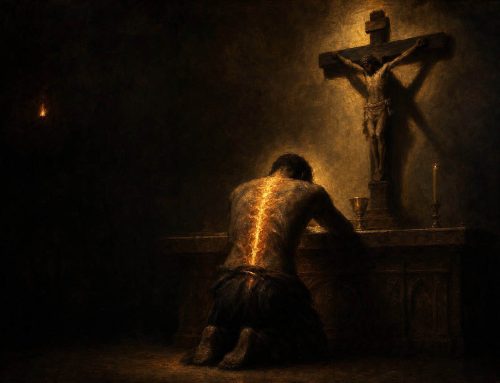
“The path toward G demands ever more clarity,” Anthony writes, introducing verticality into what seemed merely horizontal. The movement toward God—that capital G that judges all lowercase g’s—cannot be reduced to evolutionary pressure or genetic programming. It moves perpendicular to survival, often against it.
This vertical dimension changes everything. What seemed like simple determinism—bodies seeking bodies, hungers seeking satisfaction—suddenly exists within a larger frame. “Eve found more meaning and enticement in her own desires than in Adam’s love for her, than in God’s love for her.” The phenomenology here is precise: three loves, hierarchically arranged, with freedom consisting in the capacity to recognize and choose among them.
The vertical movement feels different from horizontal drift. It requires what Anthony calls “taking personal responsibility, changing and refining.” It moves against gravity, against the natural settlement of things. This is why it feels like work, why it demands “ever more clarity in understanding.”
The Paradox of Desire
“Desire is not meant to be an end in itself… but instead requires an object outside of itself, ‘knowing,’ to pursue in order to actualize its purpose.” Here Anthony articulates what pure determinism cannot explain: desire that seeks its own transformation.
The rooster does not question its chase. But human desire includes the capacity to interrogate itself, to seek not just satisfaction but understanding. “Seeking distraction rather than seeking truth, yearning for physical touch rather than yearning for wisdom”—the “rather than” marks the space of freedom, the capacity to evaluate one’s own yearnings against a standard they themselves did not create.
This is the lived paradox: we are creatures of desire (determined) who can desire to be otherwise (free). The tension never resolves into simple victory for either side. Instead, it generates the actual texture of human existence—neither pure animal nor pure spirit but something more interesting, more difficult.
The Recognition
“I no longer interpreted her availability as genuine affection. I knew better. Her approach sprang not from desire, but from calculation.” This knowing better represents a freedom earned through experience, through what Anthony calls the evolution of the soul.
The capacity to see through surface to structure, to recognize calculation beneath availability—this is not given by evolution but developed through attention. It requires what phenomenology calls epoché, the suspension of natural attitude that allows deeper patterns to show themselves.
Yet even this recognition remains ambiguous. To see calculation is already to stand outside it, to be free of its spell. But the seeing itself might be another form of determination—the bitter wisdom of wounds that now shapes perception as surely as innocence once did.
The Space Between
“Both death and love either open up new possibilities to do something different and believe in something different or they will remind one to play it safe.” The “either…or” names the essential structure: not whether we are free or determined, but how we live the tension between them.
In the end, the phenomenology of freedom versus determinism is not about solving the ancient argument but about describing how it actually feels to be both driven and choosing, both pattern and possibility. Anthony’s memoirs do not argue for freedom; they perform it, showing a consciousness that can observe its own determinations and, in observing, already stand partly free of them.
The morning struggle continues. The body’s hungers remain real, evolution’s patterns still pull. But something else is also real—the capacity to witness, to evaluate, to choose against the grain. Not pure freedom, not pure determinism, but the more interesting reality of beings caught between earth and heaven, working out their salvation in the space between the mountain and the needle.