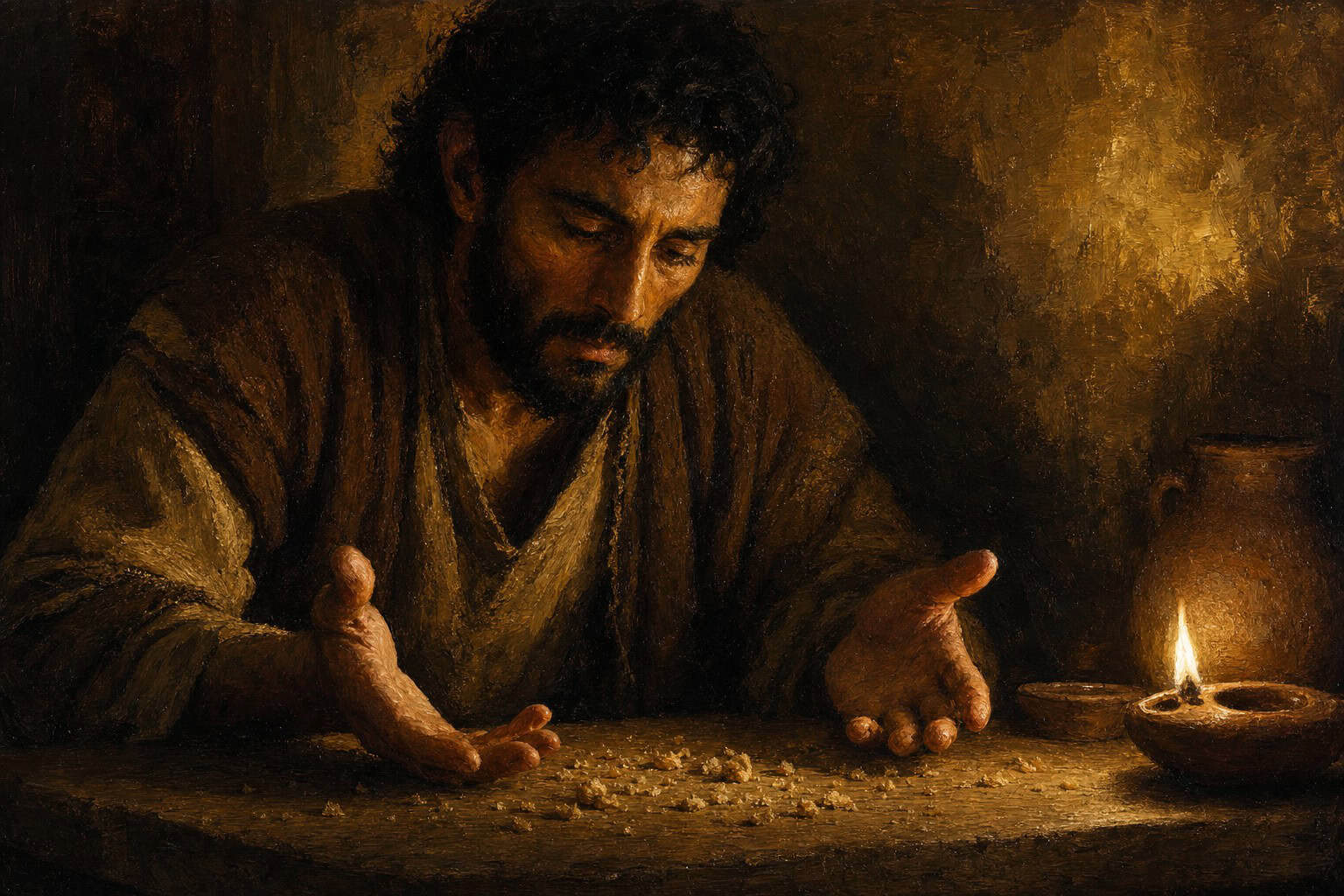
Love feels like a stranger because we chase it before we’ve faced ourselves. A raw reflection on longing, solitude, and honest teaching.
The Man Who Empties His Pockets First
Why does love keep showing up as a stranger, over and over, no matter how many times you have felt its heat? That is the question under the song, under the ache, under the words you typed into a search bar past midnight while the house went quiet around you. In the fourth chapter of Fractions of the Soul, the author does something most teachers never risk. He stops explaining and starts confessing. He tells the reader he wants to lay his mind bare, to hand over his own biases like breadcrumbs dropped along a forest floor, so that if you ever wished to find him, you could follow the trail back to the living man who wrote the sentences. He speaks of watching the words pass back and forth through his own lens, turning them, testing them, worried about being misread. He does not pretend to be a neutral voice from nowhere. He solidifies his penmanship, he says, pouring his soul into the topics on purpose, so nothing crosses between the two of you in disguise. This is not a lecture delivered from a height. It is an invitation to a bare table, and he sits down at it first. He names the bond without softening it: teacher and student, physician and the one who chooses to lie beneath the scalpel. There is something almost too much to bear in the plainness of it. He knows a reader can only follow a guide they have come to know, and that knowing costs exposure on both sides of the wood. So he goes first. He empties his pockets before he asks you to empty yours. He worries aloud about misunderstanding, about the fog that gathers between any two people who try to speak honestly across it. And in doing this, quietly, he answers the stranger-question before he has even asked it out loud. Love keeps arriving as a stranger because you keep arriving as a stranger to yourself. You hide your own biases even from your own eyes. You reach for another warm body with a mind you have never once examined, a wound you have never named, a hunger you have never traced to its source in the dark. The author refuses this refusal. His involvement, he tells you, is deliberate; he wants to be findable, to be known, to have the path between you cleared of the ordinary fog. That is a strange and specific tenderness, this choosing to be seen before you are asked to reveal anything. It sets the whole scene that follows. Before he speaks one word about men and women, about longing and the hungers we mistake for love, he walks the path between himself and you, alone, in full view, so that you can decide whether to walk it too.
The Puzzle Piece That Was Never Yours to Find
He moves from himself to Eden, and the move is not decoration hung on a wall. He reaches back to the first man and the first woman because he believes their story is still happening in every bedroom and every crowded room where two people circle each other under low light. They walked with Love itself, he says. They knew it by name, owed their every breath to it, touched it, and still turned away. If the sinless failed while holding Love’s hand, what chance do the fallen have, chasing love through strangers and glowing screens and songs that swear a stranger could be love? The tension gathers here and does not let go. He names the oldest pattern without flinching from it. Man and woman have been running toward each other since the garden, each mistaking the other for the greater good, each trying to draw the other closer for consumption, each seeing the other as the one missing piece that would finally make them whole. That is the trap dressed in the clothes of romance. It looks like devotion and it is often hunger wearing a softer name. It calls itself completion and it is often extraction underneath. The author does not sneer at any of this. He has clearly lived inside it, felt the pull himself. He knows the ache of wanting to believe that something temporary is permanent, that a glance across a room or the warmth of a body could fill the hollow that only widens the more you feed it. And this is where the stranger comes back around. The person you reach for stays a stranger precisely because you never wanted them at all; you wanted the wholeness you imagined they were carrying inside their skin. You loved the puzzle piece and never once met the human being attached to it. The strategic reading is easy and partly true: we are built to seek, to select, to bind ourselves for survival, and there is no shame in that quiet architecture. But it is only one floor of a taller house. Beneath it is a soul thirsting to connect deeply, a real yearning for union so fierce it can make a person’s natural strength seem to fade away. A woman is not a resource to be mined. A man is not a solution to be swallowed. Each is another whole world lived from the inside, carrying their own hollow, their own unexamined face in the mirror. When two unnamed hungers meet in the dark, the encounter is doomed to feel like meeting a stranger, because in truth neither one has stopped being a stranger to their own heart. The author holds both readings in his hands at once and refuses to crush one to save the other. He lets the ache stay raw and unhealed on the page.
Seek in the Solitude Before You Seek the Other
The turn comes quietly, the way the real ones always do, without trumpet or thunder. The answer, he says, rests in our response to loneliness. Not in escaping it. Not in stuffing it full of a warm body or a flattering message or the roar of a room where everyone is watching everyone else be watched. The genuine encounter with another person only becomes possible after you have first sought, asked, knocked, and desired toward the reasonable and the divine while entirely alone. He divides the labor between men and women in his own particular way, and here a thoughtful reader might resist, might feel the neatness of the split, might want to push back on it. He would not mind the pushback; the man who laid his biases bare invited exactly this. But the core beneath the division is not a cage clamped shut. It is this simple, hard thing: each person must sit inside their own solitude and let something honest be cut out of them before they are fit to meet anyone at all. He calls it removing the emotional cancer that fills the inner hollow. It is not gentle language, and he does not intend it to be. This is the moment the whole chapter has been climbing toward, and it lands with the cold clean edge of a blade. *You cannot meet another person until you have stopped mining them for the thing you refuse to find alone.* That is the truth he laid his own mind bare to earn the right to say to you. The stranger you keep meeting in love is the shape of your own avoidance walking toward you in someone else’s body. You reached out before you ever looked in. You wanted the other to do the labor of your solitude for you, to spare you the knife. And no one can carry that for anyone. The relief in this is not comfort, because he offers no comfort here, no soft landing. God does not sweep into the room and lift the loneliness off your shoulders like a wet coat. Grace, in his telling, is not a rescue out of the dark room of the self. It is a presence found within it, sitting there in the dark with you when you finally stop running. Something walks beside you into the solitude you have spent your whole life fleeing down every lit corridor. The scalpel is not punishment for your failures. It is a care that happens to hurt going in. He is honest that many people cannot do this cutting alone. They are unable, or unwilling, or they simply do not know where to begin. So they must submit to a teacher who is also a physician, someone who has already emptied his pockets on the table, someone who walked the path first and left the breadcrumbs behind him on purpose. Which is precisely what he did in the opening breath of this very chapter. The circle closes on itself. He asked for your trust at the start so he could lead you, now, to this table and this knife.
You cannot meet another person until you have stopped mining them for the thing you refuse to find alone.
What the Blade Cannot Reach Alone
Then comes the aftermath, the honest fallout, because a truth cut that deep does not leave a person clean and dry. The author turns the blade on his own chest, and this is where the memoir earns every ounce of its severity. He is not preaching down from above the wound with dry hands. He has clearly reached for people as puzzle pieces himself. He has, one feels between the lines, mistaken hunger for love and consumption for closeness, and he is old enough now, setting it all down in ink, to see plainly what he refused to see back then. The older man writing cannot climb back into the younger man who acted. Something has opened between the self that reached and the self that now understands what the reaching cost, and that gap cannot be bridged with any sentence he knows how to write. That is the ache that gives this chapter its authority over you. He is not diagnosing strangers from a safe distance. He is confessing his own strangeness to himself, out loud, where you can hear it. And the hard questions he puts to himself are the ones worth climbing inside and sitting still within. Who were those people to him, really, when he reached across the dark for them? Did he ever once see the woman in front of him as a whole soul with her own solitude, her own thirst, her own unexamined mirror, or only as the shape that might complete his own hollow for a night? What did he do in the moments when Love itself stood near and he turned away, exactly like the first ones in the garden, toward the temporary thing that glittered under the light? He does not tie any of it off with a bow. He lets the questions stay open and bleeding, because he knows the particular danger of a tidy moral. The lived truth is harder than a lesson. Even after you name the pattern out loud, the pattern still pulls at your sleeve. Even after you have sought honestly in solitude and let the knife do its work, the old hunger stirs and stands up the moment a certain face erupts into your ordered days and shatters the quiet law you thought you had built your life upon. The strategic mind and the tender heart argue inside the same ribcage, and neither one wins the argument outright. He honors that stalemate. He does not pretend that understanding your desire cures your desire. He does not pretend that facing your own mirror makes the next person any less of a mystery you will never solve. What he offers instead is company in the dark room. The teacher walks in beside the student and does not leave. The physician does not carve the disease out from the outside like a butcher; he teaches the patient how to hold the scalpel with their own trembling hand, and he stays close, breathing, while it cuts. And somewhere in that nearness, unforced and quiet, is the presence he keeps pointing toward without ever grabbing at it. Not a fix. An accompaniment. A hand resting in the solitude you were certain you were enduring entirely alone.
A Trail of Crumbs Leading Home to Yourself
Where it settles is not resolution, and the author would be the first to shake his head at the word. The stranger does not become familiar by the last line of the chapter. Love does not stop arriving unannounced and overpowering, dressed in a face you did not choose and cannot dismiss. But something has quietly shifted in how you stand before it now. You have been handed a trail of crumbs, dropped on purpose by a man who exposed his own biases first so you would not have to walk into the dark blind and alone. That is the tenderness folded underneath all the severity, the reason he risked being misread at all. He wanted to be findable. He wanted the path between teacher and student swept clear of the fog of misunderstanding, so that whatever passes between the two of you passes honestly, soul to soul, without disguise. And the deepest thing he leaves in your open hands is this: the longing itself is not the enemy you thought it was. The thirst to connect, the ache that makes your natural strength seem to drain away, the yearning that has no name and no easy cure, that longing is not a flaw to be burned out of you. It may be the fullest thing you will ever hold on this earth, this side of the closed garden. To want, aimed rightly, is already to have a little. The wanting turns holy when it points toward the good, and it becomes a prison only when you aim it at another human being and demand they be the whole of your peace. So love keeps arriving like a stranger because it is meant to. It is meant to unsettle the man who thought he had finally arranged his life into order. It is meant to send you back down into your own solitude to seek, to ask, to knock, to let something old be cut away, before you are ready to open an honest door to an honest soul. The person sitting across from you is not a piece of your puzzle. They are a whole country you will never fully cross, and that is both the mercy and the terror sewn into every real love. You will always be, in some part, strangers to each other. The task is not to erase the strangeness between you. The task is to stop pretending you are not a stranger to yourself. Fractions of the Soul does not hand you a clever technique for finding love. It does something far rarer and far harder. It pulls out a chair, empties its pockets across the bare wood, and asks whether you are willing, finally, to be known. That question is still lying there when the chapter ends, and it will keep lying there long after you set the book down, the crumbs scattered across the grain, pointing you back toward the one stranger you were always meant to meet first.