Why do women practice hypergamy? A reflection on desire, security, and what the reaching-upward really wants beneath the strategy.
The Surveyor at the Warm Table
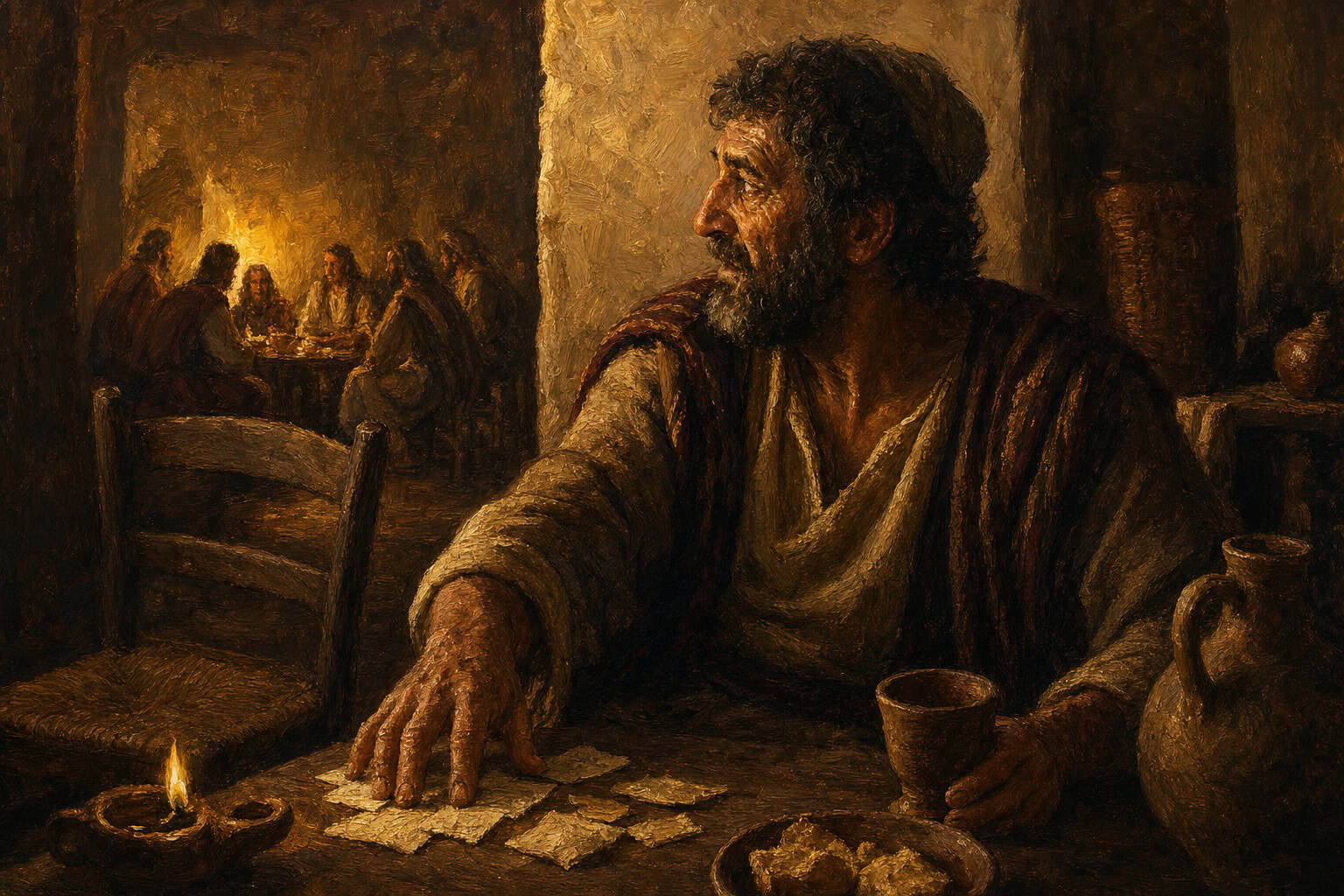
You want to know why women reach for men who stand higher, and you want it explained without insult to anyone you love. I wanted the same thing once, though for years I came at it sideways, the way a man approaches something he is a little ashamed to want. There was a season when I studied people the way a surveyor studies land, pacing off distances no one asked me to measure. I collected the small traces they left behind — a glance held a half-second too long, a sentence trimmed short to hide its second half, the way a woman’s fingers traced the rim of her glass when a certain name came up in the talk. I called these breadcrumbs. I believed that if I gathered enough of them and plotted them across time, I could walk the trail backward to the hidden self that had dropped them. Early in Fractions of the Soul the narrator lays this out almost as a method, as if a soul were a coastline you could chart from a single boat: watch the behaviors, mark the patterns, guess the person from the drift. I sat across tables and read the current of a life the way old sailors read the drift of stars. It felt like fidelity. It felt, God help me, like a kind of love — this fierce, quiet attention I paid to strangers and to the women I wanted. But it was a cold love, the love of a man who wants to know everything and be known by no one. I kept my own crumbs deep in my pocket. I watched the choosing itself the way I watched everything, hunting the pattern underneath — why she leaned toward the steady one, the older one, the man whose low voice carried across a loud room without effort or strain. I told myself I was after the truth. Some truth was there. But so was fear, sitting in my chair with me. To watch is to hold the whole horizon at arm’s length. To keep one eye shut. And a person seen with one eye is flat, a shape with no depth, a shore drawn from a single fixed point. The table where I sat and studied was warm with the heat of other people’s living, their laughter, their leaning-in, and I was the coldest object in it — a man doing arithmetic on love. That is where any honest answer to your question has to begin: not with her strategy at all, but with the strange, guarded hunger of the man who would rather explain a woman than sit near enough to be undone by one.
The Crumbs Told Where, Never Who
Here is the strategic layer, and it is real, and I will not pretend it away to sound gentle. A woman carries in her body a longer reckoning than a man carries in his. Her yes to a man is a yes with more at stake — years of her one life, her safety, the possibility of a child who will need protecting through seasons she cannot yet foresee. So when she reaches toward a man who stands higher, who holds means or standing or some steady gravity in the way he takes up space, part of that reaching is old, patient prudence at work in her, older than she is. She is asking, without ever saying the words, whether this man can hold weight. Whether he will still be standing when the storm finally comes across the ground of a shared life. Whether the floor under such a life will hold, or give way, and leave her holding everything alone. This is not greed. Call it greed and you have already failed to see her, and your failure is the more shameful for being smug. It is the oldest wisdom of anyone who has ever been vulnerable — you measure the shelter before you step out of the dry doorway into the rain. I used to log this behavior as a data point, a clean straight line on my private map. She chooses upward; the pattern repeats across the months; therefore the pattern must be the truth of her. But the map was flat, and she was not, and I knew it even as I drew her small. Because the same woman who weighs a man’s standing also lies awake in the dark and weeps at his coldness. The same woman leaves a rich man’s warm house for a poorer man’s warmer gaze and never looks back. My tidy trajectory could not hold that. It could not account for sudden change, for the choice made far outside the established line, for the night a person quietly burns down their own pattern because something living in them refuses to keep dying in comfort. The breadcrumbs told me faithfully where she had been. They told me nothing of who she was becoming. That was the buried thing I feared most, the thing my charts existed to keep at bay — that another soul is not a mechanism I can run forward and predict, but a freedom I would have to risk meeting in the open, with both hands empty. The strategic reading lights one room of the whole house, and lights it truly. But a man who mistakes that one lit room for the entire dwelling has not understood her at all. He has only shrunk her down until she is small enough to fit inside his own fear, and then called the fear knowledge.
Load-Bearing Walls, Not Coins
Then the turn came, the one I fought off for years with all my clever instruments. I had been asking the wrong question the whole time, and asking it in the wrong voice. I asked what she wanted the way you ask what an engine takes for fuel, as if the answer were a quantity you could pour in and be done. But desire is not fuel, and a woman is not an engine idling for a driver. Desire is a body’s plain cry to be met by another body, a longing for union that no amount of a man’s standing can satisfy on its own, not for a single night. When a woman reaches upward, the height she is reaching for is not always the height a man owns. Far more often it is measured in something you cannot count on any ledger — whether he can hold her. Hold her actual weight, her weeping at two in the morning, her whole unmapped and unfinished self, and not step backward when he sees it. Standing and means, when she weighs them, are the visible sign of an invisible hope: that here at last is a man solid enough to carry a life shared with another, steady enough in himself that he will not flinch on the night she finally shows him the parts of her she has kept hidden from everyone. That is the deeper hunger running under the strategy, feeding it. She is not counting coins in the candlelight. She is quietly testing the walls, feeling for the ones that will bear a load. And the small tragedy of my watching, the one I still turn in my hand, is that I saw the coins gleam and missed the walls entirely. I mapped the surface of her choosing with such care, and never once knelt to knock on the beams that held her up. A man can spend a whole life this way — praising the paint and never trusting the frame, admiring the shape of a longing while flinching from the living person doing the longing. I was that man at that table, precise and blind, reading the where of her and deaf to the who.
A woman reaching upward is rarely counting coins; she is measuring whether a man can hold the weight of a shared life without flinching.
The Tomb I Called Discernment
So the answer folds itself back onto the one who asked it, and I could not stop it from folding back onto me. Once I finally saw what she was truly reaching toward, I had no honest choice but to look hard at what I had been reaching toward all those years, sitting there with my crumbs and my careful charts spread out like a man reading tea leaves. I wanted to understand women without ever once standing in the open where a woman might understand me. I wanted the depth that only two eyes give a thing, the depth another person carves into your flat world simply by being near enough to see, and I refused the very nearness that alone makes such depth possible. I held the horizon at a safe distance and then mourned, honestly mourned, the flatness of my own life. That flatness is its own quiet exile, a country with no far edge. I have lived in it — the terrible lightness of a single fixed vantage, a world with no one seated across from me to give it its far shore. The very desire I studied so coldly in others was burning low and unfed in me the whole time, disguised as science, dressed up as method. And here is the failure I keep turning over in the dark. A woman who reaches upward is doing something far braver than I ever managed at that table. She is risking a real yes to a real man, staking her body and her irreplaceable years on a shelter she cannot fully see inside before she enters it. I risked nothing at all. I gathered data. I called my cowardice patience, and my distance discernment, and I told myself I was the clear-eyed one in a room full of the sentimental. The habitual watching hardened slowly around me into a tomb, and I decorated its cold walls with the word wisdom. Most souls, I have come to think, choose the slow death of repeating themselves over the sheer terror of being changed by another person, and I was exactly such a soul, mapping the storms of everyone else so that I would never have to stand out in my own weather. What the strategic reading of a woman never captures is the same thing it never captured in me — that under every pattern is a person, lived from the inside, aching to be received and not merely read. And God, I have slowly come to believe, was not absent from that cold table. He was seated there too, in the very act of my watching, in the sin of it, patient as a man waiting out a long rain, saying nothing, only present — waiting for me to close the ledger at last and lift my eyes to the warm and living face across from me.
Undone Instead of Understood
Where does this finally settle? Not in a formula you can fold up and carry off to use on the next woman who sits down across from you. If you leave here holding a neat rule — she wants standing, she wants security, she wants a man who can simply provide — you will have drawn the exact flat map I drew, and you will end as alone with it as I was, a surveyor of a life he never lived. The honest answer is harder than a rule, and warmer. Women reach upward for many reasons braided so tightly together that no single thread can be pulled clean — old prudence and present tenderness, the hard-won wisdom of the vulnerable and the plain animal longing of a body for a body that will not let it fall. The strategic layer is true; I will hold to that. The tender layer is truer still, because it is the one that survives after the standing is stripped away and only two people remain in a dark room, deciding whether or not to hold each other through the night. To understand any of this is not to solve a woman like a proof. It is to be undone by the discovery that she cannot be solved at all — that she is a freedom, another whole consciousness lived from within, forever more than the trail of crumbs she leaves behind her on the floor. I learned this too late and far too slowly, and I am learning it still, most days badly. The grace of it did not lift me out of my coldness in one clean stroke, the way I once demanded it should. It came instead in a small and ordinary breaking — an afternoon I could no longer pretend the map was the land, a night the loneliness of my one shut eye grew too heavy to carry another hour. That is usually how the light finds its way in: not as a rescue that ends the dark, but as a companion who had been sitting in it beside me all along, waiting only for me to turn my head and see Him there. The fuller reckoning — the watching, the crumbs, the slow terror of being seen by another — lives in the pages ahead. This is only the lit doorway a man stood inside of for years, gathering his charts, too afraid to cross. What waits on the far side is not, in the end, an explanation of women. It is the plain, unmapped risk of being met by one.