You asked about the missionary ladies. Here is the honest answer, read through a memoir’s hardest chapter about being known and unknowable.
The Kitchen Where They Fed Me First
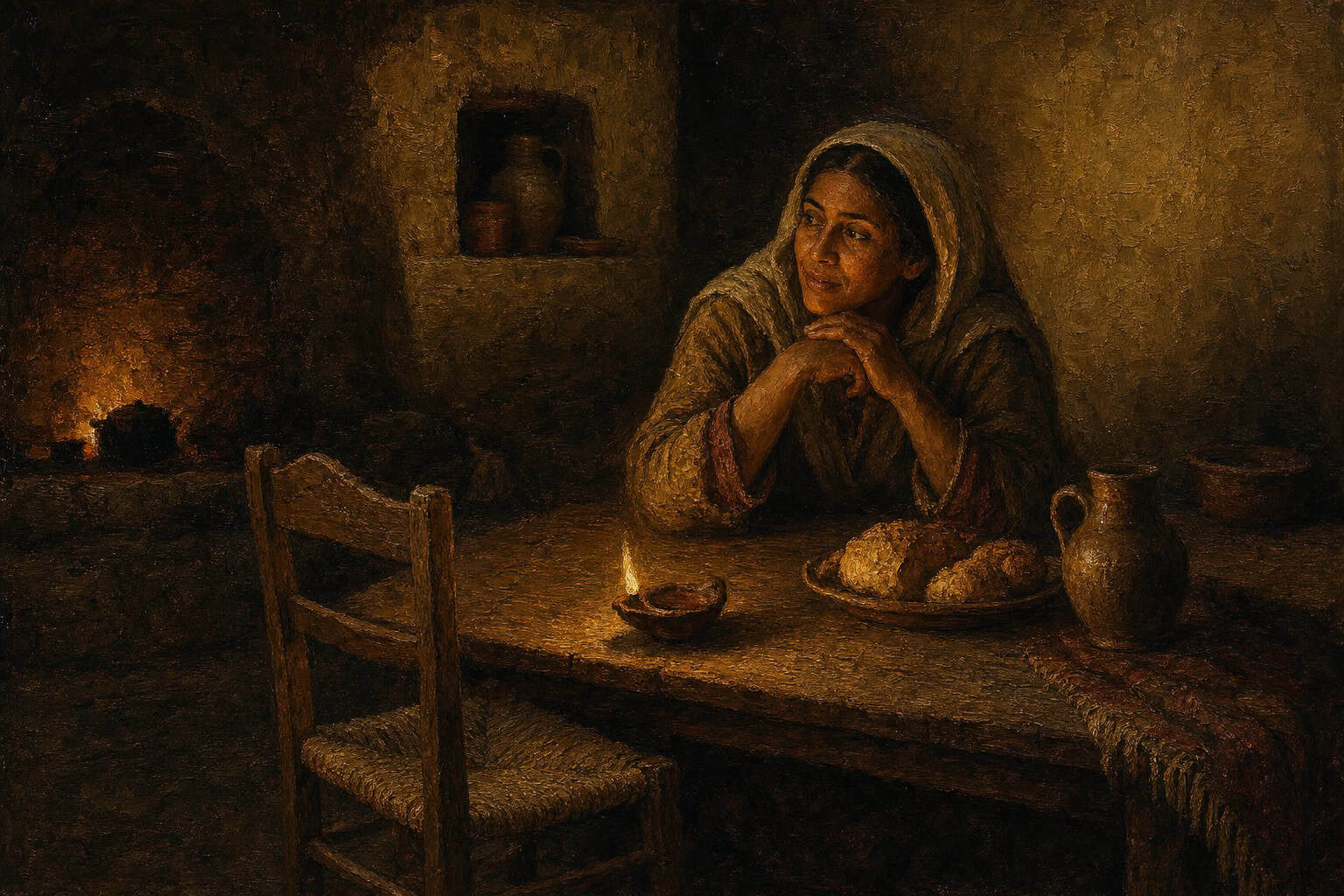
You are asking whether the women who came to help ever saw the whole of you, or only the face you turned toward each of them. I want to answer plainly, and I have to start where the question started for me: a table scrubbed pale by years of use, a loaf still warm enough to fog the knife, two hands setting a plate down without asking anything back. There was a season when women arrived like that, one after another, each carrying a lesson, a shelter, a table of her own. Each said, in her own way, let me lead you, let me feed you. I sat at those tables like a boy who had never once been full, watching the steam lift off the food, listening to the small domestic sounds — a chair dragged closer, a spoon against a pot — and feeling something in me tighten instead of soften. Here is the first hard thing I owe you. I did not receive those women as whole persons. I received them as functions, as stations, as sources of supply. This is what Fractions of the Soul forces me to confess in its second chapter, where the narrator turns a cold instrument on the very people who kept him alive. He writes of woman as a keeper of secrets, a woman who holds many men at once, giving each the exact word he needs, winding each one like a key in the back of a toy. It reads like knowledge. It is really fear dressed in the costume of knowledge, and I wore that costume for years. When your body has been fed by someone who might vanish, you build a diagram of why she will vanish, and you name the diagram truth so you can sleep. So I understand your question better than you know. You are not really asking about them. You are asking whether love can survive being known. The kitchen was warm. The bread was real, dense, honest under my fingers. But I sat in that warmth already measuring the exits, already counting the ways she could leave, deciding in advance she could not mean it, because if she meant it I would have to mean it back, and meaning it back cost more than I had. Nearness frightened me worse than distance ever did. A woman close enough that I could smell the flour drying on her wrists was a woman close enough to walk out, and I would rather narrate her leaving before it came than be caught undefended by grace. So did they know me? No. Not because they failed to look, but because I had arranged the room so no one could reach the center of me without paying a toll I had rigged, on purpose, to be unpayable.
Winding The Key In Every Back
The chapter tightens slowly, the way a hand closes when you are not watching it. Its logic seduces because it is almost true. It says a woman keeps several men near her, feeding each the precise language that keeps him kneeling at her table, and that full honesty would ruin the whole arrangement. It calls this her oldest gift: secrecy, the thing that keeps her from being reduced to a single choice a man could consume and discard. Read it once and you feel clever, initiated, let in on something. Read it twice and you begin to notice the man doing the reading, the hands holding the page. Because every charge he lays against her is a confession he cannot make about himself. I was the one keeping several tables. I was the one measuring out to each woman the exact version of me she would want to feed. At one plate I played the grateful son. At another the wounded artist who needed tending. At a third the humble seeker, all questions and soft eyes. I broke my own self into pieces and handed a different piece to each of them — and then I turned and accused her of being the fractured one. This is the sickness the second chapter exposes without seeming to know it: the man who cannot hold himself together accuses the woman of being many. He watches her the way one watches a collapsed star he cannot see into, gathering evidence, drawing his careful formulas, measuring how she bends the things around her, and never once suspecting that the darkness he cannot pierce is partly the shadow his own body is throwing across the light. The tension gathers here because the theory works so well as cover. It predicted every disappointment before it landed. If she pulled back, the theory said she was tending her other men. If she stayed close, the theory said she was performing the bonding language I needed to stay hooked. There was no move she could make that the diagram did not already own in advance. Do you see what that machine does? It makes being loved impossible on purpose. It converts every warm hand into a suspected instrument, every gift into a lure. And the loneliness of living that way is total, airless. To dwell inside a theory that nothing can disprove is to sit in a sealed cell you built yourself and locked from the inside, pocketing the key. I told myself I was seeing clearly. I was refusing to be seen. The women who fed me, who taught me, who led me without asking to own me, walked into a room already wired to read them as agents of a plot. They could not win. The generous ones especially could not win, because generosity was the precise thing my system was built to distrust. I ask myself now, with nothing to soften it: how many kind people did I quietly turn into suspects, only because kindness unsettled me more than cruelty ever could? Cruelty confirmed the theory. Kindness threatened to dissolve it, and I defended the theory.
The Toll I Rigged To Be Unpayable
Here is the turn, and it points nowhere near comfort. One night the whole apparatus came apart in my hands, not because anyone refuted it but because I finally saw whose hands were holding it. I was alone. No woman was performing anything at me, no plate was steaming, no chair was being dragged nearer. There was only the room and its ordinary furniture standing exactly where I had left it — a chair, a lamp throwing a small yellow circle, the flat stillness that settles after everyone has gone home. In that stillness the accusation could not find a target. There was no her to charge, no secret keeper to chart. There was only me and the machinery I had spent years calling wisdom, ticking away with nothing left to measure. I understood then that the collapsed dark I had been mapping was not her interior at all. It was mine. I was the one who could not be entered. I was the one handing out a different self at every table so that no single person could ever hold the whole of me and, holding it, drop it. The thing I dreaded in her was the exact thing I had made of myself. This is the collapse the chapter is truly reaching toward beneath its cold formulas: not that woman is finally unknowable, but that the man narrating her has made himself unknowable and cannot stand to say the word. And in that emptied room God did not fix it. He did not lift the fear off my chest or hand me a clean, single, honest self to wear out the door. He was simply there, near, the way light fills a room without announcing itself, present in the very corner where my sin was sitting with its lamp on. Not rescuing. Accompanying. Watching me at the bottom of my own diagram and refusing to leave. That nearness undid me more than any argument could have. Because to be seen at the exact hour you have proven yourself unlovable, and not to be dropped, was the one event my whole system swore could not occur. To be truly seen and still be kept is the one gift no performance can win, and no secrecy can survive. I had built a toll no living person could pay to reach me. And here, in the dark, was Someone who had already paid it without my permission, without my noticing the transaction, waiting in the room with no bread to offer and no lesson to teach — only His nearness, only the hard mercy of staying inside the cell I would not leave. I sat in the lamp’s small circle and let it be true for one unguarded minute, and the machinery went quiet.
To be truly seen and still be kept is the one gift no performance can win, and no secrecy can survive.
What The Bread Was Trying To Say
So the answer to your question shifts shape in the falling light, the way a familiar room looks strange when the lamp burns low. Did the missionary women know me? They knew the piece I fed them, the single face I turned toward each. But some of them, I believe now, knew something truer than the piece I offered. Some of them fed me plainly expecting nothing back, and that is not the behavior of a woman winding a key in a man’s spine. That is the behavior of a person reaching across the table toward another person, stretching out of herself toward a real me she could name but never fully hold. My theory had no room for that reach. It kept no column for a love that expects no return, no formula for a hand that gives without a ledger open beside it. And the fallout of seeing this is not relief; it is grief, plain and heavy. I spent a whole season converting their reaching into scheming, and I cannot un-spend those months. I cannot walk back into that kitchen and receive the loaf as the simple thing it was. The women who fed me for free, I paid in suspicion. The ones who led me without wanting to own me, I accused of leading me for gain. I turned communion into transaction because transaction I could survive and communion I could not. This is the unsettled thing Fractions of the Soul keeps circling back to: that the deepest failures are rarely the loud betrayals, the dramatic ones you could confess and be done with. They are the quiet refusals — the daily, private decision to stay crouched behind the toll gate rather than risk being fully arrived at by another human being. And I have to put to myself the question you now carry, since you came here holding it. Which of them was truly reaching, and which was truly winding a key? The terrible truth is that from inside my old machine I could not tell, and worse, I did not want to tell, because telling would have forced me to open a room I had sealed shut with my own hands. My fear was never really that she was many. My fear was that if she turned out to be one — whole, honest, reaching, sitting there with her flour-dusted hands open — then I would have no excuse left for staying in pieces myself. Her wholeness would stand as a verdict on my fractions. So I preferred her to be a schemer. A schemer I could hold at the length of an arm. A whole person I would have had to answer with my whole self, and I had no whole self ready to give.
Standing In The Fissure With The Light
Where does all of this finally settle? Not into a lesson you can fold small and slip into a pocket. I still do not know, with any certainty, the hearts of the women who fed me in that season of my life. Some of them may have kept several tables of their own, exactly as the chapter warns. Some of them, I now believe, kept only one table, and it was set for me, and I refused to sit down at it as a whole man. That not-knowing is the ground I stand on now, and it is not despair, though it lives on the same street as despair and I pass the house often. It is a decision to remain in the crack between what is real and what I cannot verify, and to refuse to let my old certainty pour in and seal the gap over. Trust, the chapter admits almost against its own will, is the only bridge across what words and actions can never finally prove. And trust, I have learned in the hard school of that empty room, is not a warm feeling of safety arriving on schedule. It is an act of the will made in the dark, made precisely when the evidence stays incomplete, made because the only alternative is to remain forever charting other people’s darkness, measuring their pull, and never once letting yourself be loved. I could not verify their hearts. I could only choose whether to receive or to accuse. For years I chose to accuse, and I called it discernment. When grace finally came, it did not hand me proof of anyone’s innocence. It handed me company. God in the emptied room, God in the tears I did not want any witness to see, God present inside the very fear instead of lifting the fear away. If you came here asking whether the missionary women ever knew you, or ever knew me, I will not pretend to answer for their souls. But I will tell you what your question is really made of underneath. You want to know if you can be fully known and still be kept. You want to know if the reaching is safe. It is not safe. It was never safe for anyone. You will have to decide, in the dark, without the proof you keep asking for, whether to let one whole person arrive at the table you rigged to keep empty. This memoir does not tidy that up. It stands in the fissure and keeps standing, lamp low, bread going cool. That is the only honest place I have found, and, stranger than anything, the only place I have ever felt Him already pulling out a chair.