What is hypergamy in dating? A memoirist reads the woman who dates upward, divides her attention, and never quite chooses – and the man who overpaid.
One Line in a Ledger She Kept Behind Her Eyes
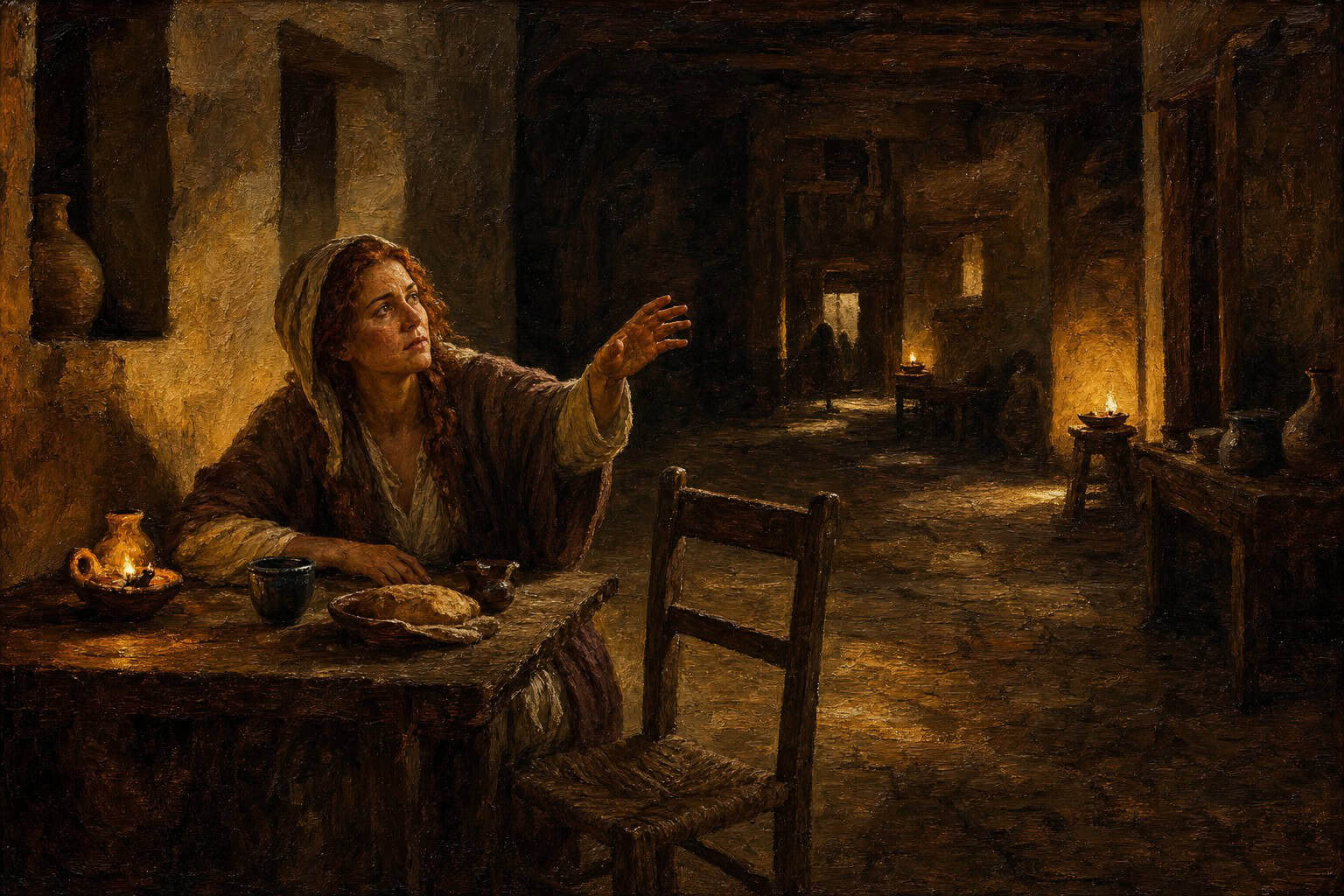
I know now what I could not name then: I was one line in a ledger she carried behind her eyes. Hypergamy, if you want the cold word for it, is the reaching upward – the pull to date and mate for advantage, to trade toward the man who signals more, and to keep the market open until a better bid arrives. But sitting across from her, over a small table where her coffee cooled untouched and her gaze kept sliding to some future she would not describe, I did not feel like a bid. I felt chosen. That was the trick of it, and the trick was not entirely hers. I built half of it myself, gladly, because I wanted to be whole to someone. She had a way of making one hour feel total, as if the walls held only the two of us, as if the whole busy world had quietly turned to face this one table. Later I understood the world had not turned for me. It had turned around her, and I was one of several men who each believed the same lovely thing in his own separate light. The reaching-upward is old, older than dating, older than the word we hang on it. It runs in the blood like a tide, this pull toward the one who signals more – more capability, more standing, more proof of worth held up before a watching crowd. Her spine knew the arithmetic her mouth would never say. In Fractions of the Soul I set it down as honestly as I could, because I had lived inside it and lied about living inside it for years. What I want to say plainly is this: hypergamy is not a slur to fling at a woman. It is a hunger we both carried, dressed in different clothes. She reached up. I reached to be enough for her reaching. Neither of us reached toward the other’s actual face. The older man writing this watches the younger one lean across that cooling cup and wants to lean in beside him, to say something he would not have heard: you are not being loved here, you are being weighed, and you are helping her hide the scale under your own eager hands. I did not know I was holding a hidden balance steady for her. I thought I was falling. I was, in a way, but not the way I believed. The fall had a floor I could not see, and the floor was the count she never let me read. That is where the story of me starts, and where the lie I told about it starts too.
One Divided by Sixteen and Sure He Was the Whole
The number that broke me was a fraction, and once you have felt a fraction you cannot un-feel it. She was one divided by sixteen. I was one divided by one. That is the plain arithmetic of what happened, and it took me years to write it without flinching. She parceled herself out across many men – a slice of attention here, a warm evening there, a message that arrived at exactly the hour it would land hardest and stay longest. Each of us received a sixteenth of a person and mistook it for a whole woman. I gave her my undivided self: my nights, my worry, the full unbroken weight of one heart set down on the table between us. In return I received a portion so thin it barely cast a shadow across my own hands. The cruelty was not simply that she preferred another man. The cruelty ran deeper and quieter. She was less present, less real, in every room she walked into, because she had spread herself across too many rooms to be fully inside any one of them. I was competing with men I could not see, names I would never learn, and I was losing a contest no one had told me was underway. Here the reaching-upward turns from instinct into wound. She was not choosing. She was tending a portfolio, holding each of us as a hedge against some crash she feared and never named aloud. Not abundance. Scarcity. She could not afford to lose any single stream, and so she settled on no one, and called that hoarding freedom. Lived time comes down hard on this. Love asks you to bind your future to one face, to let certain rooms go dark so that one room might slowly become a home. She kept every room lit and stood in the cold hallway between them, feeling all the futures at once, entering none. That is a small, doomed imitation of the mind that holds all of time in one present – and it is exactly the thing we creatures cannot do and still stay human. We are made to walk through time in one direction, to spend it, to hand it over and never get it back. She would not spend. She kept her presence like coins she was afraid to break, warming them in her fist. And I, holding my one whole self out to her across that table, could not grasp why my fullness felt so unanswered, why my giving struck no answering weight. I understand it now. I was overpaying in a currency she had quietly devalued while smiling, and she would never once post the exchange rate on the wall, because the hidden rate was the whole of her power. Take that away and there was only a frightened woman counting in the dark.
The Clever Woman Who Never Signed Her Own Name
Here is the turn it took me years to see. Her intelligence was not the thing that made her lovely to me. It was the thing that let her slip away clean. She was clever enough to do a thing and never own the doing of it – to speak the word that summoned me across a city and then, days later, deny she had summoned anything; to arrange the evening that undid me and step back murmuring that she had never asked for any of this. Plausible deniability, they call it in colder rooms than the ones we sat in, and it fit her like a second skin she could shrug on and off. The sharper the mind, the more elaborate the architecture of not-being-responsible. She built whole structures of it, and lived comfortably inside them. Every action reversible. Every word deniable. Every choice floated above her head like smoke so that she never had to stand beneath its weight and say the one terrible sentence: yes, I did this, I chose this, I am this choice. Her flesh had forgotten how to make the movements of honesty. Her mouth said what her hands had never touched, what her spine had never carried through a doorway. She played the one to whom things merely happen while quietly staging the very scenes that broke men, then watched from behind that mask of innocence, her face arranged into mild surprise. Denied power taking its satisfaction through the back door of performed helplessness – I had no such phrase then. I only knew I felt unsteady in my own memory, sure of what I had seen and unable to prove a single frame of it, worn thin by a partner who never quite admitted to what she was so plainly doing right in front of me. I began to distrust my own eyes, which was the point. And still I wonder, now, how much of the fog was hers and how much I welcomed, because a clear scale would have forced me to leave, and I did not want to leave. That is the harder question, and I will not close it.
She wanted the whole of him and offered a fraction of herself, and called the arithmetic love.
What the Trembling in My Chest Already Knew
After she left a room, something in my chest would tremble, and I learned to read that trembling far too late. The body knows before the mind will admit. My flesh had already marked her as both threat and rescue – the two at once, which is how the deepest snares are baited and set. I want to be fair to the young man I was, and being fair requires accusing him. I was not only her victim. I was her accomplice, and a willing one. I wanted to be a hero, and she handed me a helpless woman to save, and I never once stopped to ask whether the helplessness was real or whether I was being cast in a role written to feed something in me that had nothing to do with her at all. The urge to lay myself down for her felt holy while I was inside it. It was not. It was a distortion of the real self-giving I was made for, aimed at an image, spent on a scene that would strike no one. True love lays itself down for a real person, in full daylight, for the actual complicated woman and not the painting. I laid myself down for a reflection, and reflections cost nothing to receive and return nothing to the one who bleeds for them. That was the long descent, and I did not feel it as descent because it came dressed as joy, arriving warm and sure. The sweetness of her nearness worked in me the way a drug works – it numbed the higher hunger, the one that reaches past the flesh toward something that does not spread itself thin and does not deny its own name when asked. In this book I tried to be honest about how good the poison tasted, because a lie about the pleasure would poison the whole account. I did not want her actual self, with its fear and its counting. I wanted the version my desire had painted on her, and I defended that painting against every fact that came for it. When the facts finally arrived, I called them cruelty. The older man knows now they were mercy – the hard, unwelcome mercy of being shown what I had spent months refusing to see. And here is the thing I could not have believed then: even in the worst of it, I was not alone in the dark. Something quiet walked beside me there, in the very middle of my foolishness, not hauling me out, not fixing the wreck, only present in each tear I could not explain to anyone. I did not notice the company until much later, looking back down the cold hallway. But it was there, patient, standing near while I counted fractions on my fingers and lied about the sum.
Standing Where the Scale Could No Longer Reach Me
What finally settles, after all the reckoning, is not bitterness toward her. It is awe – the strange, still awe of a man who was dwarfed by a hunger vaster than himself and somehow lived to see its edges from the outside. Hypergamy is real. The reaching-upward is real, in her and in me both, a current older than either of us, running under everything we told ourselves we chose freely across that little table. To pretend it is not there is to be pulled under by it in the dark, still insisting the water is calm. But to see it, to name it in plain daylight words, is to be handed back a little ground to stand on. That is what the older self can offer the younger one across the years: not scorn for the woman who fractioned herself, but a truer question set down gently. What was she to me, really? Not a beloved. A mirror I mistook for a face. A held portfolio I mistook for a home. A promised future I was shown from the doorway and never once allowed to enter. And what was I to myself in all of it? A man overpaying in a currency I refused to admit was even being counted, calling my steady losses devotion and my blindness faith. I cannot tie this off with a clean lesson, because the ache itself does not tie off. Some nights I still feel the phantom warmth of being, for one hour, the only man in a room that held more men than I ever knew. But underneath that warmth I feel something steadier now – the plain knowledge that love, the real thing, is the costly payment she would not make and I did not understand was owed. It closes what must be closed and lets it stay closed. It signs its own name at the bottom of what it did. It stands in one place through time and lets time spend it down to nothing, and it does not hedge the future by keeping the past propped warm behind its back. That standing is a poverty and a freedom in the same breath, and I have only lately begun to attempt it, clumsy and late. If you typed your question into the dark and it carried you here, wanting to know what hypergamy is in dating, I have handed you both the cold word and the warm wound. The pages of Fractions of the Soul are where I finally lost the ability to lie about either one. Come and read where the counting at last went quiet.