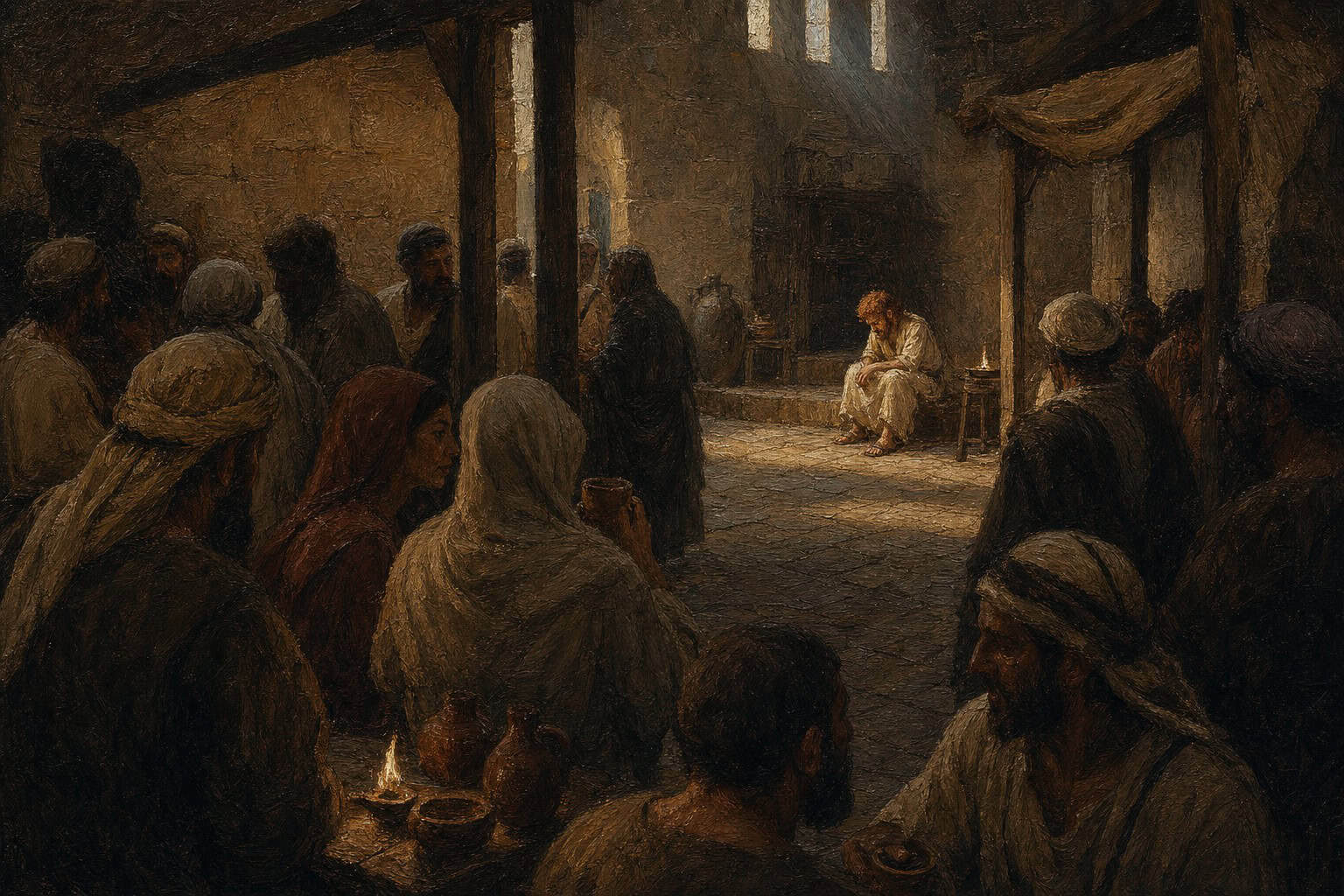
Lonely kid in school? The dread of being seen, the safety of disappearing, and why silence becomes both armor and cage. A reflection through cttec.
A Cold Coin Swallowed Before the Bell
You know the feeling before you can name it. You step into a building that is not yours yet, new lockers, new tile, new faces packed shoulder to shoulder, and something low in your stomach goes cold and heavy, like you swallowed a coin you cannot bring back up. It is not fear of one thing. It is the whole air of the place pressing on you at once, the fluorescent hum overhead, the squeak of shoes, the smell of floor wax and old lunch bags gone sour in the trash. You brace before anything has happened. Your body already knows how this goes, because it went this way before, in the smaller grades, out on the blacktop where certain boys learned your name only so they could bend it into a weapon. Now those same names might be here, somewhere in these halls, ready to pick up where they stopped. That possibility sits in you as a real thing with weight. You scan the crowd, not with hope but with dread, hunting the familiar cruel mouths that could turn a fresh start back into an old wound torn open. In Confessions to the Empty Chair, the older narrator looks back at exactly this younger self, standing at the edge of a strange school, hauling the whole load of what came before him like luggage he cannot set down. He does not soften it. He remembers the tone of it, the way the waiting itself was a punishment, the way the mind rehearses ruin long before ruin ever arrives. You do the same. You flinch at blows nobody has thrown. That is the strangeness of it. No one has hurt you yet, and you already hurt. The crowd has decided nothing about you, and you have decided everything about the crowd. That is the private loneliness of the lonely kid. You are alone in a full room, and the room does not even know you are lonely. You carry the memory of the old faces like a low gray sky you cannot climb out from under, weather that colors every corridor before you have walked a single one. You did not pick this mood. It landed on you and soaked the whole day through. And here is the part you would never say out loud, the part that shames you worse than any shove ever did: some quiet piece of you half believes you have this coming, that being unwanted is only the honest report on who you really are underneath. You wait for the verdict. You are already sure of it.
The Instrument That Lowered Your Voice
So you look for a way to live through it, and living through it teaches you fast. Maybe you find something to hide behind, an instrument with a lower voice than your own, a slide heavy in your hands that hands you a different self, one less easy to question. You put your head down. You keep your mouth shut. You learn the plain arithmetic of the place: if nobody can see you, nobody can strike you. You will call this cowardice later, in your harder hours, but it is not that. It is a hurt body doing what hurt bodies do, folding inward, drawing its own edges in, learning to erase its outline before anyone can appraise it. You train yourself to vanish before you even understand what you are hiding from. That is the eerie thing the narrator watches in his younger self: the flesh joins the plot against you. Your shoulders round without a decision. Your eyes drop and stay dropped. At lunch you count the knots in your shoelaces so you will not have to count the eyes that might be counting you. Then the trade turns bitter. Invisibility has a mercy in it, yes. It spares you the sharp edges, the open mockery, the whispered rankings. But that kind of mercy makes poor company. The silence that shields you also starves you. You wanted out of their orbit far more than you ever wanted in, and you got your wish, and the wish came back hollow in your hand. You are safe now, and you are unknown, and slowly you find out that being unknown is its own country of exile. No one mines you for jokes anymore. No one reaches for you at all, because there is nothing showing that a hand could grab. You have become a ghost in your own hallways. The mood shifts under you before you notice the turn. First it was the dread of being seen. Now it is a duller, wider ache, the ache of someone who has paid for quiet with his own voice and cannot get either one back. You bought protection with the only coin you had, your presence, and the change dropped back into an empty pocket. If you were that kid, you may still feel that transaction in your chest decades on. And this is the cruelty of it: the strategy worked. It worked so well that it sealed off the very warmth that recognition might have carried to you, and you did not even know what you were locking away until long after the lock had already caught.
The Watcher Who Called Grief Wisdom
Then something shifts, and this is the turn you may not catch while it is happening to you. When you cannot join the crowd, you begin to study it. From the edge of the cafeteria, from the far rail of the bleachers, you become a watcher, a quiet scientist of the room you are shut out of. You start to see the whole machine with a terrible clearness. You see the tribes, each with its clothes and its music and its swagger, the boots, the denim, the country-club sheen, each one guarding a code you were never handed. You see the hierarchy under all of it, the tall and the athletic and the older and the moneyed boys sitting up top, and everyone else quietly measuring against that silent architecture of power, watching who speaks, who listens, who fades. You see it clearly because you are one of the ones who fades, and the faded have nothing left to do but watch. Here is the seduction you must be honest about. The watching feels like wisdom. It feels like you have risen above the game, seeing through it while the rest play blind. You tell yourself you never wanted in, that their gossip was tedious anyway, a record stuck spinning in one worn groove, the same names, the same little cruelties, over and over. But listen hard to that story, because it is the story a wound tells so it can keep breathing. Your detachment is not insight. It is grief wearing the costume of superiority. The pride you feel is armor bolted over a hurt, and armor that heavy stops being protection and becomes a box you carry on your own bent back. This is the sharpest thing the narrator confesses when he turns and looks at himself: his cool study of the room was one more way of dying. He became fluent in reading spaces he never once felt safe enough to walk into. He mistook exile for a vantage point and called his loneliness clarity.
When you cannot belong, you learn to explain your exclusion so cleverly that you stop crying about it, and the day you stop crying is the day the wound stops healing.
That is the cost no one warns the lonely kid about. You can build a whole mind out of your isolation, a whole self, sharp and proud, and every brick of it is a brick set against your own way home. The observation that felt like power was, all along, a longer distance from the table.
When you cannot belong, you learn to explain your exclusion so cleverly that you stop crying about it, and the day you stop crying is the day the wound stops healing.
Company in the Empty Corridor
What do you do with that once you have seen it? You cannot un-see it, and you cannot pretend the years of quiet did not shape the man or woman you became. Here the honest looking-back turns hard, because the narrator does not let his younger self off the hook, and you should not let yourself off it either. He asks the questions that sting. Who were those boys, really? Were they monsters, or were they only other frightened children, mining celebrities for a self they could wear, plundering movies and radio for a costume that might keep them safe too? Did he ever see that they were as scared of vanishing as he was, that the whole cruel machine of the school had been assembled by kids who also dreaded fading into the background? He did not see it then. He was too busy staying alive. And what did he do with the hurt afterward, once he was grown enough to look? He nursed it. He fed it. He built a tower from it and named the tower thinking. The falling of this state is not loud. It is slow and gray and low. You go home. You sit with the ache you refuse to name. You go back the next morning and disappear again, and the mood does not lift, it settles down into the bones and makes a home there. Here the memoir refuses the easy comfort you want it to give. There is no rescue on this page. No sudden friend who fixes it all. No teacher who spots the real you and lifts you clean out of the crowd. The dark does not part on cue. What the narrator finds, looking back, is stranger and quieter than any rescue. He finds that God was not absent from that lonely rail of the cafeteria. God was there, nearer than his own held breath, more inward to him than the hurt he was busy hiding. Not hauling him out of the exile, but present down inside it, walking the empty corridor beside the boy who was certain he walked it alone. That is the tender and terrible truth of this book. Grace did not spare him the years of being unseen. Grace was there in them, itself unseen, keeping company with a child who was sure he had no company at all. You were not as alone as you felt. No one could have told you that in a way you would have believed, and no one did. But the loneliness you carried was carried with you, even through the coldest stretch of it, even when your own eyes seemed to turn against you and the world felt like a stage that kept shifting under your feet, a place where everyone else had lines and you had none.
The Long Road Back Toward Being Known
So where does it settle, this state you typed into a search bar late one night, lonely kid in school, four words holding a whole life inside them? It settles here: the strategy that saved you also charged you, and you get to spend years learning which was the greater loss. The narrator does not hand you a clean ending, because there is no clean ending to being cast out from the one place you were told you belonged. What he offers instead is company in the reckoning. He sets the boy at the edge of the crowd in front of you and sits beside him without looking away. He names the cold coin in the gut, the head bent low, the mouth held shut, the shoelaces counted so the eyes could be dodged. He names the mercy of invisibility and the bitter taste it leaves after. He names the pride that grew over the wound like a hard scab, proud and false. And then he does the bravest thing a person can do with his own past. He questions it. He asks whether his detachment was ever really wisdom, or only fear in a clever coat. He asks what warmth he turned away because he was too afraid to be caught wanting it. He asks whether the God he could not feel in those halls had been there the whole time, walking the same cold tile at his shoulder. These are not questions he closes to your satisfaction, because they are not the kind that close. They stay open, the way a real life stays open, the way exile does not resolve into a lesson but stretches into a longer, quieter walk back toward being known. If you were that kid, or if you still are, this book will not lift you out of the room. It will do something rarer than that. It will sit down in the room with you and tell you the truth about it, and the truth, spoken plainly and without contempt, is its own odd first warmth after a long cold. The pilgrimage is not out of the dark. It is through the dark, with someone beside you who has already walked this stretch and lived to set it down in words. Reach for the book if you want that. Not a cure. A companion. A voice that knows precisely what that cold coin in your stomach weighs, and will not pretend it never swallowed one of its own.