That restless hunt for the next new person, the next spark – here is why constant novelty can be a shield against your own emptiness.
Pacing the Hallway With a Lit Phone
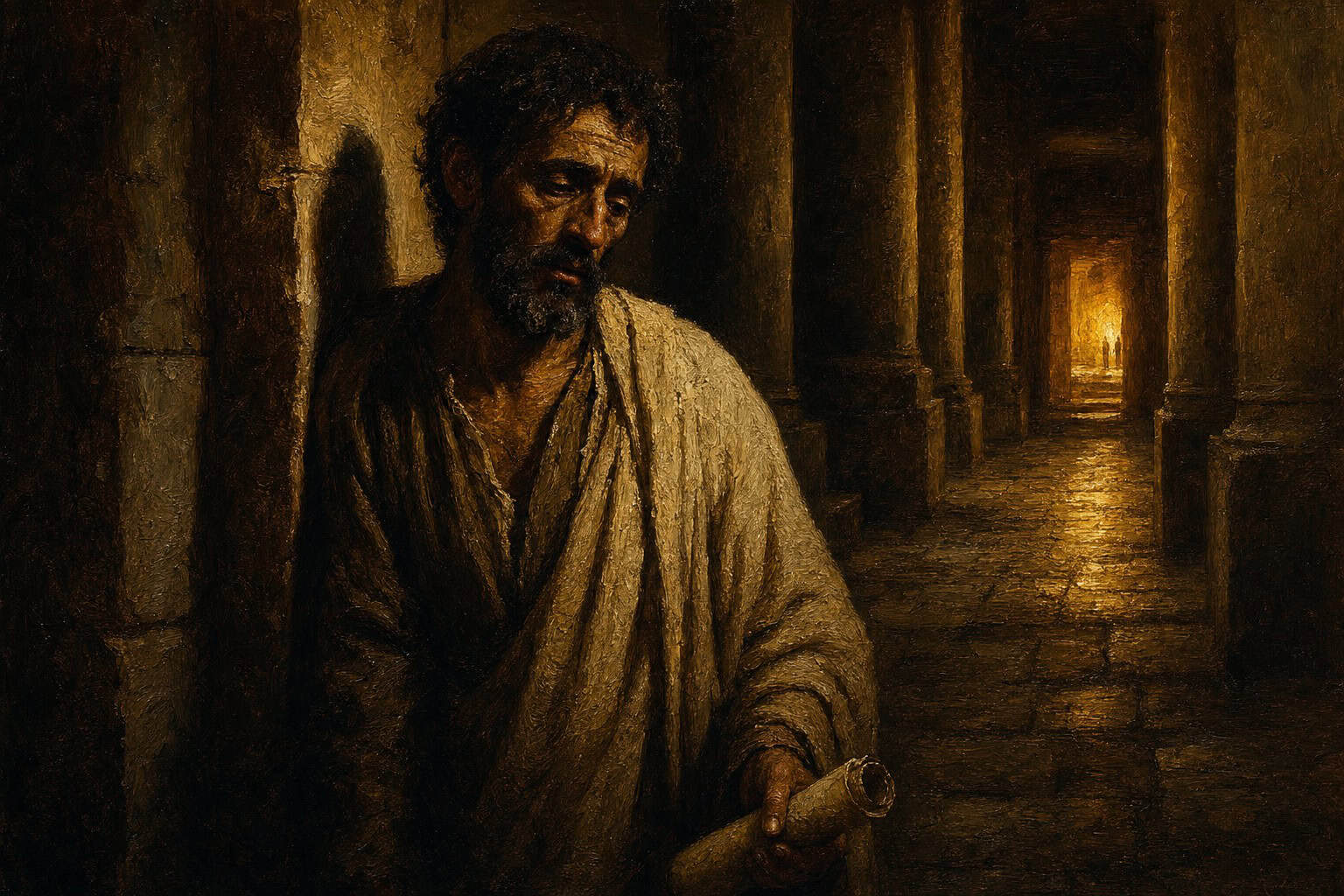
You know the feeling before you can name it. It is late, past the hour when honest people sleep, and you are moving through a hallway that seems to have no end – phone warm in your hand, a thumb sliding over faces, over unread messages, over the small bright promise of someone new. The floor is cold under your bare feet. Somewhere behind you a room sits with the light off, and you will not walk into it. You tell yourself you are busy. You tell yourself the timing is wrong, that the children need you, that the job is demanding, that this season of your life simply does not allow for anything deeper. These are true things, every one of them, and that is exactly why they work. They are also the walls you have stacked, brick by careful brick, so that no one gets close enough to see the hollow at the center of you. The hallway is where you live now. You move from one bright doorway to the next, tasting the first hour of a stranger and never the tenth, never the hundredth, never the ordinary Tuesday when the shine has worn off and only the person remains. You have made the walk itself your address. There is a particular loneliness in this, sharper than any loneliness you would feel truly alone, because it arrives while you are surrounded by attention. You are watched. You are admired. You are texted at midnight by people who think they matter to you. And still the hollow does not fill; it only echoes back the sound of its own emptiness under all that noise. You mistake the flutter of the new for the pulse of being alive. Each fresh arrival feels like a mirror tilted to the perfect angle – here, at last, is someone who will show you a self you can bear to look at. But the mirror always fogs. Within weeks the glow dims, the person becomes ordinary, becomes a demand rather than a distraction, and you feel the old pull to move on before they see too much of you. You have never let a face stay long enough to become familiar. You have never let the same light land on you twice. The hallway keeps you safe from that, and the same hallway keeps you starving. The strange thing, the thing you rarely admit at this hour with the phone glowing against your palm, is that the emptiness came first. It was there before any of them arrived. No conquest built it. No conquest will take it down. The hunt is only the medicine you swallow to forget, for one more night, that you are sick.
Burning Down to Your Fingers Every Time
Look at what you actually reach for when the hollow yawns open. Not closeness – you flinch from that the way a hand jerks back from a hot stove. You reach for sensation, for the untested, for the electric first touch that has not yet learned how to disappoint you. Your body becomes the one tool you fully trust, because it delivers a reliable jolt on command. You know how to be wanted; you have practiced it in a hundred rooms. You can step through a doorway and feel the temperature of a place shift, feel eyes turn toward you, feel the small clean power of being desired, and for a single hour that power passes for meaning. But desire spent this way is a match struck to see by in the dark, and it burns down to your fingers every time. You have never built the steady lamp that would let you sit still in one place and simply be there, unhurried, without needing anyone to look. That would require a self that stays put, an inner room furnished with something other than the promise of the next stranger’s arrival. You suspect, in your quieter moments, that you do not own such a room. That suspicion is the wound beneath the whole bright performance. So you keep your admirers in a loose orbit around you, a soft cohort of people who reflect you back at flattering angles, and you feed on their affection while never handing them the risk of your real, disinterested face. You keep one hand always resting near the emergency brake. You measure what you say. You decide, in advance, what may be felt and what must stay locked three hundred miles behind you. You call this being careful. It is really being absent. And here is the part that stings when you are finally honest with yourself in the dark: the people you draw toward you are often running from the very same thing. Their hollowness recognizes yours across a room. You choose each other precisely because neither of you will ever demand the arrival the other cannot make. Two people can circle for months in a perfect choreography of avoidance, each one mistaking the other’s distance for mystery, each one relieved to be spared. The whole architecture is built to protect you from being known – and the protection is the exact shape of the prison. What terrifies you is not being alone at night. It is being seen, unshielded, at the tenth hour, when the newness has flaked away like cheap paint and there is only you, plainly you, sitting there asking whether that bare self is enough for anyone on earth to love.
A Hand That Does Not Ask Permission
Then something cracks the pattern open, and you are not ready for it. It does not arrive as another new stranger – the strangers you can manage, you have a whole fluent vocabulary for them, a script you could recite in your sleep. It comes instead as a moment you did not put on the calendar, an interruption that never once asks your permission. Someone steps forward while others are watching, without checking whether it is allowed, without measuring the risk the way you have measured every gesture for years. It shakes you precisely because you would never have dared it yourself. You have kept one hand on the brake so long that you forgot people could drive with both hands loose on the wheel, unafraid of the road. And in that shock you see, for the first time in longer than you can count, a face you have looked at a hundred times as though you were seeing it clean, brand new, for the very first hour. That is what awe does to a person. It stops you mid-stride in the endless hallway, one foot still lifted. It dwarfs the small clever game you have been running – the plausible excuses, the strategic little disruptions, the reserve you wore like armor. Something vast walks into the corridor and refuses to play by your rules, and instead of crushing you flat it somehow makes room for you inside itself. You feel how thin your control has always been, how it never held anything real. And underneath that smallness you feel an almost unbearable tenderness at being reached for anyway, at being wanted past the point where you gave anyone leave to want you. This is the turn you cannot engineer, cannot schedule, cannot curate. You have spent your whole life stage-managing the moment, and the only moment that ever mattered is the one you did not plan and could not have.
Grace rarely arrives as a rescue from the dark; far more often it is a hand that reaches into the dark and refuses to ask if it may. The hunt is not hunger for another person; it is a fear of the one who waits when the room finally goes quiet.
The hunt is not hunger for another person; it is a fear of the one who waits when the room finally goes quiet.
The Morning After the Interruption
The shock does not fix you. Nothing fixes you this fast, and you should distrust with your whole heart anything that claims it can. The morning after such a moment you are still the same person who has never built the steady room, still fluent in avoidance, still tempted to grab for the brake, to explain the interruption away as a fluke, to file it under anomaly and drift back to the hallway by nightfall. That is the honest fallout, and it does not flatter you. Awe does not erase the habit; it only turns the light on and shows you the habit clearly. Now you know what you have been doing all these years. You can no longer pretend the emptiness is a scheduling problem, that it is the children or the career or the wrong season of your life. You have felt, for one clean instant, what it is to be reached for without permission, and you have felt exactly how far and how fast you flinched from it. The flinch itself is the diagnosis. And so the harder questions begin, the ones you would give anything not to put to yourself in the dark. Who were all those orbiting faces to you, really? Were they people with lives and hungers of their own, or were they mirrors you arranged carefully to catch a flattering light? What did you do with the affection they handed you – did you tend it, or did you feed on it and move on before the check came due? How much of your famous carefulness was virtue, and how much was plain cowardice wearing virtue’s borrowed clothes? You do not get clean answers to any of it. You get the slow, unsettled work of sitting in the room you have dodged your whole life, feeling how it echoes back, learning by inches that the echo will not actually kill you. Time presses hard on all of this. The past does not stay obediently behind you; it walks straight into the present carrying every face you held at arm’s length, every name you kept in reserve. And the future presses in with its own quiet, insistent question: will you do this again, or will you finally let someone stay past the tenth hour? You cannot answer for the whole future at once. You can only answer for the next quiet evening, the next time the hollow yawns and the hallway beckons and something old in you reaches for a new distraction. The wound is still there in the morning. But now you know its shape, and knowing its shape is not the same as being healed – it is only the beginning of learning to bear it without a match burning in your fist.
Letting the Lamp Burn Instead
So where does this settle, if it settles anywhere at all. Not in a tidy resolution you can knot off and shelve. It settles, when it settles, in the slow and unglamorous discovery that the room you feared – the quiet one, the one with the light off, the one where you would finally be plainly yourself with no admirers left to reflect you back – is survivable. You can walk into it. You can reach out in the dark and find the switch. You can sit there in the ordinary silence, feel the emptiness press against your ribs, and not immediately grab for your phone, and you will learn something strange: the emptiness, once faced head-on, is far smaller than the emptiness you kept fleeing. It was the running that made it vast. The hunt magnified the very hollow it swore to cure. And you begin to suspect, on your better nights, that you were never meant to pack that hollow full of strangers at all – that it was always the exact shape of a longing for something no first hour could ever deliver, something that asks you instead to stay, to be known slowly, to let one familiar face grow more beautiful the hundredth time you see it rather than less. Awe made room for you once, uninvited, when you had planned nothing. It can make room for you again – not as a rescue that lifts you clean out of your life, but as a presence that lowers itself down beside you and stays, in the tears, in the shame of the wasted years, in the very habit you still cannot break in one night. You are not asked to become a different person by morning. You are only asked to stop striking matches and let the lamp burn steady on the table. If any of this has found you where you actually live – in the hallway, in the flinch, in the dread of the tenth hour – then you already sense why a book like Confessions to the Empty Chair draws so honestly from this same deep well. It does not sell you a cure in a bottle. It sits down with you in the dark and names, without once looking away, what the hunt was really for the whole time. That naming does not end the ache. But it is the first thing that ever made the ache feel like something a person could carry across a room, and even, on rare and interrupting nights, be met inside.