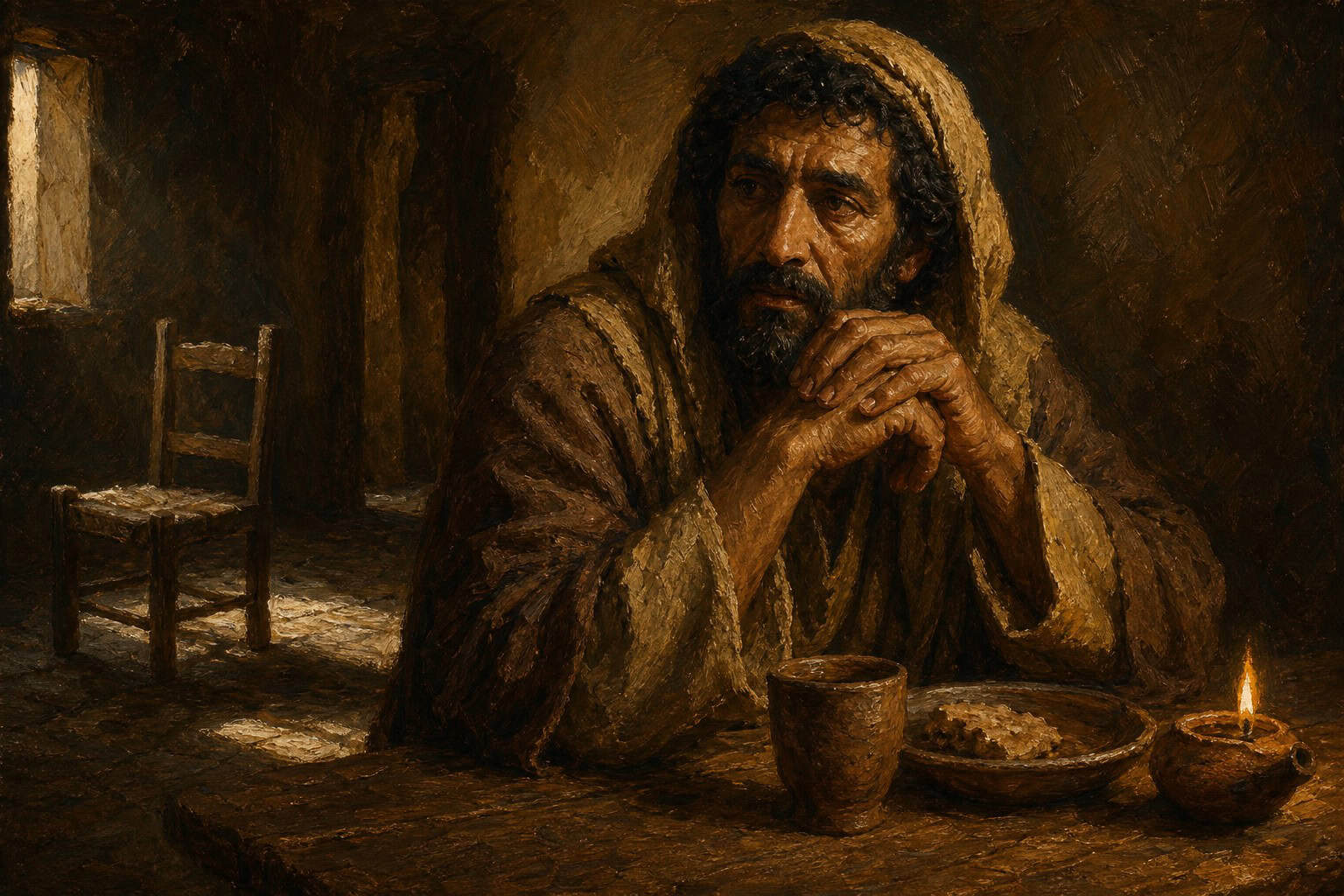
Childhood rejection returns in adulthood, quieter and sharper. Why the old wound of not being chosen still moves through your grown body.
A Hot Drop Arrives Before You Can Vote
You are a grown person when it happens again. Someone turns away in a hallway. A message goes unanswered for a day and then two. A name gets picked for the table, and it is not yours, and the reaction that rises in your chest is not the reaction of a grown person. It is small and quick and hot, and it knows exactly where it is going. You feel it in the throat first, that thick swallow that will not clear. You feel it in the hands, which want something to do. It is the same swallow you felt at nine, at twelve, when the seats filled around a table and none of them had been saved for you. The body keeps a strange ledger. It does not care that you pay rent now, that you sign for packages, that people in certain rooms treat your word as weight. It hears one flat sentence and produces the child instantly, whole, unaged. There is no waiting room, no adult clerk to screen the feeling first. The child simply walks in and takes over the chest. This is the first honest thing to say about rejection in adulthood: it is rarely about the present. The present is only the doorbell ringing. The one who answers the door is much younger than you and has been standing in that hallway a long time, listening for it. You want to believe you have outgrown him. You have read the books. You have clean theories about your own patterns, and you can lay them out for a friend over coffee with the calm of a man reporting the temperature. But the theory floats on top of something that cannot read. Beneath every clever interpretation the child feels one plain fact and cannot be talked out of it: I am not wanted here. Your grown mind offers context, angles, reasons the other person might have had. The child does not want reasons. He wanted a seat, and none was left, and no amount of analysis reaches the place where he is sitting. That gap between what you understand and what you feel has its own quiet vertigo. You are supposed to hold authority over yourself. You are supposed to decide how you feel and when. Instead you meet a small resident who overrules your judgment and floods the whole house before you can cast a single vote. The floor you thought was solid turns out to be laid over a hollow, and the hollow is old, and it has your face.
A Fine Instrument for Detecting the Coming Blow
Rejected children grow a skill, and it follows you into every adult room. You learn to read. You become a fine and exhausting instrument tuned to the smallest shift in another person’s manner. A pause that runs a half-second long. A reply that arrives shorter than the last one. A word chosen where a warmer word could have gone. You catch the warmth thinning the way a swimmer feels the water cool over a deep spot, and from that single change of temperature you build an entire verdict, and the verdict is almost always the same: they are pulling back. This was a real tool once. A child who could feel the disagreement coming, who could sense the cooling before it hardened, had a moment to prepare — to shrink, to go quiet, to leave the room in his mind before anyone pushed him from it. Survival taught the skill, and survival does not know how to switch it off. So it runs in you all the time now, scanning, interpreting, gathering the small crumbs people scatter in their sentences and their faces and assembling them into meanings they never spoke aloud. You read closeness through syntax. You feel for wounds and warnings in the space between words, and you find them whether or not they were ever placed there. This is where the dread lives — in the low, constant hum of watching. You cannot simply sit in a conversation. Part of you stands off to the side, taking readings, testing the air, braced for the sign that you are about to be dropped. It is a lonely way to be with people, this being both inside the circle and posted at its edge like a sentry who is never relieved. The others seem to move through connection without effort. They laugh, they touch a shoulder, they let silences sit without fear. You watch them from your post and the old exile rises: the sense that you are made of some other, colder material, that closeness is a language everyone else learned young while you were busy learning to guard. And here is the question you almost never turn on yourself: how much of the rejection you feel is actually happening, and how much are you reading into the crumbs because reading it there hurts less than being caught off guard by it? The instrument is so fine it manufactures the very thing it fears. You catch the coldness early, name it, and by naming it you begin to draw back, and your drawing back chills the other person, and the coldness you predicted arrives right on schedule. You were correct. You are always correct. That is the trap of becoming a scientist of the smallest signals — you get to be right and alone in the same breath.
The Coat You Called Discernment
There comes an hour, usually late and quiet, when you finally see what you have done with the wound. Not felt it — you have felt it for years, in the throat, in the hands. Seen it. You built a wall and gave it a nobler name. You called it discernment. You told yourself you were selective, that most people were shallow, that you were guarding something rare and worth guarding by keeping them at arm’s length. You made your loneliness sound like a standard. You decided that the ones who did not choose you were not worth being chosen by, and this was far easier to carry than the other thought, the one you could not stand to hold: that you were simply not chosen, and no verdict of yours changed it. Contempt is a warm coat on a freezing night. It lets you feel taller than the very people whose warmth you are starving for. And the cold clarity that finally arrives is this: the coat was never protection. It was a second wound, and you were the one who cut it. You spent so much of your strength holding people at a distance that you had none left over to be held. You perfected the art of leaving first. You learned to take love apart on the table, to name its parts, to explain other people’s wanting as something merely physical and beneath you — because if you could master it with your mind, you would never have to gamble on it with your unguarded self. But no one has ever been reasoned into being loved. The mind cannot deliver what only an open hand receives. You wanted to be chosen for your depths, your ideas, the treasures you were sure you carried, and it galled you that people answered instead to plain presence, to a warm face, to the ordinary animal fact of someone showing up without armor. You wanted to be wanted on your terms. Being wanted does not run on terms.
The child who was not chosen never leaves; he only learns to wear your adult face and speak in your reasonable voice.
That is the sentence you have to sit down inside. The reasonable voice — the one that explains, interprets, keeps the running ledger of slights — it is the child, only grown fluent. He runs your friendships and your loves from behind a curtain, and he is still working the one problem he could not solve at that table. All your sophistication is his long campaign. It dresses up what he already knows and cannot bear to say out loud.
The child who was not chosen never leaves; he only learns to wear your adult face and speak in your reasonable voice.
When the Cleverness Runs Dry and the Boy Remains
The analysis does not fix it. That is the part no one warns you about. You can map the whole machine — the reading, the drawing back, the contempt standing watch over the ache — and the map does not lift the ache off your chest. You still feel the small hot drop when someone turns away in the corridor. You are only now a person who understands precisely why he feels it, which is a lonelier place than ignorance, because you can no longer lay the fault on the world. You had expected the insight to arrive as a rescue. It does not rescue. It is a lamp switched on in the room, and the room is still the room, and the boy is still sitting on the floor of it with his knees drawn up. What changes, if anything changes, is far smaller and quieter than rescue. You stop calling the wall a virtue. You let the contempt slip off your shoulders, at least on some evenings, and underneath it you find not the strength you advertised but a child who only ever wanted a place saved for him at the long table. You feel that plainly now, without the costume. And in that undressed feeling something odd happens: you are less alone in it than you were the whole time you defended it. The coat kept out the cold and it kept out everything else — every hand, every warmth, every chance. Without it you are more exposed, more likely to be hurt again, and also, for the first time in years, actually here with another person. This is the vertigo of the thing. You are free to call off the old campaign. You could sit in a conversation without posting a guard at the edge. You could let someone come near and not comb their sentences for the coming blow. But the freedom terrifies, because the guard has kept you standing for decades, and to lay him down is to stand on nothing at all, uncovered, not knowing whether you are about to be left again. No one makes that choice for you. There is no proof stored anywhere that it will go well. You reach the middle of your life and find that the deepest fear was never the rejection itself but the freedom to risk it anyway — the groundless hour when you have to decide, with no guarantee handed to you, whether to open a hand that has been a fist so long the fingers have half forgotten the shape of open. The faith it asks is not the certainty that you will be chosen this time. It is the willingness to stay present in the room even if you are not.
An Occupant in the Chair You Called Empty
You will not think your way out of childhood rejection, and you will not achieve your way past it. This is its hard mercy. The wound does not seal because you grew successful, or married well, or won the respect of the rooms that once had no chair for you. It closes, when it closes at all, in the same spot where it first opened — in the risk of being seen and possibly not chosen, taken up again, deliberately, with the sentry stood down. What surprises people is where the comfort finally comes from. Not from being at last, fully, safely chosen by another person, which no person alive can promise you. It comes, strangely, from a discovery made low in the exile itself: that even seated alone at the edge of every room, even certain no place was ever kept for you, you were not as alone as you had sworn. Something was in the empty chair the whole time. Not a fix. Not a hand that yanks you up out of the dread and into the light. A presence that pulls out the chair and sits down in the dread beside you and does not get up to leave — that was there at the childhood table, in the message that went unanswered, in the wall you mortared brick by brick, in the contempt you fed and warmed, present even in your flat refusal to be loved. This is not the cheap comfort that tells you the pain carries a tidy meaning. The pain stays where it is. But you are kept company in it, and being kept company turns out to be a different thing from being cured, and a truer one. That is the well this reflection was drawn from — the long, unsparing reckoning of Confessions to the Empty Chair, where a man turns the lamp on himself and asks who he refused to see, and what he made of the wound of never being chosen. He does not tie it off with a moral. He stays in it, on the floor, knees drawn up. And staying there, uncovered at last, he finds that the chair he had addressed as empty was not entirely empty. You may find, when you set your own guard down some ordinary evening, that the same holds for you — that the child who was never chosen has been sitting in company all along, beside someone who does not need to read the room to know, to the last degree, what he feels. The seat you were sure was empty had an occupant. He was only waiting for you to stop defending yourself long enough to turn your head and see him there.