Why do people hide from other people? A raw, honest look at the fear underneath our fragments, and the grace that finds us anyway.
A Thread Thin as Spider Silk
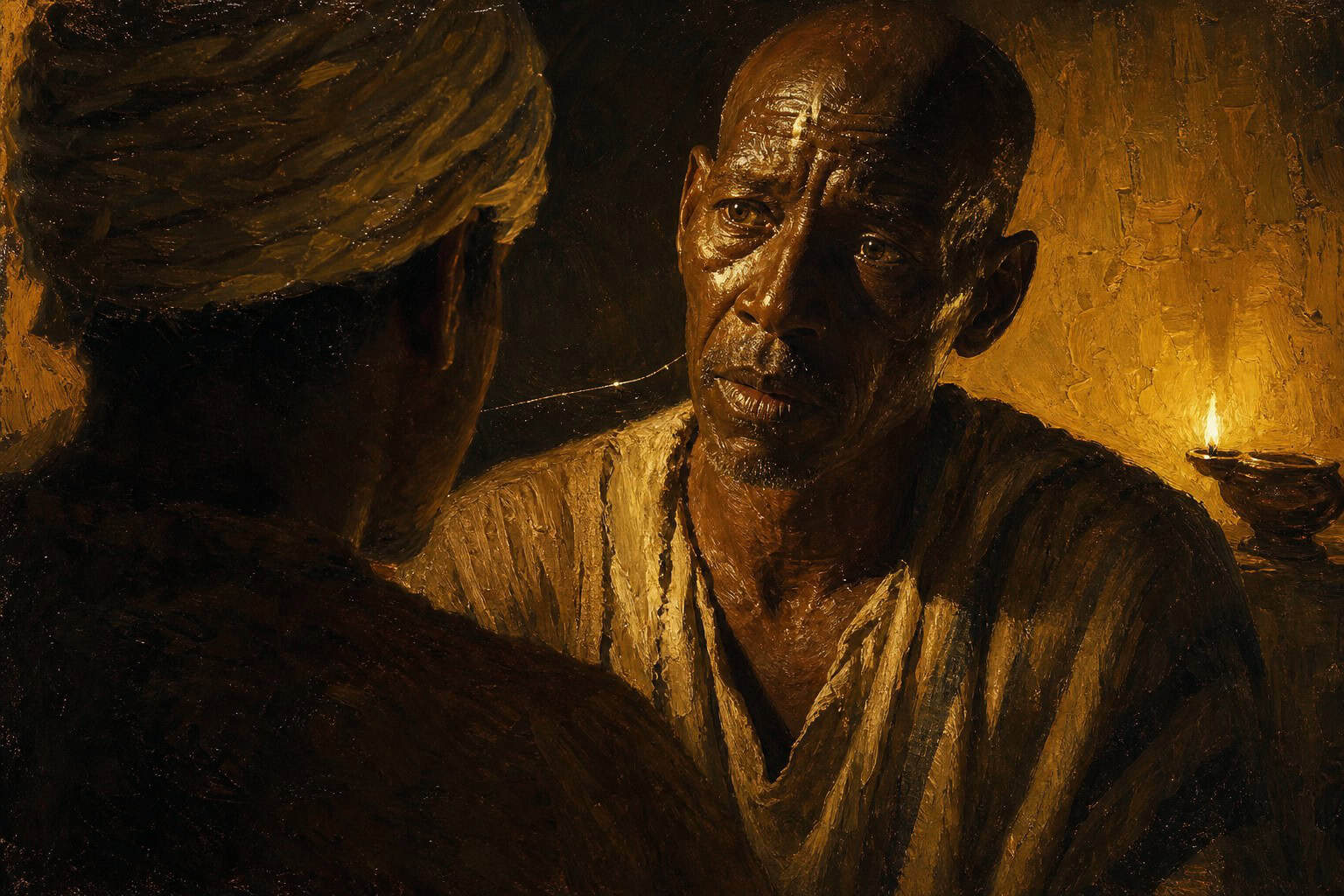
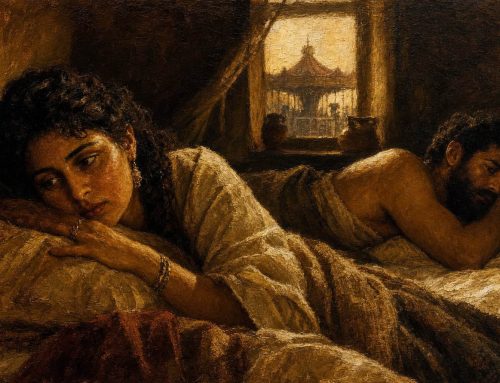
You hid because the first time someone saw you, it felt like your skin came off. I remember you at that age, chest tight, breath shallow, standing in a room where a girl finally turned her face toward you. Before that turning, you were safe. You existed inside your own solitude the way a seed sits under snow, untouched, unbudged, unrisked. Then a single thread spun out between the two of you, no thicker than the silk a spider drops from a beam, and everything changed. That thread was possibility. It was also a leash. You wanted to be seen so badly that the wanting frightened you, and so you learned, young, to step back into the dark just as the light reached you. I am writing to you from years down the road, and I want to name plainly what you could not name then. The fear was not shyness. It was the body’s honest knowledge that to appear is to be exposed, and to be exposed is to hand someone the power to leave. You felt the hollow ache in your chest before your mind had words for it. Your body knew you might not matter to her. It knew before you would let yourself believe it. Two people can stand in the same room, breathing the same warm air, and remain utterly hidden from each other until that first thread crosses the space between them. Until then there is only distance, and distance is comfortable, and distance is death dressed as safety. The thread ends the distance. It pulls you close whether you consent or not, and closeness is the thing you dreaded most. So you hid. You hid behind jokes, behind silence, behind a screen, behind the version of yourself you thought she could stand to look at. This is the oldest human motion there is, older than shame, older than the first hidden face among the trees. We hide from each other because the alternative is to stand fully in the open and let ourselves be measured. And measured, we might come up short. You dreaded the coming-up-short more than anything, more than loneliness, more than the long gray years it would cost you. I understand now that hiding was not weakness alone. It was also grief in advance, a mourning for a rejection that had not yet happened. You buried the seed rather than watch the frost take the bloom. But a buried seed does not stay safe. It stays small. And I want you to know, before we go further, that the God who made you was already in that dim room, closer than the girl, closer than the fear, watching the thread spin out and calling it good even while you flinched from it.
The Fractions You Handed Out Like Coins
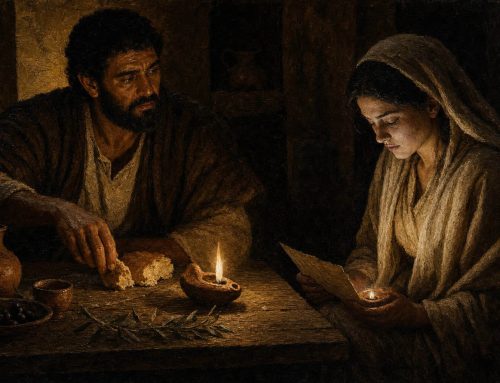
You learned to break yourself into pieces so that no single piece could be destroyed. I watched you do it. You gave one person your body and another your mind, one your laughter and another your grief, and you told yourself this was cleverness. It was survival, and I will not pretend otherwise, but it was also a slow kind of self-annihilation, and you need to hear both truths at once. When you fraction yourself, no one ever gets the whole of you, and so no one can ever wound the whole of you. That is the logic. It is airtight and it is a prison. Each person met only the fragment you had assigned them, and each fragment stayed manageable, defended, small. You handed them out like coins, one to this man for his humor, one to that woman for her attention, each portion measured against what they could give you back. You thought you were protecting yourself. You were disappearing. And you were not the only one doing this. She did it too, the woman who fills these pages, keeping her men in orbit like ships she tracked across a private sea, each one useful in some thousand little ways, each one a separate universe with its own rules and its own leash. She was intimate with her body toward one and intimate with her heart toward another, and never fully present to either. You recognized her because you were her. I see the deeper thing under it now, the thing you could not see. You were never fully present anywhere because presence is the one act that cannot be taken back. To be wholly there, in your body, in your speech, in your love, is to be undefended. And you had decided, somewhere in the frost of that first room, that undefended was the same as dead. So you spread yourself thin across many rooms and were never truly in any of them. You reinterpreted your absence as a kind of presence, told yourself the fragment was enough, that the leftover coin you handed each person carried the value of the whole treasury. It did not. And here is the harder question I put to you, the one I still sit inside: which of those versions of you was real? The one who laughed easily and gave nothing? The one who confessed everything and stayed nowhere? You did not know. I am not sure I know now. What I do know is that the God who made you did not make fractions. He made one soul, whole, meant to be given whole, and every piece you scattered was a piece He wanted gathered back. The scattering was not clever. It was homesickness for a wholeness you had never dared. And yet, even scattered, even hiding, you were not abandoned. Grace does not wait for you to assemble yourself before it comes. It comes to the fragments. It comes to the coward in the dark room. It comes before you have earned a single thing, which is the only way it has ever come to anyone.
Loving the Idea Instead of the Person
The cruelest hiding is the one that feels most like love. You did it through the screen, through distance, through images and words sent late at night. You told yourself you were close to her when you were farthest away, because distance let you keep the version of her you preferred. A person in the room resists you. A person in the room has bad breath and a bad mood and a face that does not always want yours. But an image, a memory, a voice made of light on a screen, that you can bend to your wanting. You did not love her. You loved the shape she made in your imagination, and you fed on it the way a starving man chews on the idea of bread. Her absence became, in your mind, a kind of imagined presence, and the imagined presence was easier to worship than the real woman ever could have been. This is the thing I most need you to understand, because it damns me too. When you replace a living presence with a fragment of them, you stop loving a person and begin pleasuring yourself with their image. It is a lonely act dressed as intimacy. You called it longing. It was consumption. You were not reaching toward her; you were reaching toward your own reflection wearing her name. And she, if she was the woman of this story, was doing the same to you, feeding you intimate words and images crafted to keep you close, keeping you on a thread, useful, warm, on call, measured by what you could provide. Two hidden people building a cathedral of delusion and calling it a relationship. If the two of you had truly yearned for each other, you would have crossed the room, closed the distance, borne the friction of a real face. You did not. You preferred the tangle to the touch. Here is the sharpest thing I have to say to you, and I say it as a gift and not a knife.
We do not hide because we are unwanted; we hide because being wanted might cost us the whole self.
That is why the screen felt safe. It let you be wanted without being present, adored without being risked. But a love that costs you nothing gives you nothing. You knew this even as you refused it. You felt the emptiness after every exchange, that flat gray hour when the phone went dark and you were still alone in your body, hungrier than before. The idea of her could not hold you. Only her actual, awkward, resistant presence could have, and that was the one thing you would not allow. I forgive you. I need you to begin forgiving yourself. Because even in that gray hour, in the fake warmth and the real loneliness, God was not disgusted with you. He was sitting there. He was in the emptiness with you, quiet, not fixing it, just refusing to leave.
We do not hide because we are unwanted; we hide because being wanted might cost us the whole self.
The Gray Hour After the Screen Goes Dark
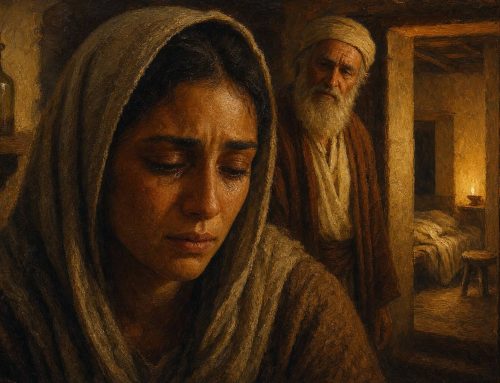
So what did all the hiding buy you? Look at your hands. They are empty. You protected the whole self by never spending it, and now the whole self sits unused, like a coin so precious you never dared put it in circulation, and coins that never circulate buy nothing at all. This is the fallout, and I will not soften it. Every fragment you handed out came back changed, and none of them came back whole. The people you kept at screen’s length drifted into the fog where you had placed them, useful for a season, then gone, because a fragment cannot hold a friendship any more than a photograph can warm a bed. You woke in the gray hour again and again and found the same hunger, deeper each time, because delusion is a food that starves you as you eat it. Over time the habit stopped feeling like a habit. It became your native tongue, the language you thought in, the water you swam in without noticing the wet. You stopped seeing that you were doing it at all. You mistook the small managed life for the whole one. You called the shallow safety peace, and you defended it against anyone who tried to pull you into the open. I want to reach back through the years and shake you, gently, and say: this is not living, this is the careful rehearsal of a life you keep postponing. But I also want to kneel down beside you in that gray hour, because I know something you did not. The emptiness you felt was not God’s absence. It was the exact shape of what you were made for, pressing against what you had settled for. The ache was holy. It was the last honest thing left in you, refusing to go quiet, refusing to let you believe the fragment was enough. There is a homesickness in it that no comfort could touch, because it was grieving a threshold you had walked past a thousand times without ever stepping through. And this is the mercy that undoes me still: God did not despise the ache. He lived in it with you. He was the presence you kept refusing, waiting not at the far end of your repentance but right there in the wreckage, in the dim room, in the gray hour, closer than the screen. He did not rescue you out of the pit on your schedule. He sat down in the pit. That is not a tidy comfort. It did not fix the loneliness that night, or many nights. But you were not alone in it, and that changes everything and nothing at once, which is the only kind of truth I trust anymore.
Coming Out of the Trees With Empty Hands
Here is where it settles, and it does not settle into an ending. You are still that boy in the room, and I am still learning to stop hiding, and the distance between us is smaller than either of us thought. People hide from each other because being seen is a wound that might not heal, and being loved is a debt you might not be able to pay. That fear is real. I will never tell you it was silly. But the hiding did not save you. It only postponed the risk while charging you interest in loneliness. The thread that spun out in that first room, thin as spider silk, was never the danger. It was the invitation. To be seen, to be measured, to come up short in someone’s eyes and stay standing anyway, that is the whole terrifying human vocation, and you spent years running from it into the arms of images that could not hold you back. You confused nearness with capture and farness with peace, and you got both exactly backward. The screen you called intimacy was the farthest place you ever stood from anyone. The room you fled was the only place love could have happened. I write these memoirs, this one and the confessions that followed, not to explain the running but to stop it, one honest sentence at a time. In Fractions of the Soul I had to lay out every scattered piece of myself on the table and count them and grieve what the scattering cost. I do not have a clean resolution to hand you. The wholeness I was made for is still ahead of me, worked toward, not achieved. But I can tell you the direction. It is out. It is toward the person in the room, breath and bad mood and resistance and all. It is toward the God who was never fooled by any of my fragments and loved the whole of me before I dared assemble it. That is grace, and grace is the only reason I can bear to look at you at all. It came before you earned it. It came while you were still hiding, still consuming, still calling delusion love. It knelt in the gray hour and did not flinch. So come out of the trees. Come out with empty hands and a cracked-open chest and let yourself be seen. You will not die of it, though it will feel like dying. And on the far side of that small death is the only thing worth the risk: to be known and, astonishingly, kept.