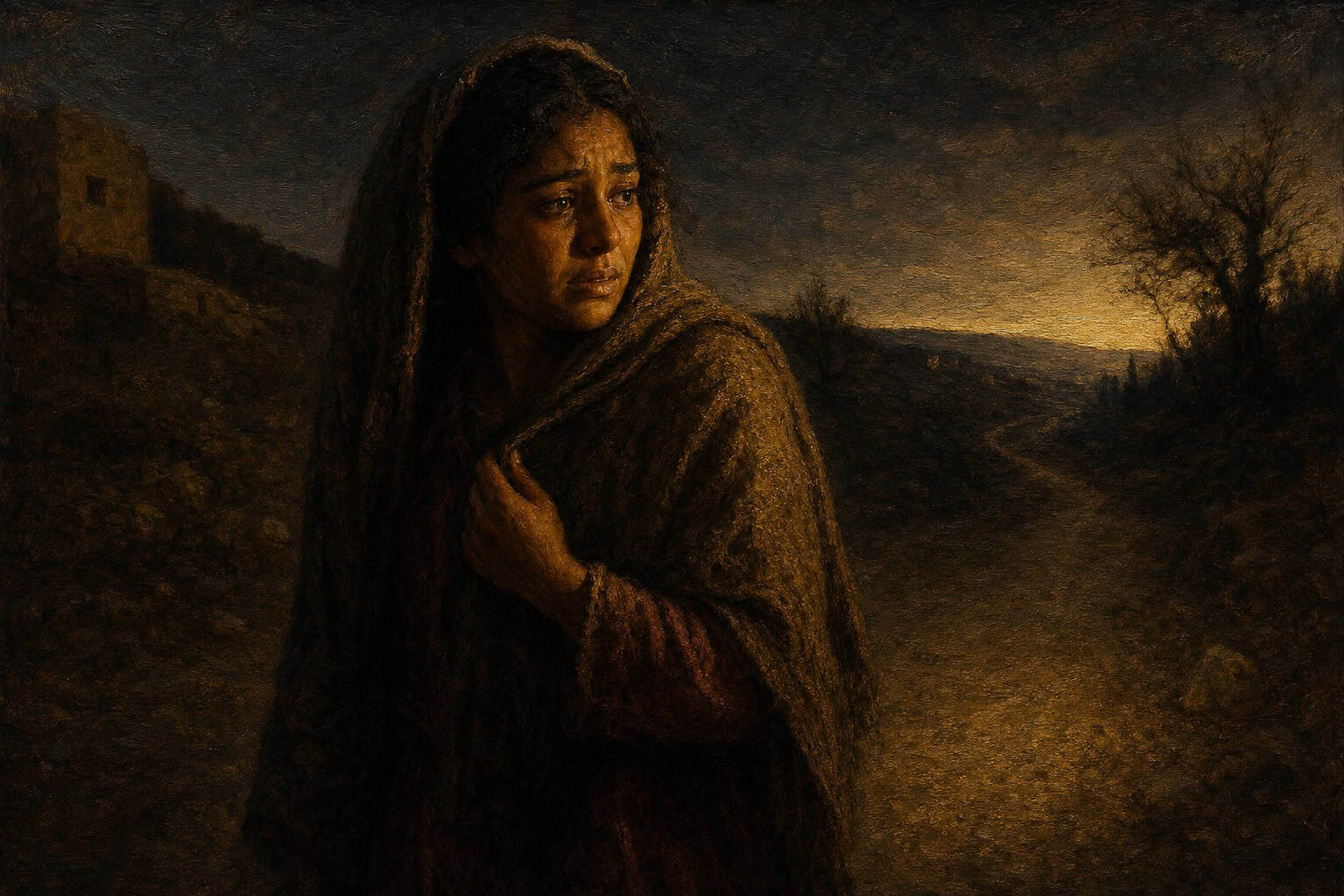
Feeling alone after a breakup? A raw reflection on loneliness, damaged desire, and the strange prayer that keeps a wounded heart alive.
The Smolder Where the Fire Used to Roar
You wake and the bed is too wide. That is the first thing loneliness does after a breakup: it stretches the ordinary until it hurts. The empty half of the mattress. The mug with no partner in the cupboard. The phone that stays quiet at the hour it used to buzz. In Confessions to the Empty Chair there is a man who knows this exact quiet, and I want to sit beside him a while, because he does not lie about it. His anger, once an inferno, has burned down to a smolder. The drinking that fed it has thinned. The punishing hours under the barbell have loosened their grip. He used to lift hard, he tells us, as a penance for being stupid, as though his body were a debt he had to keep paying in sweat and strain. Now the severity relaxes, not because he is healed, but because there is less fuel left to burn. His arms remember the load even as the muscle softens. His flesh had learned discipline as a language for grief, a way to speak the pain without words, and now that language falls quiet, and the silence of it is its own dull ache in the joints. He believes, still, that love of the body and love of the spirit run together, two currents braided in one stream, and he has no wish to abandon either. He will not pretend the hunger of the flesh is shameful, nor that the longing of the spirit is separate from it. So he does the only thing left. He prays. Not a polished prayer, not the kind said in a pew, for he has stepped away from all that. It is a private, ragged conversation carried on during late walks in the dark, breath fogging, gravel under his shoes. If you are alone tonight and the house is louder for being empty, you already know this posture, even if you have never named it. The loneliness is not only the absence of a person. It is the absence of the man that person made possible. He is grieving her, yes. He is also grieving the version of himself who could feel, who could trust, who could pour himself out and expect something poured back in return. That man is the ghost sharing the wide bed. The smolder in his chest is all that is left of the heat that once was them, and he lies there breathing it in like smoke from a fire someone already stamped out. He tends it anyway. There is nothing else warm in the room.
The Scar That Learns to Poison
There is a fear worse than never being loved again, and this man names it with terrible precision. He does not lie awake dreading solitude. He lies awake certain that he has become incapable of love itself. He knows too much now. He trusts too little. Somewhere in his chest is a scar he can nearly feel with his fingers, and he is sure, with the cold sureness that only heartbreak grants, that the scar will leak into whatever comes next. Any new woman, any new tenderness, would meet a skepticism already waiting, a bitter watchfulness that undermines the very peace he is starving for. This is the cruelest turn loneliness takes. It convinces the wounded heart that the wound has become the whole heart. Some cuts do not close into wisdom; they harden into a kind of immunity, and the tragedy is that the heart begins to attack the medicine it needs. Hope arrives and the scar reads it as a threat. Trust reaches out and the old betrayal answers first, before the new person can even speak. If you have been broken this way, you recognize the trap: you want the closeness and you flinch from it in the same breath, because the last time you opened your hands they came back empty and stinging. I do not think he exaggerates his damage to win our pity. He is being honest about how corruption spreads inward, how a betrayal received becomes a betrayal rehearsed, played forward against people who have not yet arrived and have done nothing to him. Here I have to ask the harder question on his behalf, the one he circles but does not answer. Is the scar telling the truth, or is the scar telling a story that protects him from risking again? The skepticism feels like wisdom. It feels like clear sight. But clear sight and self-defense can wear the same face, and a man alone at night cannot always tell them apart. Perhaps the darkness he carries is real, heavy, undeniable. Perhaps it is also a wall he has learned to hide behind, calling it honesty when it is only fear in disguise. The lonely heart is a strange witness against itself. It reports its own death and mistakes the report for a diagnosis, signs the certificate, and lies down inside it. He believes love is foreclosed, the wound sealed over for good. But belief, even cold and certain belief, is not the same as fact. And the very fact that he keeps praying, keeps walking, keeps speaking into the dark, suggests some ember in him refuses the verdict his own mouth has handed down. He argues against himself without knowing it. The scar has not silenced him yet.
A Prayer Sent Forward to a Woman He Has Never Met
Then the prayer turns, and it turns toward someone who does not exist to him yet. He begins to pray for a wife he has never met, a stranger somewhere out in the world, living her own ordinary days, unaware that a broken man is already asking God to be near her. Just be there with her, he prays into the cold. Comfort her. I know she needs you. It is one of the most tender and most complicated things I have watched a lonely man do. He is not praying to be rescued. He is praying that she will be held before he ever reaches her, because he already knows what he will bring when he arrives. He names himself a sword and imagines her as the sheath, the one strong enough to contain his accumulated darkness with a greater strength of her own. Here I have to stop and be honest, because that image can be read two ways at once, and I refuse to flatten it into one. Read one way, it is beautiful: a man humbled enough to admit he will need containing, a man who wants his future love guarded from him even as he aches for her nearness and her presence. Read another way, it asks something enormous of a woman who has not consented, casting her as the one who must absorb his poison and survive it whole. Both readings are true at the same time. He knows she carries her own darkness too; he says the darkness in him will recognize the darkness in her, and something in that mutual recognition sits closer to honesty than any romance built on pretending we arrive clean and unmarked. Still, I want to ask him gently, the way you ask a friend you love: is she a person to you yet, or a rescue you have quietly designed? Does he long for her, or for what she will do for the ruined thing in his chest? A thoughtful woman reading over his shoulder deserves to be more than a sheath, more than a strong vessel for a man’s wreckage, more than the answer to his loneliness. And yet I think he half-knows this, which is exactly why the prayer stays a prayer and never becomes a plan. He hands her to God precisely because he cannot yet hand her a whole self. He has only pieces, and he will not offer a woman pieces and call it love. In the dark, longing does this. It reaches past the person we lost toward a person we have never touched, and in that reaching it confesses both our hunger and our fear that the hunger will harm the one who finally meets it.
The lonely heart does not first fear it will never love again; it fears it has already lost the power to.
Children Felt Like a Breeze on the Late Walks
The prayer widens again, and now it reaches further still, toward children who do not exist. On his late-night walks he says he can sometimes feel them, a presence light as a breeze against his face, unnoticed at first and then suddenly undeniable, the way you feel someone near before you turn. He imagines their unmade souls loving him from heaven, waiting like a painting God has envisioned before the first stroke of the brush ever touches the canvas. Here the loneliness does something I did not expect. It does not curdle into despair. It reaches toward life. A man who has just told us he may be incapable of love finds a strange warmth in picturing the small ones who might one day sit at his feet, and he says plainly that they are his only hope of feeling again, of coming back to life. The fallout of heartbreak, then, is not only the collapse he described earlier, the cooling body and the poisoned scar. It is also this: a hunger for a future so real that the flesh itself can almost sense it on a cold road, breeze on the skin, the body leaning forward toward a fatherhood not yet given. I find this deeply human and deeply Catholic, this refusal to imagine heaven as a thin and ghostly place. His hope is not to escape the body but to see it carried forward into something more whole. He wants children of real flesh, born through the flesh of two wounded people, breathing and stubborn and warm. He wants to hand them the one thing his pain has actually produced, a hard-won wisdom he could pour out across a single evening’s conversation, sparing them the years it cost him to learn it. There is grace in this, and I want to name it carefully, because it is not the grace that lifts him out of the dark. God does not appear here to fix him or to erase the scar or to fill the empty side of the bed by morning. God appears as the one he trusts to comfort a stranger and to hold the souls of the unborn, present within the loneliness rather than lifting it off him. That is the exact shape of it. He walks alone in the dark and prays, and the dark does not thin, but he is not walking alone inside it. The breeze that carries the children is also, perhaps, a nearness he cannot quite name and does not try to. He endures the empty present for their sake, he says, not his own. Loneliness, it turns out, can be carried by leaning toward people who have not yet arrived, and the leaning itself is a small, stubborn act of faith.
What the Ember Refuses to Concede
So we come back to where you started, alone after the breakup, the bed too wide, the certainty that something in you has been broken past repair. This man offers no easy exit from that, and I will not pretend to either. He does not tell you the loneliness will lift by morning. He does not promise the scar will heal into a tidy lesson you can frame. He sits inside the ache with a severity that respects your intelligence too much to hand you comfort you cannot use. And yet notice what he does with the pain, because this is the quiet turn worth carrying home with you tonight. He does not aim his prayer at his own relief. He aims it outward and forward, at a woman still unknown to him, at children not yet made, and in that aiming he keeps something open in himself that his despair had been working to seal shut. He would tell you he is incapable of love. But a man incapable of love does not spend his dark walks begging God to comfort a stranger he will never meet unless heaven wills it. That is the contradiction at the center of him, and I think it is the contradiction at the center of most of us when we are alone and honest. The mouth says love is finished; the hands keep reaching anyway. The mind delivers its cold verdict; the heart quietly files its appeal in the dark. There is a hard question left unanswered, and he leaves it unanswered on purpose, because to answer it too quickly would be a lie. Is his longing tender, or is it need dressed convincingly as tenderness? Is he honoring these future people, or using them to get through the present? He does not resolve it, and neither will I, because the honest thing is that both can be true in the same aching chest at the same hour. What I can tell you is that the ember he describes, the few living coals still glowing in a burned-down soul, is enough. Not enough to fix anything. Enough to keep him upright, walking, praying, feeling the breeze move past him. If you are alone tonight, that may be all you have, and it may be all you need for now: not a rescue, but a refusal to stop reaching. This book does not sell you a cure for loneliness. It shows you a man kneeling inside it, breath fogging the cold, still hoping toward the ones who are coming. That is where this leaves you, and it is truer than any comfort could ever be.