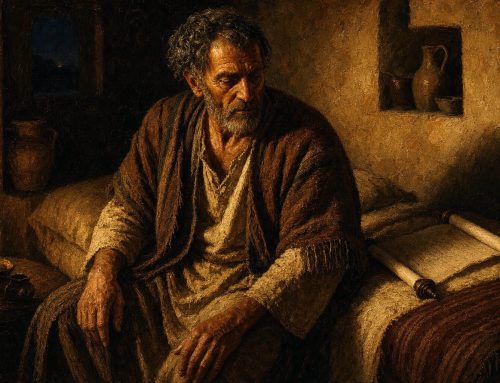
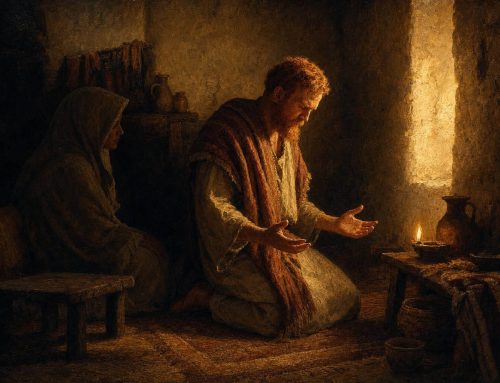
Why you always feel like a second choice – and the older ache underneath it, read through a hard, honest scene in Confessions to the Empty Chair.
Breadcrumbs Dropped Across a Table
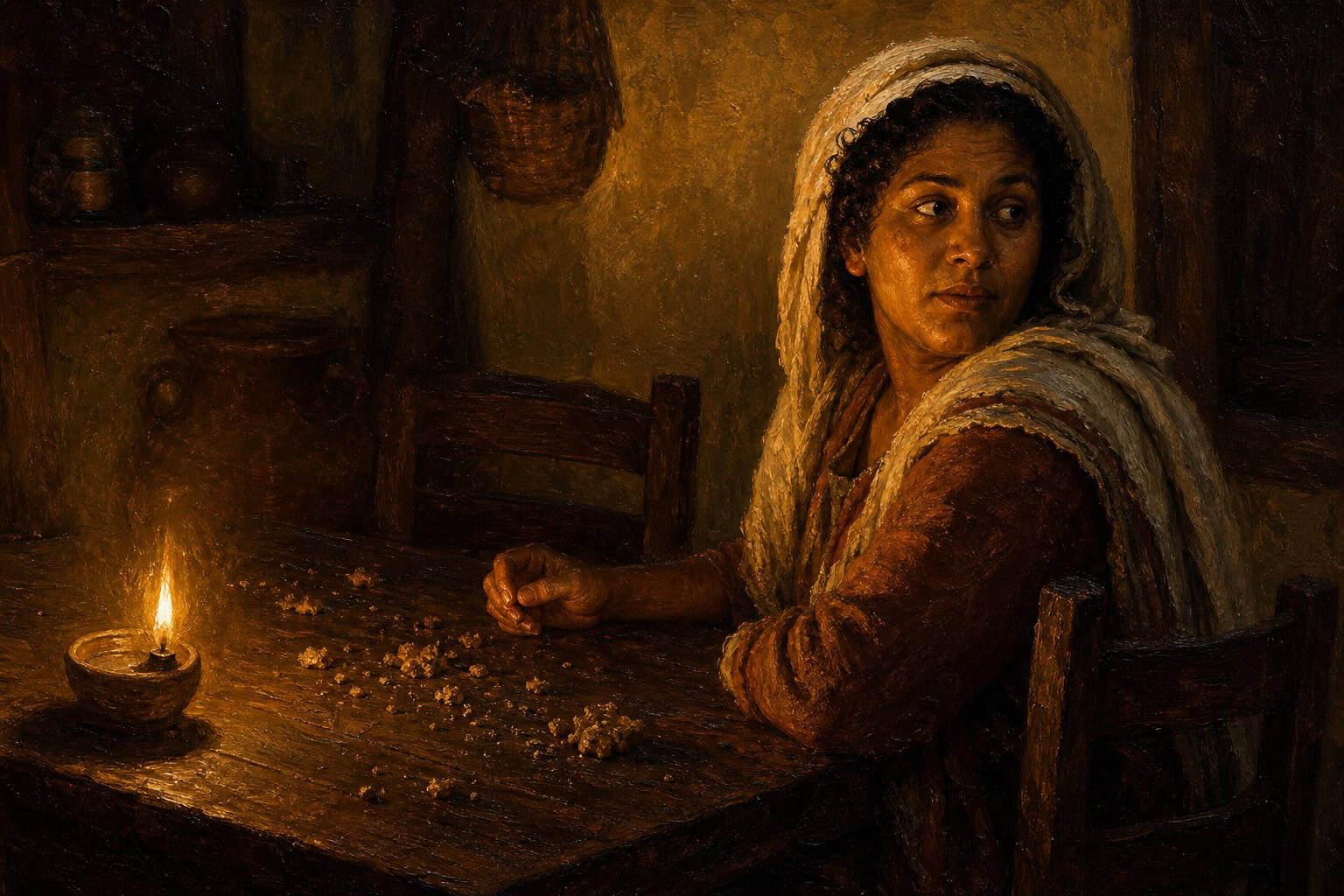
You feel like a second choice because you have already decided you are one. That is the first hard thing I have to say to the man who typed this question at midnight, and it is the first hard thing I have to say to my younger self, who sat across a table from a woman named Leigh and did not simply speak. He performed. He handed himself over in small, controlled bursts, pieces of his spirit peppered across ordinary conversations, breadcrumbs scattered so she might follow the trail and find him. From the outside it looks like intimacy. It is not. It is a man who cannot bear to be chosen freely, so he arranges a treasure hunt and calls the finding proof of love. I remember the strange pleasure of it, the way each dropped fragment felt like a coin tossed into a well, my whole body still, listening for whether it struck water or stone. I told myself this was depth. I told myself most people skate the surface, and only the rare woman would gather the fractions and assemble the whole. But underneath the elegance was a boy who had learned, somewhere I can no longer point to, that his plain self was not enough to hold anyone across a table for long. So he built a puzzle. If she solved it, she had earned the right to know him, and he had earned the right to feel wanted. The trouble with a puzzle is that it turns a living person into a test. You are no longer sitting with them. You are grading them, pen poised, tallying each response against a scale they cannot see. And a man who grades a woman on how well she reads his silences has already answered his own question before she opens her mouth. He has decided, in advance, that he will not be enough unless she proves otherwise, and even her proving will not quiet him for long. The feeling of being second choice does not begin with rejection. It begins here, at this table, in the very way he offers himself. He hands her crumbs and then quietly resents her for not tasting bread. He watches her chew and finds her wanting. I did that. I dressed my fear as discernment and my hunger as high standards. I sat there measuring a warm, present woman against a mark she never knew existed, and I called the measuring wisdom. This is where the old ache hides. Not in who leaves, but in how carefully we arrange never to be simply met.
Mapping the Exact Place Where Warmth Turns to Frost
There is a watchfulness in me that has always hunted for the second a woman’s warmth goes cold. I knew it before I could name it. I could feel the temperature drop in a room a full sentence before anyone else noticed it, the way an animal feels weather turn in the ache of its joints. In that scene with Leigh I was hunting for it openly, pushing her a little further with each revelation, watching for the threshold where enthusiasm silently becomes distance, where the leaning-in tips over into the pulling-away. I called it a test of her interest. What it really was, I see now, was a rehearsal of my own abandonment. A man left enough times becomes a cartographer of leaving. He learns the terrain of retreat so well he can walk it blind, name every ridge and dry riverbed of it. And this is the cruel gift the wound hands you. You become an expert reader of the signs of being left, so skilled that you begin to see the leaving before it arrives, sometimes before it exists at all. I caught the smallest things: the half-second delay before a reply, the eyes flicking toward the window, the breath that came a beat too even. And I would think, there it is, the pattern again, they always go. But I was the one drawing the map. I was the one who needed the leaving to be coming, because a leaving I predicted was a leaving I could survive. Second choice is safer than no choice. A rejection you saw approaching does not break you the way a rejection you never expected does; you have already braced the body for it, already gone half-numb. So I taught myself to expect it always. I turned every warm woman into a countdown, listening for the tick under her kindness. I mistook my vigilance for wisdom and my dread for clarity. What I could not see, sitting across from her, warm coffee cooling between us, was that a man watching for the frost will always find frost, because his watching is itself a chill. He breathes cold onto the very thing he wants to keep warm, and then reads its shiver as betrayal. When it finally cools, as everything under such a gaze eventually cools, he says with terrible satisfaction, I knew it. He does not know his knowing was a hand on the thermostat the whole time. I made my quiet prophecies and then I fulfilled them, and I called the ruin proof that I had been right about people all along. That is the loneliest kind of being right. It costs you every person you might have kept.
The Sight That Was Really a Wall
The turn came when I understood that my great gift was also my cell. I believed I could see through people, past the personas they built, past the small customizations and defenses, straight down to the ground of the soul from which their words grew. And I could, sometimes. But that seeing was not the closeness I imagined. It was a wall dressed as a window. When you can see through everyone, you stand alone on the far side of the glass, watching them arrange themselves, aware of what they hide, and wholly unable to be met yourself. They do not see you. They cannot. You have made certain of it with your breadcrumbs, your tests, your rationed revelation. This is the unbearable asymmetry: I knew them and refused to be known. I sat in full view of their defenses while holding my own face just out of reach. And a man who refuses to be known will always, always feel like a second choice, because he has arranged the world so that no one can choose the actual him. They only ever chose the puzzle, the fragments, the version he consented to release into the light. If they stayed, he did not trust it, because they had not seen the whole. If they left, he felt vindicated, because of course they left, everyone does. There was no outcome in which he could be loved. He had built a chamber with no way in for love, and then stood inside it complaining of the cold. Here is what I would tell him if I could sit at that table now, if I could reach across the cooling cups and still his restless watching. The feeling of being second choice is not information about how others rank you. It is the shape of your own refusal to be first for anyone. Being first means being seen whole. Being seen whole means you might be turned away for what you actually are, not for a test you built to be failed. That fear is old. It has roots deeper than any woman. It was not about Leigh, though I aimed it at her like a lens. It was never about Leigh. To test whether a person will choose you is to guarantee you never learn if they would have.
To test whether a person will choose you is to guarantee you never learn if they would have.
What the Grading Cost the Woman Across From Me
I have to sit now with what my testing did to her, and this is the part that shames me into silence. Leigh, whoever she truly was under all my watching, came to that table as a person, not a proctor. She carried her own hungers, her own fears, her own softness she was almost certainly guarding the way I guarded mine. And I turned her into an instrument for measuring my own worth. I had decided in advance that women grow bored with matters of the spirit, that they follow the well-worn path and count the plain coins instead of tasting what the coins might mean. So I watched her through that grim expectation, half-waiting to be proven right about the whole of her. What an insult that was to lay across a living face. What a small, armored posture to carry into an ordinary conversation. And yet she listened. She stayed. The more I spoke, the more she leaned toward me, elbows on the wood, eyes steady, and instead of receiving that as the astonishing mercy it plainly was, I filed it as data. A woman with eyes to see and ears to hear, I thought, as if even my praise were a grade written in the margin. I never once let her simply be a person who might, freely and without earning it, care for the man in front of her. I could not let anyone be free with me, because freedom includes the freedom to leave, and I could not survive that risk left unmanaged. So I managed it. I called the managing clarity. I told myself I would rather push a woman away with honesty than waste my time scattering seed on rocky ground. There is a true thing buried in wanting to be authentic, and I will not throw the whole of it away. But my authenticity wore armor. It said, here is the real me, take it or leave it, precisely so that when she left I could tell myself I had been real and she had been unworthy of it. That is not honesty. That is a first strike wearing honesty’s coat. And the cost of it was borne by her, by the actual warm attention she offered, which I received with a ledger open instead of hands. I wonder now what she felt, being studied like weather. I wonder if she sensed the invisible mark she was being held against. I wonder if my quiet grading became, for her, its own small abandonment, delivered before she ever thought to leave.
A Word Spoken Without Strategy
What settles at the end is not an answer but a homesickness. For years I believed I was only lonely for a woman, or for the version of myself some woman might finally confirm into being real. But under that ache runs an older one, and I can name it now. I was homesick for a single place where I could speak a word without strategy. Every conversation I ever entered was arranged beforehand. Every revelation was rationed by the spoonful. Every offering was also a test with a hidden answer key. A man who cannot speak without strategy has never, not once, been fully received, and so of course he feels like a second choice in every room, at every table, because he has never let anyone stand before the whole of him. The tenderness I owe that younger self, the tenderness I am only now clumsy enough to try, is this: the boy who built the puzzle was not cruel for sport. He was terrified. He had learned, somewhere too early, that his plain self drove people off, and he built the whole elaborate machinery of testing simply to keep breathing through the fear. I do not despise him anymore. I grieve him, the way you grieve someone who died young inside a living man. And here, in the dark of it, comes the nearness I never engineered. There is One before whom the strategy finally drops, before whom the breadcrumbs are useless because the whole trail was known before I scattered the first crumb, before whom I am seen entire and not turned away. He did not lift the loneliness off me like a blanket in the morning. He did not fix the wound or hand me the woman or unwrite the pattern I had rehearsed for years. He simply stayed while I ran my tests, present in the grading itself, walking beside me in the very sin of it, quiet, close, not flinching at the fractions I refused to show any human face. That nearness does not erase the ache. Some nights it barely reaches it. But it changes the question I was asking. The question was never why I am always the second choice. The real question, the one I could not bear to speak aloud, was whether I could ever let myself be chosen at all. Confessions to the Empty Chair sits inside that question and refuses to let me off the hook, and I have come to be glad it refuses. Because the way out was never to test better or read the frost sooner. It was to set the puzzle down on the wood and let one word, at last, be spoken plain.