What are childhood wounds? Not scars that heal, but a lens that decodes every room you enter after. A tender, honest answer through a memoir’s early scene.
The Boy on the Cold Gymnasium Floor
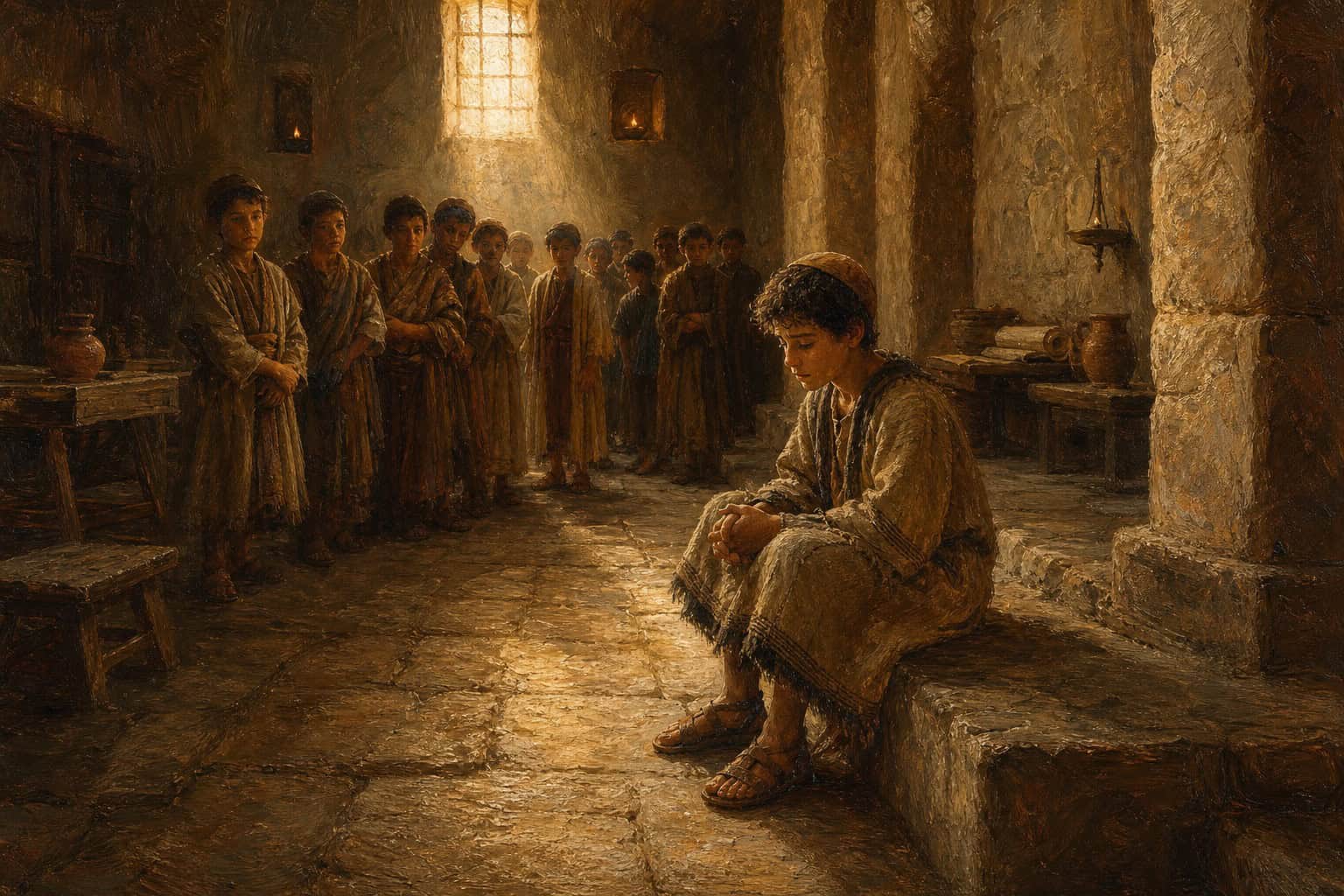
You are five, maybe six, sitting cross-legged on the cold varnish of a gymnasium floor, waiting for a teacher to gather you like a duckling into a line. Your father dropped you off early in his work van, on his way to a job that would not wait, and the building around you was raised in 1955, half a mile from a house whose walls you already knew too well. I want to sit down beside you on that hard floor, because you do not yet have words for what a childhood wound is, and you are already carrying one. The gym smells of floor wax and rubber soles, and the light comes in high and thin through windows too tall for a small boy to reach. Here is the plain answer I could not give you then: a childhood wound is not a cut that closes and fades with time. It is an organ you were forced to grow before your time, an extra eye that opens in the dark and never learns how to shut. You call your silence a language, and you are proud of it, because in this new place fewer sounds pierce your shell. Fewer voices crying around you. Fewer voices swinging without warning from love to rage in the space of a single breath. You welcome the strict rules, the rigid instruction, the significant differences from the daycare you left behind, because rules are predictable and predictable is safe, and safe is the only thing you truly want. What you cannot see, little one, is that your comfort is itself the shape of the injury. A child who prefers stone silence to warmth has already learned that warmth is a trap that springs shut when you least expect it. The other children on that floor are simply waiting for class to begin, restless, whispering, kicking their heels. You are doing something else entirely. You are reading the room, counting the exits, gauging the mood of every adult who moves toward you across that wide floor. That labor never rests, not for one minute of one morning. And I, who am you grown old, have to tell you the truth I withheld from myself for decades: this was never resilience. Resilience is the word the strong invent for the burdens they force onto the small and then admire. What lived in your small chest was vigilance, exhausting and constant, the premature work of a sentry who was never once relieved of his post. You thought you were being good. You were being watchful, which is a very different and much lonelier thing, and it aged you in ways no birthday could measure.
The Riddle Ms. Chavez Could Not Read
Your quickness did not stay hidden for long. You finished every assignment with a speed that unnerved even you, then sat staring at the paper shapes hanging from the classroom ceiling while the clock crawled and your classmates bent low over their work. Time did not move the same for everyone, you already knew that, and you knew it far too young. Ms. Chavez noticed the way you finished and waited. She asked whether you felt bored in her room, and you looked up at her and said no, quietly, because you did not want to upset her, because upsetting an adult was a thing you had trained yourself never to risk under any circumstance. That small, careful lie is the whole wound in miniature, and I need you to see it plainly. A six-year-old who manages a teacher’s feelings before he tends his own is a child who has already been taught that his truth is dangerous when spoken aloud. So she handed you a special test, a challenging thing the district called a version of an IQ measure, and you finished it cleanly, and she kept the paper. Then she looked at you differently than before. Not as a student anymore. As a riddle she could not solve. I have thought about that look for most of my life, and I have to ask myself the hard question now, the one I ducked for years: did I hunger for it? Did some starved part of me savor being seen as a marvel, since I could not be seen simply as a child? The pride was real, warm, addictive. Being handpicked felt like being loved, and I confused the two so completely that I would spend years mistaking recognition for tenderness and never knowing the difference. Ms. Chavez was kind. I do not accuse her of anything. She saw a speed of mind she could not account for and did what a good teacher does with a promising pupil. But she could only read the part of you that impressed her. The other part, the heavy part, the knowledge too large for your small frame, was invisible to her, and you had made certain of that. You had built the mask that well, that early. Here is what neither of you understood on that ordinary afternoon: cleverness can be a hiding place as much as a shelter. A boy who cannot be safe can decide to be exceptional instead, because exceptional draws a different kind of eye, and any eye that does not intend harm feels, to a watchful child, almost like grace itself. You were bright, yes. You were also busy. Busy proving you deserved the very air you breathed, busy earning a keep no child should ever be billed for. The riddle she saw was not your gift at all. It was your wound wearing a costume it had sewn for itself in the dark, and it fooled everyone in that room, including you.
Handpicked by Heaven and Hell at Once
The recommendation came through before your first-grade year had ended. A new district program, rigorous and selective, with only a handful of open slots, and your teacher endorsed you for it, and your parents gave their consent, and just like that you were chosen. You would write, many years later, that a teacher had handpicked you, and perhaps, unknowingly, heaven and hell alike. I have circled that sentence a thousand times in the small hours, and now, as the older man speaking back across the years to the boy, I will say aloud what it means. A childhood wound is the exact place where two hands reach for the same child at the same instant. One hand is holy and wants to raise you toward your true measure, the full height God intended. The other hand is ravenous and knows that a marked child is easy to find, because the mark itself sends up a signal that predators read clearly across any distance. Being chosen is never a neutral thing. That recommendation opened a door to the best that was in you and, in the very same breath, a door to those who feast on the gifted and the lonely and the quiet. You did not choose which hand would close around you first. No child ever does. This is the terror hidden underneath every proud story of being singled out and celebrated, and I refuse to soften it for you now, because the softening is precisely how the lie began.
A childhood wound is not the past; it is the eye you were forced to grow early, and it decodes every room you will ever walk into.
Sit with that a moment, little one, though it is far too much to ask of your small shoulders on a school morning. The gift and the danger arrived wearing the same set of clothes, indistinguishable to a child. The recognition that felt like being finally, truly loved was also a lantern held up in a dark wood, and things in the wood turned and came toward the light. I do not tell you this to frighten you further; God knows you were frightened enough already. I tell you because the shame that will trail you for years is not yours to carry. You did not summon them. You did not earn them by being quick or quiet or good or clever. The magnetic pull you will feel your whole life, the way certain patterns of harm keep arriving at your door as if invited, is not the evidence of your guilt that you will take it to be. It is the residue of a mark set upon you by another’s sin, pressed into your skin before you could resist, and I would give what remains of my own life to lift it from you before it settles all the way in.
A childhood wound is not a scar you outgrow; it is the eye you were forced to grow early, and it never learns to stop watching.
Chocolate Milk and the Second Self
You learned to live split, and I have finally stopped calling that a sickness. There was the boy who savored the cold sweetness of chocolate milk, the boy who loved Superman and the clean certainty of a hero no fist could reach. And there was the other boy, the one who carried knowledge no child should ever hold, walking a half-step behind the first like a shadow that would not detach itself no matter how bright the morning. People will want to name this a disorder someday, will reach for cold and tidy words to file you neatly beneath. I will not join them. What you did on that gymnasium floor and in that classroom was survive. When the sweetness of a glass and the bright red cape of a comic were the only reliable anchors in a world that kept tilting, you clenched them tight, and that clenching was not weakness in you. It was a wisdom the body knew long before the mind could find the words. The sensory pleasures were never escapes from what was real. They were counterweights, small mercies you rationed out to yourself so you could bear what each day demanded of you. I want to defend that boy against the grown man who spent years despising him for his needs. You called yourself broken for needing comfort. You were not broken. You were a child improvising a way to stay whole while the ground shifted beneath your feet. The mask of the normal child, worn all the way through public school, was not a deceit you should carry shame for. It was armor you forged with your own small bare hands because no one else in that house would forge it for you. And still I have to ask the unsettled question, the one that will not let me rest even now: what did I lose, learning so young to hide? A boy who splits himself to survive does not simply grow back together once the danger has passed. The seam remains, tender to the touch for the rest of a life. For decades I mistrusted my own softness because that softness once made me a target. I punished the tender boy for being tender, as though his gentleness had somehow invited the wound onto him. That was the deepest cruelty of all, and it came not from any stranger in the dark but from me, turned back against the child I had been. Here is the tenderness I withheld far too long, and I hand it to you now across all these years: you did nothing wrong by wanting to be held. You did nothing wrong by loving the taste of something sweet in a bitter house. The two selves you carried were not a fracture in your character. They were the marks of a soul refusing, even that young, to let evil take every last part of you.
Who Kept Vigil Beside You
So I come back to the gymnasium floor one final time, to the small watchful boy sitting cross-legged, waiting for his line to be called. I cannot change what came. I have tried, in dreams, to reach back through the years and carry you out of that building before the hands close around you, and I wake every time in the same aging body, holding the same unaltered history. That is the hard grace of it, the part I cannot dress up: the wound was not removed. This is the truth I most want you to hold in your small hands. God did not lift you clean out of the dark. I prayed for exactly that rescue for years, prayed until my voice went thin, and it did not come the way I begged for it, and I was angry, and my anger was honest, and He bore the whole of it without flinching. But I have learned to see something I could not see as a boy staring up at the paper shapes on the classroom ceiling while the clock refused to move. He was on the floor beside you. In the silence you had made into a language, He was there, quiet as you were quiet, keeping the vigil right alongside you while you kept your own. In the split down the middle of you, He held both boys at once, the one with the chocolate milk and the one with the unbearable secret, and He did not turn His face from either of them. He was in the tears that no adult ever saw fall. He was there in the pride and even in the confusion of it, walking with you through the very place where you felt most utterly abandoned by everyone. This is not a tidy ending, and I will not counterfeit one for you to swallow. The patterns kept finding you across the years. The vigilance never fully learned to rest. Some nights it still does not, and I sit awake with it. But the honest answer to what a childhood wound is comes down to this: it is the eye that never closes, and grace does not close it for you either. Grace sits with you on the cold floor while the eye stays open. That nearness in the dark is the strangest and the truest thing I know, and it is the only reason I can speak to you now without falling into despair. If you have carried an invisible mark from your own early years, if the same shape of harm keeps arriving at your door and you have quietly blamed yourself for its return, then hear the older voice saying what no one said to the boy on the floor: you were not the sin done to you. You were the child caught in the middle of it, and you were never, not for one silent morning of your whole small life, alone. There is a fuller reckoning waiting in Confessions to the Empty Chair, but this much you may keep for tonight.