How to handle romantic rejection when it hollows you out—a raw, faithful reflection on the ache, the split self, and where God stays.
The Coffee She Leaves Half-Drunk
You know the exact moment the answer changes. She does not say it in cruel words. She says it in the slowness of her reply, in the way her body angles a few degrees away when you enter a room, in the coffee she leaves half-drunk on the table and does not offer to finish with you. The rejection arrives before the sentence does. Your chest registers it first, a cold drop below the ribs, the sensation of a missing step in the dark before your foot confirms the fall. You keep talking. You keep smoothing. You keep offering small acts of care, because your hands do not yet know what your gut has already understood. This is the first strange fact of being turned away: the body knows before the mind will admit it. Your skin has read her withdrawal like a change in the weather, a pressure drop, a chill that has no source you can point to. You feel yourself become, in her eyes, a thing to be managed rather than met. You had wanted to be a person to her. Now you are a situation, a matter she is handling with polite economy. And the horror is not only that she no longer wants you. It is that you cannot make her want you, and no amount of thoughtfulness—the meal you set out, the way you memorized her preferences, the little accommodations you learned without being asked—will convert her indifference into desire. You had believed love could be earned by attentiveness. You are learning it cannot. Desire is not a debt someone owes you for good behavior. It either rises in her or it does not; it did not, and you are standing in her space with your care held out like a plate no one will take. She keeps her own place and lets you know you are only visiting. You feel, in your muscles, the difference between belonging somewhere and hovering at its edge, and the edge is a narrow, lonely ground where you cannot sit down. You want, more than her affection itself, to stop feeling this—the exposure, the way your longing has made you both visible and small at once. That wanting-to-stop-feeling is its own second wound. You are ashamed of the ache, and then ashamed of the shame, the flush rising in your face at your own transparency. Rejection actually begins here: not in her no, but in the slow bodily understanding that you cannot argue your way out of it, and that every gesture you make now only proves how badly you needed her yes.
Busy in a Kitchen That Is Not Yours
So you start to play a role. This is the part almost no one confesses aloud. When the desire is not returned, you do not simply grieve—you build a stage and step onto it. You become helpful. You become useful. You cook, you tidy, you anticipate her needs, you make yourself a kind of companion who belongs by right of service. You tell yourself this is love, and there is love in it, real and warm, but underneath the love runs a frightened calculation: if I am necessary, she cannot send me away. Caregiving becomes a hiding place from the one truth you cannot bear—that you are free, that she is free, that her freedom means she may simply not choose you, and no amount of service will bind her to your side. You perform the domestic warmth of a relationship that does not exist. You do it partly to hide from yourself. It is easier to be busy in her kitchen than to stand still with the plain fact of her indifference. The body colludes in the escape. Your hands find tasks the moment they empty. Your feet keep moving through her space so you never have to stop and feel how little room there is for you in it. Meanwhile she builds her own barrier—a cool, intelligent composure, a glass calm that lets nothing warm pass through. You watch her withdraw and you respond not by weeping but by studying. You turn clinical. You gather evidence. You read her tone, her posture, the length of her silences, as though enough data would hand you mastery over a heart that has already shut against you. This is the cruelest trick rejection plays: it tempts you to swap love for analysis, to become a detective of your own abandonment, mistaking vigilance for closeness. And all the while the real question sits unasked in the corner. Who was she actually to you? Did you love her, or did you love being chosen, being needed, being the one who could stir feeling in another person? These are not comfortable questions and they do not resolve. The honest answer is usually both at once, tangled past any clean separating. You wanted her, and you wanted to be wanted, and you cannot say where one hunger ends and the other begins. That uncertainty is not a failure of insight. It is the true texture of a wounded heart trying to see itself while it is still bleeding, still reaching, still setting out plates. You are not a hypocrite for the mixture. You are simply human, caught in the widening gap between what you meant and what your hands were actually doing.
Grieving at Dawn, Hungering by Dark
Then the fracture opens, and you find, to your alarm, that you can walk across it. On one side of your soul lies the casualty—the part broken by the love that was refused, tender, grieving, aching for a healing that has not come. On the other side something else stirs, restless and alive: the part of you that discovers, almost in defiance, that it can still draw desire elsewhere, that the flesh still has its power, that other rooms and other nights will take you in without asking your grief for a reference. The devastating thing is not that both of these exist in you. It is that you pass between them freely, with no wall to stop you—grieving at dawn and hungering by dark, tender and reckless inside the same skin, the same body that wept now warm under someone’s hands. You expect to feel like a hypocrite. You brace for the accusation to land. But what you actually feel is stranger and more honest: this division is simply what a wounded soul looks like from the inside. The heart that genuinely loved—that still aches for the one who turned away—is the very same heart now drawn toward pleasures that feel almost dangerous, almost demonic in their heat. Not a contradiction. A wholeness you did not know you carried. Innocence has broken, and what stands revealed is the terrible full range of what one person can hold at once. You reach for the body of another and you are, in part, exploring your own—learning through their skin what you are, what you can still feel, whether you are even real after being unchosen. Desire does not arrive as a conclusion you reason toward. It floods up, lived and suffered, before the mind gives its consent. And here is the finding that undoes you most of all.
Rejection does not only bruise the heart; it exposes that the eyes you saw the world with were never fully your own.
The Lenses You Never Chose
Rejection does not only bruise the heart; it exposes that the eyes you saw the world with were never fully your own. The broken heart does something no teacher, no book, no year of careful thought ever could: it strips the lenses off your face while you are still wearing them. You realize the whole way you saw love, saw yourself, saw what you deserved and did not deserve—none of it was truly yours. It was inherited. It was assembled by hands you cannot name, in years you cannot fully remember, and you mistook the construction for the plain truth of things. Rejection performs a quiet violence on your seeing itself: it reveals that even your perception was borrowed, handed down, worn against your face like glass you were told was clear air. Standing inside that revelation, you feel dwarfed—not by her, not by the one who turned away, but by the sheer size of what you never understood about your own soul. That is the fallout no one prepares you for. You thought the wound was only about her, about the yes she withheld. Instead the wound keeps opening inward, room after room, until you are standing in the vast and unfamiliar architecture of yourself, holding a candle to walls you did not know were there. It is frightening. Your breath goes shallow. You feel the ground you built your certainties on give way beneath your feet, and there is a moment of pure vertigo where nothing holds. Who were you, if the very lenses were not yours? What did you actually love, if you cannot trust the eyes that told you it was love? These questions do not close neatly. They stay open, aching, and you have to live inside them without the comfort of an answer. And yet—this is the awe that steals in sideways, unasked—the vastness that terrifies you is also the first honest room you have stood in for years. The borrowed self was smaller. It fit into the tidy role you were begging to keep. Now the role has been torn off, and what is left is raw and enormous and true. You are not being punished by this size. You are being shown it. The collapse of a love you could not save has done what comfort never manages: it has told you the truth about how little of your own life you had ever actually seen with your own eyes. And standing there, undone, you begin to suspect that the person you were trying to protect from rejection was never really you at all.
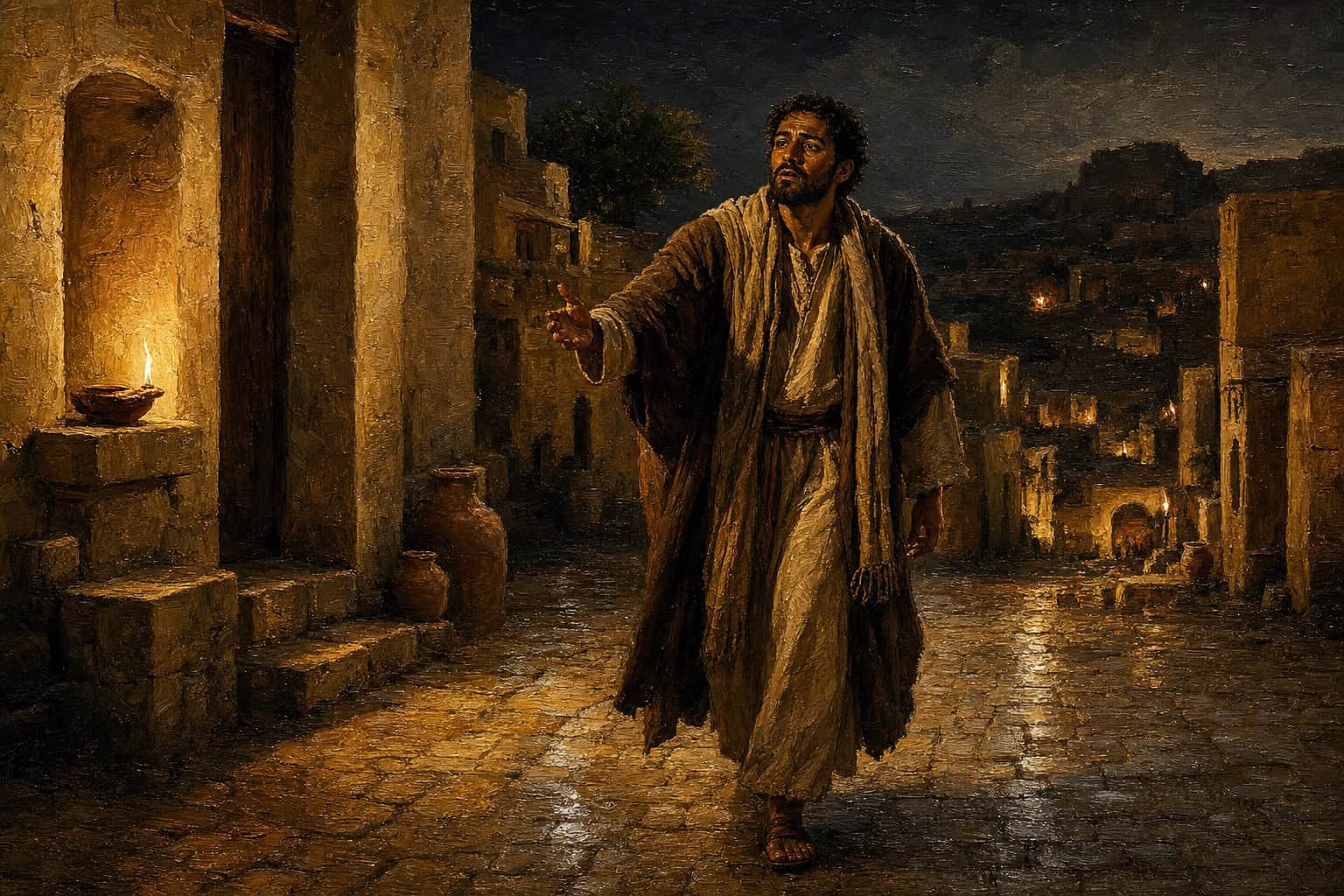
Streets That Testify Against You
Afterward you go looking for yourself in places, and the places will not let you lie. This is what no one warns you about being refused: it drives you outward, into nights and streets and rooms where you try to dissolve the ache into music and bodies and the thrum of other people’s lives. For a while it works. The city takes you in, loud and forgiving, and you learn its rhythms, learn which corners hold warmth, learn to walk with a certain slouch that says you are fine, you are free, you were never hurt at all. But years later you pass through those same streets and they testify against you without mercy. Your feet know where they stumbled. Your muscles remember the exact pauses, the doorways where you stopped, the particular way you carried loneliness disguised as appetite. The geography itself becomes a kind of conscience, an involuntary confessional that keeps the self you tried so hard to bury. You cannot walk there again as someone who never made those choices; the city holds your freedom to lose yourself as a permanent fact about who you are. This is the true fallout of a refused love left unhealed: you spend yourself recklessly, offering everything and accepting crumbs, and the streets remember the exchange rate—how low you sold yourself when you did not yet know the market would shift, when a stranger’s wanting felt like proof you still existed. There is real grief in this looking back. You see the younger self reaching toward union and settling for proximity, mistaking being touched for being known, calling it maturity, calling it freedom, calling it anything but the wound it was. You want to be angry at him and instead a terrible tenderness rises, because he was only trying to survive being unchosen. Was it sin? Yes, some of it, plainly. But it was also a wound behaving exactly like a wound, seeking any warmth within reach. The hard part is refusing to flatten it into pure guilt or pure innocence. Both are true and both stay true. You degraded yourself, and you were also a hurt creature grasping at the only comfort you knew how to reach. And here the strangest grace slips in—not a rescue, not a clean forgiveness that scrubs the corners bright, but a presence that walks those streets beside you. God does not delete the memory. He does not sweep the doorways clean. He is simply there, in the very nights you tried to obliterate yourself, in every tear you hid behind the noise, near to the self you were most ashamed of. Not fixing. Accompanying. That is the whole shape of it, drawn out with unsparing care in Confessions to the Empty Chair—not a cure for rejection, but a companion through it. The one who turned away did not carry off your whole self. What is left, standing tender and unfinished in its own skin, is the raw beginning of a truer person than the one who was refused.