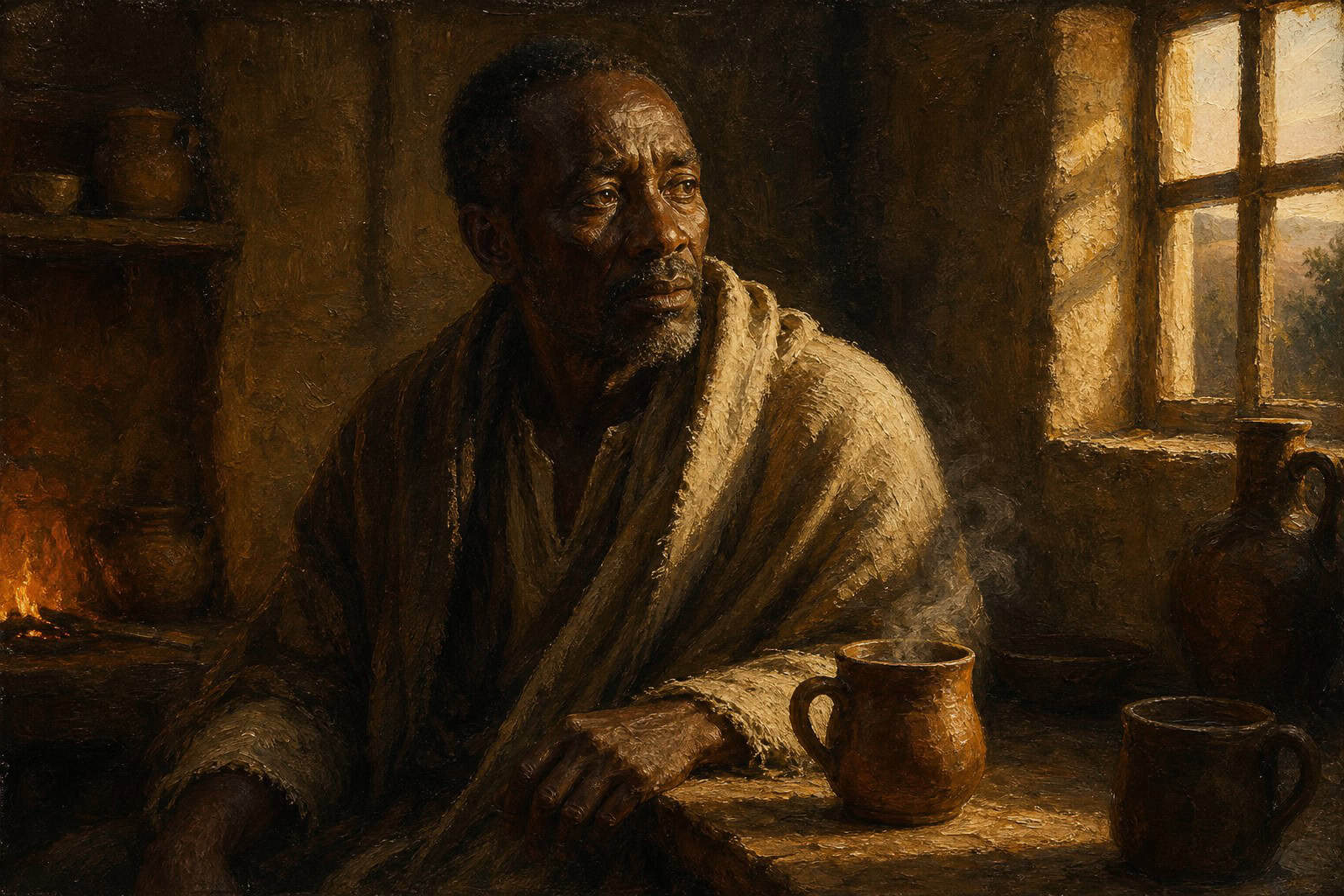
Grief come to grief: when mourning stops moving and turns to stone in you. A raw, honest reflection on carrying the dead and waking to your own end.
The Kettle You Still Fill for Two
You remember the morning it started, though you did not know it was starting. Someone was gone, and you stood at the counter and filled the kettle to the old line, the line for two cups, before your hand caught up with the truth. Water rose past the mark and you poured half back down the drain, watching it swirl, and the small stupid gesture undid you more than the funeral had. That is where grief begins for most of us. Not in the wailing but in the muscle memory, the body still living a life that has ended. You set out the second mug. You turn to say a thing and the room takes it back. Your hand goes to the phone to call and stops halfway, hanging in the air like a bird that forgot how to land. For a while this ache feels like love, and it is, and you let it burn because burning is proof you have not forgotten. You would rather hurt than heal, because healing sounds like betrayal, like agreeing they can be spared, filed away, forgotten among the thousands who die each day in places whose names you never learned. You have always let strangers die without a tear. You read the number in the paper and turn the page. Now you refuse to let this one die twice by fading, so you keep the kettle at its line, you keep the ache warm on purpose. There is a strange comfort in the routine of mourning, the way it gives shape to hours that have lost their reason. You wake, you grieve, you sleep, you wake. It becomes a kind of employment, a job with no wage but the feeling itself. Your body learns the rhythm the way a hand learns a stairwell in the dark. And here is the first quiet danger, the one no one warns you of at the graveside. Grief can settle into a groove and stop being sorrow at all. It can become a habit that wears your face, a costume you put on without thinking, a shape your mouth makes before you have felt anything. The tears keep coming but they no longer move you anywhere. You cry the way a faucet drips, out of a worn washer, out of wear, not out of the deep. The salt still runs down your cheek and means nothing. This is grief beginning to come to grief. It is mourning that has forgotten what it was for. And you do not notice, because from the inside it still feels exactly like faithfulness.
The Tenant Who Never Leaves the Attic
Then the strangeness thickens. You begin to sense that you are not only remembering the dead, you are housing them. You carry the whole unlived remainder of their days inside your chest like a lodger who took a room and never signed a lease. All the mornings they will not wake to, the meals they will not taste, the arguments never finished, the forgiveness never asked for, the trip half planned and now unplannable, all of it moves into you and waits. You become a theater with the lights on and no play running, a stage set for a performance the actor will never make again. You catch yourself living twice, once for you and once for them. You order the dish you never liked because they liked it. You defend an opinion that was theirs and not yours, arguing their side of a fight you cannot win because they are not there to lose it. You keep their coat on the hook and dust the shoulders. And under all of it a colder thing stirs, the thing you keep fleeing. Their death was a rehearsal for yours. When the thin cloth between them and you tore, so did the thin cloth between you and your own ending. You are no longer safe. Death has stepped out from the far countries of strangers and taken a chair at your table. It knows your name now. It has learned your face and your habits and the sound of your key in the lock. Every choice you make suddenly weighs more, because the clock has become audible, ticking in a room you cannot leave and cannot silence. You feel a vertigo you have no word for, a groundless hour where the floor of ordinary time gives way and you look down into how little of your own life is left and how much of it you have already spent asleep. This is not the fear of punishment. It is older and more raw than that. It is the plain fact of your finitude standing in your kitchen in its socks, refusing to be talked out of the house. You want to explain it away, to cover it over, to fill the calendar loud enough to drown the ticking. You take on projects. You make yourself busy past exhaustion. But it will not go, and some part of you knows the covering is a lie you are telling with your whole body. You cannot pray it into abstraction. You cannot reason it back into the newspaper. You have carried the dead so long you did not notice death had also begun to carry you, quietly, its arm already under yours.
The Hour the Ticking Comes Under Your Ribs
There comes an hour, usually alone, usually at night, when the whole arrangement collapses. You are lying in the dark and the ticking is not out there anymore, it is under your own ribs, keeping time with your pulse. And you understand, all at once and with a sickening clarity, that you have been using grief to hide from something. You told yourself you kept the dead alive by mourning them. The truth is uglier and more merciful. You kept yourself asleep. As long as you were tending their unlived life, you did not have to face your own dwindling one. Grief was a fine excuse for the autopilot, a black armband that gave you permission to stop choosing. Now the excuse burns off like fog off morning glass and you are standing exposed before the one question you spent all this sorrow avoiding. What will you do with the days you still have. Not the days they lost. The days you are wasting. The freedom terrifies you more than the loss did, because loss was done to you and freedom is on you, all of it, nothing to blame. You could go on grieving forever, comfortable, employed, faithful-seeming, dead while breathing. Or you could let the dead finally lie down, and stand up into your own unfinished, unrepeatable, terrifyingly open life. The choice is real and it is yours and no one can make it for you, and knowing that is its own kind of dizziness. This is the turn, the place where mourning either buries you or wakes you. And here, if you are seeking and not just suffering, you may feel something you did not summon and cannot explain. Not a rescue. Not a lifting of the dark. Just a presence in it, quiet, near, breathing with you inside the very room you fouled with despair. You will not be pulled out of the grief. You will be met in it. A nearness that does not fix a single thing and changes everything. The tears keep coming but now they move again, they run somewhere, they carry you instead of dripping out of a worn washer. You keep the dead alive by ignoring your own death; you begin to live only when you stop. That is the sentence that breaks the trance. That is the hour when the false, dutiful sorrow goes silent and the true grief, the one that lets you be mortal, finally stands up in you and takes a breath.
You keep the dead alive by ignoring your own death; you begin to live only when you stop.
Pouring the Second Cup Down the Drain
Waking does not feel like victory. It feels like theft. When you finally set down the whole unlived life you were carrying, when you let the lodger leave the attic and hear the door close behind him, the house goes quiet in a way that is worse at first than the noise. You mourned so long that mourning had become your company, your one conversation, and now even that is gone and you are alone with the plain fact of yourself. You go to the counter and you fill the kettle to the line for one. Your hand does not flinch this time, and the steadiness of it startles you. You watch the water stop at the lower mark and you feel the small betrayal of it, the agreement you swore you would never make, that they can be spared, that you will not die a second death every morning to keep them warm. It feels like abandonment. Part of you hates the steadier hand and wants to break it. You want to run the tap past the line again just to feel the old ache, the honest burn, and you understand now that the ache was never honest at the end, it was only familiar, a groove worn smooth by use. Real grief costs more than repetition. Real grief lets the dead be dead and lets you be mortal beside them, both of you finite, both of you held. The vertigo does not vanish. The ticking under your ribs does not stop. You have simply stopped pretending you cannot hear it, stopped stuffing your ears with busyness and armbands and second cups. And in the strange bareness of the one-cup morning you notice you are no longer performing to an empty theater with the lights blazing over empty rows. You are living, small and exposed, in a house with no ghost waiting in the wings for a cue. It is not comfort. It is something harder and better than comfort. It is the return of your own weight, your own hunger, your own unspent days pressing back against your hands. You eat the thing you actually like now, and it tastes like yours. You lose the argument that was never yours to have and feel lighter for the losing. You let the calendar fill with what you choose and not with what you flee. The dead are not gone from you, they have just stopped standing in for your life, stopped renting the rooms you needed to live in. And the nearness you felt in the dark does not leave when the crisis passes. It stays, quiet, at the low mark of the kettle, in the ordinary steam that fogs the window and then is gone.
The Steam Rising Off One Cup
You will not tie this off neatly, and neither will I, because it does not tie off. You still catch yourself reaching for the second mug on bad days, your hand betraying the old count. Some mornings the ache comes back genuine and knocks you flat in the middle of the floor, and that is right, that is love doing what love does, and you would not want it gone. The question the older, sadder version of you keeps asking is not whether you loved enough. You did. The question is whether you were using the depth of your sorrow to excuse the shallowness of your living, whether the grief that felt so faithful was partly a hiding place from the harder call to be alive while you still can. You do not fully know the answer. You interrogate your own motives and they will not hold still under the lamp, they slip and change shape the moment you name them. You wonder how much of your mourning was truly for them and how much was for the version of yourself that got to stop, that got permission to sleepwalk under the black cloth. These are not comfortable questions and you should not want comfortable answers to them. Sit in them. Let them do their slow work in the dark of you. What you can trust is the plain thing your body learned at the counter, that to keep the dead you were letting yourself die, and that stopping felt like betrayal and was actually the first honest breath. Death, once it steps out of the far countries and into your own kitchen, will not go back into abstraction, and you should not try to send it there with numbers on a page and other people’s names. Let it stand near. Let it teach you the worth of the one cup, the single mortal morning, the days that are yours and counted. This is the raw ground Fractions of the Soul walks without flinching, the place where sorrow either turns you to stone or opens your eyes, where the presence you did not summon meets you inside the dark instead of sparing you from it. The steam rises off the one cup and thins into the cold air and you watch it go, all of it, and you do not fill the kettle back up. You drink while it is still hot. You let the mourning move again, downstream, carrying instead of drowning. And you go out into a day that is finite and yours and, for the first time in a long while, awake.