Want to be less quiet? A chapter that reads the silent woman who tests men, and shows why the hush costs more than it protects.
The Whetstone She Kept in Her Pocket
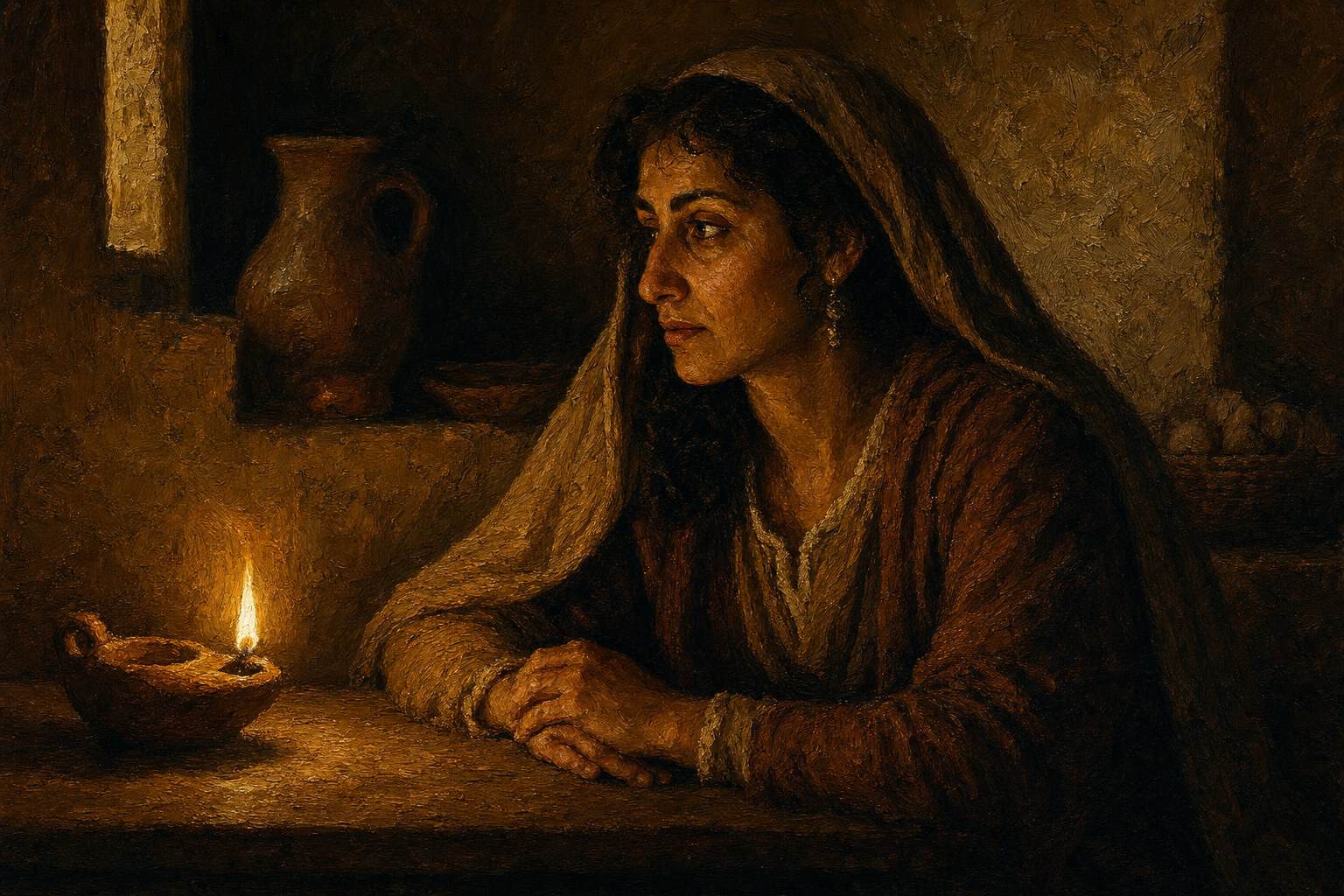
It started, for me, in a memory I still cannot set down cleanly. A woman across a table, saying little, her eyes doing the work her mouth refused. A candle between us threw its small yellow light against her face, and she let it, the way she let everything, without adding a word. I thought her silence was depth. I thought it was a room I was invited into if I proved worthy. In the fifth chapter of Fractions of the Soul, I return to that kind of person and finally name what she was doing: she was a whetstone, and she was grinding. She did not open her mouth because she did not have to. She let the men come, one after another, and she pressed each of them against her edge to see if anything of worth stayed behind after the friction. Her quiet was not empty. It was full of judgment, full of testing, full of a hunger she would not confess out loud. I remember mistaking that for peace. The chapter sits at the point where I stop admiring the silence and start reading it, and what I read frightened me, because I had been quiet in exactly the same way, for exactly the same reasons. Silence, I had told myself, was discipline. It was reason ruling over feeling, the value system I was raised to prize, emotion forced through the narrow gate of thought before it earned a voice. But there is a silence that guards the soul and a silence that starves it, and from the outside they look identical. She withheld her heart while she fed on the men who came near. I withheld mine and called it standards. The searcher who asks how to be less quiet is not asking for a trick. He is asking why the words will not come, why the hush has become a house he cannot leave. That is the ache the chapter opens on: the cost of being the one who never says the thing, who tests instead of trusts, who grinds instead of speaks. The physical detail I cannot forget is her stillness. Hands folded on the cloth. Mouth closed. A mind roaring behind a face that gave nothing back. Her fingers did not tap, her breath did not hurry, and I read all that composure as arrival, as a woman who had already crossed the water everyone else was still drowning in. I wanted to be admired for that same control. I sat straighter. I said less. I did not yet know it was a form of hiding, and that hiding this well is its own kind of exile, chosen and then mourned, a country you build stone by stone and only later notice you cannot get out of.
Sharpening on Men Who Would Not Hold an Edge
The chapter tightens when I stop describing her and start following her pattern. She chooses men born from her own pain. The pain comes first; the man comes into focus only through it, like a shape you see because it blocks a light behind it. She does not find him and then hurt; she hurts and then finds him standing in the hurt, made visible by it. She tells herself that loving him will teach her to love herself. She tells herself he has potential, that a great man is folded up inside him waiting for her patience to unfold him. I know that lie because I told versions of it about the people I chose, and I told it about myself when someone chose me and stayed. The tension the chapter builds is quiet and terrible: nothing she does with these men repairs anything. She grinds and grinds, and the weaker men are grateful to be ground, because they have no standards to lose, and they will stay forever in her brokenness because they were made from it. Her silence keeps them close. If she spoke plainly, if she demanded, the game would end and they would have to become something. So she stays quiet, and the quiet becomes a machine that feeds her pain more men to test. Here the searcher’s question turns sharp. Being less quiet is not about volume. It is about whether you are willing to be met, to let another person into the mind and heart where you actually live, not the front room you keep swept for visitors. The chapter is blunt about the alternative: a mind that tries to know itself through itself only deepens the flaws already sewn into it, overlooks them, compounds them, hands them forward. She could not see her pattern because she was the pattern. I could not see mine for the same reason, and no amount of thinking harder inside my own head was going to show me the crack running through the thinking. The dread underneath all of it is the clock. She does not have endless years to keep testing men who cannot hold her edge. Neither did I. Every grinding season was time I would not get back, warmth spent on bodies I would not let become souls, an intimacy that was really two people alone together, each using the other, warm and present and completely unknown. That is the loudest silence of all, the one that fills a bed and empties a person. To be less quiet, the chapter suggests, would mean risking the one thing she never risked: being seen before she was sure it was safe. She never was sure. That was the whole tragedy, and I was slow, humiliatingly slow, to admit I had built the identical fortress and stocked its rooms with the same false comforts.
The Hush That Was Never Discipline
The turn comes when the mirror swings around and stops on me. I had spent years believing my quiet was strength. Reason over emotion. Feeling processed, refined, permitted to speak only when it had earned the right. That was the value system I inherited, the one I wore like good clothing and was proud to be seen in. But the chapter forces a harder question, and it will not let me squirm out of it: was my silence discipline, or was it fear wearing discipline’s clothes? The woman I was reading did not withhold her heart because she was wise. She withheld it because giving it meant she could be judged, refused, undone in front of someone. I withheld mine for the same reason and dressed the wound as virtue, and I did it so smoothly that even I believed the costume. Every time I chose the composed silence over the risky sentence, I told myself I was being rigorous, that I was mastering the animal parts of me. But the animal was not the danger. The danger was the pride that could not bear to be caught mid-mistake, the vanity that preferred a locked mouth to an exposed heart. This is the recognition the chapter carries toward, and it lands with no comfort attached: the quiet I called mastery was the exile I had chosen. I had cast myself out of the country of ordinary human speech and then stood at its border complaining I was lonely. To be less quiet, I saw, was not to become louder or cleverer or more certain. It was to stop grinding people against my edge and to let someone grind me back. It was to hand another person the mind and heart I kept sealed, knowing they could see the flaws I had spent a lifetime arranging out of sight. That terrified me more than any confession, because it meant admitting I was not finished, not superior, not safe. It meant the tidy image I had built of myself was itself the thing keeping me alone, and that no clever word would ever undo what only an honest one could.
Your quiet is not safety; it is the exile you built and then called home.
What the Silence Cost Everyone Who Loved Me
After the recognition, the fallout. I had to reckon with the people my quiet had shaped and shortchanged. Every relationship I entered from pain, every warm body I kept close while keeping my heart locked in another room, every person I let believe my silence was depth when it was only distance dressed for company, they carried what I would not give them. The chapter is unflinching here. The stunted ones come from stunted homes and pass along the deficiencies done to them; they do unto others what was done unto them, a curse handed down like a family name nobody chose. I had told myself I was different, refined, a whetstone and not a common stone, cut from better rock. But the mechanism was the same. I withheld. I tested. I stayed quiet where speech would have cost me something, and my quiet did damage I could not measure, because you cannot measure the words you never said, the reassurances that never came, the doors that stayed politely shut. The falling action of the chapter is the slow accounting of that debt. The flesh could not fix her pain; she would have been fixed many times over by now if bodies could mend what only the soul can reach. My silence could not protect me; it only postponed the exile it pretended to prevent, and charged interest the whole time. I think of the people who waited for me to say the thing and finally stopped waiting, who read my quiet correctly at last and left. I think of the version of myself I used to be, before the fortress, a boy who spoke too freely and was punished for it and learned to bury the voice deep enough that no one could use it against him. That boy is who the exile separated me from most of all, not only from God, not only from the people at my table, but from the self who once trusted words enough to spend them freely. The chapter does not let me grieve that cheaply. It insists I look at my own hand in it. Was the quiet ever really about reason? Or did I love being the one who was never wrong because I never said enough to be caught in error, never risked the sentence that could be held against me? Those are the questions I sit inside without answers, because the honest answer keeps changing depending on how brave I am on a given day. What the chapter gives me is not absolution. It is clarity. The silence had a cost, and I paid it in people, and some of that will not come back. Some things close for good, and no confession, however late and tearful, reopens them. That is the true fallout, and I refuse to soften it into a lesson.
One True Word Spoken Into an Empty Room
Where does it settle. Not in a cure. The chapter does not hand the silent person a script or a technique for manufacturing volume. It offers something slower and more demanding: the willingness to be known before you are sure it is safe, which is the only real end to the grinding. To be less quiet is to stop using your silence as a stone to sharpen and dull the people who come near, and to let one of them into the mind and heart you have guarded so long they have gone stale from lack of air. It is to risk being seen unfinished, mid-sentence, wrong. That is the hardest thing the chapter asks, and it asks it of me before it asks it of any reader. I have not fully done it. I write these pages partly because writing is the one place my voice still moves freely, and I am aware, painfully, that a page is safer than a face, that ink cannot flinch or leave. But even the page is a beginning. Even one true word spoken into what feels like an empty room loosens a stone in the wall. And here is the part I hold onto without pretending it repairs the damage: the room was never truly empty. When I finally said a true thing, out loud, to no one I could see, I understood that Someone had been sitting in the exile with me the whole time, not waiting for my eloquence, only for my honesty, patient as breath at the back of the throat. That is not a rescue. The silence still cost what it cost. The people it drove away are still gone, and I do not get to pretend otherwise. But the company was real, and it changes what the quiet means from here forward. Fractions of the Soul does not close this chapter with a woman transformed or a man made whole and beaming. It closes with the recognition that the exile of silence is a choice remade every morning, and that speaking, even badly, even late, even into the dark, is the first step on the road back. If you came here asking how to be less quiet, the book will not sell you a trick. It will set a mirror in front of you, and put a companion beside you in the dark, and let you feel the freeing, unbearable knowledge that the silence was never protecting you. It was only keeping the meter running. The rest of the chapter is where that reckoning goes, and I will not tell you where it leads. I only know the first word out has to be true, and that it does not need to be loud.