Overcoming childhood trauma isn’t more insight—it’s being seen. A reflection on Fractions of the Soul and the hidden gravity we carry into every room.
Two Strangers at a Low-Lit Table
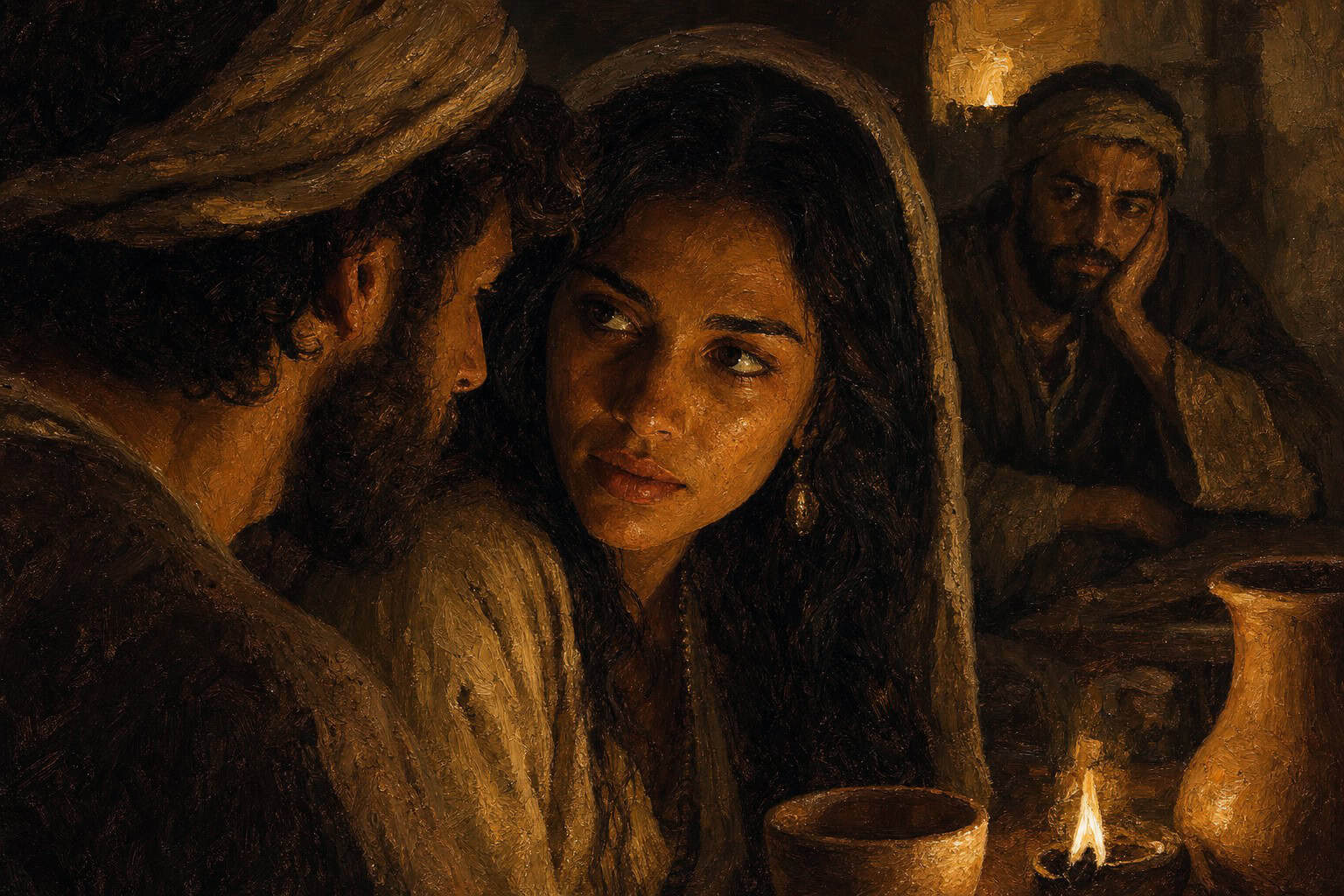
A man leans toward a woman across a small table, and her body answers before her mouth does. Her crossed arms fall open. Her breath goes short and shallow, catching in a way she does not decide. She lifts her right hand, grazes the side of her neck, tucks one length of hair behind her ear, and the small stones in her earrings catch what little light there is. She has said nothing worth remembering. Yet she has already told him he may come closer, and he takes the permission with a smirk so small it almost isn’t there—a private, congratulatory flicker at the corner of his mouth. This is where Fractions of the Soul begins its long looking, and the strange thing is that it does not begin with the narrator’s own childhood, or his own name, or his own grief. It begins with two people he does not know, caught in a moment they believe is entirely their own. If you came here asking how to overcome childhood trauma, this opening will feel like an odd doorway. There is no counselor, no timeline of wounds, no numbered path out. There is only a man who has decided to watch human beings the way you might watch a slow chemical reaction, careful not to disturb the very thing he studies. But watch what he is actually doing. He is training himself to see what people hide from each other. He believes that the second anyone senses they are being observed in that careful, information-gathering way, they change—they compose the face, they turn toward the flattering light, they perform instead of live. So he stays out of sight. He gathers what he learns without consent and without warning, because he wants the true thing and not its dressed-up version. And underneath the method there is a quiet violence he does not yet name: the exact fear he watches in these two strangers—the instinct to arrange the self before it can be caught—is the fear he has lived inside his entire life. This is not really about the lovers. It is about a man who learned early that being seen is dangerous, and who has taken that lesson and made it into a discipline he is proud of. He has turned watching into a way of never being watched back. That is not health. That is an old wound teaching a very intelligent grown man exactly how to survive, and calling it wisdom. The book knows this from the first page. It sets these two people before us so gently that we forget to ask the harder question: why can the narrator describe every detail of their courtship, yet not once imagine himself sitting down at the table?
The Gravity You Cannot Point To
He asks us to slow the moment down, to freeze the courtship mid-motion and wonder what made it possible in the first place. Stop, examine, refuse the easy reading—that is the exact instinct a wounded child builds when the surface of things cannot be trusted. When home is unsafe, a small person learns to read the room before anyone speaks a word. She studies the shoulders, the set of the jaw, the hand that might rise. He learns to hear the tone hiding underneath ordinary conversation. The narrator has kept that childhood skill and dressed it in the language of science, but the engine is the same one that ran in the boy: if I understand it first, it cannot get to me. Notice how sharply he distrusts the naïve onlooker, the layperson who sees only two people flirting and nothing more. He is not wrong that the casual glance both reveals and conceals at once. But listen to the pride tucked into it, the small congratulation he grants the man at the table and, more quietly, himself. The gift of seeing what others miss is real. It is also a cell. This is where the book presses directly on the thing you actually typed into the search bar. Old relational wounds do not lie still in the past like a photograph in a drawer. They work like an unseen mass, a pull you can never point to directly, bending every approach and every retreat you make in the present. You cannot look at the wound itself. You feel its drag in the way your body leans back the instant someone leans in, in the way you find yourself narrating a moment instead of living inside it. The woman uncrossing her arms and the narrator refusing to uncross his own are the same human event seen from two sides. She opens a space to be entered. He seals his so that no one enters without being announced first. The heartbreak the chapter quietly sets in motion is that he has mistaken his sealing for insight. He believes distance is the same thing as clarity. He calls himself a special kind of scientist, and there is real hunger in that word—the hunger to finally understand the whole world that lives between a man and a woman, the new one that opens the instant two people truly meet. But you cannot study the warmth of a fire from a room that has none, and part of him already suspects this. The questions he will one day be forced to put to himself begin gathering here, before he has any idea they are coming. Why can he describe desire with such precision and enter it so rarely? What did being watched, or worse, not watched, teach him when he was small? What is he guarding, and from whom, and at what cost?
The Terrible Bargain of the Watcher
A turn comes in his own confession, and it is not loud at all. It arrives as a recognition he cannot afterward pretend away: the covert watching he has spent years perfecting is not a neutral tool. It is a bargain he struck a long time ago, before he had the words for bargains. To understand love without being burned by it, he agreed to stand permanently outside of it. To gather the truth of people, he agreed never to fully be one of them at the table. He trades his participation for his understanding, and the price of that trade is a loneliness so old that he had long since stopped feeling it as a loss. It just felt like who he was. This is the honest accounting the whole book is built to force him toward—and it is not simply a ledger of the things done to him, though those exist and matter. It is something far harder: the reckoning with what he did with the wound once it was his. He took a child’s survival instinct—watch, do not be watched, understand before you can be hurt—and he chose it, over and over, as an adult who could have chosen otherwise and did not. He grooms his detachment as carefully as the woman grooms her hair, an imperceptible gesture that arranges him for safety before anyone can reach him. He congratulates himself, silently, for seeing so clearly. And the entire time, the one thing his wound most needs is the one thing he refuses to allow: another person’s honest look landing on him, unmanaged, uninvited, seeing what he cannot see about himself. That is the cost the passage lays bare without ever saying it plainly. He can name every tell in their bodies, every uncrossed arm and quickened breath, and he cannot let a single set of eyes rest on his own face without composing it first. The scientist has become the thing he pities in the naïve—more hidden, not less.
You cannot find your own blind spot by staring harder into a mirror you hold in your own hand.
What the Dark Refuses to Give Back
Here is where a lesser book would hand him a cure. It would tell him to name the wound, walk the steps, feel the feelings, and walk out lighter. Fractions of the Soul does no such thing, and that refusal is its mercy. The narrator does not get delivered from his watching in this chapter. He does not suddenly sit down at the table and let himself be loved. He stays where he has always stayed, half in shadow, pen moving, gathering evidence without consent. The fallout of his recognition is not relief. It is a colder clarity—the ache of a man who now sees the cage and still cannot make his own hand open the latch. And this is the truth about old childhood wounds that the self-help shelf keeps promising to erase: understanding the trap does not spring it. He knows exactly what he is doing and why, and knowing changes almost nothing. The hardening happened beneath language, in a body that learned to armor before any thought could form, and it will not be undone by a clever sentence. What the book offers instead is stranger and more faithful. It does not lift him out of the dark. It suggests, very quietly, that he is not alone down there. The One who made the human heart—the heart the narrator keeps insisting never changes—is not waiting for him on the far side of the healing, arms crossed until he earns entry. That presence sits with him in the very act of hiding, in the covert watching itself, in the loneliness he has dressed up as strength. Grace here is not a rescue party. It is a companion in the shadow, watching him watch, loving the man who cannot yet bear to be loved. That is the theology the chapter plants without announcing it. The narrator wants to be the one who sees. He has not yet grasped that he is already seen—fully, without his careful arranging—and that this being seen is the only thing that has ever healed anyone. He is homesick for a home he cannot remember, aching toward a communion his body craves and his mind refuses. The chapter leaves that ache raw and unanswered. It does not tie it off. It simply lets us watch a man learn that the skill which kept him alive is now the wall keeping him from the only thing that could make him well.
The Chair He Will Not Sit In
By the chapter’s close nothing is fixed, and that is precisely why it holds you. The lovers stay frozen where the narrator paused them, arms open, breath caught, the earrings still catching that low light. He stays outside the frame, seeing everything, entering nothing. If you came looking for a book to help you overcome childhood trauma, understand what you are being offered. Not a method. Not a ladder out. A companion who has lived inside the exact bargain you may have made without knowing you made it—the bargain that says being seen is too dangerous, so I will do the seeing for everyone and let no one do it for me. The gift of Fractions of the Soul is that it refuses to lie to you about how hard this is. It knows the wound teaches a genius kind of survival. It knows that insight alone leaves you standing in the same cold spot, wiser and no freer. What it dares to believe is that the way out was never more understanding. It was the presence of another—a look you did not manage, a face that saw yours before you could compose it, a nearness that stayed even in your hiding. The whole book leans toward that possibility the way the woman at the table leans toward the man, uncertain, exposed, hoping. And the ache that opens here, in these first pages, is the ache the narrator will have to carry all the way down: whether a man who has spent his life watching love can ever let himself be watched back, and what it will cost him to try. He has not answered it yet. He may not answer it the way you hope. But you will want to follow him to the table he keeps refusing—to see whether he ever pulls out the chair he has stood beside for so long, and sits.