Surviving a breakup: how one man learned to burn in love that ends, read the signs of leaving, and stay honest in what breaks. A hard, human guide.
Scattering Fractions Across a Table of Talk
You know the ache before I name it. Someone is gone, and the chair where they sat still holds their shape, and your hand keeps drifting toward a warmth that no longer answers. So you go searching for a way through, typing your grief into a small glowing box at two in the morning, and I will not lie to you about how narrow the way is. In Confessions to the Empty Chair, around the fifteenth chapter, the narrator sits across from a woman named Leigh and does something most of us do without confessing it: he tests her. He does not hand her the whole of himself. He drops pieces instead, small ones, an opinion set down like a coin, a reflection let slip, breadcrumbs scattered through ordinary conversation, each crumb carrying the taste of the larger loaf it was torn from. He wants to see if she will bend down and gather them. He wants to know if she has, as he puts it, the eyes to see and the ears to hear. This is not romance yet. This is reconnaissance dressed as talk. He is measuring her, and he knows he is measuring her, and part of the terrible honesty of the scene is that he refuses to pretend otherwise. Anyone surviving a breakup will recognize this instinct with a flinch. We all learn to test, to leave small offerings on the table and watch what happens to them, because we have been burned once by giving everything in a single reckless breath. His crumbs are careful, controlled, released in measured bursts. He calls it gradual revelation, and there is real dignity in the phrase, the dignity of a man who wants his spoken words to grow from the actual ground of his soul and not from some borrowed script. It is also, in the same instant, a kind of armor with holes cut in it, letting one part of the man show while the rest stays hidden in the dark behind his eyes. The table between them is small. The words move back and forth like something passed hand to hand. And underneath every sentence he speaks runs a single silent question, so quiet he barely hears it himself: how much of me can you hold before you drop me. That question is far older than Leigh. It was living in him long before she ever arrived at his table. It will still be there long after. This is where he dwells, in the ache of not being kept, and he has furnished that ache like a room he cannot bring himself to leave, hanging his fear on the walls of it, making a home of expecting to be left.
Mapping the Exact Inch Where Warmth Turns to Frost
Watch what he does next, because it is where the wound bares its teeth. He is not merely dropping crumbs and waiting. He is searching, on purpose, hunting for the precise line where a woman’s warmth goes suddenly cold. He describes it plainly, without softening it: that hidden inch of interpersonal space where enthusiasm and desire shift, without warning and without sound, into silence and dismissal and distance. He has felt that shift before. He has felt it many times, in many rooms, across many tables. And so he has become something no man should have to become, a surveyor of his own abandonment, charting with cold accuracy the exact coordinates where affection in another turns to leaving. He pushes at Leigh a little each time they speak, testing her tolerance, pressing for the edge, reading the smallest changes in her face. This is what grief does to us over the long years. It does not only hurt. It teaches. It trains the eye to catch the half-second delay before a reply, the way a mouth tightens, the way a face closes like a shutter drawn against evening. The wounded become experts in the geography of leaving. We read the signs of an ending long before the ending arrives, and we mistake this bitter skill for wisdom, for maturity, for knowing better than to hope. If you are surviving a breakup tonight, you may already be doing exactly this, scanning your memory for the moment it began to go, replaying the last months to find the inch where the warmth first left the room. It feels like understanding. It is really vigilance, the exhausted watchfulness of someone left too often to trust being kept. And here the chapter earns its severity, because the narrator turns this same lens on himself and does not look away. He asks whether he truly wants Leigh or whether he wants proof of the pattern he already believes in, a confirmation he can hold up and say, see, they always go. He entered the room already deciding how it would end. He half-expected her to grow bored, to retreat, to walk the well-worn path away from him the way, in his telling, most women do with matters of the spirit. He built the exit before she had a fair chance to stay. This is the exile he cannot quite see he is living: cast out not only from her but from the man he was before he learned to expect the casting-out. He carries his banishment inside his own chest and brings it to every table he sits down at. The cruelest turn is that his map of leaving, however precise, half-guarantees the very thing it predicts, because a man watching so hard for the door slowly teaches the other person exactly where it stands.
The Curse of Seeing Through Every Mask She Wears
Then comes the turn, and it arrives quieter than you brace for. Leigh does not leave. He drops his crumbs across the table, and she bends and gathers them. He pushes at the edge, and she stays past it. The more he speaks, the more she listens, leaning in rather than pulling back. He had steeled himself for her retreat, had all but scheduled it, and instead her presence lingers after each conversation like the smell of a meal still hanging in a warm room. This should be joy. In him it is closer to dread. Because his gift, the very seeing he prizes above almost everything, is also the walls of his cell. He can look at a woman and read the persona she has assembled, the small customizations of self she has arranged for the world to approve, her defenses set in place like furniture in a room she thinks no one else can enter. He sees straight through the mask while she does not know she is wearing one, and she does not know that he sees. This is an asymmetry no ordinary love survives intact. He knows her more than she knows he knows. He stands outside a pane of glass she is certain is a solid wall. So his clarity, the thing that makes him refuse false comfort and demand authentic and unapologetic revelation, is the very thing that seals him alone inside his own skull, holding a knowledge he cannot share and cannot unsee. Here is the sentence to underline before we go a step further: to love what will end is not foolishness; the refusal to love because it will end is the true poverty. He has half-grasped this. He chooses to burn in what cannot last rather than hoard himself against the coming loss, and that choice is the real good in him, a stubborn refusal to let finitude talk him out of living. But the seeing corrupts the burning, because he cannot stop cataloguing the woman even while he offers himself to her, cannot lay down the ledger even as he opens his hands. The scene holds both truths at once and refuses to reconcile them for you. He wants clarity even if the clarity drives Leigh away from him for good. He would rather she return to her old shortsighted patterns than waste his hours throwing seed into ground where nothing can grow. Filter, he tells himself, one hard word. And reading it, you feel that the filter is quietly protecting a man who has confused sight with love, who has made a private sacrament of his own perception and forgotten that to be truly known by another is also to consent, sometimes, to being fooled by someone you have chosen to trust well past the evidence.
To love what will end is not foolishness; the refusal to love because it will end is the true poverty.
What the Two Copper Coins Were Really Worth
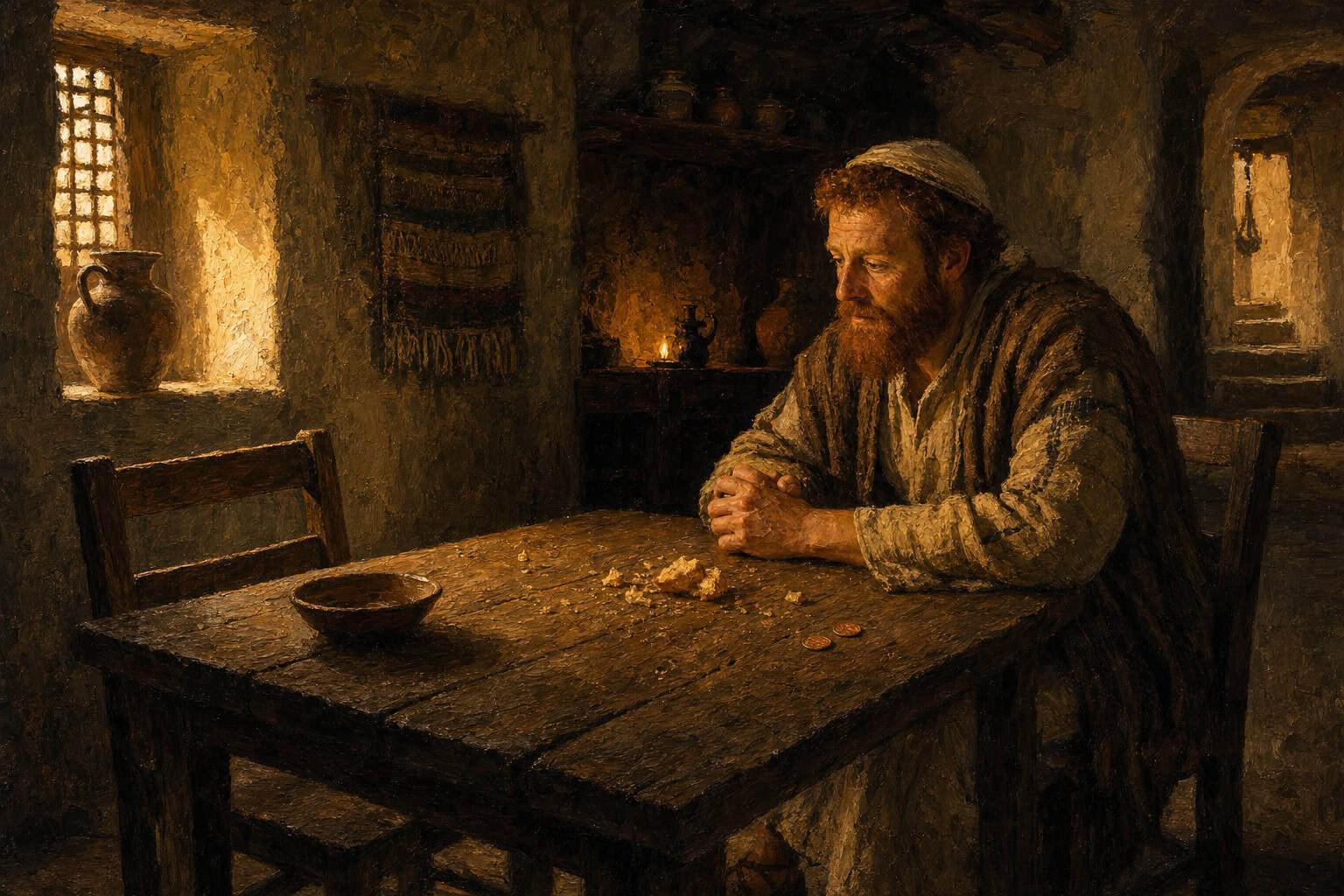
The fallout of this posture is a loneliness of a very particular grain. He speaks of two copper coins, small worthless change laid on the table, and of how a woman without the eyes to see would fasten only on the literal coins rather than on their meaning. He wants to be read for what he means, not for his surface, wants someone to trace his opinions and reflections back to the whole soul they were torn from. It is a holy hunger, this ache to be understood clear down to the ground from which one’s words grow. But he has bent that hunger into a test almost no one can pass, and worse, a test that even when passed leaves him no less alone, because the one who passes it he then quietly suspects for passing it too easily, too quickly, as if her very success proves she cannot really have understood. If you are surviving a breakup, sit here a moment longer, because this is where the chapter cuts closest to the bone. His real homesickness is not for Leigh at all. It runs older and deeper than any woman who has ever crossed his path. It is a longing to stand before someone and speak a single word without strategy, without scattering crumbs to test the soil first, without surveying the exits while he talks. He has forgotten how. Every conversation has become a maneuver. Every offering is a probe sent out to measure the tolerance threshold of the one across from him. And beneath all of it lies the exile’s oldest ache, the ache to come home at last to a presence that does not need to be managed, that already holds the whole loaf and not only the torn crumbs, that has always seen through every mask a man wears and loves him without flinching anyway. He is homesick for God and calling it loneliness for a woman, and he has confused the two because the woman is the easier of the two to pursue across a small table on an ordinary evening. None of this is resolved in the scene. His despair is not lifted off him. He does not suddenly repent of his testing and topple into simple, unguarded love. What breaks in, if anything breaks in, is smaller and stranger than rescue: the quiet fact that he cannot wholly unsee his own game even while his hands are busy playing it, that the very self-scrutiny threading through his words is a light he did not light himself. He names his motives out loud. He interrogates his own filtering. Something in him refuses to let the maneuver slide past unexamined. That refusal is no comfort, and it does not make him gentler with Leigh in the moment. But it is a companion in the dark, a witness walking beside him inside the very sin he is committing, present in the telling itself. The coins were never truly worthless. He knew that from the start. That is precisely why he sat back and watched to see who would notice.
Learning to Sit at the Table Without Counting the Exits
So here is what the chapter finally offers you, and it is not a program. There is no tidy checklist for surviving a breakup, no seven clean steps that carry you dry-eyed out the far side of it. What there is instead is company in the honesty of the wound. The narrator lays bare the machinery most of us keep hidden under the floorboards: the testing, the crumb-dropping, the careful map of leaving we draw before a single person has actually left. He shows you plainly that self-protection, the refusal to invest yourself in what will one day end, is not safety at all but a slow, quiet refusal of life itself, a starving that calls itself caution. The way through, then, is not to stop hurting; the hurt is not the enemy. It is to keep sitting at the table when everything in you has already counted the exits and priced the loss down to the last coin. It is to burn, knowing the fire ends, because a fire that will not burn for fear of ashes gives no warmth and no light and is not, in any honest sense, a fire at all. The narrator has not arrived anywhere. He is still testing Leigh even as some deeper part of him aches to lay the testing down. He is still exiled from the man who could once speak a plain word with no hidden hook buried inside it. But he is putting the right questions to himself, and he is putting them without flinching from his own answers, and that unflinching asking is the beginning of a return, if a return is possible at all for a man so practiced at watching for the frost. You will not be told in these pages whether he learns to trust her. You will not be handed the ending like change slid across a counter into your palm. What you are handed is the more useful thing by far: a mirror held at the exact angle where you can catch yourself doing what he does, dropping your own crumbs, studying the face across from you, bracing for the cold before it has even come. In that recognition lives a small, real mercy, the mercy of not being alone in the pattern, of hearing your worst instinct named honestly by a man who is still standing inside it as he names it. If you are grieving someone as the house goes quiet tonight, Confessions to the Empty Chair will not comfort you cheaply, and you should be glad of that. It does something harder and kinder. It sits down beside you in the dim room and refuses to pretend the morning is close, and in that very refusal, somehow, it keeps you company until you can lift your head from your hands. The crumbs are still on the table between you. Someone across from you is still watching, patient, to see whether you understand what they were always meant to mean.