Why do girls like rich men? A hard, honest look at devotion, hunger, and the invisible economy of a heart that harvests what it will never repay.
The Banquet Set With Another Man’s Bread
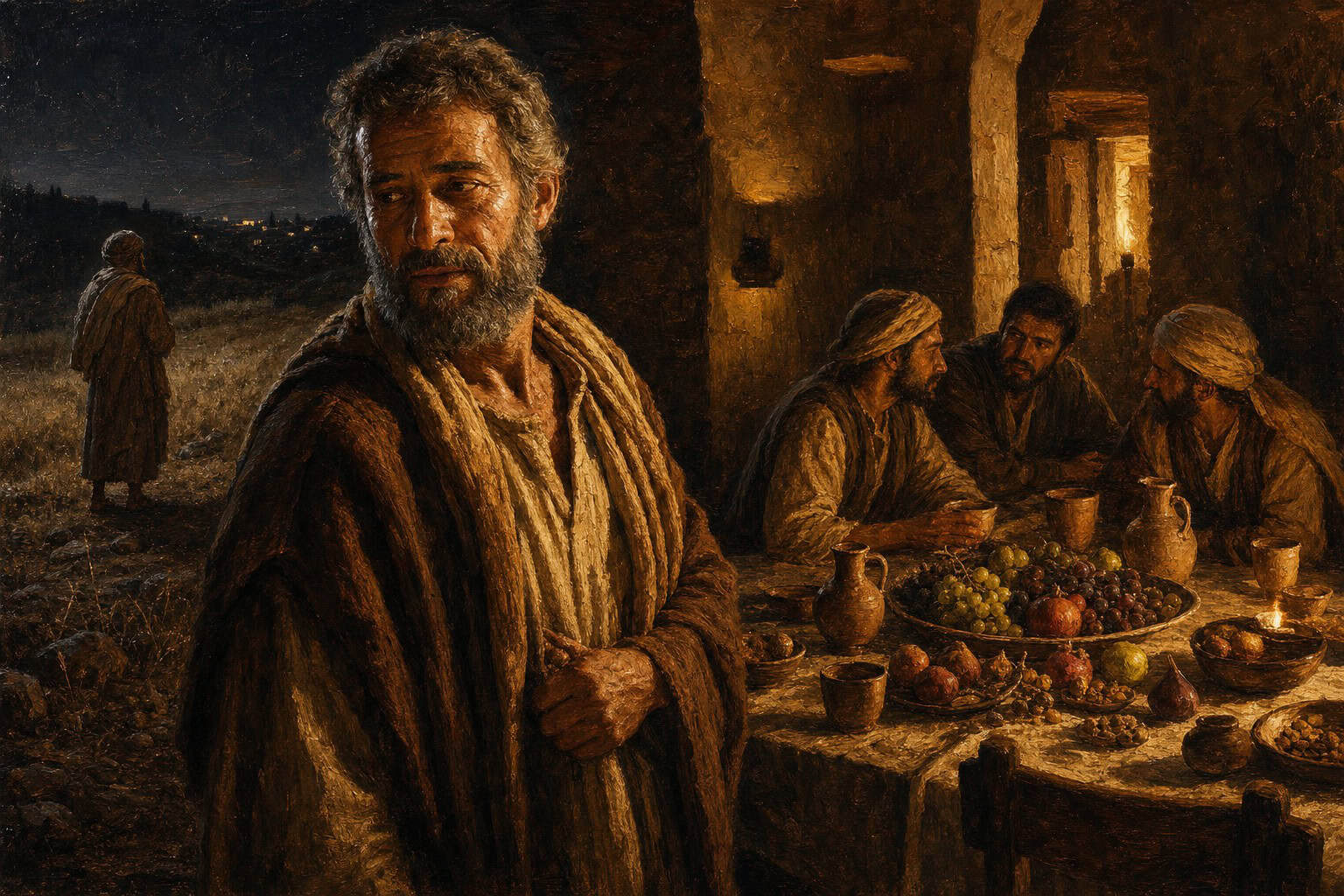
You typed it late, maybe after picking up a check she barely looked at, maybe after watching a woman you wanted turn her whole body toward a man whose money was thicker than yours. Why do girls like rich men. The words come out small and bitter, the way a man talks when he feels unseen. But there is a real hunger under them, and in Fractions of the Soul the narrator drags that hunger into the open and refuses to leave it simple. He describes a woman who runs an economy no eye can catch. One man gives and gives — his hours, his money, his open chest, his readiness to come when she calls. She takes it. She lifts it like fruit picked from one field and carries it to a table set for a man who did nothing but exist. She prepares the whole of herself for that other man. The one who worked the ground never sits down to eat. Feel the exact shape of it in the body: the provider’s hands are calloused from carrying, his shoulders sore from the giving, and the sweetness he grew is spooned onto someone else’s plate. The narrator is not writing a lecture on wealth. He is writing about a hunger that money only pretends to feed. When you ask why women want rich men, he would tell you to look harder at what you call riches. A rich man here is not only a man with means. He is a man trained to pour without limit, who mistakes his own bleeding for being chosen. His resources are coin she spends elsewhere. His devotion is fruit she harvests and hands away. The cruelty is quiet, domestic, almost tender from the outside — no shouting, no scene, only the slow draining of a man who keeps filling the pitcher because filling it feels like being loved. And the narrator does not stand above this. He has been the man in the field, kneeling in the dirt, watching his own harvest carried past him to a mouth that never once said thank you. He turns the lens on himself and it stings. Did he not know? Did some starved part of him choose the provider’s role because being needed felt safer than the risk of being seen and refused? He sits inside that shame instead of hurrying past it. He wonders whether the giving was ever clean, or whether every gift had a small hook buried in it, a hope that the labor would buy him a seat he was too frightened to simply ask for. That is where the honest reading begins.
Friendship as the Cage With No Bars
The tension gathers around a single soft word: friendship. She offers it like a present, and the narrator watches what the present actually does. Friendship becomes the holding pen. She keeps a man near enough to harvest, near enough to summon at midnight, but never near enough to see the full map of her life. She calls him her best friend, parades him at her side, and he glows with the naming, and he is not chosen. Some men she makes labor for every crumb of her attention. Others she chases outright. Some she hides in secret, running two men who never learn of each other, bending her own rules for one while enforcing them hard on the next. She writes the rules. She names the exceptions. The exceptions are always the men she desires and never the man who pays. Here the physical detail bites down. A man in the friend cage feels his own body go unseen while he watches. His chest tightens when she laughs too warmly at another man’s joke. His hands — the hands that paid, that carried, that reached toward her — are quietly told to stay at his sides. There is a hollow low in his gut, an ache with no clean name, the flesh registering before the mind will that he does not appear in her field of care. You can stand a foot from her and be a ghost in the room. That hollow is the first true answer to your question. Women do not want rich men. Certain wounded women, the ones this chapter describes, want the safety of a man who will keep providing while they feed their real appetite somewhere else. The wealth is not the lure. The wealth is fuel — an endless supply that lets her dodge the terror of choosing, of being wholly seen, of letting one man arrive all at once and stay. And the narrator drives the blade back into himself. When he laid out his own gifts, was that love, or was it a purchase order? Did he try to buy a place he was too afraid to ask for plainly, without payment, at the risk of a plain no? He will not let himself off. He wonders whether his generosity was ever free of self-interest, or whether he too was spending, coin after coin, hoping the transaction would win him a tenderness he could not believe he deserved for nothing. The friend cage, he sees, is not built by her alone. A man walks into it because it lets him keep giving, and giving lets him postpone the naked question of whether he is wanted at all. He stayed in the pen because the pen felt like proximity, and proximity felt, for a while, like being loved.
The Predator Was First the Prey
Then the turn arrives, and it does not come as revenge or triumph. It comes as something worse and more honest. The narrator stops seeing the woman as a plain villain and starts seeing the wound under the machine. Her whole apparatus — the ranking of men, the secrets, the harvested devotion, the banquet built for one mouth with another man’s bread — is not run by greed. It is run by terror. She keeps everyone because she believes, down in the marrow, that she deserves no one. If she let a single man arrive fully, if she stopped splitting her life into sealed rooms where each man thinks he is the only one, the truth would rush in like water and pull her under. So she divides herself. In one room the friendship is genuine. In another the parasite is genuine. Alone in the dark, the fear is genuine. She lives each piece as if it were a whole world because the whole world, arriving at once, would kill her. This is the cruelty and the pity fused together. The one who harvests was harvested first. The predator was prey once, dropped somewhere far back before memory sharpened, and she learned that to be held is to be released, so she will be held by many and released by none, and she will starve at the fullest table. She sits at the banquet she stole and cannot swallow a bite. Here the narrator’s self-reckoning cuts deepest, because he finds the same shape lodged in his own chest.
The one who hoards every man’s devotion is a starving guest at her own banquet, unable to eat the very love she steals.
He sees that his own hoarding, his own frantic collecting of any affection within reach, rose from the same ancient wound. He did not stand outside her sickness diagnosing it. He carried his own strain of it. And God is here, inside this recognition — not repairing it, not lifting the two of them clear of the wreck, but present in the very act of seeing. There is a nearness in the dark the narrator does not explain away or dress up. Grace does not drop down as rescue. It walks beside him inside the sin, quiet, unhurried, in every ashamed tear, letting him look full at what he did and what was done to him without flicking off the light and sparing him. The mercy is not that the ache stops. The mercy is that he is not left alone while he stares at it. That is the strange consolation the chapter offers, and it offers nothing cheaper.
The one who hoards every man’s devotion is a starving guest at her own banquet, unable to eat the very love she steals.
What the Harvest Leaves in the Soil
After the turn, the fallout settles slow, the way a field looks once the pickers have gone and the light goes flat. The narrator counts the cost, and the tally is grim. A man who spends himself funding another’s romance does not merely lose money and hours. He loses his grip on his own worth. He starts to believe love must be bought, because it was never once handed to him free. His generosity, meant as a gift, hardens into a reflex of purchasing, and the purchasing trains him to think he is wanted only for what he can supply. That is the poison folded inside the answer to your question. If you chase the notion that women want rich men and resolve to become the richest provider in the room, you will build the very cage the narrator describes and lock the door from the inside. You will be the man at the field, and you will be superb at it, and you will be starving in the middle of the abundance you grew. The book does not spare her either. Her soul has a membrane that should let love in, and that membrane has learned to read love as poison. When a good man offers real devotion, freely, asking nothing back, she tastes it and spits it out, because it does not carry the bitter flavor she was taught to trust. She starves surrounded by plenty. He starves in the act of giving. Two hungers, each certain the food itself is the enemy. And the narrator turns the lens once more on himself and asks the question he cannot dodge: did he ever offer love without a hook set in it? Could he even tell the difference between a free gift and a baited one? Did he want her freely to choose him, or did he want to buy her freedom and rename the purchase as love? He knows a love bought is no love at all. He knows a lover cannot live on one oath sworn long ago; he needs the other to choose him again in each new instant, freely, or the thing is not love. So he sits with the bare fact that neither he nor she could give that free choosing, because both were too afraid, and the field lay fallow, and the banquet went to rot, and God stayed near in the ruin without sweeping any of it away. Nothing is fixed. Everything is finally seen. He does not pretend that seeing is the same as healing, and he does not pretend the two are strangers either.
The Question You Were Really Asking
Where it settles is not comfort. You came asking why girls like rich men, and the narrator hands you a different question, one you did not know you were carrying up the stairs. You were not really asking about her taste. You were asking whether you will ever be loved for yourself, apart from what you can hand over, or whether you must forever buy your way to a table where you remain a stranger among the plates. That is the ache the book names and does not rush to heal. Fractions of the Soul will not tell you that money wins women, and it will not tell you money cannot. It tells you a wounded heart turns every gift into a transaction, and that a man who lets himself shrink into a provider is signing a paper that says: spend me. The richness that draws the wounded is not gold in a vault. It is the bottomless supply of a man willing to give and give without ever being chosen back. And the woman who wants that supply is not simply wicked. She is terrified — so afraid of being dropped again that she will be carried by a crowd and love none of them, feeding a hunger that only widens the more she feeds it the wrong food. The narrator does not close on a lesson tied off with ribbon. He closes inside the honest wreck, still asking whether he can learn to give a love that grows love in return, or whether he will keep pouring himself into ground that drinks everything and yields nothing. He does not know yet, and he refuses to pretend he does. What he knows is that God did not walk off when the harvest failed. That is the stubborn thing the memoir keeps circling back to — not a repair, not an extraction, but a companion in the dark who does not turn away when you finally see what you have done and what was done to you. If your question was really the deeper one, if you are the man in the field feeling yourself thin into a ghost, this chapter will not flatter you and it will not lie to you. It sits down in the emptied field beside you, names the hunger by its true name, and then rises to keep walking, because there is more soil ahead, and by then you will want to walk it.