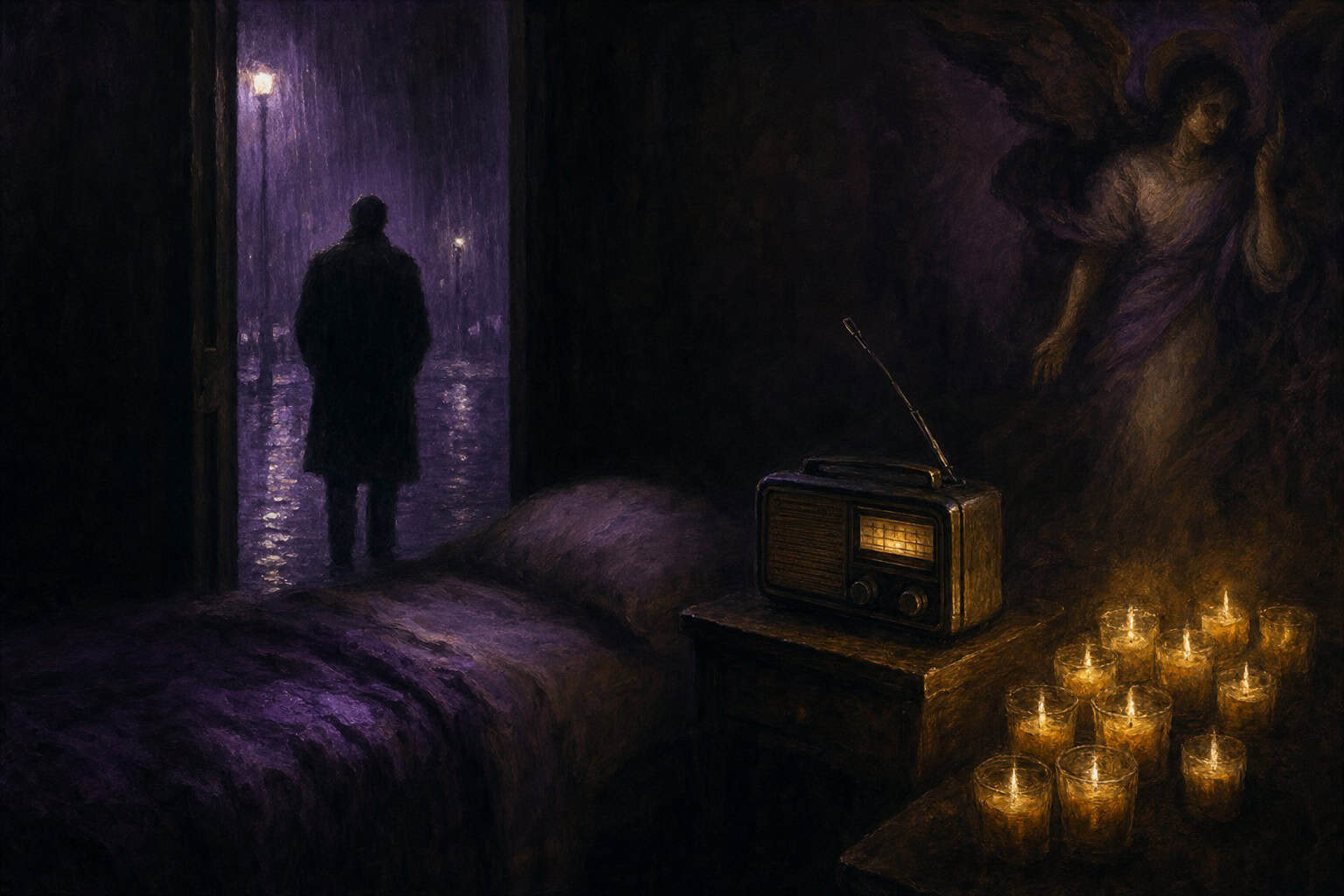
He twists the dial of a cheap radio with a bent antenna, chasing a voice through the static, never guessing the fault is in the receiver and not in the signal.
A Bent Antenna Humming in the Dark
Picture a cheap bedside radio left on after midnight, its thin metal antenna bent from some forgotten fall. The room hums with that low, restless crackle as you twist the dial, chasing a song you can almost recognize. Clear music flares for a second, then dissolves into hiss and chopped syllables, as if the air itself were breaking words into bits. Nothing out at the tower has changed; the station keeps pouring out the same melody it always has. What’s changed lives in the bruised circuitry, the crooked metal, the hairline fractures that make reception ache. This passage names that bent antenna as the human heart after the first break in our story. Not ruined, not ripped from the socket, but hairline-cracked in ways that blur the signal that once rang clean. We walk the sidewalks and bus aisles of our days with this half-broken device humming under the ribs, misreading its noise as evidence that no one is broadcasting at all.
When Chemicals Try to Explain the Song
In that same dark room, you could ignore the music and measure only current and charge—how much voltage runs through the radio, which resistor warms under your fingertips. You could say the whole event is nothing but electrons, no melody at all, just patterns in a circuit. This is the temptation the passage leans into: to call love nothing but dopamine, trust nothing but oxytocin, devotion nothing but patterns of firing cells. If all that matters is the lab report, then the raw ache in the chest becomes a misfire, and what once felt sacred shrinks into an error margin. The human person turns into hardware that needs a firmware update or a better pill. Yet the lived experience refuses to sit still under that story. There is something about the way a name spoken in tenderness rearranges the body that will not consent to be only chemistry, even while it fully involves chemistry. The passage holds that tension at the edge of the receiver’s hum.
A Crown Set Down Beside the Doormat
Now the scene shifts: it is no longer us standing by the flickering radio, but a king standing outside a house that is his by right. He could tear the hinges from the frame with the smallest thought, yet his hand rests, quiet, against the wood. The crown might as well be at his feet, set down beside the welcome mat, while rain runs down his wrists. This is how the passage chooses to speak of power: not as a fist through the wall, but as a will that refuses to cross the threshold unasked. The same Voice that lit suns into being stands at the edge of its own creation, accepting the small insult of delay. Our bent receivers, our drug cabinets, our clever explanations all run on inside while he waits. The pressure in this moment is almost unbearable because nothing forces a conclusion. The refusal to force is the point, a love strong enough to let us misread silence as absence rather than crush our freedom to choose him.
The damaged receiver in us mistakes God’s persistent signal for silence, and calls His terrifying patience an absence.
The Hum in Your Chest You Keep Calling Nothing
Most people do not hold a golden crown or a theology book in their hands; they hold prescription bottles, phone screens, steering wheels. They wake at three in the morning with that familiar tightness between throat and heart and think, again, that it proves they are alone. The passage presses into that exact place: the pew where you stand dry while others weep, the bedroom where prayer feels like talking to drywall, the clinic where a form asks you to rate your sadness from one to ten. It suggests that the flatness, the numbness, even the jolt you chase with medicine or distraction, might not mean the station has gone off the air. It might instead be the sound of a damaged tuner struggling to lock onto a stubborn, steady signal. That does not excuse suffering or render tablets unnecessary; bodies are real and sometimes need chemical mercy. But it quietly refuses the verdict that says your lack of feeling proves God’s lack of presence. The ache itself becomes a contested territory, not a signed death certificate.
Learning to Listen Through the Crackle
If static can exist only where a signal presses against resistance, then our whole age might be one long, buzzing testimony. The passage does not rush in with instructions, as if there were a simple dial you could twist to make the music come clear. It leaves you instead in that dim room, hand on the radio, recognizing that the broken sound is still sound, that underneath the harshness something steady endures. It leaves you with the king outside, hand against wood, choosing not to splinter it despite the ease with which he could. Between those two images—a humming antenna and a waiting sovereign—lies a question that has not yet been answered: what kind of repair do we dare ask for, and what kind of permission are we willing to give? The book will move on, but this passage lingers like a faint melody stuck in the mind. It stays there, unfinished, the way a note hangs in the air long after the instrument has stopped moving.